

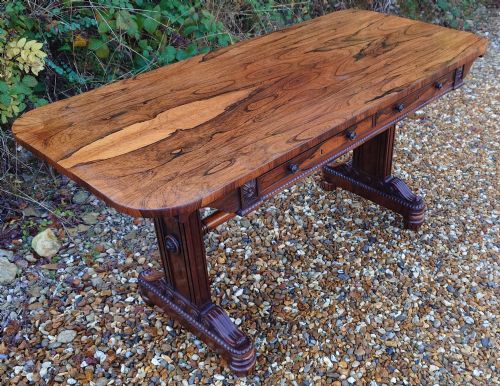
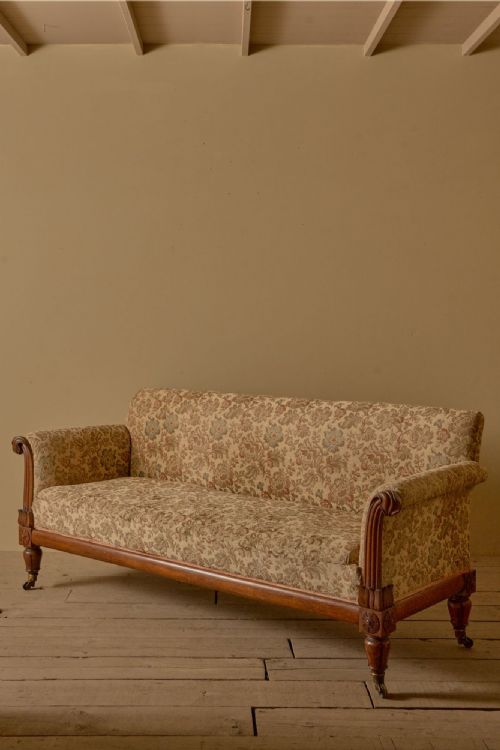
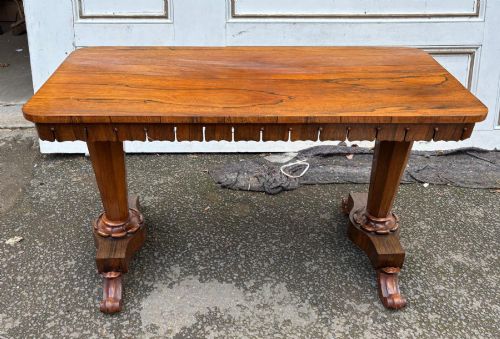
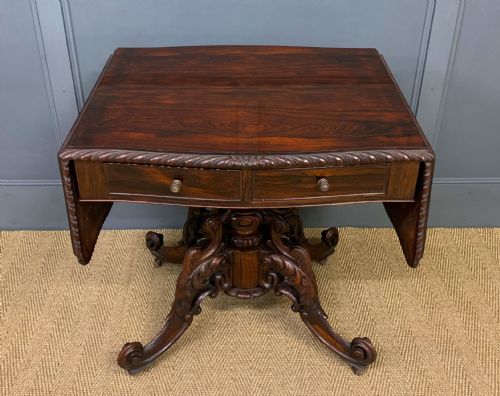
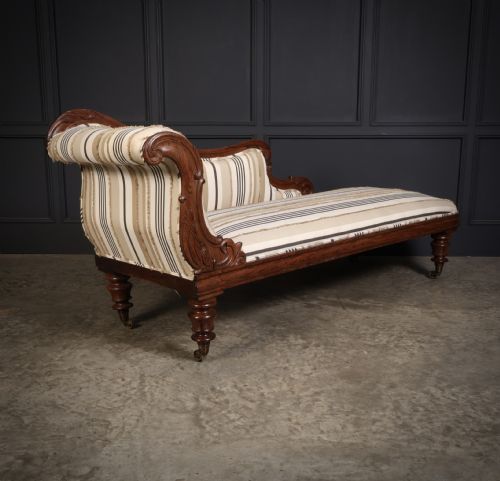

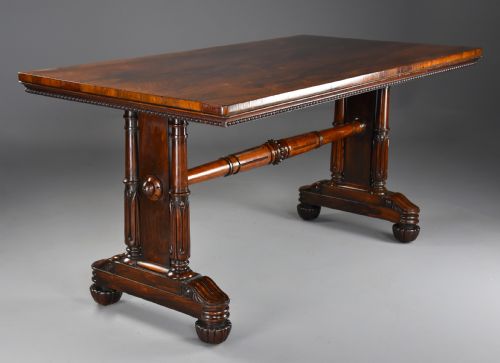
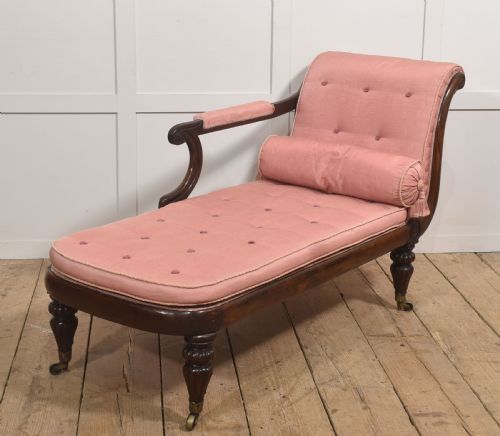
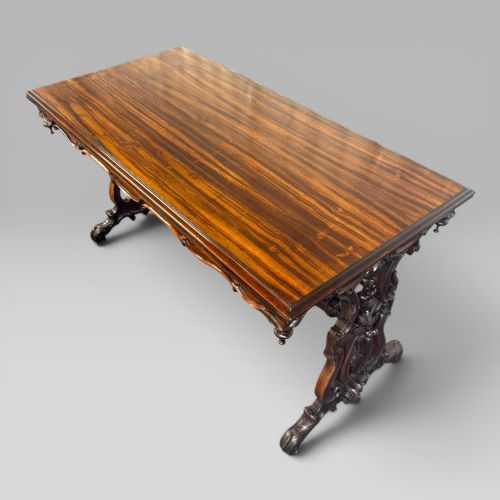


William IV Rosewood Sofa
A william iv rosewood sofa brings substantial timber and deep seating to a period interior.
William IV Rosewood Sofa
When you search for a william iv rosewood sofa, you encounter heavy nineteenth-century seating built from dense dark timber, often sharing stylistic traits with library tables, chaise longues, and settee forms from the same era. The inventory shows pieces spanning the 19th Century, Regency, and Early Victorian periods, alongside related furniture types like sofa tables and day beds.
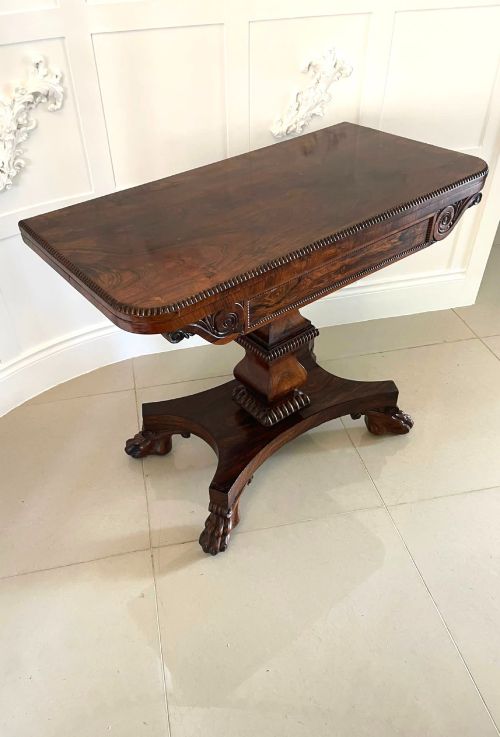
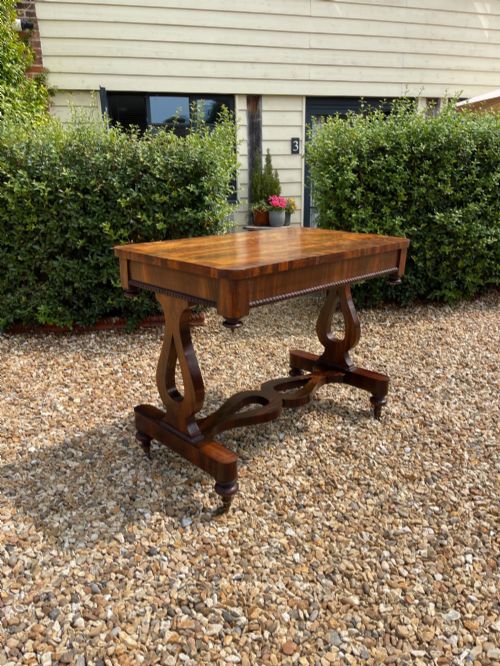
Makers and workshops of the period utilised rich rosewood veneers and solid framing to create substantial seating arrangements for country houses and town residences. These items sit comfortably alongside related occasional furniture such as centre tables and card tables recorded in the same eras.
How they were made
Construction relies heavily upon dense rosewood timbers, sometimes paired with secondary woods like mahogany, zebrawood, or goncalo alves for structural integrity. Brass inlays, marble tops, and detailed carved elements frequently accent the timber frames.
Upholstery methods involved traditional fabric coverings, silk, and hessian support webbing beneath sprung or stuffed cushions. Joinery techniques from the period ensured rigid end supports and stretcher bases for heavy daily use.
William IV Rosewood Sofa Retail Price Guide 2026
Typical asking prices for william iv rosewood sofa among the pieces listed under this phrase on Sellingantiques today, from the lower quarter to the upper quarter. They describe what is for sale here now, not the wider market.
One clever nineteenth-century desk even doubles as a laptop station today.
What varies in quality
Quality reveals itself in the grain selection of the rosewood veneer and the crispness of any carved wooden details on the frame. Superior examples demonstrate balanced proportions and thoughtful integration of brass or gilt work.
The integrity of the underlying timber frame and the sympathetic nature of any reupholstery dictate the long-term desirability of the piece. Well-balanced proportions between the show wood and the upholstered sections separate standard production from finer workshop output.
Mein of Kelso·Gillows
The William IV Rosewood Sofa Glossary
- Rosewood
- A dense, heavily figured dark timber prized for its rich grain patterns and durability in nineteenth-century furniture construction. It takes a high polish and forms the primary visual surface on these items.
- Sofa table
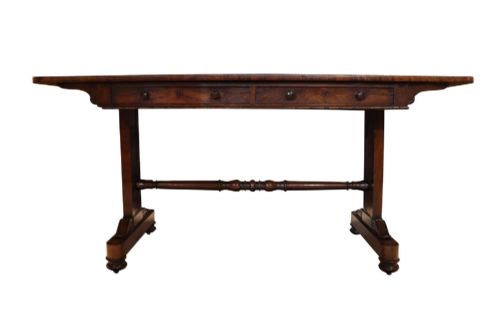
- A rectangular table featuring drop leaves at either end, originally designed to sit in front of a sofa. Many examples include small drawers beneath the top.
- Chaise longue
- An upholstered seating form designed for reclining, featuring an elongated seat and one or two raised ends. These pieces often share the carved rosewood frames typical of contemporary sofas.
- Stretcher
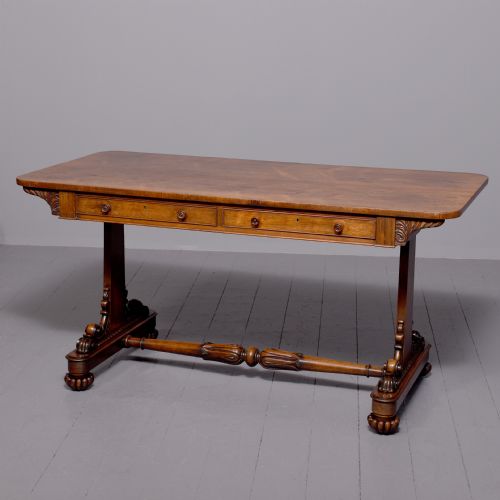
- A horizontal wooden bar connecting the legs of a table or sofa near the base to provide additional structural rigidity. They appear frequently on heavier nineteenth-century library and side tables.
- Goncalo Alves
- An exotic dense timber occasionally utilised alongside rosewood for its striking decorative grain. It provides a similar weight and colour profile to standard rosewood.
William IV Rosewood Sofa: Frequently Asked Questions
What is a william iv rosewood sofa?
A william iv rosewood sofa is a nineteenth-century seating piece constructed from heavy tropical hardwood with distinct period carving.
These items reflect the robust architectural tastes popular during the 1830s and 1840s.
How do I date a rosewood sofa?
Dating relies upon examining the timber choice, structural joinery, and stylistic details such as scroll arms or turned legs.
Comparative pieces from the same decades often share specific carving motifs found on contemporary library tables.
Where were these sofas used?
Original placement was typically within the principal reception rooms or libraries of substantial nineteenth-century town and country residences.
They provided formal seating that matched the surrounding rosewood centre tables and console furniture.
How do I care for rosewood furniture?
Maintenance requires keeping the timber away from direct heat sources and sudden humidity changes to prevent veneer splitting.
Regular dusting with a dry cloth preserves the natural polish of the polished surface.