
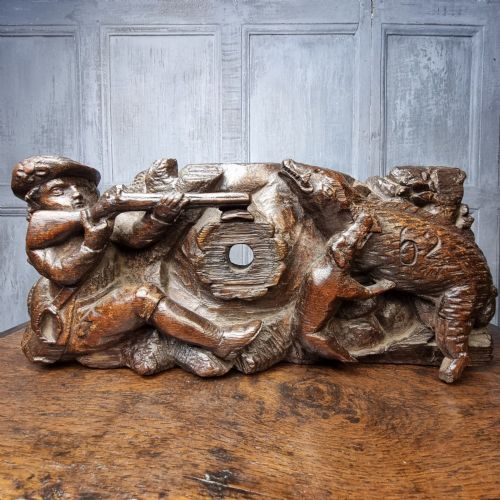
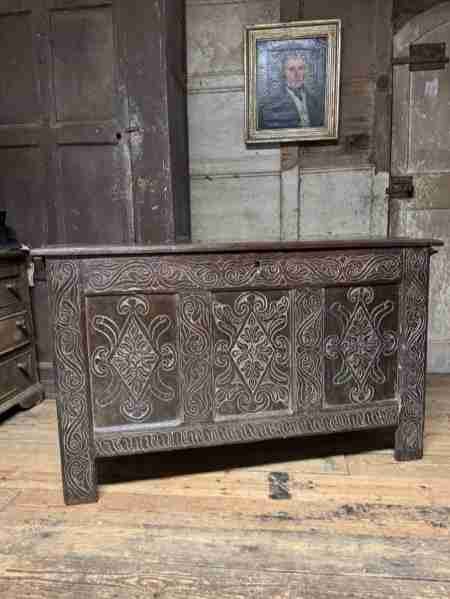


Carolean Carved Oak Panel
Carolean carved oak panel works of art bring seventeenth-century joinery into modern rooms through robust timber architecture.
Carolean Carved Oak Panel
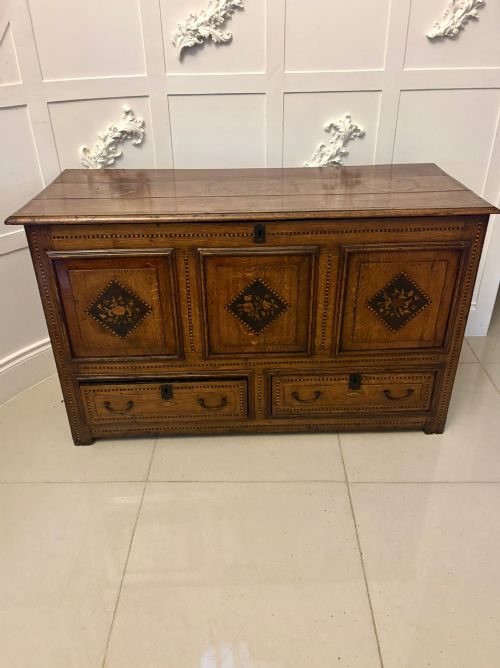
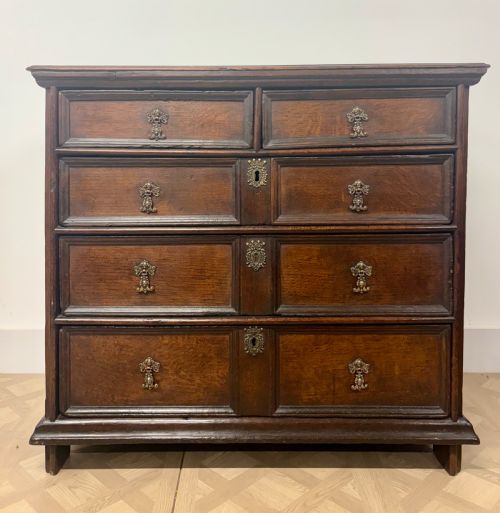
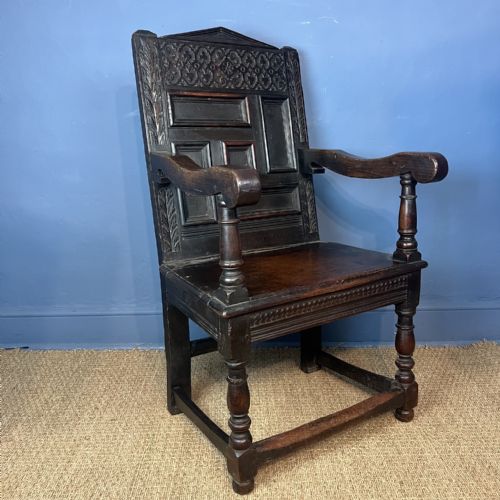
A carolean carved oak panel search reveals sturdy seventeenth-century timber architecture, architectural salvage, and carved friezes alongside seating and storage furniture. Buyers frequently encounter seventeenth-century oak carvings, joined chests, wainscot chairs, and mule chests shaped during the reign of Charles the Second and later revival periods.
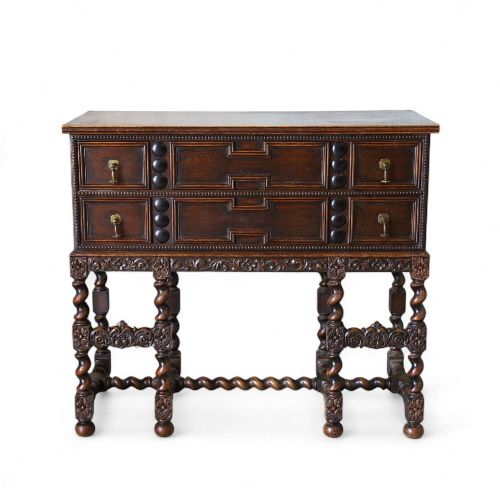
The pieces on this page span authentic seventeenth-century origins through to later nineteenth-century and 1930s Carolean Revival interpretations. Solid oak forms dominate the selection, often presenting deep relief carving, geometric mouldings, and panelled construction characteristic of English workshops.
Materials and construction methods
Makers utilised solid oak for the primary structural elements and decorative panels of these items. Joinery relied on traditional mortise and tenon joints secured with wooden pegs, creating rigid frames capable of supporting heavy carved ornamentation.
Carving was executed by hand directly into the dense timber substrate, producing crisp relief work on friezes, chair backs, and coffer fronts. Additional materials such as iron, brass, and marquetry inlay occasionally appear on chests and drawers to accent the woodwork.
Samuel Pepys makes an unexpected cameo in the timber record, preserved through a monumental library bookcase built after an original.
Distinctions in quality
Quality rests upon the depth, sharpness, and rhythm of the hand carving across the oak surface. Superior examples display confident, articulate tool marks and well-proportioned architectural framing that reflect the skill of the original joiner or master carver.
The integrity of the timber and the retention of original construction elements heavily influence the standing of a piece. Finer items maintain their heavy solid oak boards, period brass or iron hardware, and minimal structural alteration over the centuries.
Thomas Dennis·Edward Pearce·Samuel Pepys
The Carolean Carved Oak Panel Glossary
- Carolean
- Pertaining to the reign of King Charles the Second, spanning the mid to late seventeenth century. This era is known for exuberant carved woodwork and rich surface ornamentation.
- Wainscot chair
- A heavy wooden armchair constructed with panelled backrests and solid wooden seats. These items represent significant status in seventeenth-century domestic interiors.
- Mule chest
- A storage chest featuring one or more drawers built into the base beneath the main compartment. They bridge the design gap between simple coffers and full chests of drawers.
- Barley-twist
- A rounded furniture leg or support turned in a spiral helix resembling twisted barley sugar. This decorative turning style gains popularity during the seventeenth century and later revival periods.
- Marquetry inlay
- The art of applying decorative veneer pieces onto a solid timber carcase to form intricate patterns. This technique enhances surfaces on select chests and storage furniture.
Carolean Carved Oak Panel: Frequently Asked Questions
How do I identify a genuine seventeenth-century oak panel?
Examine the timber grain, tool marks, and construction joints for signs of authentic hand craftsmanship. Period pieces show consistent hand-planed surfaces and pegged joinery rather than modern fixings.
Compare the style of the carving and moulding profiles against documented examples from the same era. Revival pieces from the nineteenth and twentieth centuries often exhibit different patination and mechanical tool signatures.
Where were these carved oak panels used originally?
Carved oak panels and friezes formed integral parts of interior wall panelling, overdoors, and heavy furniture within substantial English homes. They provided both structural enclosure and visual display in reception rooms and halls.
Freestanding pieces like wainscot chairs and coffers served practical seating and storage functions in the same domestic spaces. Their robust timber construction ensured daily utility across generations.
How should I care for historic oak furniture?
Keep wooden items away from direct heat sources and dramatic humidity fluctuations to prevent the solid oak from splitting. Maintain a stable indoor climate to protect the integrity of the ancient timber.
Apply traditional wax sparingly and buff gently with a soft cloth to nourish the surface. Avoid modern silicone polishes that can degrade the historic finish over time.
What is the difference between original seventeenth-century and revival pieces?
Original seventeenth-century items carry the wear, structural settling, and patination accumulated over three hundred years of use. Their joinery and timber preparation reflect the specific hand tools and methods of that period.
Revival pieces, such as those from the nineteenth century or the nineteen-thirties, emulate earlier aesthetics using period-appropriate or later machining techniques. They offer robust utility while reflecting the historicism of their own time of manufacture.