



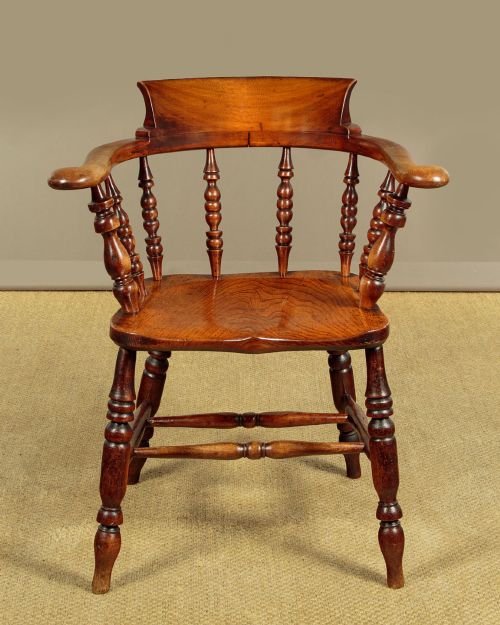
Captains Desk Armchair
A captains desk armchair offers sturdy seating designed for long hours at work, combining deep wooden bows and turnings with practical swivel mechanisms.
Captains Desk Armchair
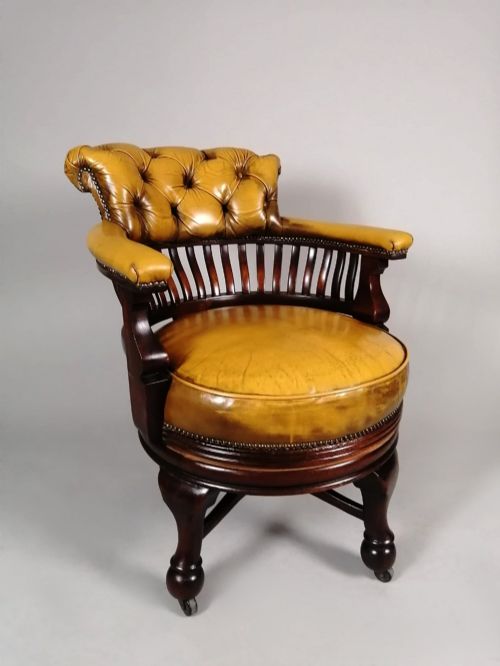
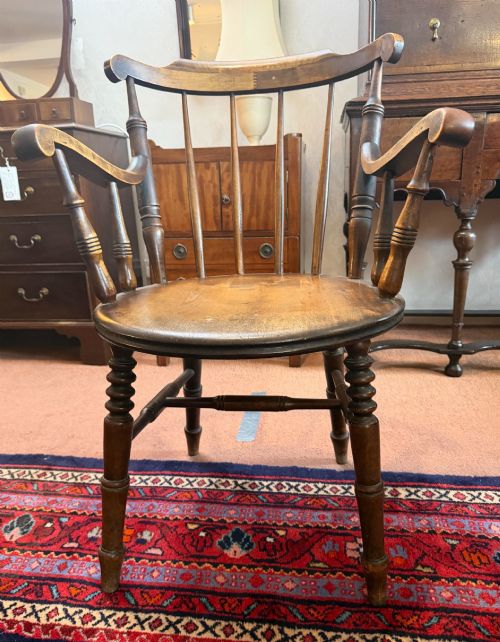
A captains desk armchair serves as a robust seating option found in studies, libraries, and offices, evolving from traditional Windsor forms into revolving desk chairs. When searching for a captains desk armchair, buyers encounter pieces primarily originating from the Victorian and Edwardian periods, alongside earlier nineteenth-century examples and later twentieth-century iterations.
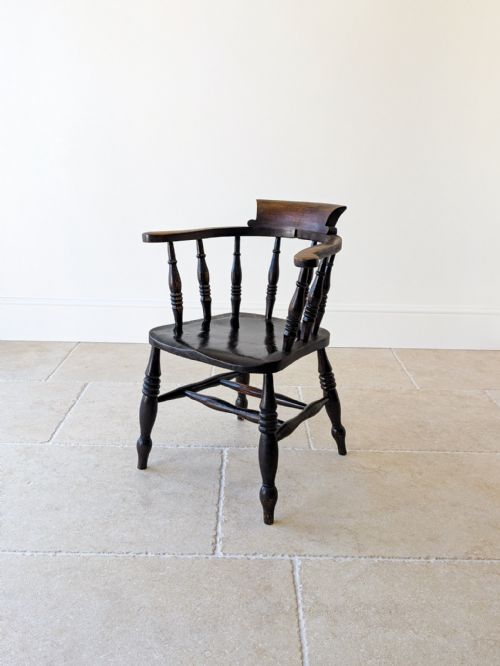
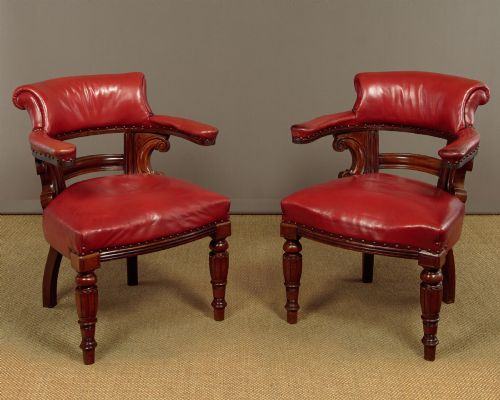
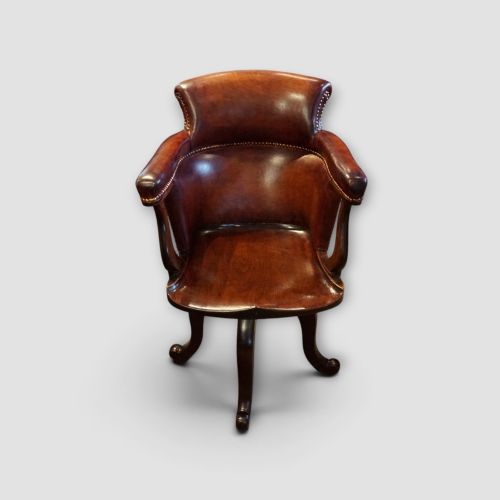
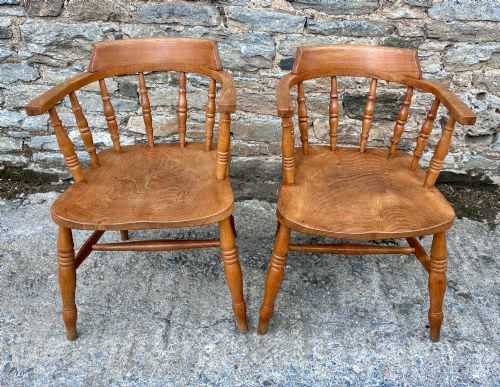
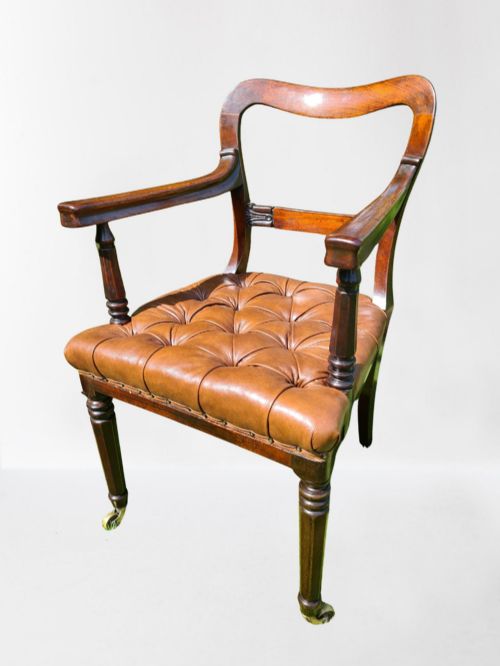
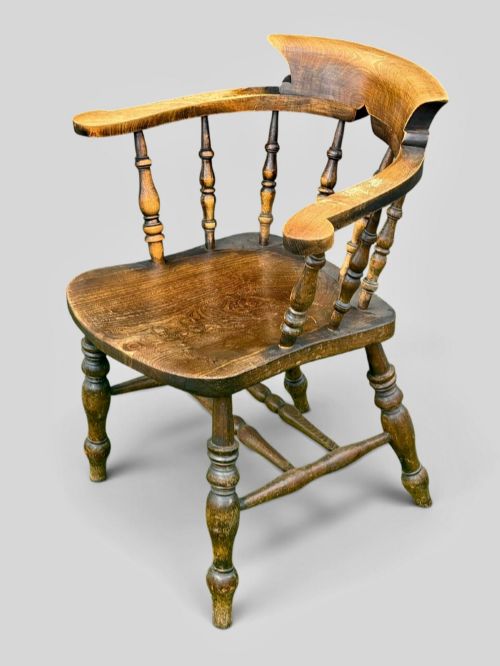
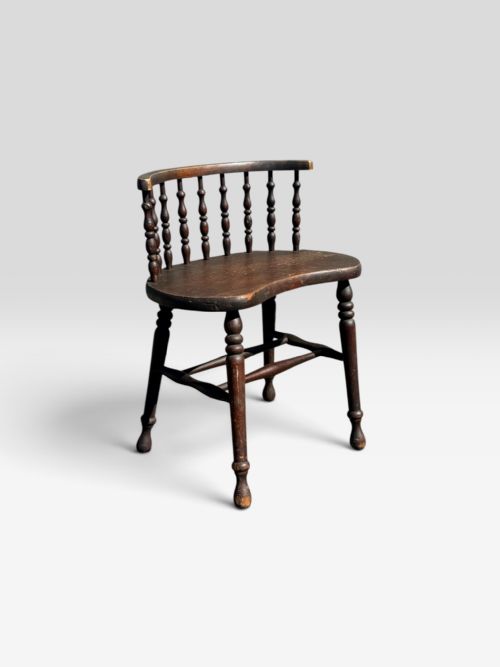
The form frequently bridges the gap between country Windsor seating and formal library furniture. Many examples take the shape of the lower-backed smokers bow, whilst others feature upholstered leather pads and swivel mechanisms tailored for office use.
Makers utilised a mix of regional timbers and finer cabinet woods, resulting in variations ranging from vernacular elm and ash combinations to polished mahogany and walnut library chairs.
Materials and Construction
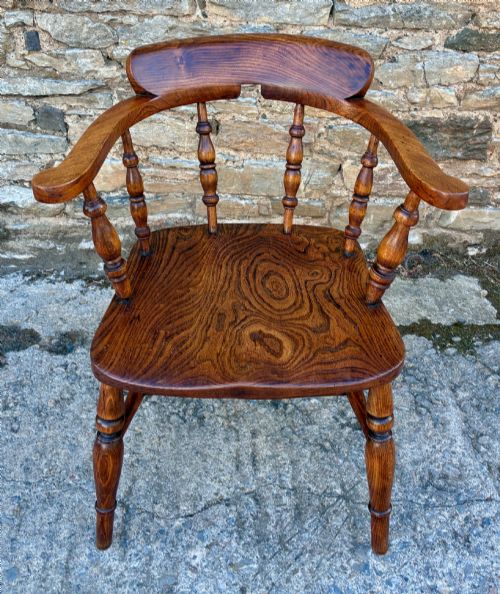
Makers constructed these chairs using a combination of durable hardwoods for the frames and turning, frequently pairing elm seats with ash or beech spindles and bentwood rails. Cabinetmakers also turned to mahogany, oak, and walnut for formal library and revolving office variations.
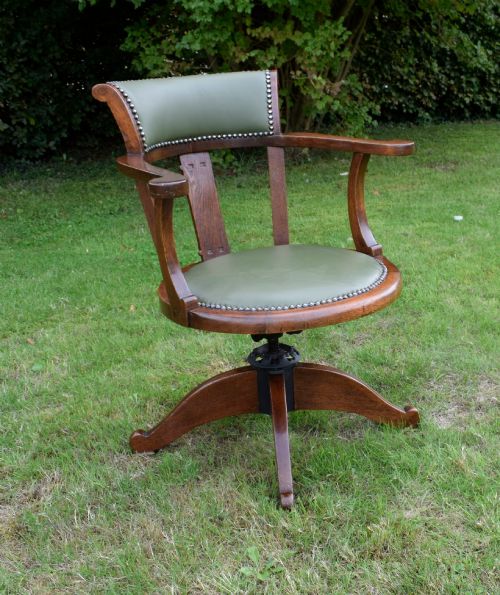
Joinery relies on traditional Windsor techniques such as wedged through-tenons and steam-bent hoops, supplemented later by cast iron and brass swivel mechanisms fixed to the underside for office utility.
Listings feature woods such as oak, elm, mahogany, ash, beech, walnut, birch, and yew across Victorian, Edwardian, and Regency periods.
Assessing Quality and Distinction
Quality rests upon the crispness of the turnings in the arm supports, the depth of colour in the timber, and the integrity of the bentwood hoop. Finer examples display generous proportions, carefully matched timber grains, and well-executed swivel actions that operate smoothly without excessive play.
Chairs featuring original leather upholstery with patinated tooling command greater interest than later replacements, whilst vernacular country models derive their appeal from the rich texture of the grain and honest signs of age.
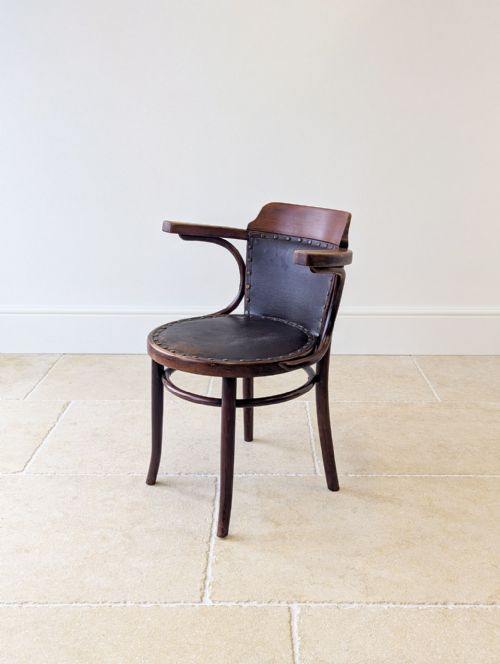
Thonet·Gillows
The Captains Desk Armchair Glossary
- Smokers Bow
- A low-backed Windsor armchair featuring a continuous curved arm and back rail, often associated with country pubs and domestic studies.
- Revolving Desk Chair
- An office armchair fitted with a central spindle and iron or brass mechanism allowing the seat to turn and sometimes adjust in height.
- Windsor Chair
- A chair built with a solid wooden seat into which the legs and back spindles are directly bored, creating a strong and stable frame.
- Gothic Revival
- A nineteenth-century design style incorporating pointed arches, trefoils, and medieval architectural motifs into furniture construction.
- Patina
- The deep, lustrous surface sheen developed on old wood and leather through decades of handling, exposure to light, and polishing.
Captains Desk Armchair: Frequently Asked Questions
What is a captains desk armchair?
A captains desk armchair is a sturdy seating option designed for offices and libraries, characterised by a rounded wooden backrest and often a swivel base. These chairs evolved from traditional country Windsor designs into practical furniture for the workspace.
They combine the comfort of a low-backed Windsor or smokers bow with the functional requirements of a desk chair, frequently incorporating leather pads and revolving mechanisms.
How do I date a captains desk armchair?
Dating these chairs involves examining the timber, the style of the turnings, and the mechanical hardware underneath the seat. Early nineteenth-century examples often feature vernacular country timbers like elm and ash, whilst later Victorian and Edwardian versions frequently incorporate mahogany, oak, and cast iron swivel mechanisms.
Construction methods also provide clues, as hand-turned spindles and wedged tenons give way to mass-produced components by the early twentieth century.
Were these chairs used only at desks?
While many examples served as office or library desk seats, their comfortable proportions made them versatile seating choices throughout the home. They frequently appeared in studies, parlours, and smoking rooms where a supportive yet compact armchair was required.
Their robust construction meant they could withstand daily use in both domestic and professional environments.
How should I care for the leather upholstery?
Maintaining vintage leather requires gentle cleaning with a soft, damp cloth followed by periodic treatment with a suitable leather balsam or wax. Avoiding direct sunlight and excessive heat prevents the hide from drying out and cracking over time.
Preserving the original surface helps maintain the character and historical integrity of the piece.