


Canvas Genre Oil Painting
Canvas genre oil painting brings domestic scenes and everyday moments from past centuries directly into contemporary interiors.
Canvas Genre Oil Painting
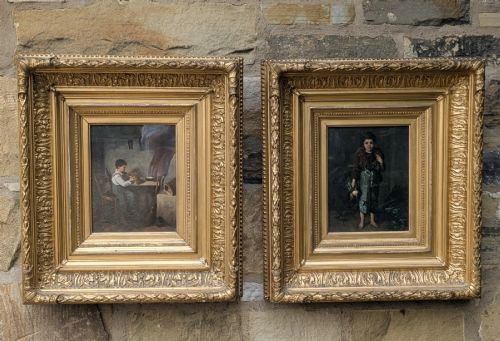
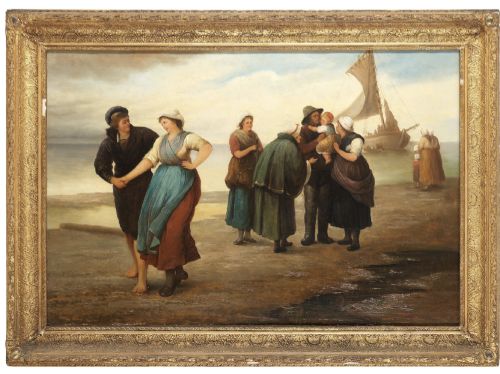
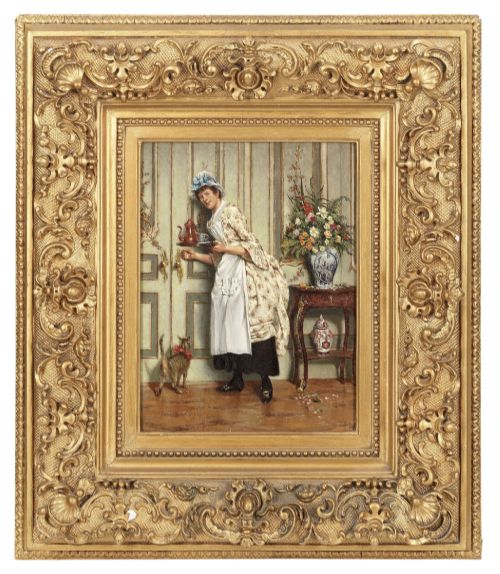
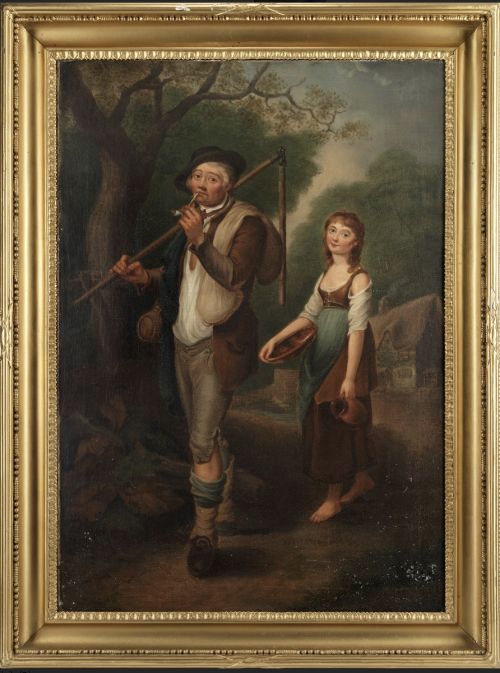
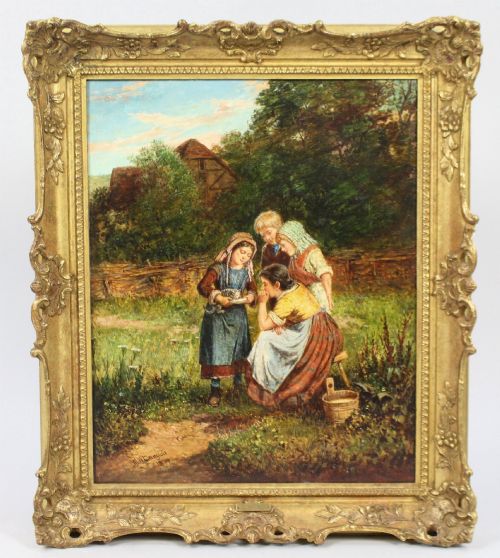
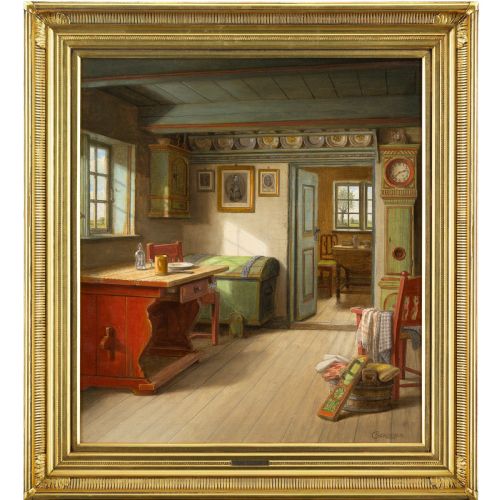
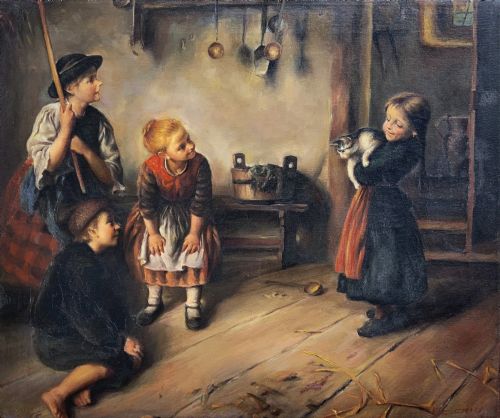
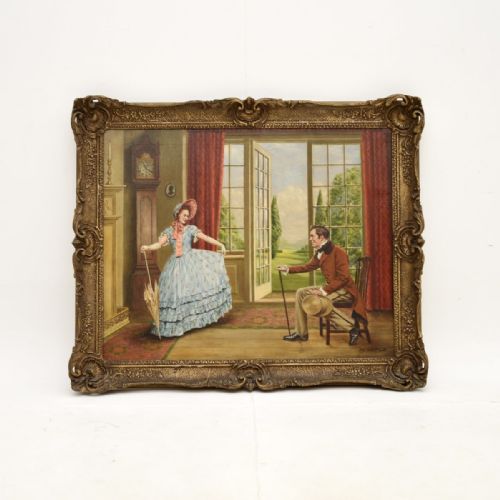
A canvas genre oil painting depicts scenes of everyday life, domestic interiors, and human narratives rather than formal portraits or sweeping landscapes. These works capture ordinary people engaged in daily routines, quiet moments, or social gatherings across various historical periods.
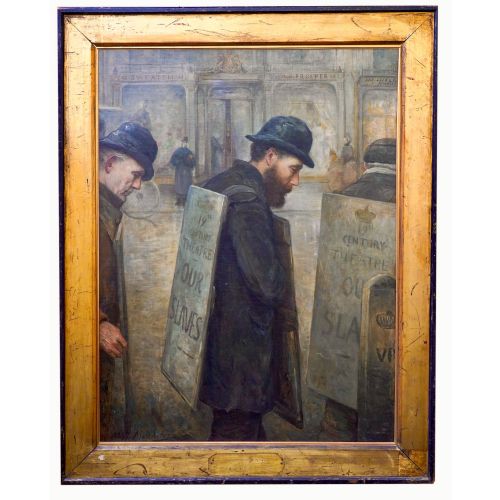
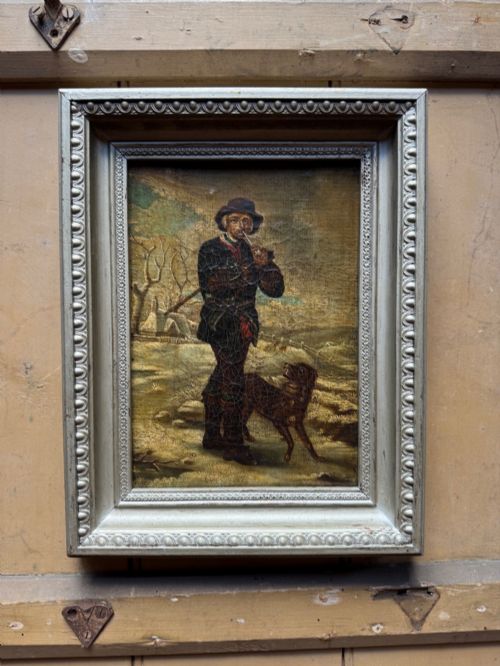
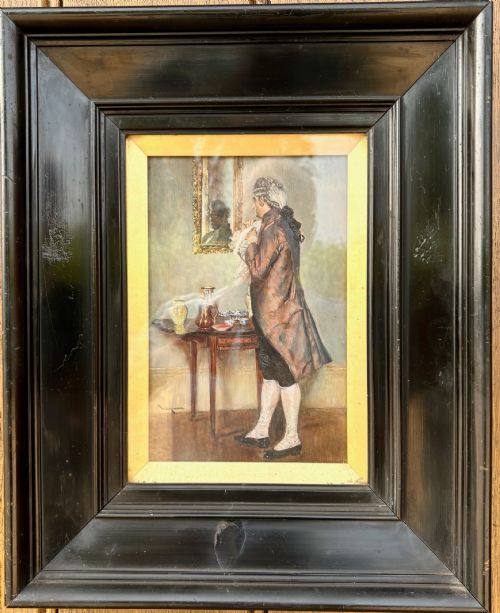
The pieces found here span multiple centuries, with a strong representation of nineteenth-century Victorian works alongside earlier Georgian and later early twentieth-century examples. Subjects frequently include children, domestic animals, tavern interiors, and country house scenes painted with narrative intent.
Originating from diverse European traditions including British, French, Dutch, and Italian schools, these artworks reflect the cultural tastes of their respective periods. Buyers encounter everything from intimate cottage scenes to monumental social history canvases executed with varying degrees of academic precision.
How They Were Made
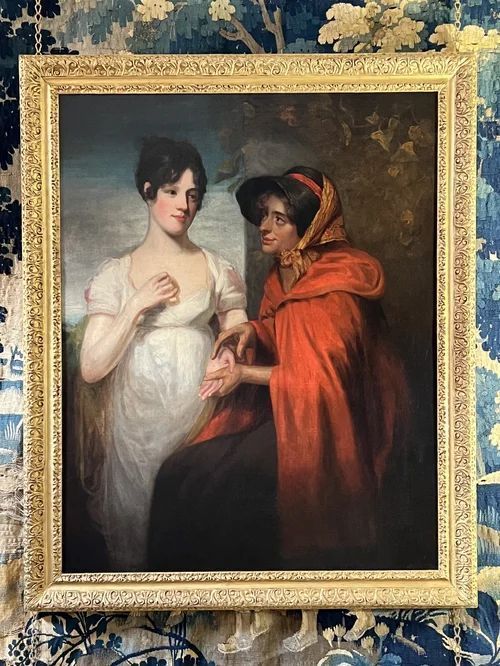
These works are created using oil paint applied to woven canvas supports, often stretched over wooden frames and occasionally housed within elaborate giltwood or gesso frames decorated with gold leaf. The combination of oil pigments allows for subtle blending, deep tonal variation, and fine detail in clothing and facial expressions.
Artists built their compositions through successive layers, starting with an underpainting before applying rich glazes and opaque highlights to create depth in interior settings and textiles. Frames were constructed from timber and moulded gesso, designed to complement the palette and period of the specific painting.
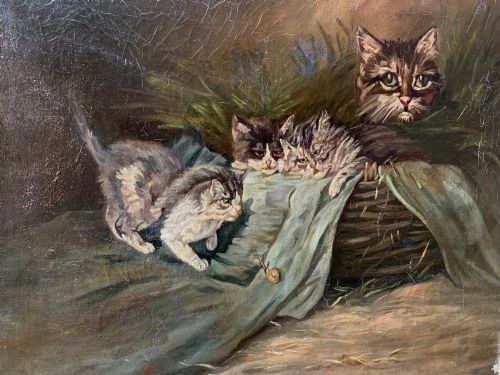
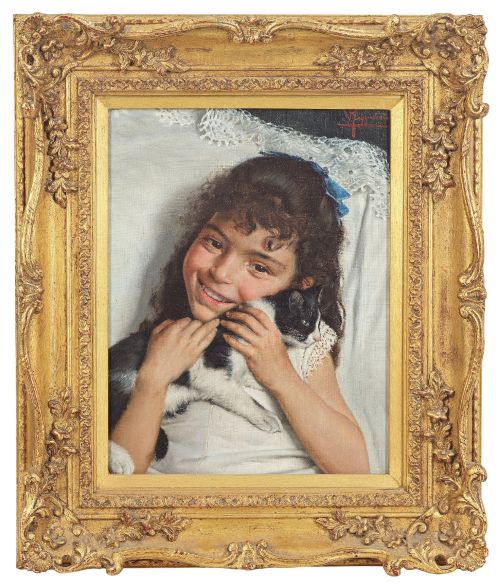
Cats and kittens appear with surprising frequency across these domestic scenes, supervising tea times and getting tangled in sewing baskets.
What Varies in Quality
Quality in these works rests upon the artist's ability to render human anatomy, facial expression, and narrative tension convincingly within a domestic or social setting. Superior examples display confident brushwork and harmonious lighting that draw the viewer into the narrative without feeling stiff or overly posed.
The handling of surrounding details, such as textiles, household objects, and interior architecture, further distinguishes accomplished works from routine studio output. Framing also plays a role, with original or period-appropriate giltwood surrounds contributing to the overall integrity of the piece.
Felix Stone Moscheles·Valentine T. Garland·Stephen Samuel Lewin·Vittorio Reggianini·Mark William Langlois·Alfred Lyndon Grace·Howard Helmick·Adelaïde Salles-Wagner·Max Kaltenmoser·George Augustus Holmes·James Hamilton·Joseph Farquharson·Bernard De Hoog·Valdemar Magaard·Renato Moretti·Alfred Arthur Brunel de Neuville·Jacob Akkersdijk·Delapoer Downing·Paul Ehrenberg
The Canvas Genre Oil Painting Glossary
- Canvas
- A heavy woven fabric, typically flax, hemp, or cotton, used as a surface for oil painting. It is stretched tightly over a wooden frame before the artist applies sizing and ground layers.
- Genre painting
- The pictorial representation of scenes from everyday life, typically involving ordinary people in domestic or social settings. These works contrast with historical, landscape, or portrait painting by focusing on common human experiences.
- Giltwood
- Wood that has been decorated with a thin layer of gold leaf or powder applied over a prepared surface. It is commonly found on antique picture frames from the Victorian and earlier periods.
- Gesso
- A white paint mixture consisting of a binder mixed with chalk, gypsum, or pigment, used to prepare wood or canvas surfaces. It forms a smooth base for oil painting and is moulded for decorative frame details.
- Oil paint
- A slow-drying paint made by combining pigment particles with a drying oil, most commonly linseed oil. This medium allows artists to work wet-in-wet and achieve remarkable depth and luminosity through glazing.
Canvas Genre Oil Painting: Frequently Asked Questions
What defines a genre painting?
A genre painting depicts everyday subjects and ordinary people engaged in domestic or social activities rather than grand historical or mythological events. These scenes offer a window into the daily lives, domestic interiors, and social customs of past eras.
Artists focused on relatable human moments, such as children playing, quiet indoor domesticity, or lively tavern gatherings, making these works distinct from formal portraiture.
How should I clean an old oil painting?
Antique oil paintings on canvas require careful handling and professional conservation rather than household cleaning methods. Surface dust can sometimes be gently removed with a very soft, dry brush by someone experienced in textile care, but moisture or solvents should be avoided entirely.
Professional conservators should address discoloured varnish, accumulated grime, or damage to the canvas support to prevent permanent harm to the pigment layers.
Are original frames important?
Original or period-appropriate frames significantly enhance the historical context and visual appeal of nineteenth-century and earlier artworks. A well-matched giltwood or gesso frame complements the painting's palette and reflects the aesthetic standards of the period in which it was created.
While paintings are sometimes separated from their original surrounds over time, finding a piece with a sympathetic period frame is preferred by collectors.
How do I identify the period of a canvas painting?
Period identification relies on examining the stretcher frame, canvas weave, artist signature, and stylistic clues within the clothing and interior decoration depicted. Nineteenth-century works often feature specific academic or realist conventions that separate them from later twentieth-century interpretations.
Signatures, exhibition labels on the reverse, and historical records regarding the artist provide definitive dates and geographical origins for the work.