28,368  PAGES BROWSED TODAY PAGES TODAY 227 ANTIQUES UPLOADED TODAYNEW ARRIVALS
227 ITEMS ADDED TODAY
Sort Order
Items Per Page
Browse Categories
Sort order
Items per page
ID #SA1233581
FOR SALE
£16,000
Email Buy
Save
John Opie R.A ( 1767-1807) - 'The Fortune Teller' Oil on Canvas Genre Painting
Period Portraits
for sale €18,720     $20,320
£16,000
Period Portraits

Period Portraits

Sellingantiques Verified Since Jan 2017
View Dealers Stock Page
  • About Us
    Specialist dealer in portraits from the 17th century to the 20th century. Our stock includes quality oil paintings, drawings, and mezzotints
Id #SA1233581
PDF SHARE
SAVE

John Opie R.A ( 1767-1807) - 'The Fortune Teller' Oil on Canvas Genre Painting

18th century
For Sale by Period Portraits
Description

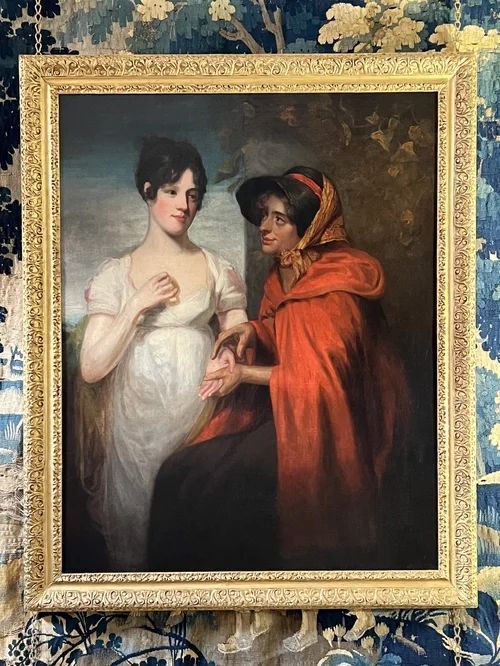
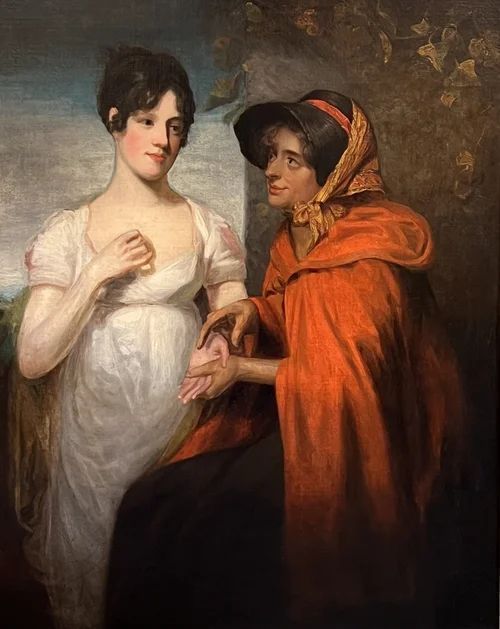
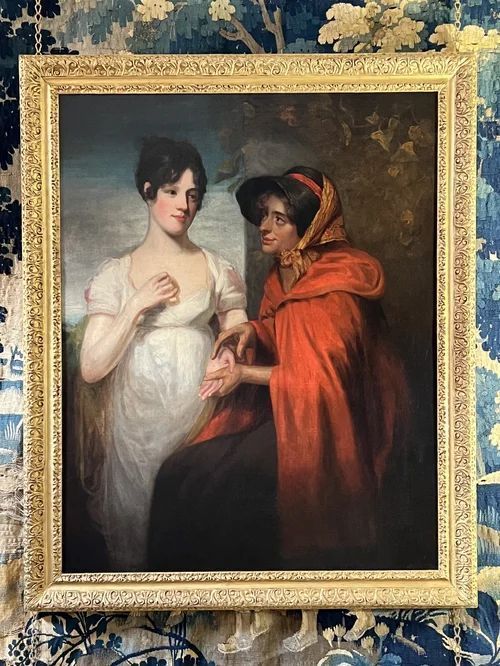
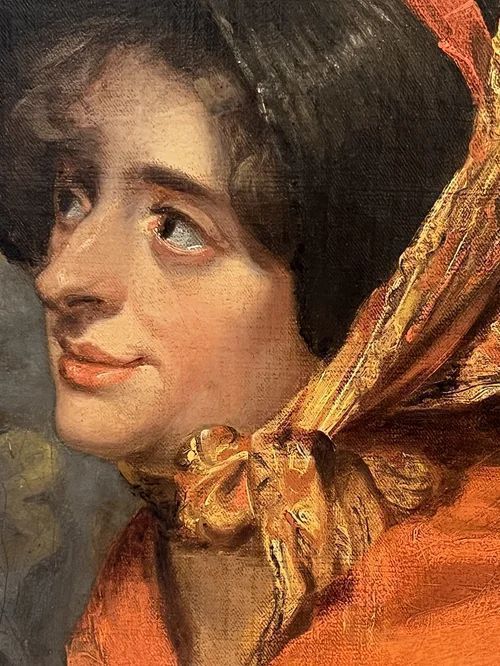
The Fortune Teller a fine late 18th century English oil on canvas subject or ‘fancy picture’ attributed to John Opie R.A (1767-1807)

John Opie (1767-1807) Opie was born the son of a carpenter in a tin-mining district of Cornwall before being discovered as a child prodigy. A self taught artist his natural gifts in drawing were discovered by Dr John Walcot (1738-1819), whose protection and patronage helped to nurture the boy’s gifts before he was brought to London in 1781 where his works caused great sensation. He quickly received the patronage of the Royal Family alongside leading figures of the nobility and cultural elites. Opie was elected an Association of the Royal Academy in 1786 and was made an RA the following year.. He became professor of painting at the Royal Academy in 1805, his lectures being posthumously published in 1809 (prefaced with a memoir by his wife, the novelist and poet Amelia Opie). Although celebrated as a portrait artist Opie was also known for his historical and genre scenes, and the painting we offer here is a case in point. Opie is buried at St. Paul’s near Joshua Reynolds, one of the Academy’s founders.
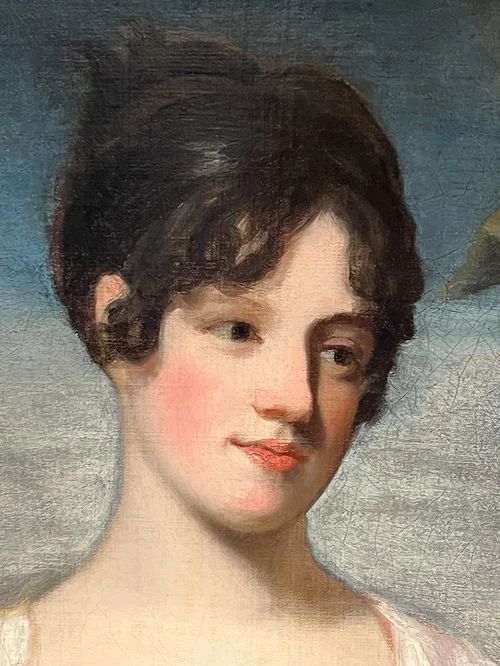
In Britain, subject pictures or fancy pictures referred to the imagination, or ‘fancy’ and amongst them there are several notable representations of women having their palms read. These paintings often emphasise the material wealth and refinement of an innocent young beauty against the spiritual wealth, sensuality and comparative poverty of the (often Romani) fortune teller.
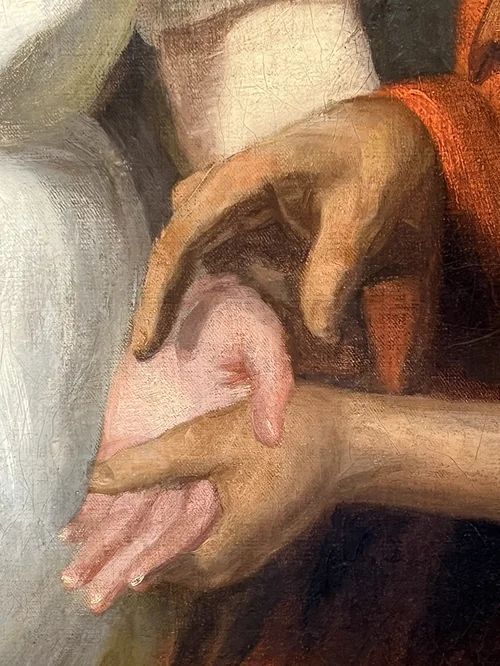
The fortune tellers dark hair and exotic dress suggest that she is Romani. The Romani (gypsies) had migrated across Europe from their probable origins in India, arriving in northern Europe by about 1420.Their proud independence, nomadic lifestyle, and unusual costumes and customs prompted curiosity and ultimately, a degree of fear and resentment among many settled Europeans. From the fifteenth century onwards, European artists have explored the theme of an often gullible young person having their palm read by a fortune teller, perhaps to know the future of a love affair.
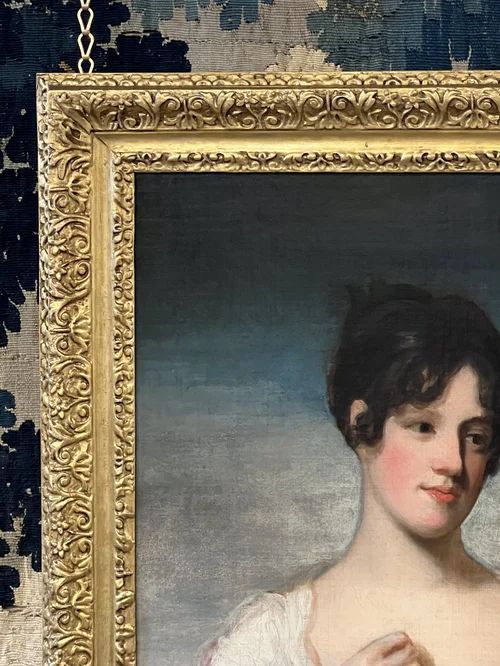
According to custom, gypsies could not enter a home to tell a person’s fortune, so often, readings take place in an outdoor setting such as the one we see here. The theme of the Fortune Teller—hinting at exoticism, sensuality, and a venture into the unknown—offers Opie a perfect opportunity to highlight his skills with drapery and use of chiaroscoro. In fact it was Opie’s abilities in chiaroscuro which is said to have won the praise of Sir Joshua Reynolds, who reputedly described him as ‘like Caravaggio and Velazquez in one.’ This work is a fine example of a rustic fancy picture by the artist with rich Rembrandtesque lighting.
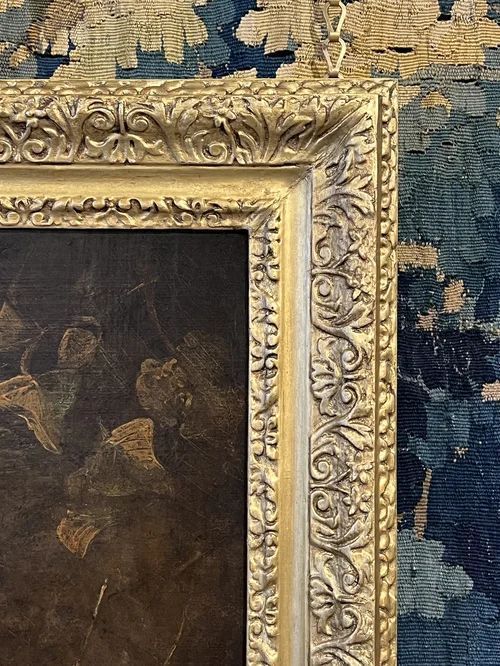
This striking work is available to purchase in its original carved and gilded frame and is an excellent state of conservation.

Provenance: Sothebys Sale March 23rd 1977. The collection of George Verdaguer Gomez Esq until 2024.
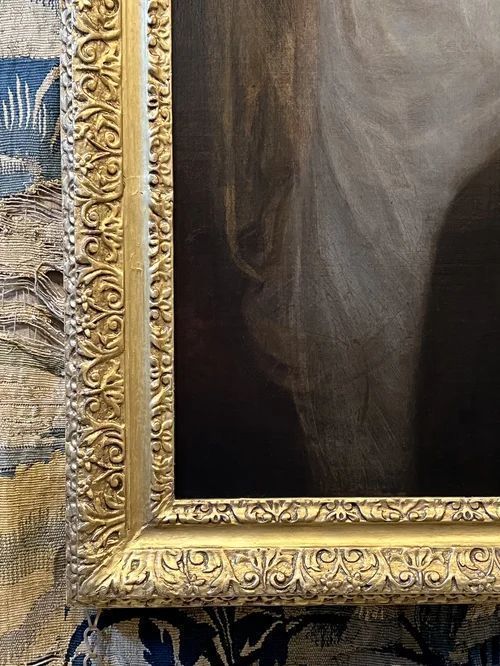
Higher resolution images on request.

Worldwide shipping available.

Canvas: 256” x 45.5" / 127cm x 102cm.

Framed: 50" x 40" / 142cm x 116cm.

Physical Dimensions
Height
142cm (55.91")
Width
102cm (40.16")
Depth
4cm (1.57")
Declaration

Period Portraits has dated this Georgian Genre Oil Painting to the 18th Century.

Reference Numbers
Sellingantiques Reference
SA1233581
Description
The Fortune Teller a fine late 18th century English oil on canvas subject or ‘fancy picture’ attributed to John Opie R.A (1767-1807)

John Opie (1767-1807) Opie was born the son of a carpenter in a tin-mining district of Cornwall before being discovered as a child prodigy. A self taught artist his natural gifts in drawing were discovered by Dr John Walcot (1738-1819), whose protection and patronage helped to nurture the boy’s gifts before he was brought to London in 1781 where his works caused great sensation.

He quickly received the patronage of the Royal Family alongside leading figures of the nobility and cultural elites.
Period Portraits

Opie was elected an Association of the Royal Academy in 1786 and was made an RA the following year.. He became professor of painting at the Royal Academy in 1805, his lectures being posthumously published in 1809 (prefaced with a memoir by his wife, the novelist and poet Amelia Opie). Although celebrated as a portrait artist Opie was also known for his historical and genre scenes, and the painting we offer here is a case in point. Opie is buried at St. Paul’s near Joshua Reynolds, one of the Academy’s founders.

fig 1. An 18th-century oil painting on canvas depicting a young woman in a white gown having her palm read by a figure in a red cloak, displayed within an ornate gilded frame.
fig 1. John Opie R.A ( 1767-1807) - 'The Fortune Teller' Oil on Canvas Genre Painting

In Britain, subject pictures or fancy pictures referred to the imagination, or ‘fancy’ and amongst them there are several notable representations of women having their palms read. These paintings often emphasise the material wealth and refinement of an innocent young beauty against the spiritual wealth, sensuality and comparative poverty of the (often Romani) fortune teller.

fig 2. An 18th-century oil painting on canvas depicting a young woman in a white gown having her palm read by a figure in a red cloak, displayed within an ornate gilded frame.
fig 2. John Opie R.A ( 1767-1807) - 'The Fortune Teller' Oil on Canvas Genre Painting

The fortune tellers dark hair and exotic dress suggest that she is Romani. The Romani (gypsies) had migrated across Europe from their probable origins in India, arriving in northern Europe by about 1420.Their proud independence, nomadic lifestyle, and unusual costumes and customs prompted curiosity and ultimately, a degree of fear and resentment among many settled Europeans. From the fifteenth century onwards, European artists have explored the theme of an often gullible young person having their palm read by a fortune teller, perhaps to know the future of a love affair.

fig 3. An 18th-century oil painting on canvas depicting a young woman in a white gown having her palm read by a figure in a red cloak, displayed within an ornate gilded frame.
fig 3. John Opie R.A ( 1767-1807) - 'The Fortune Teller' Oil on Canvas Genre Painting

According to custom, gypsies could not enter a home to tell a person’s fortune, so often, readings take place in an outdoor setting such as the one we see here. The theme of the Fortune Teller—hinting at exoticism, sensuality, and a venture into the unknown—offers Opie a perfect opportunity to highlight his skills with drapery and use of chiaroscoro. In fact it was Opie’s abilities in chiaroscuro which is said to have won the praise of Sir Joshua Reynolds, who reputedly described him as ‘like Caravaggio and Velazquez in one.’ This work is a fine example of a rustic fancy picture by the artist with rich Rembrandtesque lighting.

fig 4. An 18th-century oil painting on canvas depicting a young woman in a white gown having her palm read by a figure in a red cloak, displayed within an ornate gilded frame.
fig 4. John Opie R.A ( 1767-1807) - 'The Fortune Teller' Oil on Canvas Genre Painting

This striking work is available to purchase in its original carved and gilded frame and is an excellent state of conservation.

Provenance: Sothebys Sale March 23rd 1977. The collection of George Verdaguer Gomez Esq until 2024.

fig 5. An 18th-century oil painting on canvas depicting a young woman in a white gown having her palm read by a figure in a red cloak, displayed within an ornate gilded frame.
fig 5. John Opie R.A ( 1767-1807) - 'The Fortune Teller' Oil on Canvas Genre Painting

Higher resolution images on request.

Worldwide shipping available.

Canvas: 256” x 45.5" / 127cm x 102cm.

Framed: 50" x 40" / 142cm x 116cm.

Height
142cm (55.91")
Width
102cm (40.16")
Depth
4cm (1.57")
Date of Manufacture

Period Portraits has dated this Georgian Genre Oil Painting to the 18th Century.

Reference Numbers
Sellingantiques Ref
SA1233581
Period Portraits
Period Portraits
Sellingantiques verified Since Jan 2017

Specialist dealer in portraits from the 17th century to the 20th century. Our stock includes quality oil paintings, drawings, and mezzotints

Dealer Profile

You can view the stock and full dealer information on the Period Portraits Profile Page
PDF SHARE
SAVE
An 18th-century oil painting on canvas depicting a young woman in a white gown having her palm read by a figure in a red cloak, displayed within an ornate gilded frame.
1 / 9
Archive I An 18th-century oil painting on canvas depicting a young woman in a white gown having her palm read by a figure in a red cloak, displayed within an ornate gilded frame.

John Opie R.A ( 1767-1807) - 'The Fortune Teller' Oil on Canvas Genre Painting
Archive II An 18th-century oil painting on canvas depicting a young woman in a white gown having her palm read by a figure in a red cloak, displayed within an ornate gilded frame. View II
Archive III An 18th-century oil painting on canvas depicting a young woman in a white gown having her palm read by a figure in a red cloak, displayed within an ornate gilded frame. View III
Archive IV An 18th-century oil painting on canvas depicting a young woman in a white gown having her palm read by a figure in a red cloak, displayed within an ornate gilded frame. View IV
Archive V An 18th-century oil painting on canvas depicting a young woman in a white gown having her palm read by a figure in a red cloak, displayed within an ornate gilded frame. View V
Archive VI An 18th-century oil painting on canvas depicting a young woman in a white gown having her palm read by a figure in a red cloak, displayed within an ornate gilded frame. View VI
Archive VII An 18th-century oil painting on canvas depicting a young woman in a white gown having her palm read by a figure in a red cloak, displayed within an ornate gilded frame. View VII
Archive VIII An 18th-century oil painting on canvas depicting a young woman in a white gown having her palm read by a figure in a red cloak, displayed within an ornate gilded frame. View VIII
Archive IX An 18th-century oil painting on canvas depicting a young woman in a white gown having her palm read by a figure in a red cloak, displayed within an ornate gilded frame. View IX
Enlarged Archival View
Telephone 07889 859729
Location
North Yorkshire
United Kingdom
Verified Since Jan 2017
Items For Sale 47
Items Sold 61
Period Portraits
Period Portraits
Verified Since Jan 2017
View Dealer Info
Location: North Yorkshire, United Kingdom
Verified
Jan 2017
For Sale
47
Sold
61
An 18th-century oil painting on canvas depicting a young woman in a white gown having her palm read by a figure in a red cloak, displayed within an ornate gilded frame.
JOHN OPIE R.A ( 1767-1807) - 'THE FORTUNE TELLER' OIL ON CANVAS GENRE PAINTING
Ref: SA1233581
An 18th-century oil painting on canvas depicting a young woman in a white gown having her palm read by a figure in a red cloak, displayed within an ornate gilded frame.
Detail View 1
Detail View 2
Detail View 3
Detail View 4
Detail View 5
Detail View 6
Detail View 7
Detail View 8
Archival Detail
Every single antique dealer on our platform is individually approved by our internal team. We verify their professional trade history, ethical standards, and photographic quality to ensure a secure, high-standard buying environment. Upon joining, every dealer agrees to a strict 9-point code of conduct. While issues can occasionally arise, our dealers typically resolve them swiftly and directly with the buyer. In fact, since our founding in 2002, Sellingantiques has only had to step in to help resolve an issue on roughly five occasions—a true testament to the quality of our dealers and their dedication to your happiness.
Our dealers are highly experienced in packing and shipping fragile, high-value antiques. Because you are in direct contact with the dealer, you will be able to easily go through all available shipping and insurance options together to ensure your item arrives safely.
Antiques are the ultimate green purchase. By choosing historical pieces over newly manufactured goods, you completely eliminate the carbon footprint of modern mass production while preserving exceptional, timeless craftsmanship.

Georgian and Regency genre paintings are late 18th to early 19th-century British narrative artworks that depict scenes of everyday life, folklore, and social interactions. Often executed with chiaroscuro lighting and classical proportions, these compositions captured human emotion, fashion, and cultural practices of the era.

Paintings from this era were created using natural pigment powders ground in linseed or walnut oil, applied directly onto hand-stretched linen or cotton canvas. Frames were typically crafted from carved wood or plaster mouldings and coated with water gilding using genuine gold leaf.

Authentic period canvases display natural age-related craquelure patterns, period-correct wooden stretcher bars, and evidence of historical relining or oxidisation on the canvas reverse. Pigment analysis and examination under ultraviolet light further verify original brushwork and historical restoration.

A large framed oil painting serves as an ideal anchor above a fireplace mantelpiece, sideboard, or within a gallery wall setup. Juxtaposition with clean-lined modern furniture highlights the historic detailing and rich tones of the original gilding and canvas.

Display the painting away from direct sunlight, dampness, and fluctuating heat sources like direct fires or radiators. Dust the gilded frame gently with a soft dry brush, and rely strictly on professional fine art restorers for canvas cleaning or varnish removal.
items
Add keywords to the filter
Price
£100
£250000
Era
Movements
Material
Origin
Stock Location
Freshness
Online Payments
Categories