

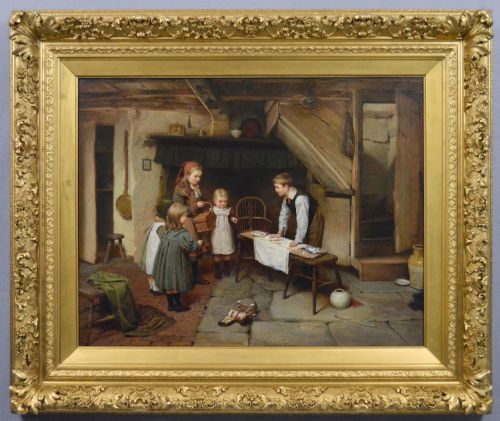

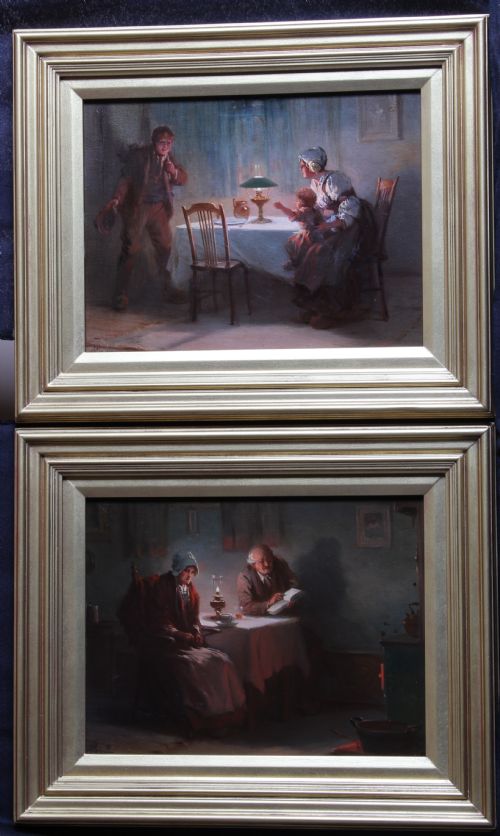


Domestic Scene Artwork
Domestic scene artwork captures intimate moments of daily life within period interiors, offering a window into historical households through traditional painting and watercolour techniques.
Domestic Scene Artwork
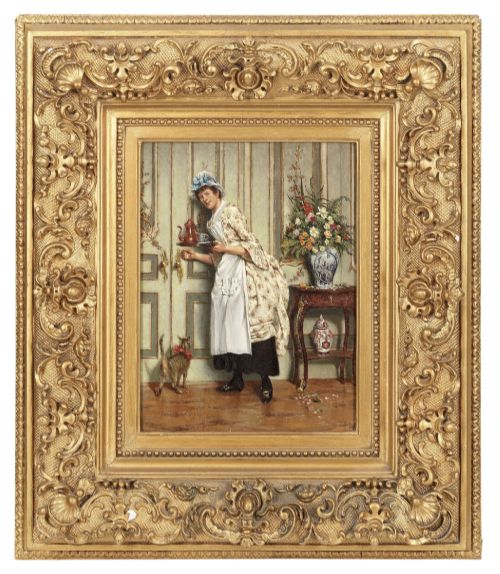
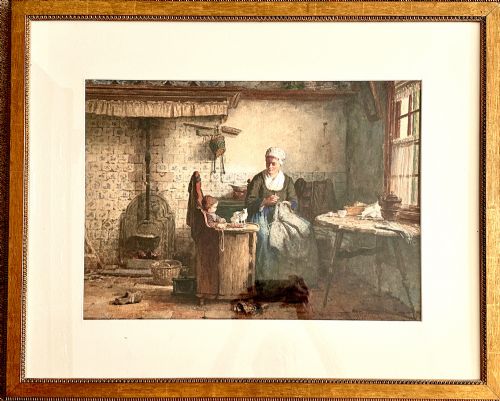
Domestic scene artwork depicts everyday indoor life, often focusing on cottage interiors, family interactions, and quiet household moments such as tea time or fireside rests. Buyers exploring this category encounter numerous Victorian and nineteenth century genre paintings alongside early twentieth century watercolours and oils.
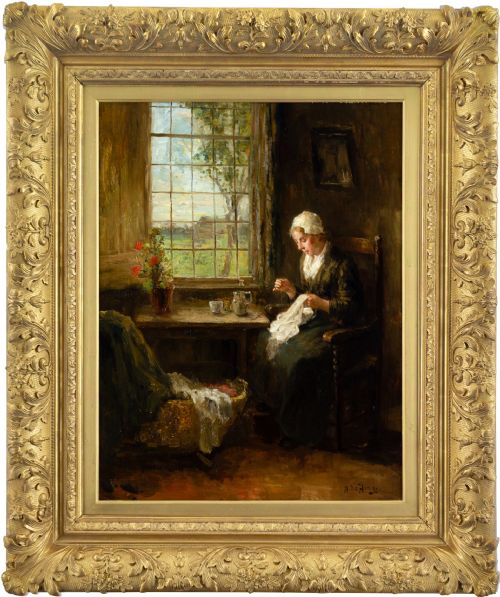
The subjects frequently involve mothers and children, spinning maids, or gentlemen disturbed in daily rituals, rendered with an emphasis on narrative charm and domestic realism. Most examples originate from British, French, and Scandinavian traditions, reflecting regional domestic architecture and social customs.
The forms range from large framed canvases to delicate watercolours on paper and panels, representing both professional studio output and intimate sketches. These pieces serve as historical records of domestic routines, dress, and interior furnishings from past centuries.
Materials and methods
Painters relied primarily on oil paint applied to canvas, wood panels, or copper plates, building rich surface textures and deep tonal gradations. Watercolours on paper provide a lighter, more translucent alternative, capturing subtle shifts of light within cottage interiors.
Many works incorporate traditional gesso and gold leaf framing, which complements the painted surface and protects the edges of the canvas or panel. The handling combines careful academic draughtsmanship with loose, impressionistic brushwork to render fabrics, furnishings, and interior daylight.
Listings span the nineteenth century through the mid twentieth century, featuring oil paints, watercolours, and gold leaf frames.
Distinctions in quality
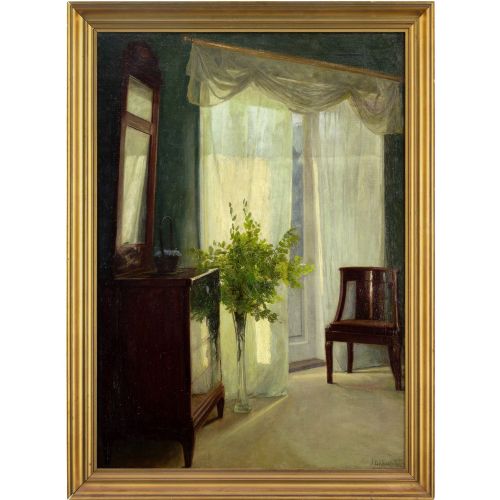
The sophistication of narrative composition and the psychological depth of the figures separate standard decorative works from master examples. Finer pieces demonstrate superior control of natural light filtering through doorways or windows, creating convincing atmosphere and spatial depth within confined rooms.
The precision in rendering textures - such as polished wood furniture, coarse homespun wool, and layered garments - signals the hand of a more accomplished artist. Additionally, the handling of background details and facial expressions determines whether a domestic interior feels truly observed or merely formulaic.
Stephen Samuel Lewin·John Lübschitz·Hendrik Valkenberg·Bernard De Hoog·James Hayllar·Harry Brooker·Alexander Rosell·James Kyd·George Smith·William Henry Knight·Théophile Emmanuel Duverger·Henry Spernon Tozer·Rolinda Sharples·Pauline Delacroix Garnier·Alfred Provis·Henry Silkstone Hopwood·Jonathan Pratt·Pierre-Louis Bouchard·Charles Lewis
The Domestic Scene Artwork Glossary
- Genre painting
- A style of artwork depicting scenes from everyday life, typically involving ordinary people engaged in domestic activities rather than grand historical or mythological subjects.
- Oil on panel
- A technique where artists apply oil paint directly to a prepared wooden board rather than woven canvas, offering a rigid and stable support.
- Giltwood
- Wood that has been carved and coated with a thin layer of gold leaf or gold paint, frequently used for traditional picture framing.
- Watercolour
- A paint consisting of pigment suspended in a water-soluble binder, traditionally applied to paper to achieve translucent colour washes.
Domestic Scene Artwork: Frequently Asked Questions
What defines a domestic scene painting?
These artworks portray ordinary people engaged in indoor household activities, such as reading, tea preparation, or fireside relaxation.
They offer detailed glimpses into historical domestic environments, focusing on human interaction within modest or affluent homes.
How were these watercolours and oils framed?
Period works typically feature wooden frames enriched with gesso mouldings and gold leaf finishes to complement the richness of the painted surface.
Original frames often provide valuable clues regarding the age and exhibition history of the piece.
Where were most of these artists active?
The creators of these works operated across British, French, Dutch, and Scandinavian artistic centres during the nineteenth and early twentieth centuries.
Their regional backgrounds influenced the architectural details, clothing styles, and interior furnishings depicted in the compositions.
How do I care for antique oil paintings?
Keep the paintings away from direct sunlight and fluctuating humidity to protect the canvas, wood panel, and oil pigments from cracking.
Dust the surface gently with a soft, dry brush and avoid using liquid cleaners on the delicate paint layers.