





Dutch Style Interior Painting
A dutch style interior painting brings domestic life and tavern scenes from earlier centuries straight onto the wall.
Dutch Style Interior Painting
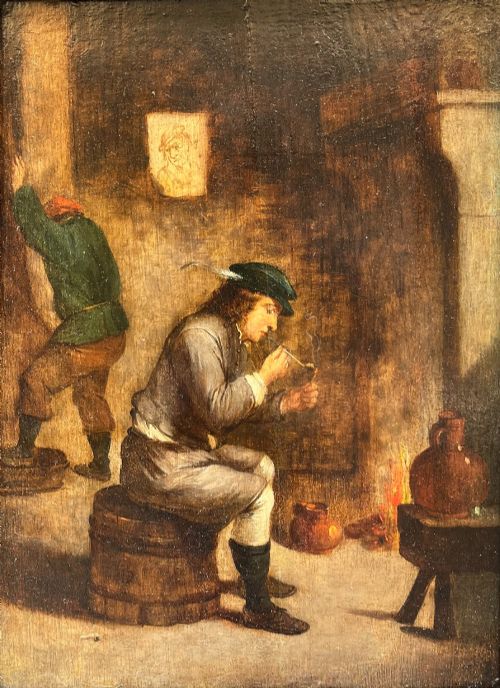
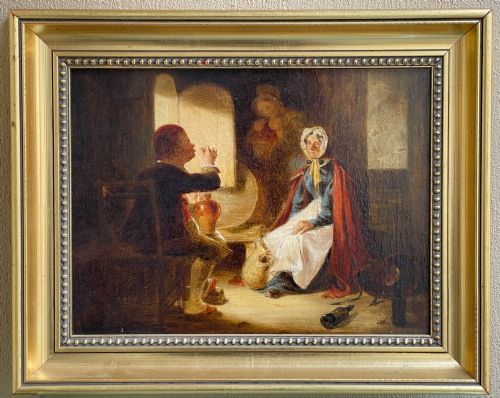
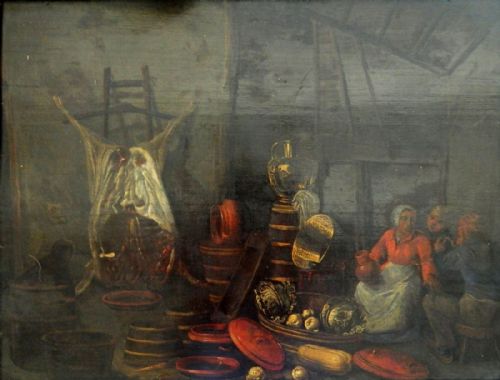
A dutch style interior painting captures domestic scenes, taverns, and kitchens that draw on the traditions of the Dutch Golden Age. These works depict figures engaged in everyday tasks, smoking, or merrymaking within enclosed spaces.
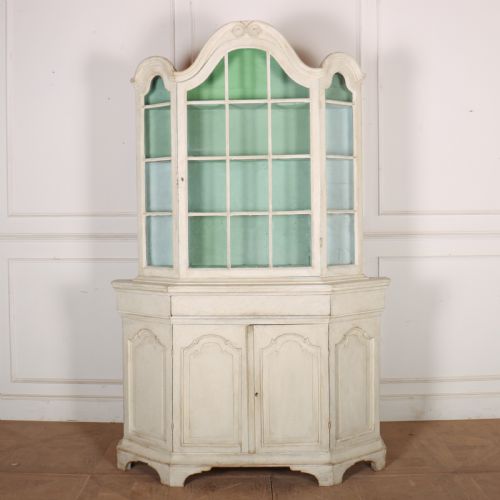
Most examples found here date from the nineteenth century, often produced in the manner of earlier masters or as later interpretations of seventeenth-century genre painting. Alongside canvases and panels, the selection also includes related furnishings like painted vitrines.
The subjects range from solitary spinners and hunters to lively tavern groups gathered around the hearth. Each piece reflects a lasting fascination with the realism and narrative depth established by historic Flemish and Dutch schools.
Materials and Technique
Artists painted primarily with oil paint on supports of canvas, wood board, copper, tin, or panel. These diverse grounds allowed for both smooth, detailed brushwork and richly textured surfaces.
Many of the nineteenth-century works and later copies utilise traditional techniques to emulate golden age paintings, framed in gesso and giltwood to complete the historic presentation.
Assessing Quality
Quality rests on the precision of the brushwork and the handling of light within the interior space. Superior works achieve a convincing depth and atmosphere that bring the figures and their surroundings to life.
The vitality of the composition and the expressiveness of the faces distinguish finer genre scenes from simpler decorative copies. Original nineteenth-century interpretations often display a confident handling of pigment that matches the ambition of their seventeenth-century predecessors.
David Teniers·Quirijn Van Brekelenkamp·Ludolf de Jongh·Reinier de la Haye·Jan Steen
The Dutch Style Interior Painting Glossary
- Genre painting
- The depiction of aspects of everyday life by depicting ordinary people engaged in common activities. These scenes often take place in domestic interiors or taverns.
- Oil on panel
- A painting executed on a flat piece of wood rather than canvas. Wooden panels provide a rigid and smooth support favoured by many early artists.
- Giltwood
- Wood that has been treated and covered with a thin layer of gold leaf. This material is commonly found on traditional picture frames.
- Old master
- An artist of skill who worked in Europe before about eighteen hundred. The term also refers to a painting by such an artist.
- Gesso
- A paint mixture consisting of a binder mixed with chalk, gypsum, or pigment. It serves as a prepared surface for painting or gilding.
Dutch Style Interior Painting: Frequently Asked Questions
What is a dutch style interior painting?
A dutch style interior painting is an artwork depicting domestic life, kitchens, or taverns, inspired by the seventeenth-century Dutch Golden Age.
These pieces often show figures in everyday moments and may date from the nineteenth century or later.
How do I identify the period of the painting?
Dating relies on examining the support material, framing, and pigment style. Nineteenth-century works often interpret earlier subjects using contemporary canvas or board.
Looking closely at the style of the gesso and giltwood frame can also offer clues regarding the age of the piece.
Where were these paintings displayed historically?
Such artworks were traditionally created to adorn the homes of merchants and burghers who favoured realistic depictions of daily life.
They added warmth and narrative interest to domestic interiors and public spaces alike.
Are all these paintings from the seventeenth century?
No, many are nineteenth-century interpretations or works created in the manner of earlier masters. The selection spans several periods from the seventeenth century through to nineteen twenty.
Each piece reflects the enduring popularity of Dutch genre painting long after the golden age.