

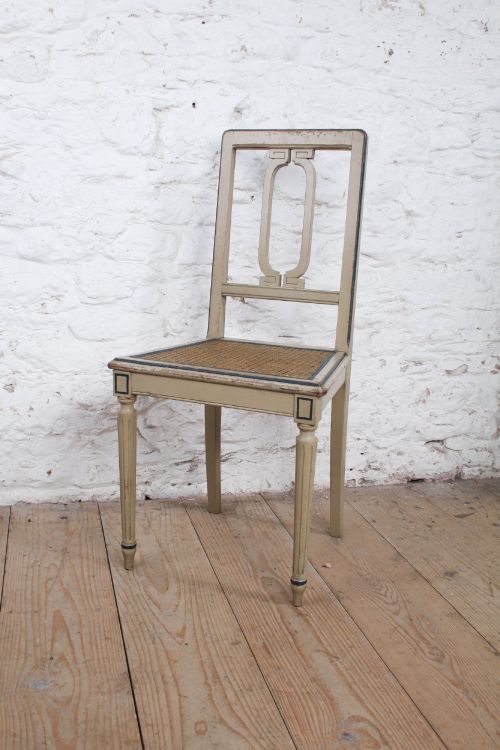
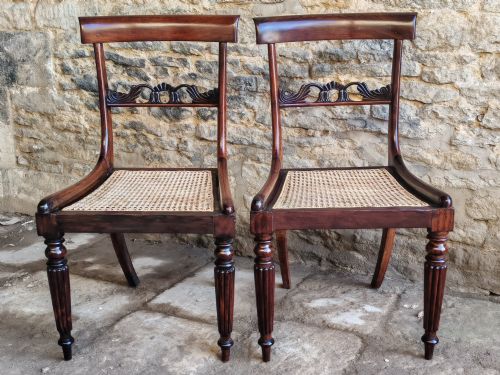
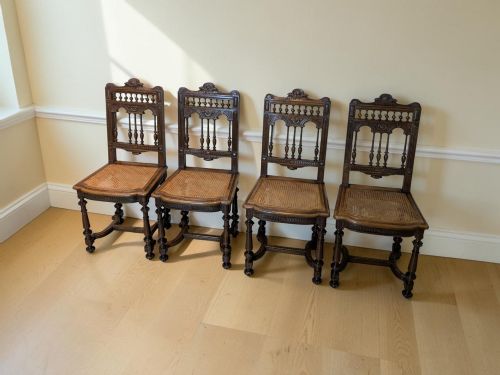
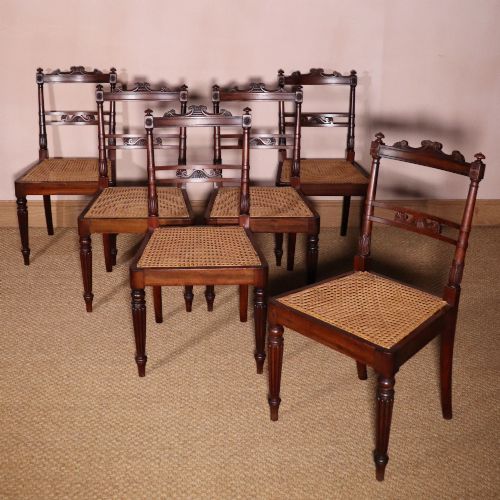
Caned Seat Dining Chairs
Caned seat dining chairs bring lightness to a room through woven cane panels set into wooden frames.
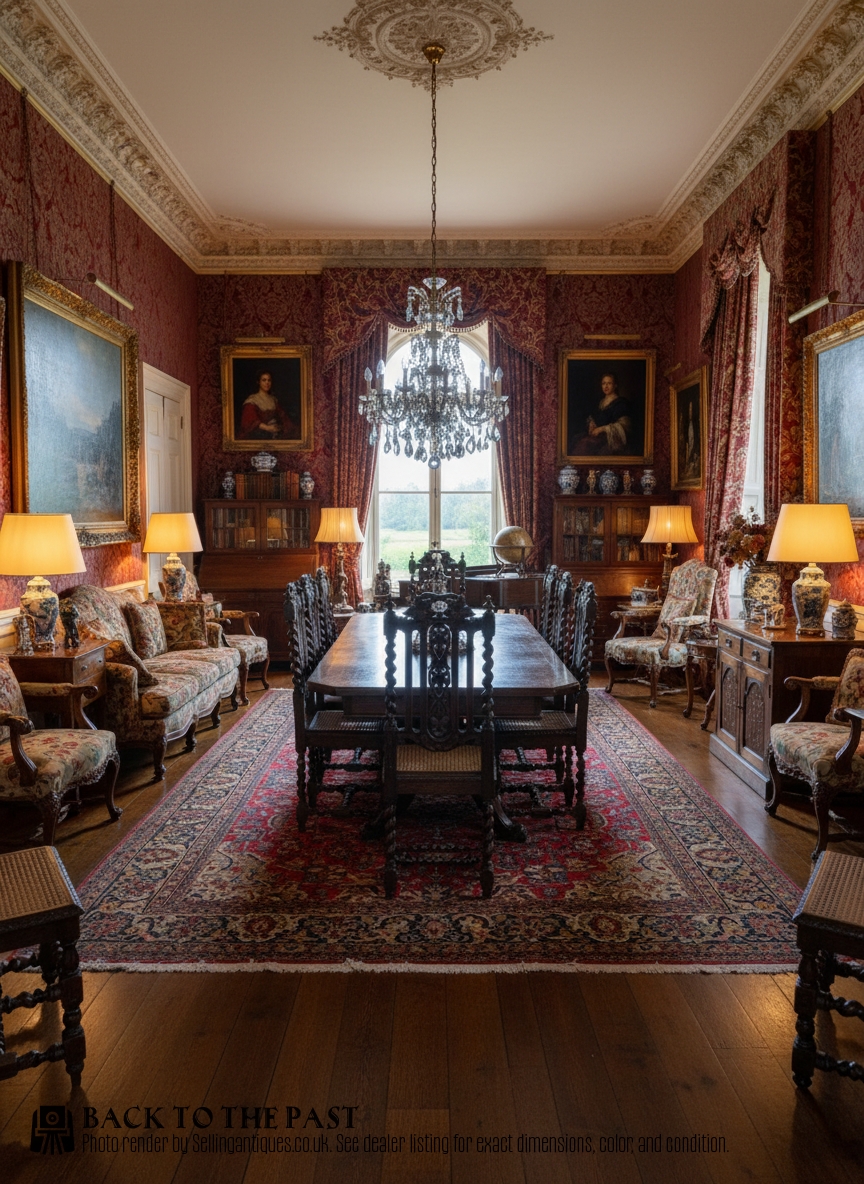
Caned Seat Dining Chairs
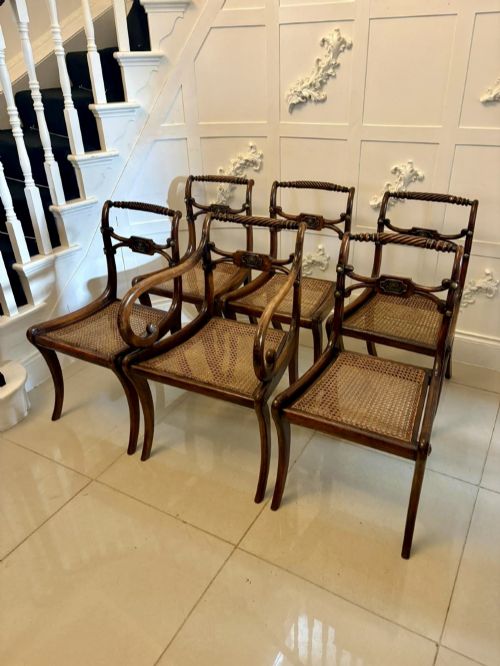
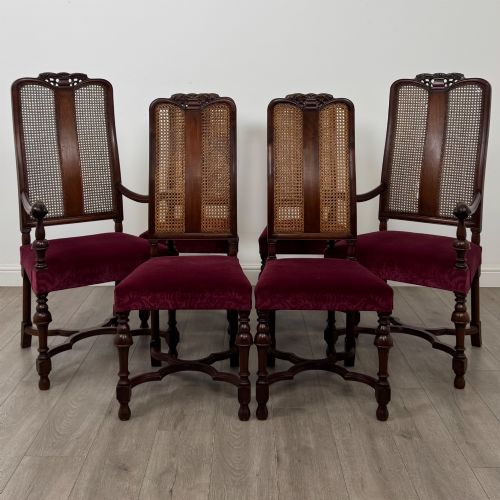
When you search for caned seat dining chairs, you encounter seating designed for the dining table across several centuries of British and continental cabinetmaking. The pieces span Georgian, Regency, and Victorian periods, alongside later revival styles from the early twentieth century.
Sets frequently appear alongside pairs and single armchairs, offering options from compact side chairs to elbow chairs and carvers. The selection includes regional variations such as Anglo-Indian ebony and teak pieces, alongside formal mahogany and rosewood dining sets.
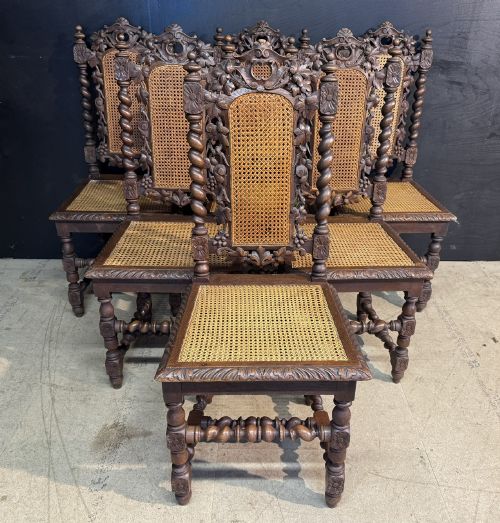
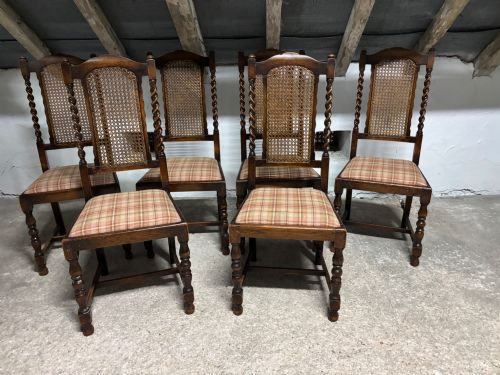
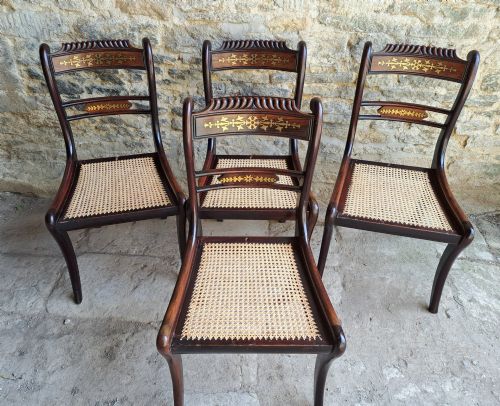
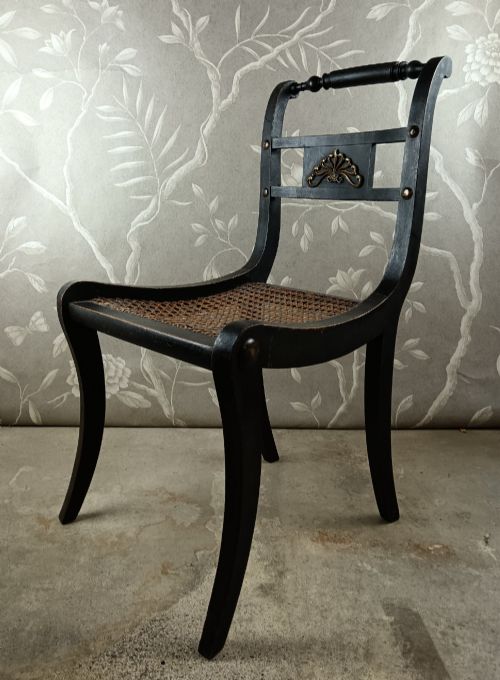
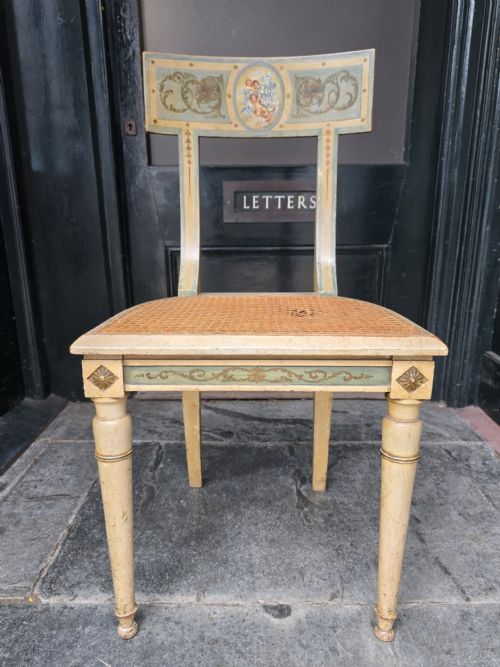
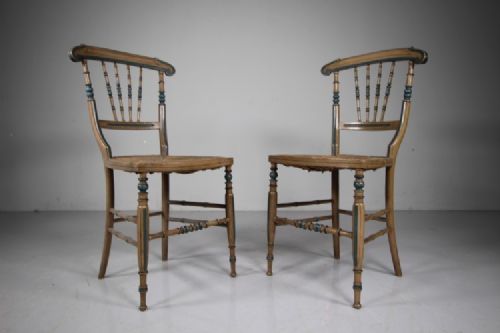
Makers utilised various timbers and decorative schemes, creating forms that range from simulated rosewood and painted surfaces to solid oak with barley twist legs. Dining chairs form the largest group, accompanied by occasional chairs and children's versions.
Materials and Construction
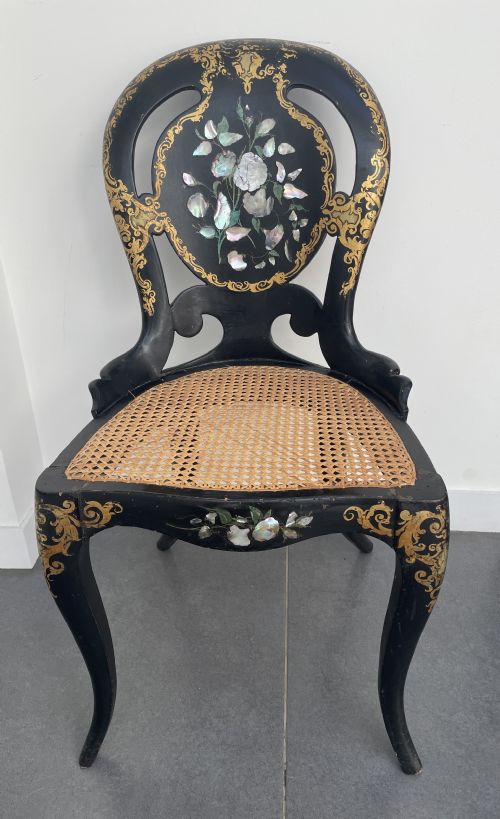
Makers built the frames of these chairs using hardwoods such as mahogany, rosewood, walnut, and oak, occasionally applying paint, ebonising, or giltwood finishes to the wood. Brass inlay and mother-of-pearl details appear on select nineteenth-century examples.
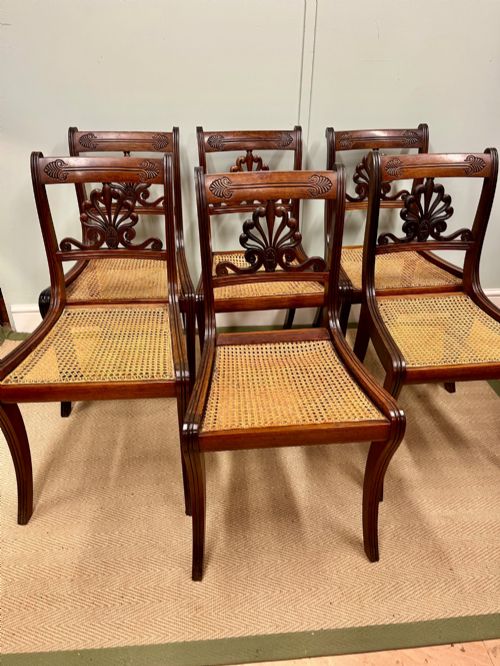
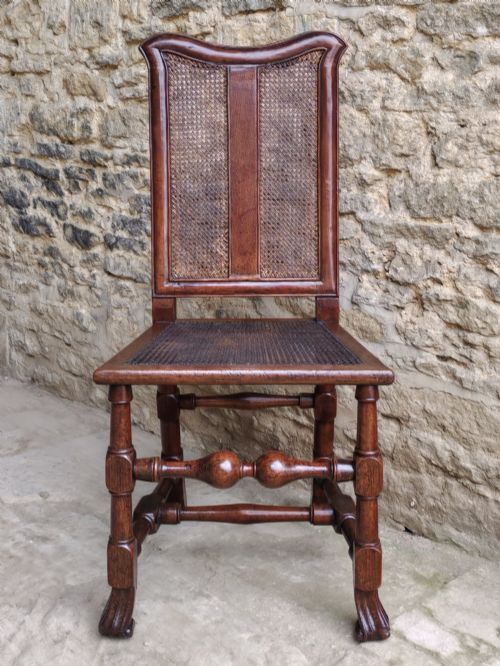
The seats and backs incorporate woven cane, rattan, or bergere panels, fitted into grooves within the wooden frame. Turnings, sabre legs, and carved back rails give structural support while defining the style of each period.
Caned Seat Dining Chairs Retail Price Guide 2026
Typical asking prices for caned seat dining chairs among the pieces listed under this phrase on Sellingantiques today, from the lower quarter to the upper quarter. They describe what is for sale here now, not the wider market.
Children's chairs share the floor with fourteen-chair dining sets, proving that miniature diners enjoyed caned comfort too.
Distinctions in Quality
Quality rests upon the crispness of the wood carving, the tightness and regularity of the cane weaving, and the structural integrity of the frame joints. Subtleties in the turning of legs and the selection of figured timber distinguish standard workshop production from notable cabinetmakers.
Original surfaces and finish condition separate unaltered examples from those with later painted layers or replaced cane panels. The weight and grain of woods like rosewood and mahogany dictate the presence of finer proportion and detail.
Gillows·Waring & Gillow
The Caned Seat Dining Chairs Glossary
- Cane
- Woven material made from the peeled outer bark of rattan palms, utilised for flexible and breathable seat and back panels.
- Carver
- An armchair designed to sit at the head of a dining table, typically matching a set of smaller side chairs.
- Bergere
- A type of upholstered or caned seat featuring enclosed woven sides and back, common in nineteenth and early twentieth-century seating.
- Sabre leg
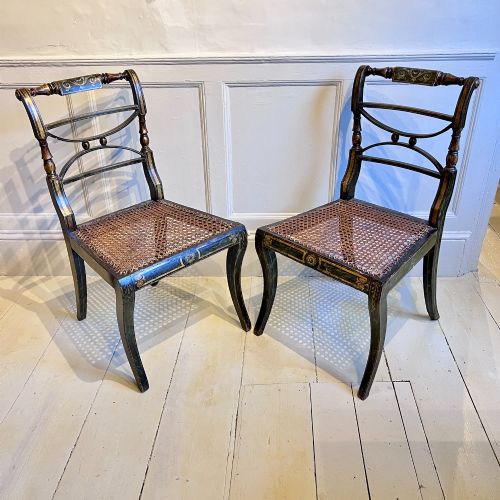
- A concave curving leg that tapers towards the foot, frequently seen on Regency dining chairs.
- Barley twist
- A type of turned furniture leg resembling a spiral rope, popular in seventeenth-century pieces and later revival furniture.
Caned Seat Dining Chairs: Frequently Asked Questions
How do I care for cane seats?
Cane requires occasional light dusting and hydration with a damp sponge to prevent the natural fibres from becoming brittle over time.
Avoid placing these chairs in direct sunlight or beside intense heat sources, which dry out the rattan and weaken the weave.
Are these chairs strong enough for daily use?
Most dining chairs with woven panels provide robust support, provided the wooden joints remain tight and the cane shows no major breaks.
Heavier use suits mahogany or oak frames with sound structural frames, while delicate occasional models require gentler treatment.
How can I tell a Regency chair from a Victorian one?
Regency examples typically feature classical influences, such as sabre legs, brass inlay, and simulated rosewood finishes, dating from the early nineteenth century.
Victorian pieces often display heavier carved walnut or oak frames, sometimes incorporating barley twist supports or mother-of-pearl inlay from the mid to late nineteenth century.
Can broken cane seats be repaired?
Traditional hand-caning can be repaired or entirely re-woven by a skilled specialist using matching rattan strands.
Professional re-caning restores both the appearance and the tension of the seat without altering the original wooden frame.