


Caned Back Settee
A caned back settee offers light structural seating, pairing woven cane panels with robust frames across centuries of revival and period design.
Caned Back Settee
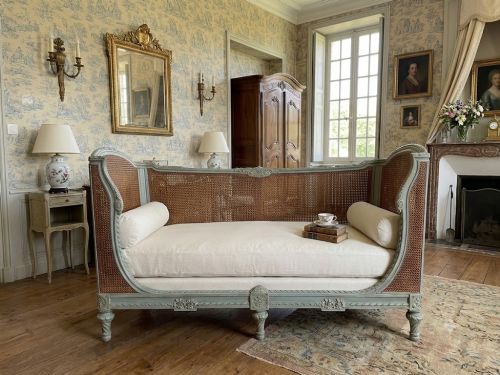
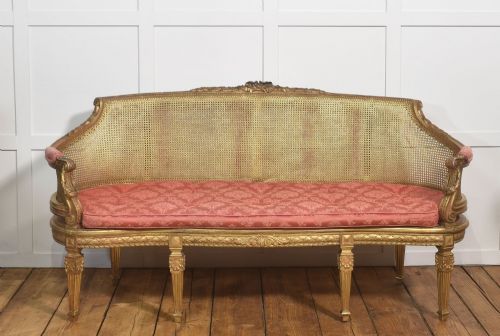
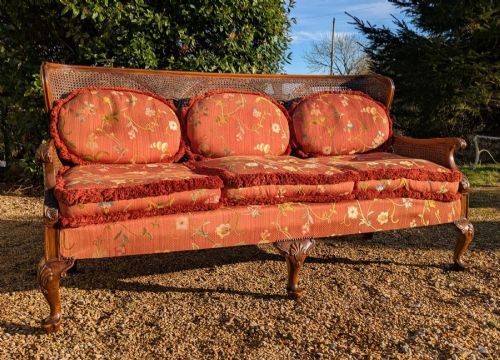
A caned back settee brings together open woven panels and sturdy wooden frameworks to create formal and relaxed seating. When exploring this selection, buyers frequently encounter pieces styled after French Louis XVI models, Carolean designs, and Georgian revivals from the nineteenth and early twentieth centuries.
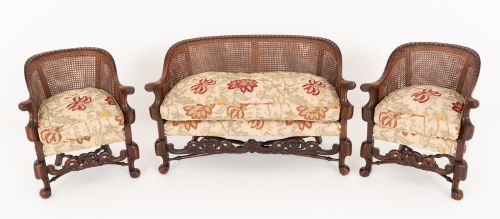
The assortment spans diverse forms including daybeds, window seats, two-seater sofas, and larger suites with matching chairs. Origins stretch across British workshops, continental ateliers, and regional interpretations like Anglo Indian pieces.
Makers utilised various woods to support the woven work, pairing walnut, beech, satinwood, and giltwood with upholstered cushions in velvet, linen, and fabric.
How they were made
Craftsmen built the primary framework using solid timbers such as walnut, beech, and painted wood, often applying gilding or carving intricate details onto the rails and cabriole legs. These wooden structures provide the load-bearing strength necessary to support both the occupants and the tension of the woven panels.
Canework panels were hand-woven directly into drilled holes along the frame using flexible strands of cane to create repetitive geometric meshes. This technique allows air to circulate through the backrest while maintaining a resilient, supportive surface.
Listings feature walnut, beech, and painted wood frames alongside nineteenth-century pieces and twentieth-century revivals.
What varies in quality
The standard of a piece depends heavily on the precision of the timber carving and the tightness of the hand-woven cane mesh. Finer examples display crisp botanical or classical motifs carved deeply into the wood alongside evenly tensioned cane work that shows uniform strand spacing.
Material selection also dictates the hierarchy, with giltwood finishes, figured walnut frames, and matched satinwood elevating the decorative ambition of the seating. The integrity of the original joints and the proportion of the frame determine how successfully the settee holds its form over generations.
The Caned Back Settee Glossary
- Caned
- Furniture featuring panels woven from peeled cane strips. This method provides lightweight strength and decorative texture to chair and settee backs.
- Bergere
- A closed-arm upholstered armchair or sofa style originating in France. These pieces typically incorporate cushioned seating alongside woven cane or fabric side panels.
- Giltwood
- Wood that has been coated with a thin layer of gold leaf or gilt finish. This treatment was common on formal salon seating during revival periods.
- Daybed
- A long seating item designed for reclining during the day. Examples often combine a caned backrest with an extended seat platform.
Caned Back Settee: Frequently Asked Questions
Where should a caned back settee go?
These settees suit reception rooms, bedrooms, or large hallways where their open woven backs maintain a sense of light and space. Placing them away from direct heat sources helps preserve the natural flexibility of the cane.
Because the woven panels allow air to pass through, they look particularly striking against patterned or coloured walls that show through the backrest.
How do I clean caned furniture?
Dusting the woven panels regularly with a soft brush prevents dirt from accumulating within the mesh intersections. A slightly damp cloth can remove surface marks from the wooden frame without dampening the cane excessively.
Avoid soaking the woven material, as excessive moisture can cause the natural fibres to become brittle and snap over time.
Can I reupholster the cushions?
Most settees feature loose or drop-in cushions that can be recovered in new fabric, linen, or velvet to match an interior scheme. The original frame and cane panels remain untouched during this process.
Selecting textiles that complement the wood tone and existing upholstery style helps maintain the visual balance of the piece.
How do I date a caned settee?
Dating relies on examining the timber species, the hand-weaving technique of the cane, and the stylistic vocabulary of the frame. Revivals from the Victorian and Edwardian eras often reinterpret eighteenth-century French and British forms.
Tool marks on the frame, the type of screws or fixings used, and the regularity of the cane holes provide further clues to the period of manufacture.