


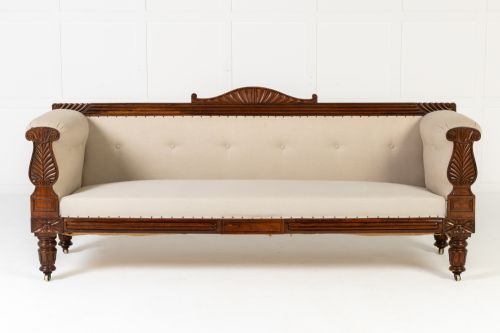


Scroll Carved Bench
Scroll carved bench pieces bring sturdy nineteenth century seating into a hall or room, offering rich woodwork and traditional form.
Scroll Carved Bench
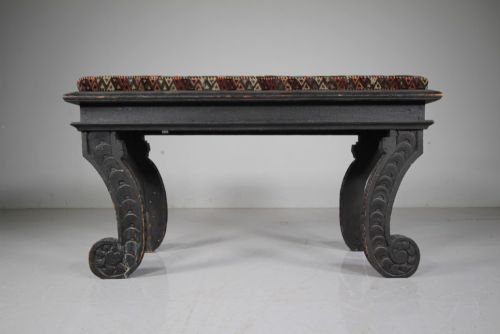
Buyers will most frequently meet mahogany and rosewood examples dating from the Regency and Victorian eras. These items often feature scrolled ends, turned legs, and carved details that suit hallways, drawing rooms, or bed ends.
How they were made
Cabinetmakers constructed these frames using dense timbers such as mahogany, oak, walnut, and rosewood, often shaping scrolls and mouldings by hand. Structural joinery relied on traditional mortise and tenon methods to support heavy daily use.
Upholstery materials range from silk damask and velvet to contemporary fabric, applied over webbing or horsehair stuffing in period pieces. Surface finishes include polished wood grains, painted pine, and gilded accents depending on the regional workshop and period.
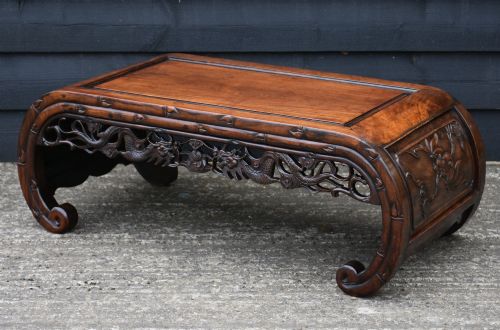
Several pieces double as opium tables, proving that nineteenth-century furniture was designed for remarkably diverse lounging habits.
What varies in quality
The crispness of the hand-carved scrollwork and the selection of figured timber distinguish finer items from simpler utilitarian seating. Well-proportioned frames with tight, original joinery show the hand of a more skilled cabinetmaker.
The integrity of the structural timber and the retention of period upholstery foundations dictate the overall grade. Pieces retaining dense hardwoods without major alterations command greater appreciation among collectors.
The Scroll Carved Bench Glossary
- Regency
- A British design style spanning the early nineteenth century, noted for classical restraint and scrolled terminals. It draws heavily on Greek, Roman, and Egyptian motifs.
- Scroll end
- A furniture arm or terminal curved into a spiral or scroll shape. This decorative flourish is characteristic of nineteenth-century daybeds and sofas.
- X-frame
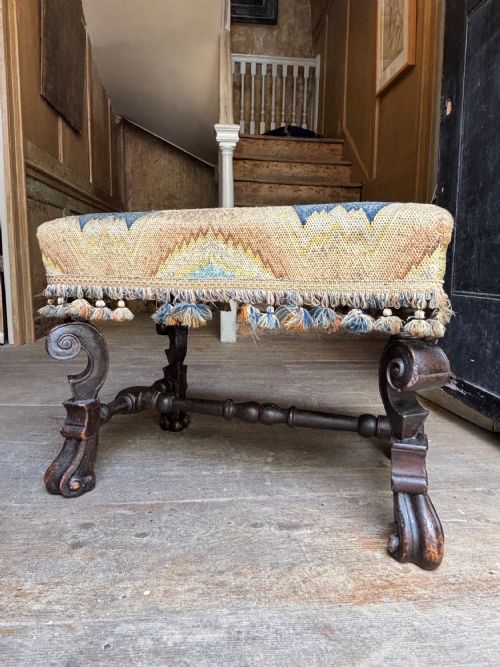
- A structural form utilising crossed stretchers or legs to support a seat. This ancient design appears frequently on stools and benches from the nineteenth century.
- Carolean
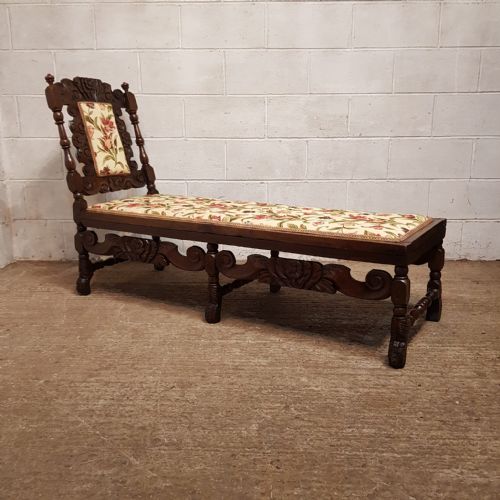
- A seventeenth-century British style associated with the reign of Charles II, known for exuberant baroque carving and ornate woodwork.
Scroll Carved Bench: Frequently Asked Questions
Where should I place a scroll carved bench?
These benches fit naturally in wide hallways, at the foot of a bedroom, or beneath a large window as a dedicated seat. Their decorative scrollwork makes them suitable as statement pieces in reception rooms.
Ensure there is enough floor clearance around the scrolled ends to let the silhouette stand out without crowding adjacent furniture.
How do I care for the wooden frame?
Dust the hardwood surfaces regularly with a dry, soft cloth to prevent particulate accumulation in the carved recesses. Apply a quality beeswax sparingly to nourish mahogany, oak, or rosewood without building up a heavy residue.
Keep the timber away from direct sunlight and heat sources to prevent the wood from drying out and splitting over time.
Can I reupholster a period bench?
Many surviving frames have been recovered multiple times over the decades to match changing interior schemes. Using traditional stuffing materials and appropriate period textiles helps maintain the architectural integrity of older pieces.
Consult a professional restorer who understands traditional frame construction if the internal webbing or springs require rebuilding.
How can I tell a Regency piece from a Victorian one?
Regency designs lean towards clean neoclassical lines, subtle brass inlay, and restrained mahogany or rosewood surfaces. Victorian examples often display heavier proportions, darker oak or walnut, and more exuberant, deep-relief carving.
Examining the construction methods underneath often reveals whether the piece belongs to the earlier Regency era or the later nineteenth century.