


Period Style Sofa
These period style sofa examples range from Georgian mahogany forms to French giltwood designs, offering historical seating for traditional interiors.
Period Style Sofa
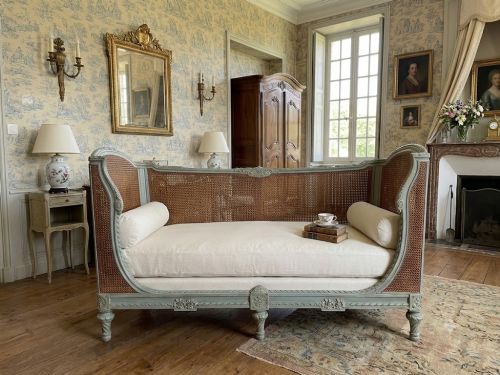
A period style sofa covers seating forms spanning the 17th century through the early 20th century, encompassing English and continental traditions. Buyers encounter settee, canapé, and daybed forms alongside larger salon suites.
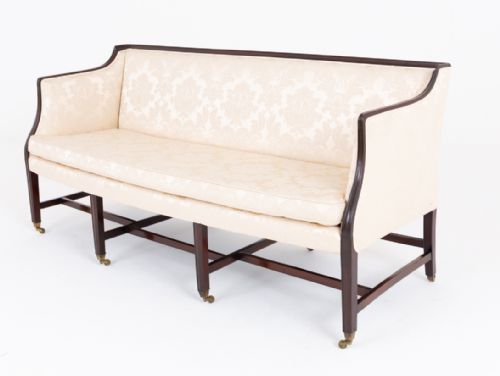
The selections include Regency mahogany scroll end designs, Edwardian Knole sofas, and French Louis XVI style painted frames. Many pieces channel earlier Georgian or Hepplewhite proportions while dating from later revival periods.
How they were made
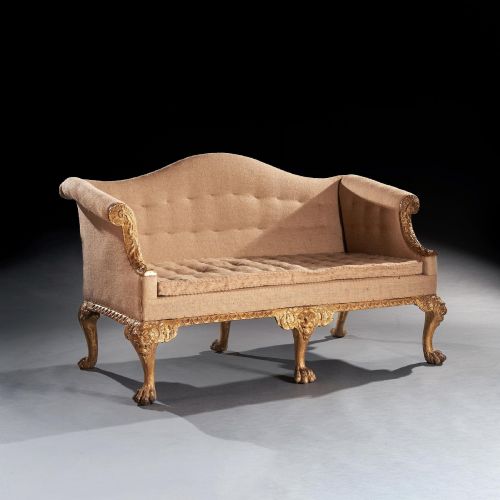
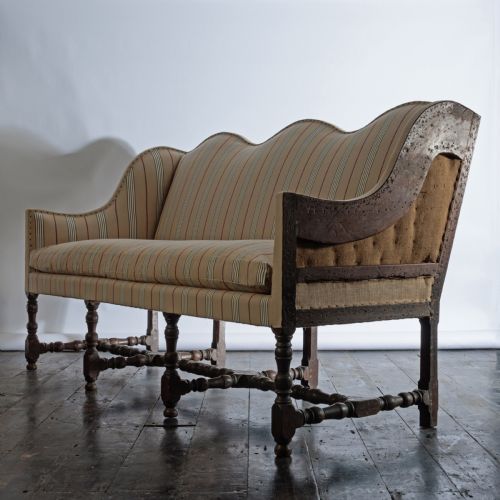
Timbers such as mahogany, walnut, and rosewood provide the structural framework for carved wooden frames and show wood rails. Giltwood and painted finishes appear frequently, often highlighting intricate hand-carved details.
Upholstery relies on traditional fabrics including damask, tapestry, and plain textiles, paired with supportive materials like brass hardware and cane work on specific daybed and canapé designs.
Certain antique sofas hide historical draughts away behind adjustable high hinged arms designed for chilly English castles.
What varies in quality
The refinement of hand carving on wooden elements dictates the distinction between standard production and exceptional examples. Crisp execution of leaf motifs, lion mask details, and gilt application elevates certain frames.
Integrity of proportion and the preservation of original finished surfaces define the standing of each piece. Surviving period upholstery fabrics and well-maintained frame construction separate notable antiques from later alterations.
Giles Grendey·Gillows
The Period Style Sofa Glossary
- Canapé
- An upholstered French sofa style featuring an exposed wooden frame, often carved and painted or gilded. These pieces frequently date from 18th century models through later revival periods.
- Knole sofa
- A traditional English seat featuring hinged or adjustable high arms, originally designed to keep out draughts. This form typically uses elaborate trimmings and heavy damask upholstery.
- Giltwood
- Timber coated with a thin layer of gold leaf or gold paint to create a lustrous decorative surface. This finish appears commonly on French and Regency salon furniture.
- Scroll end
- A sofa arm design curving outward and downward in a continuous scroll shape. This profile characterises many Regency and classical revival seating forms.
- Settee
- A long wooden or upholstered seat with a back and arms, designed for multiple occupants. The term often interchanges with sofa across various 18th and 19th century styles.
Period Style Sofa: Frequently Asked Questions
What is a period style sofa?
A period style sofa replicates or continues historical design traditions from centuries past, including Georgian, Regency, and French revival aesthetics. These pieces provide functional seating rooted in recognised historical forms.
They bridge past craftsmanship with traditional interior schemes, using period timbers and textile choices.
How do I identify a Regency sofa?
Regency sofas typically display classical lines, scroll ends, and dark woods like mahogany, sometimes incorporating brass mounts or gilt frames. Their silhouettes reflect early 19th century neoclassical tastes.
Look for distinctive scroll arms and restrained carved details that distinguish them from heavier Victorian or ornate Rococo designs.
Where were these sofas used historically?
Such seating was positioned in formal drawing rooms, libraries, and grand salons to accommodate guests and display social standing. Larger settees and salon suites served reception and entertaining functions.
In domestic settings, daybeds and smaller canapés offered spaces for rest within private chambers.
How do I care for antique upholstery?
Protect delicate textiles like damask and tapestry by keeping antique sofas away from direct sunlight and fluctuating heat sources. Gentle surface dusting helps preserve fragile fabric weaves.
Consult professional conservators for deep cleaning or structural repairs to wooden frames and gilt finishes.