

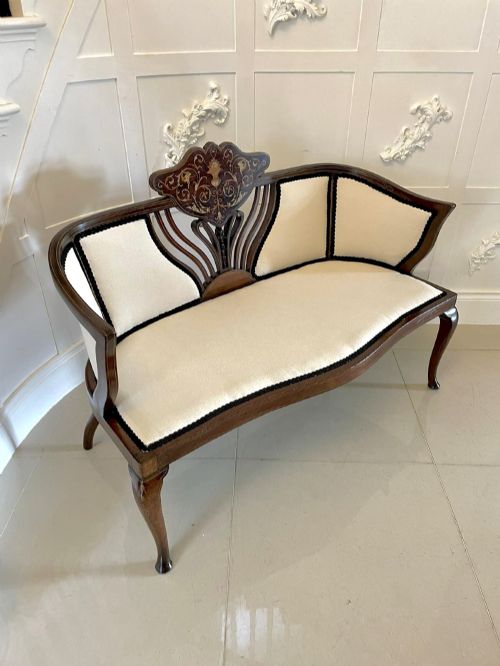
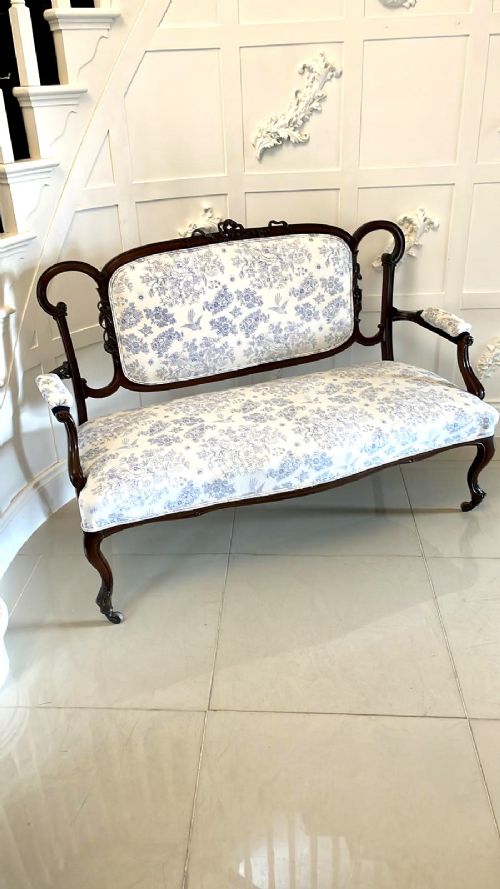

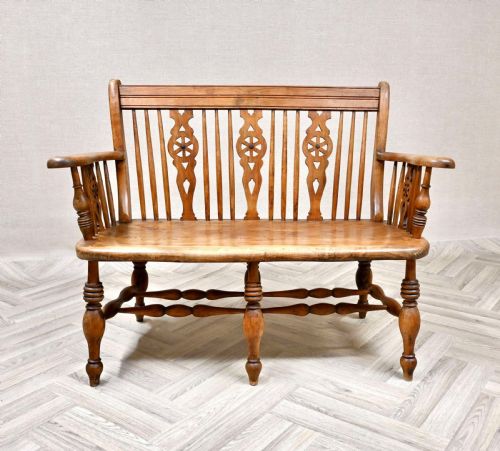


Carved Wooden Loveseat
A carved wooden loveseat brings compact seating for two into a room, combining solid timber frames with upholstered comfort.
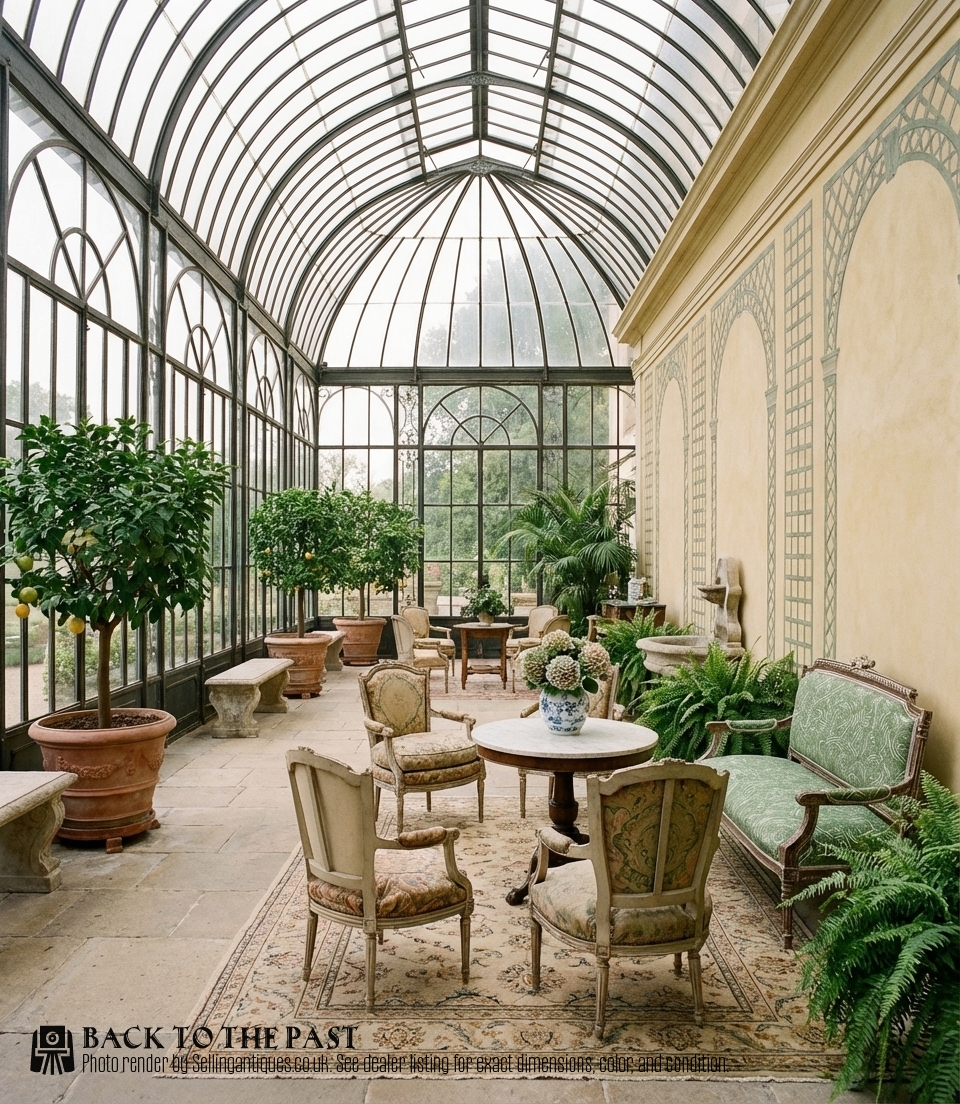
Carved Wooden Loveseat
The pieces on this page span from the mid-nineteenth century up to the 1920s, showing how cabinetmakers adapted earlier revival styles for smaller sitting spaces. Mahogany, walnut, and painted wood provide the structural framework, often paired with exposed carved details and upholstered seats.
Assessing quality and craftsmanship
The refinement of the carving dictates the distinction between standard production and finer examples, with crisp hand-chiselled details outperforming simple machine shaping. Timber selection also matters, as well-figured mahogany or walnut displays richer grain patterns.
Structural tightness and the integration of inlay work separate superior framing from simpler builds. The proportion of the legs, whether fluted, cabriole, or turned, influences the overall balance of the piece.
Carved Wooden Loveseat Retail Price Guide 2026
Typical asking prices for carved wooden loveseat among the pieces listed under this phrase on Sellingantiques today, from the lower quarter to the upper quarter. They describe what is for sale here now, not the wider market.
The listings span from 1860 to 1920, incorporating Victorian, Edwardian, and various French revival aesthetics.
The Carved Wooden Loveseat Glossary
- Canape
- An upholstered French sofa or settee featuring an exposed wooden frame. These pieces often display carved ornamentation and cabriole legs.
- Bergere
- An enclosed upholstered armchair or settee with wooden sides and a padded seat. The frame is typically exposed and polished or painted.
- Satinwood inlay
- A decorative technique inserting contrasting light-coloured wood veneers into the primary timber surface. This creates delicate geometric or floral patterns.
- Chairback settee
- A small bench or sofa whose backrest resembles a series of joined chair backs. Common in eighteenth-century revival styles.
- Cabriole leg
- A furniture leg curving outward at the knee and inward at the ankle, ending in a pad or foot. This form derives from classical animal leg motifs.
Carved Wooden Loveseat: Frequently Asked Questions
Where did people place these small settees?
These compact seating pieces suited private parlours, bedrooms, and smaller withdrawing rooms where full-sized sofas proved too large.
They provided intimate seating for two close to a fireplace or window.
How do I distinguish French styles from English ones?
French-inspired pieces like Louis XV or Louis XVI designs often feature painted or gilt surfaces, curved cabriole legs, and sweeping exposed wooden frames.
English Victorian and Edwardian equivalents typically rely on polished mahogany or walnut with more restrained turned supports and inlaid details.
Can I use a loveseat in a modern interior?
Their compact dimensions allow these double seats to fit easily into contemporary hallways, bedrooms, or living spaces.
They work well as accent seating alongside simpler modern furniture.
What periods do these wooden seats cover?
The available selection spans from the mid-nineteenth century Victorian era through Edwardian times up to the 1920s.
Many pieces also adopt earlier revival motifs, such as George II, Hepplewhite, and William and Mary styles.