

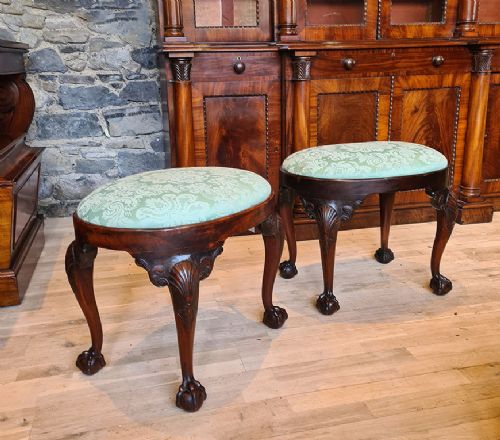


Cabriole Leg Window Bench
A cabriole leg window bench offers a low, elegant seat suited to placing beneath sills, drawing from styles like Victorian and Edwardian.
Cabriole Leg Window Bench
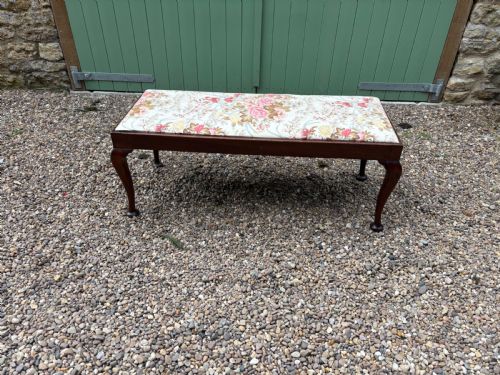
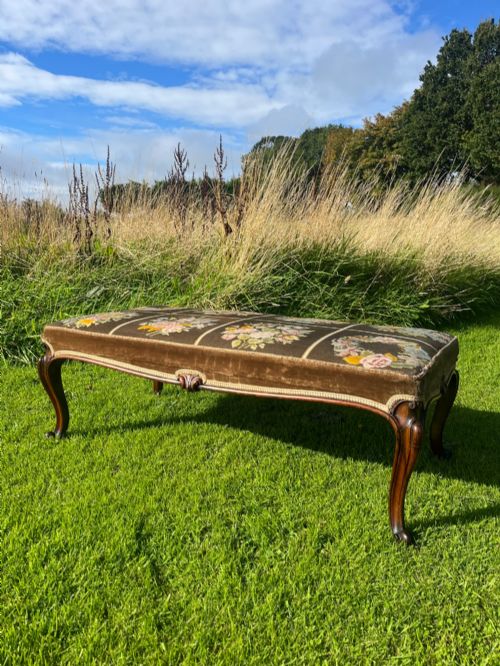
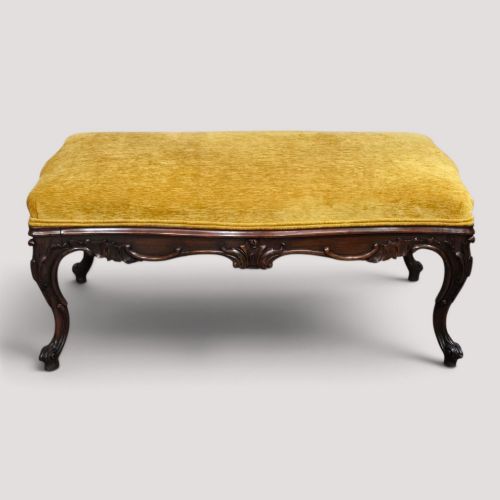
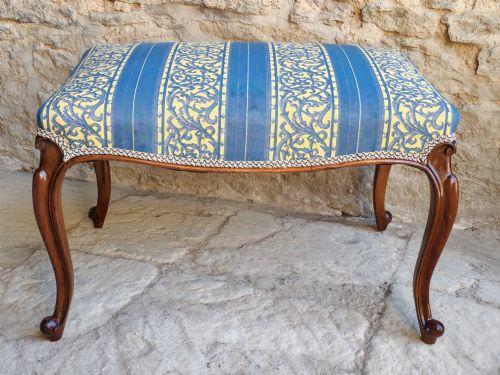
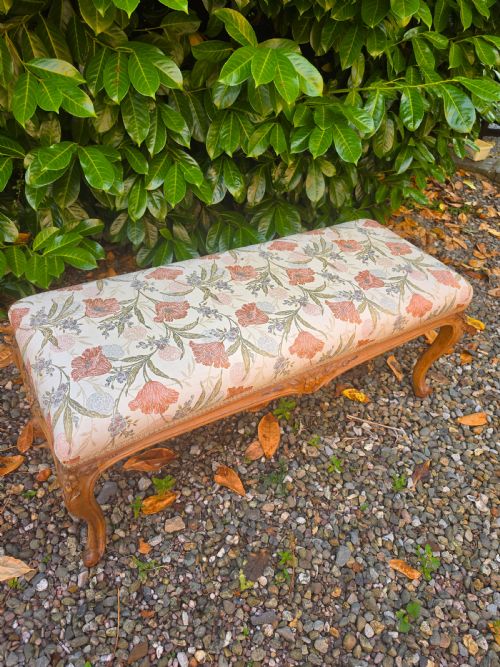
A cabriole leg window bench sits low to the floor, designed specifically to fit beneath a window frame while providing a comfortable surface to sit upon. These pieces appear across various forms, functioning as long stools, window seats, and duet stools within the available selection.
The pieces on this page span several periods, including Regency, Victorian, Edwardian, and the early twentieth century. Makers of these eras drew inspiration from earlier designs, resulting in revivals like the Queen Anne Revival and Rococo Revival.
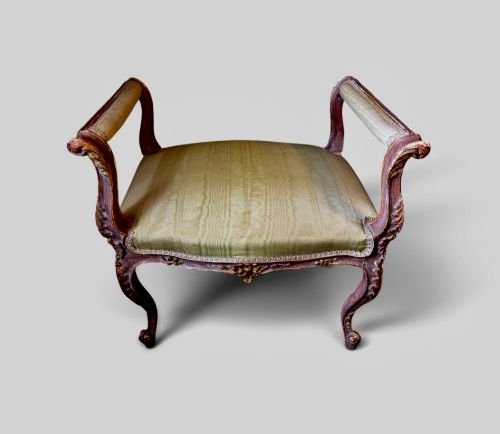
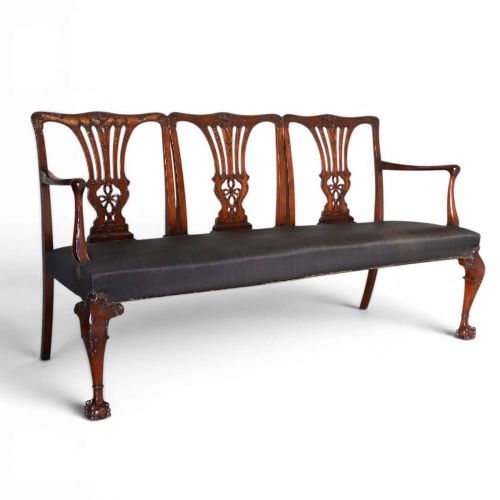
Most examples function as seating for bedrooms, hallways, or living spaces, sometimes incorporating arms or carved backs. The forms range from compact single stools to large multi-seat settees.
How these benches were constructed
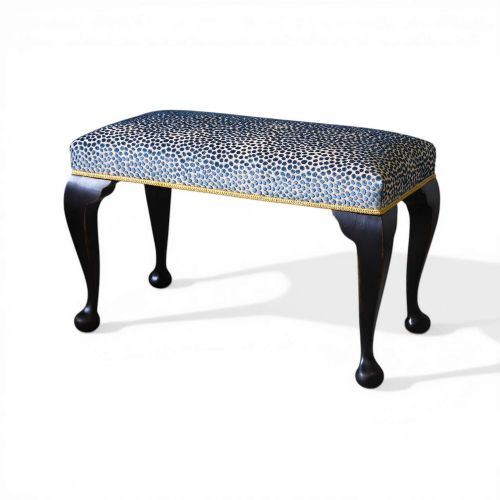
Cabinet makers utilised dense hardwoods such as mahogany, walnut, and rosewood to form the structural frames and shaped supports. Less common frames feature painted wood, ebonised finishes, or giltwood.
Upholstery defines the upper portion, employing materials like fabric, velvet, and cane. Certain pieces incorporate textile designs associated with Morris and Co. or Liberty over traditional padding.
The selection spans the nineteenth century through the Edwardian era and into the 1930s.
What determines the quality of a bench
The crispness and depth of the carved detail upon the wooden frame set finer examples apart from simpler production. Carved elements such as ball and claw feet or foliage require precise hand work by skilled artisans.
The choice of primary timber and the integrity of the joinery dictate the structural longevity of the frame. Denser timbers like rosewood and figured walnut indicate a higher grade of initial manufacture.
The Cabriole Leg Window Bench Glossary
- Cabriole leg
- A furniture leg that curves out and then in, mimicking an animal's curving leg. This form typically terminates in a pad, claw, or scroll foot.
- Window seat
- A long, narrow upholstered stool designed to sit in the well of a bay window. These pieces often feature matching upholstery and carved wooden rails.
- Ebonised
- Wood finished with a dark stain or black lacquer to imitate ebony. This technique appears frequently on nineteenth-century seating.
- Giltwood
- Wood that has been covered with a thin layer of gold leaf. It creates a bright, reflective surface seen on decorative seating from various periods.
- Duet stool
- An elongated piano stool built to accommodate two players at once. They often feature hinged seats revealing storage space for sheet music.
Cabriole Leg Window Bench: Frequently Asked Questions
Where should I place a window bench?
These low seats suit placement beneath low window sills, at the foot of a bed, or along a hallway wall. Their compact height ensures they do not obstruct incoming light or views.
They also function effectively as centre stools in larger rooms or as occasional seating that can be moved easily when needed.
How do I identify the period of a bench?
Examining the timber, the style of the carved legs, and the upholstery method helps indicate the era of manufacture. Victorian and Edwardian pieces often display revivalist motifs drawn from earlier Georgian or French designs.
Matching the wood grain and construction joints to known period techniques provides further clues to the date of origin.
What is the difference between a stool and a settee?
A stool provides a seat without back support or armrests, whilst a settee incorporates a backrest and sometimes arms for extended sitting. Both forms appear with cabriole legs across the listed periods.
Settees offer a more substantial profile suited to placement against a blank wall rather than directly beneath a low window.
Are these benches comfortable for daily use?
The comfort depends upon the original or updated padding and the upholstery fabric chosen. Many feature deep upholstery stuffed with traditional materials suited for resting upon.
Adding a cushion or updating the interior padding allows historical benches to serve comfortably in modern settings.