
Low Back Slipper Chairs
Low back slipper chairs are low-slung, comfortable seats designed for bedrooms and parlours, offering a compact silhouette that suits traditional and period interiors.
Low Back Slipper Chairs
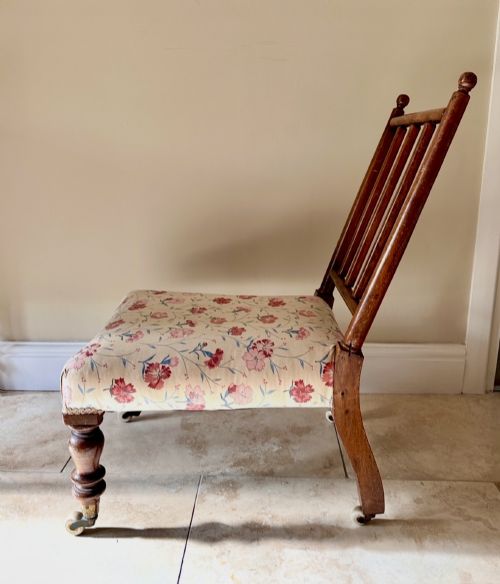
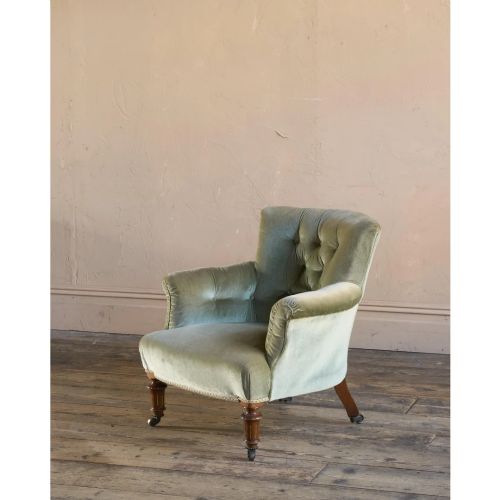
Low back slipper chairs encompass nineteenth century bedroom chairs, nursing seats, and compact occasional chairs designed with low profiles for ease of dressing and fireside sitting. These pieces emerge predominantly from Victorian and Edwardian periods, alongside earlier Regency and William IV examples.
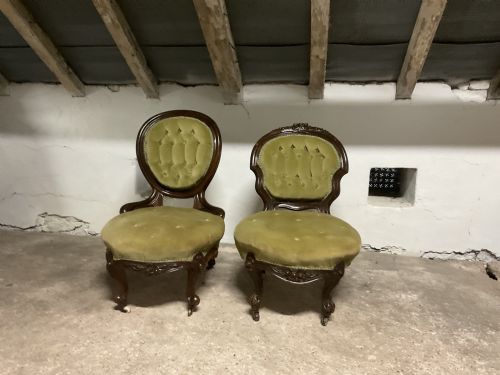
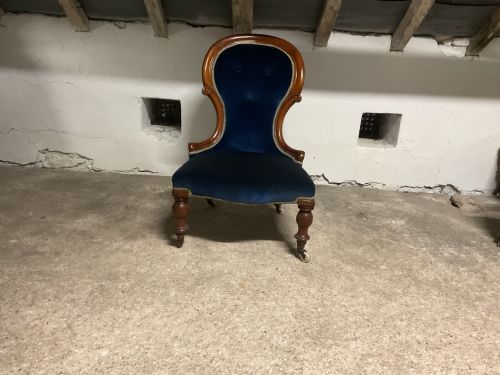
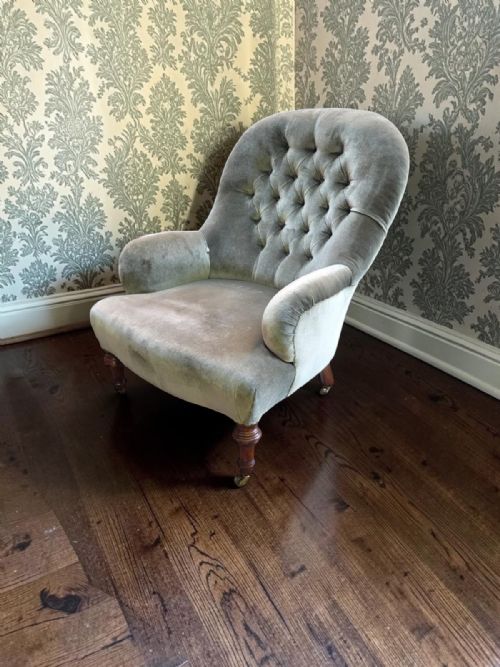
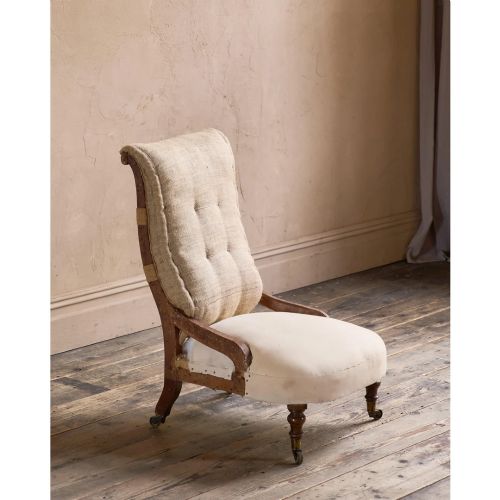
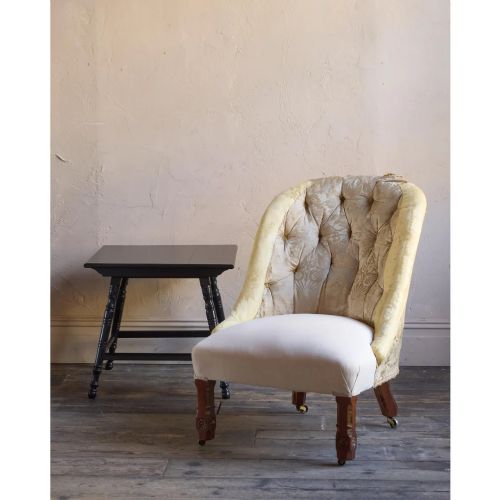
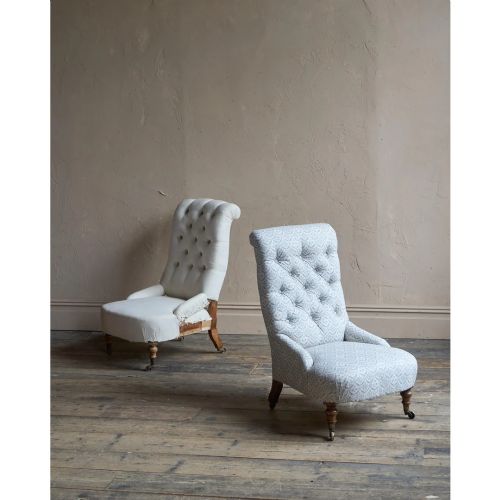
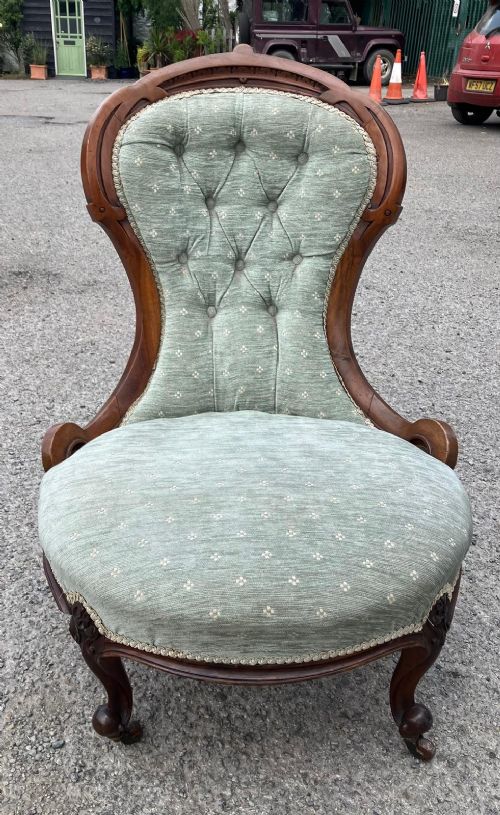
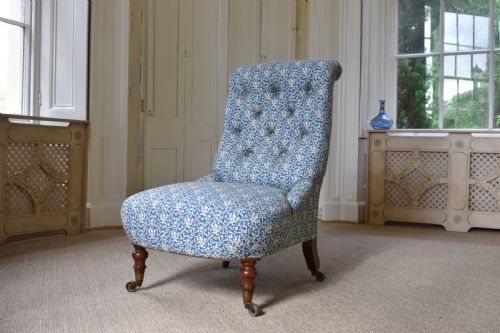
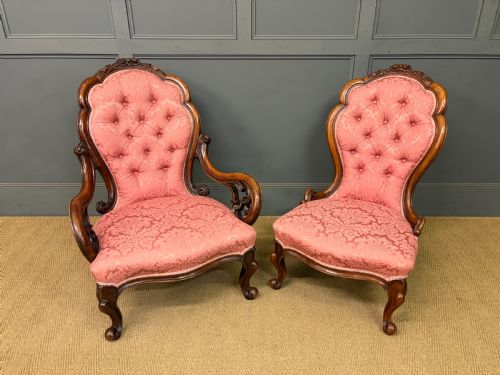
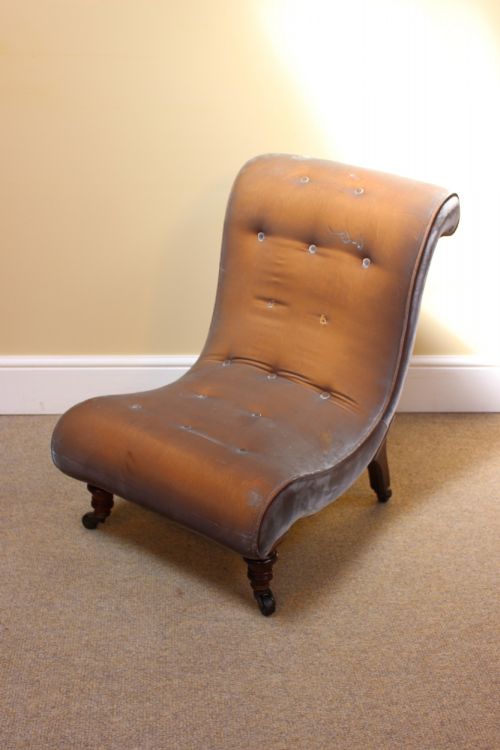
The selections span various forms including button back designs, scroll back French models, and tub chairs. Buyers frequently encounter walnut and mahogany frames paired with upholstered finishes in velvet, calico, and modern printed fabrics.
Materials and Construction
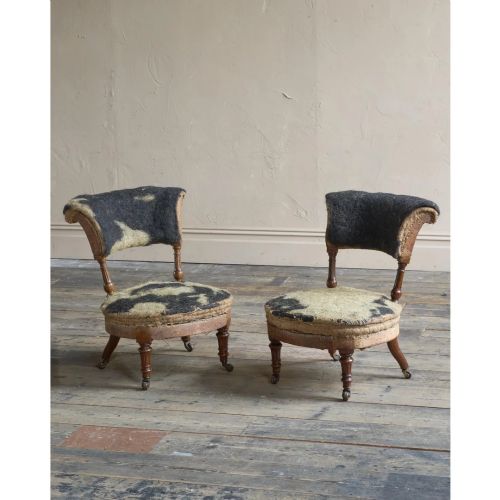
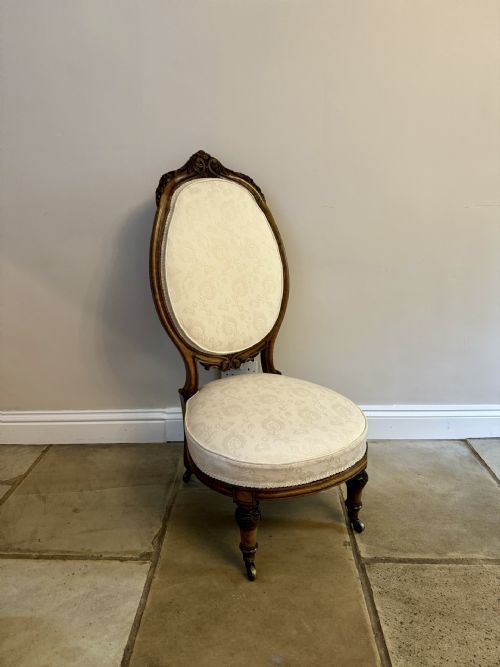
Makers utilised sturdy hardwoods such as mahogany, walnut, and ebonised wood to form the structural frames, often incorporating carved details, giltwood accents, or turned wooden legs fitted with brass castors.
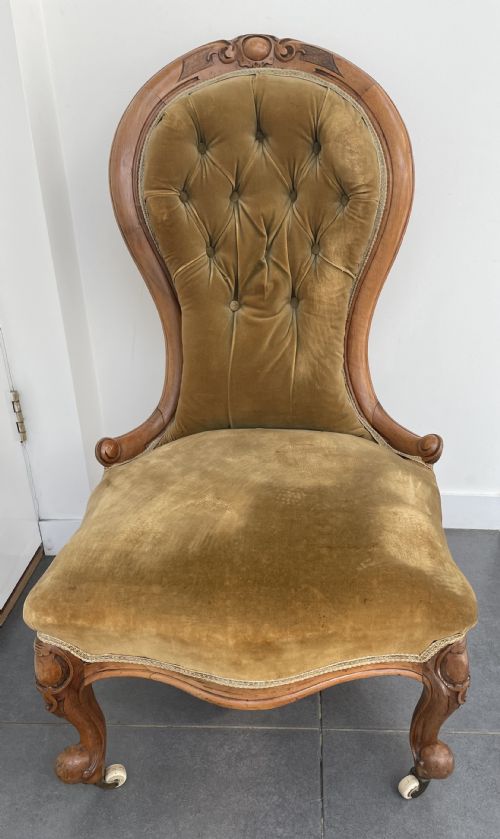
Upholstery methods relied on traditional stuffing techniques enclosed in calico, velvet, or fabric covers, frequently finished with deep buttoning, scroll backs, and decorative fringe trim.
Victorian ladies required low chairs so their voluminous crinolines would not catch while dressing.
Distinctions in Quality
Superior examples display crisp, hand-carved woodwork on walnut or mahogany frames, paired with robust internal framing and balanced proportions that maintain stability over generations.
Fine craftsmanship is further distinguished by maker attribution, precise button upholstery, and the integrity of original wooden components rather than later replacements.
Howard and Sons·Gillows
The Low Back Slipper Chairs Glossary
- Button back
- An upholstery method where depressions are formed in the padding by pulling twine tightly through the material and securing it to the frame, creating a padded pattern.
- Nursing chair
- A low-seated chair historically designed for women to sit comfortably while nursing infants, typically featuring an upright, low frame.
- Spoon back
- A padded chair back shaped like the bowl of a spoon, contoured to fit the human spine and common on Victorian walnut seating.
- Tub chair
- An armchair featuring a continuous curved back and arms that form a single enclosed tub-like shape.
- Castor
- A small wheel fitted to the base of furniture legs to allow smooth movement across carpets and floors.
Low Back Slipper Chairs: Frequently Asked Questions
What is a low back slipper chair?
A low back slipper chair is a compact, low-seated chair originally used in bedrooms for dressing or putting on shoes. Their low profile made them practical for domestic spaces.
Today, these pieces function well as accent seating in bedrooms, dressing rooms, and living areas where space is limited.
How do I date a Victorian slipper chair?
Dating relies on timber choice, such as mahogany and walnut, alongside stylistic details like button upholstery, carved frames, and turned wooden legs. Victorian pieces often reflect mid to late nineteenth-century aesthetics.
Makers' stamps, where present, help pinpoint the exact workshop or manufacturing decade.
Are these chairs comfortable for daily use?
Most antique slipper chairs offer firm support due to traditional horsehair and spring stuffing methods. Many feature deep seats and padded backs suited for relaxing.
Buyers often select pieces for periodic seating rather than heavy daily lounging.
Can I recover an antique slipper chair?
Many buyers acquire antique frames specifically to reupholster them in fabrics that match contemporary interiors. Traditional frames tolerate careful recovering when handled by skilled upholsterers.
Preserving internal webbing and padding helps maintain the structural integrity of the piece.