
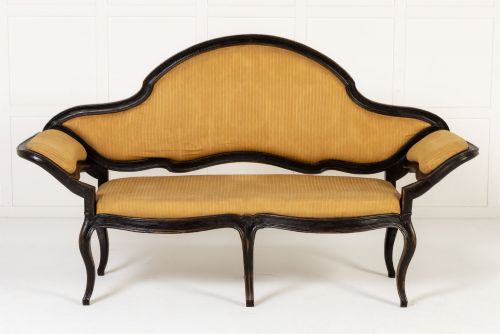


Yellow Upholstered Benches
Yellow upholstered benches bring rich colour and historic seating to a room, ranging from grand rosewood settees to compact walnut footstools.
Yellow Upholstered Benches
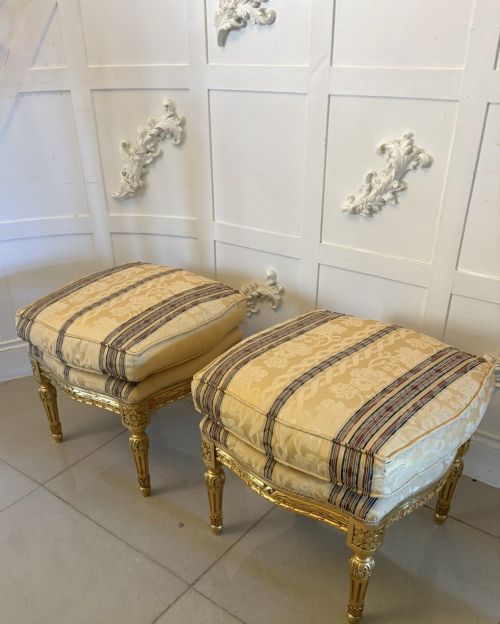
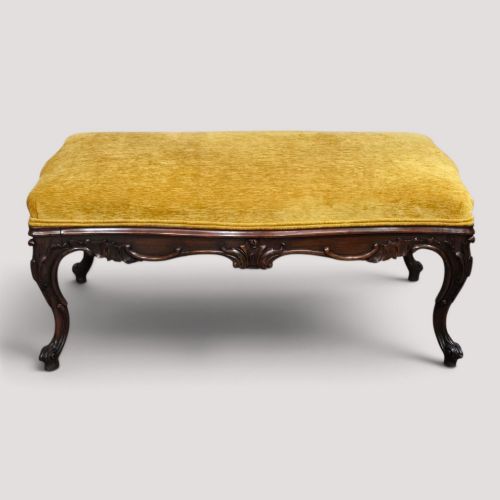
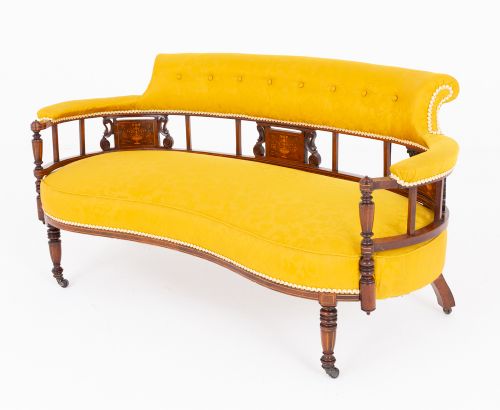
Yellow upholstered benches encompass a diverse group of seating forms, including settees, window seats, long footstools, and low ottomans. The examples found here span centuries of design, covering the Regency era, Victorian period, and Edwardian times.
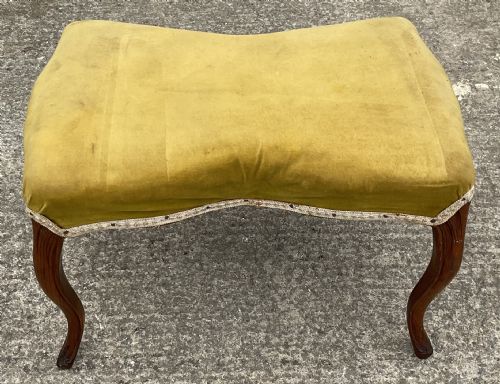
The selection ranges from intimate piano stools and dressing table seats to large country house walnut stools and multi-seater sofas. Buyers searching for yellow upholstered benches will encounter frames shaped by various historical movements, from Italian Rococo and Venetian styles to classical revival forms.
Origin and form dictate the exact silhouette, with some pieces offering X-framed supports and others resting on turned or twist legs. Each item provides a distinct seating option rooted in past craftsmanship.
How they were made
The structural frames rely on dense timbers such as mahogany, walnut, rosewood, and ebonised wood, which provide the necessary strength for seating. Artisans shaped these woods through carving, inlay work, and polishing to highlight the natural grain.
Upholstery techniques involve securing textiles like velvet and fabric over internal padding to create supportive seats. Brass details and painted finishes frequently complement the wooden structures to complete the design.
The listings feature timbers including walnut, mahogany, rosewood, and ebonised wood across Victorian, Edwardian, and Regency periods.
What varies in quality
The standard of carving and the choice of primary timber heavily influence the distinction between standard examples and finer pieces. Dense hardwoods like rosewood and figured walnut demonstrate superior cabinetmaking compared to simpler fruitwood or painted alternatives.
Refinement in the frame construction, such as detailed woodwork, precise joinery, and well-executed upholstery, separates everyday seating from exceptional examples.
The Yellow Upholstered Benches Glossary
- Settee
- A long upholstered seat with a back and arms, designed to accommodate more than one person. These pieces function as compact sofas in reception rooms and hallways.
- Window seat
- A narrow bench traditionally placed in the recess of a bay window. They offer low seating without obstructing natural light.
- Ottoman
- A low, upholstered seat or footstool without a back or arms. Larger versions often serve double duty as low coffee tables.
- X-frame
- A structural furniture support shaped like the letter X, seen on folding or fixed stools and piano seats. This design provides robust load-bearing strength.
- Ebonised
- Wood treated with a dark finish to imitate expensive ebony. This technique was popular in various nineteenth-century revival periods for dramatic contrast.
Yellow Upholstered Benches: Frequently Asked Questions
Where should I place a long footstool?
Long footstools suit placement at the foot of a bed or positioned centrally in a large living room as an alternative to a coffee table.
Their elongated proportions also make them useful in hallways or beneath windows where standard chairs might block the pathway.
How do I identify a Regency period piece?
Regency items typically display classical restraint, often incorporating dark timbers like rosewood alongside restrained brass mounts. The lines tend to be clean and architectural, drawing inspiration from ancient Greek and Roman designs.
Proportions remain balanced, with less heavy ornamentation than later Victorian iterations.
What is the difference between a stool and a window seat?
Stools are generally independent, four-legged or X-framed seats designed for moving around a room for temporary sitting. Window seats are constructed specifically for placement against walls or beneath windows.
Window seats often feature integrated armrests or low backs tailored for prolonged sitting in specific architectural spaces.
How do I care for antique rosewood frames?
Antique rosewood requires minimal maintenance, primarily protection from direct sunlight and sudden humidity changes that can dry the timber. Dusting with a soft, dry cloth helps preserve the polished finish without damaging the wood.
Avoid applying modern silicone polishes, which can build up on historical wood surfaces over time.