
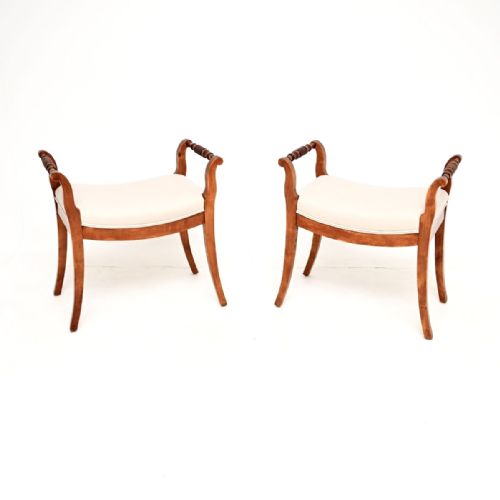
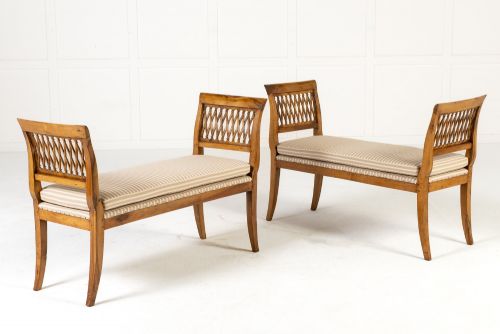
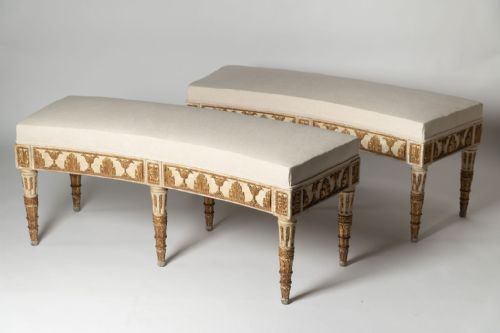
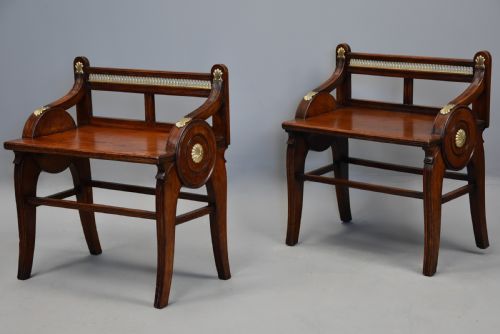

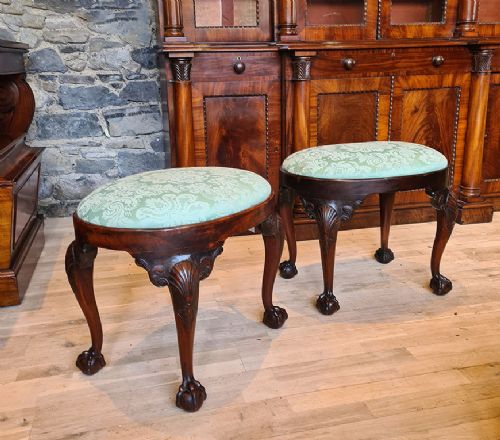


Pair of Window Seats
A pair of window seats offers matched symmetry for a bay or hallway, bringing balanced seating grounded in centuries of design.
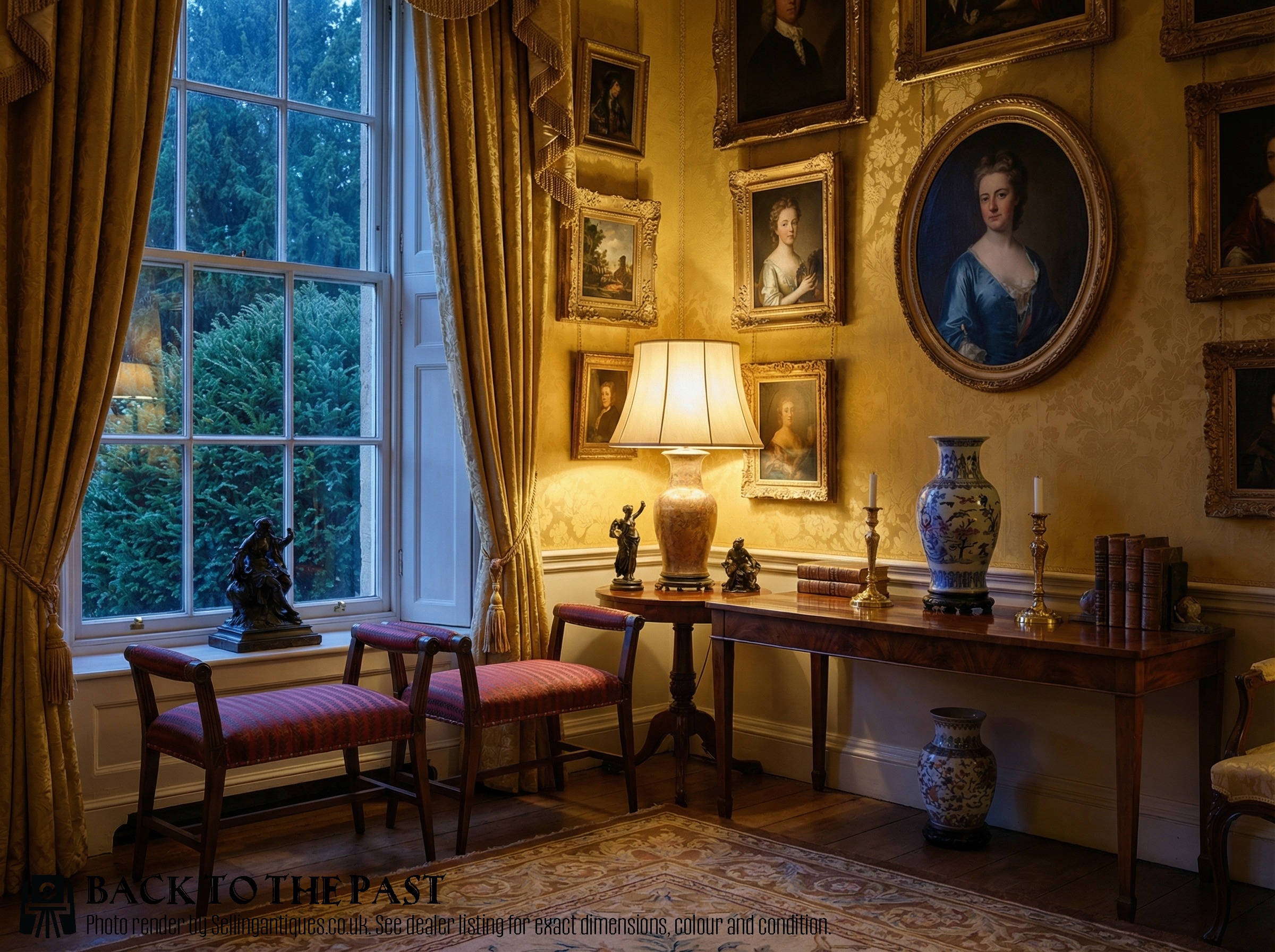
Pair of Window Seats
A pair of window seats brings matched twin seating designed for alcoves, long hallways, and beneath deep window frames. The pieces on this page span the eighteenth, nineteenth, and early twentieth centuries, drawing on Georgian, Regency, Victorian, and Edwardian aesthetic traditions.
Makers and workshops across Britain, France, Italy, and Sweden produced these forms in mahogany, walnut, oak, and giltwood. Alongside formal window seats, the selections include related twin benches, stools, and hall seats sharing the same long proportions.
Most examples rely on traditional upholstery in fabric, leather, or French linen, while others present exposed timber surfaces like satin birch, rosewood, and satinwood. Buyers encounter both dedicated window forms and versatile long stools adapted to similar domestic positions.
Materials and construction
Cabinetmakers built the structural frames of these twin pieces using dense hardwoods such as mahogany, walnut, and oak, often reinforced with brass mounts or ebonised details. Joinery relied on traditional pinned mortise and tenon joints to support the weight of two occupants along extended bench spans.
Surface ornamentation involved carved giltwood, inlaid brass, bone details, and polished veneers of rosewood or satin birch. Upholstered varieties utilised horsehair and traditional webbing beneath outer layers of leather, patterned fabric, or heavy linen.
One particularly polite pair of nineteenth-century French walnut seats has spent decades watching the rain without ever catching a cold.
Quality and proportion
Quality rests in the crispness of the timber carving and the integrity of the structural frame. Finer examples display carefully selected grain patterns in mahogany or walnut, balanced proportions, and seamless joinery that remains rigid over long spans.
The distinction between standard output and finer workshop production lies in secondary details such as hand-cut brass inlay, finely chased giltwood, and substantial framing timbers that avoid unnecessary modern reinforcement.
James Shoolbred & Co.·George Hepplewhite·Gordon Russell
The Pair of Window Seats Glossary
- Regency
- A British design period spanning the early nineteenth century characterised by classical revival motifs and architectural restraint. Pieces from this era often incorporate saber legs, brass inlay, or mahogany frames.
- Giltwood
- Timber coated with a thin layer of gold leaf over a prepared gesso ground. This finish appears frequently on formal nineteenth-century French and Italian frames.
- Biedermeier
- A Central European style from the first half of the nineteenth century prioritising clean lines and polished domestic woods like satin birch. These pieces focus on utility and the natural grain of the timber.
- Aesthetic Movement
- A late nineteenth-century British design current that rejected heavy industrial ornamentation in favour of artistic simplicity. Objects from this context often display refined silhouettes and sober tones.
Pair of Window Seats: Frequently Asked Questions
Where should I place a pair of window seats?
These twin forms fit naturally beneath large bay windows, along wide corridors, or at the foot of a bed where paired seating creates visual balance.
Their elongated proportions also serve well in entrance halls as a practical spot for putting on shoes.
How do I identify a Regency window seat?
Regency examples typically feature dark timbers like mahogany, clean classical lines, and occasionally brass stringing or inlaid mounts reflecting ancient Roman and Greek influences.
Turned legs and sabre profiles are common hallmarks of this early nineteenth-century aesthetic.
Are these seats suitable for everyday use?
Solid hardwood frames and traditional joinery make these pieces robust enough for daily domestic seating.
Upholstered surfaces may require periodic renewal depending on the wear they receive in busy household areas.
What is the difference between a window seat and a hall bench?
Window seats generally feature upholstered tops designed for comfort in reception rooms or bedrooms, while hall benches often present solid wood or cane surfaces intended for transit areas.
Both forms share the elongated twin format found throughout this selection.