



Walnut Upholstered Bench
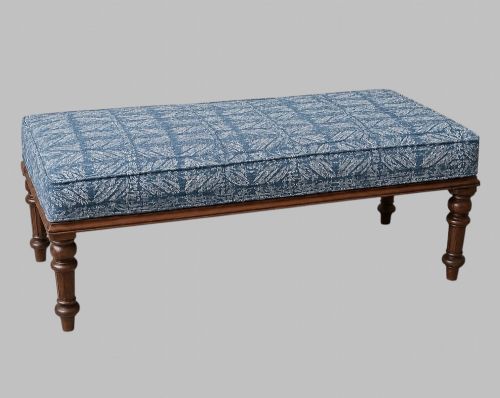
These walnut upholstered bench selections range from compact footstools to expansive settees, offering sturdy timber frames and comfortable padded seats.
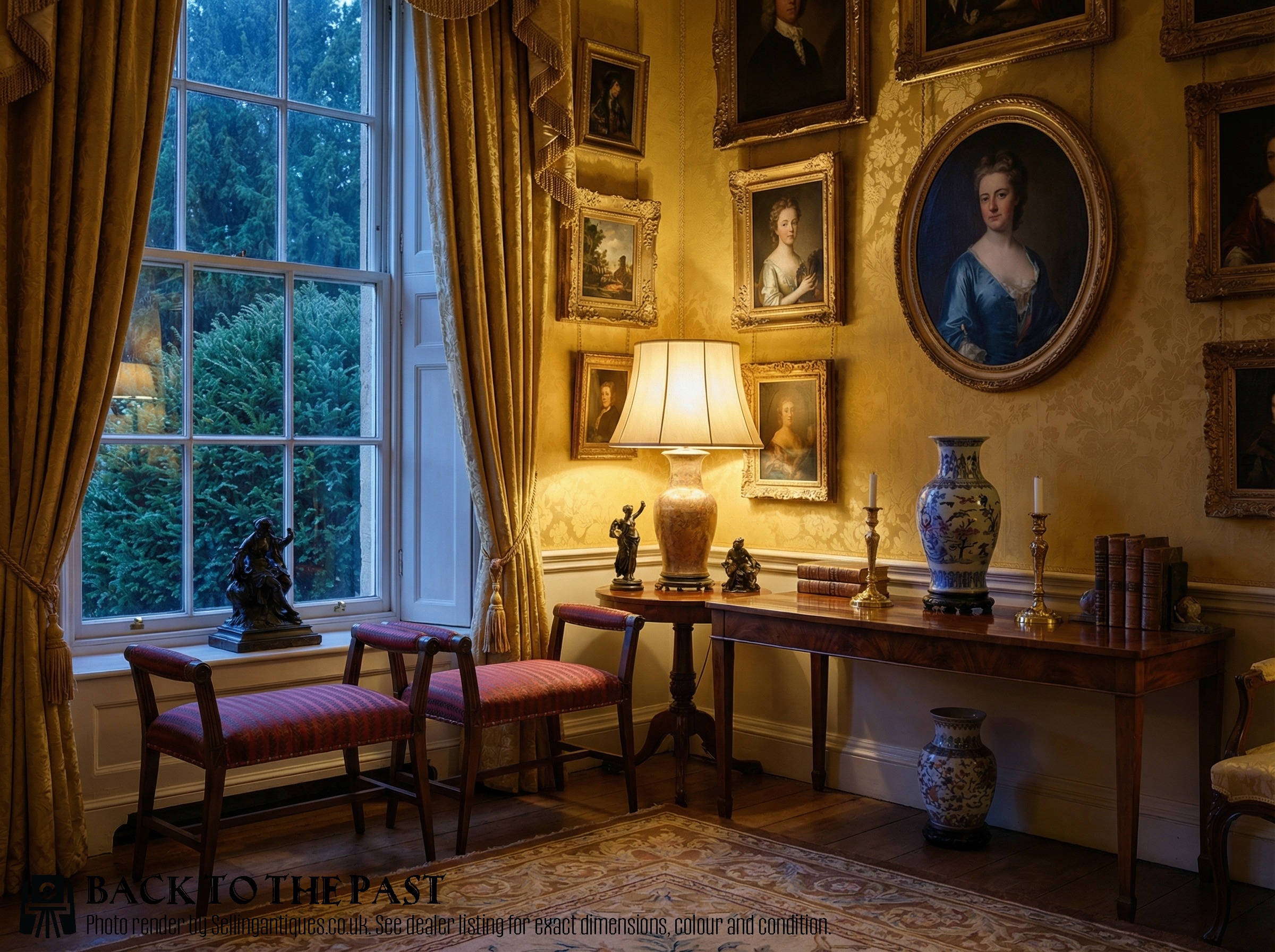
Walnut Upholstered Bench
A walnut upholstered bench brings together substantial timber frames and soft textile surfaces, functioning as seating for halls, bedrooms, and reception rooms. When searching for a walnut upholstered bench, buyers encounter a diverse selection spanning compact dressing stools, window seats, and larger settees.
The objects on this page originate from various periods including the eighteenth, nineteenth, and twentieth centuries. Revival styles such as Queen Anne, Victorian, and Art Deco dominate the selection, showing historical influences adapted for domestic use.
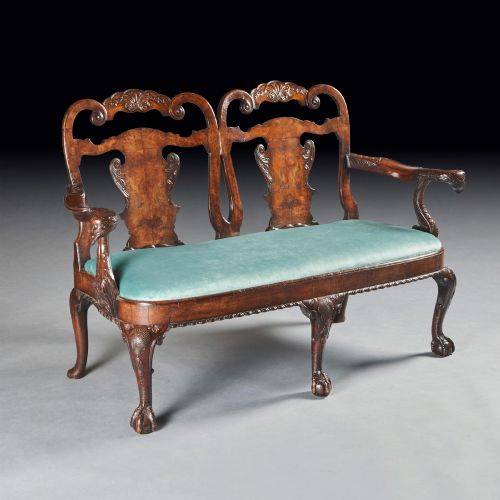
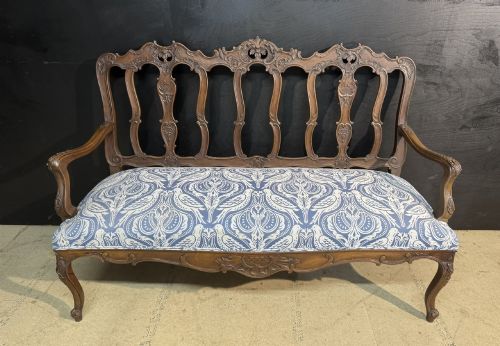
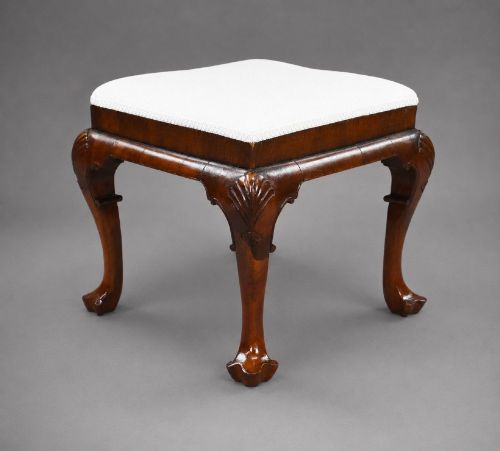
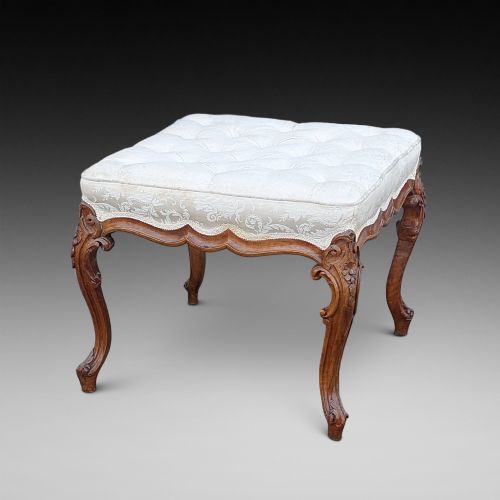
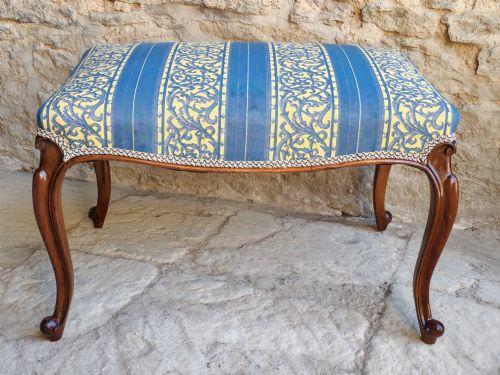
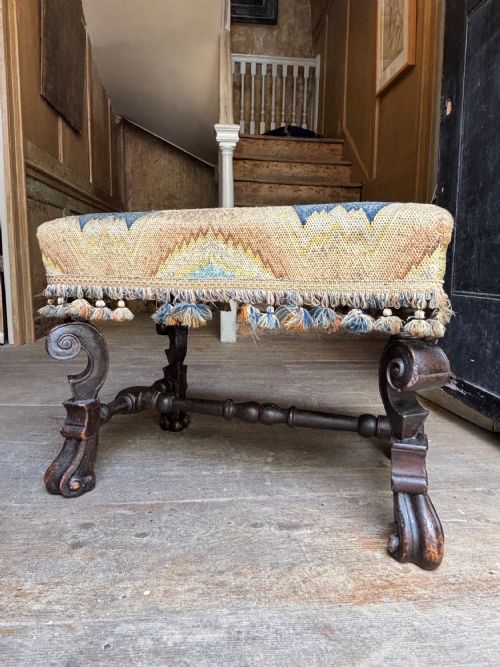
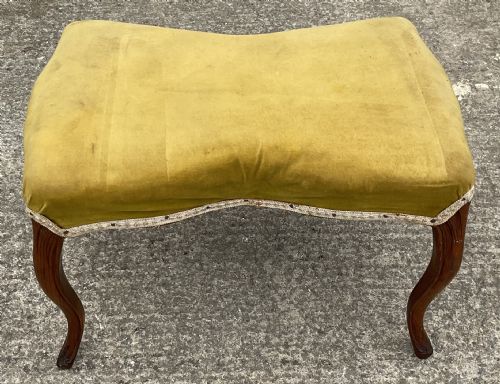
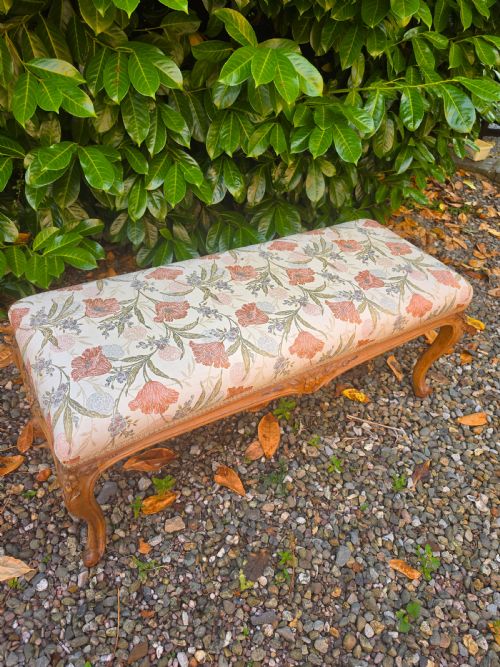
Formats vary from single-seat footstools and dressing stools to multi-seat window seats, daybeds, and sofas. Many pieces feature carved cabriole legs, turned supports, or scroll ends, executed in solid or burr walnut.
How they were made
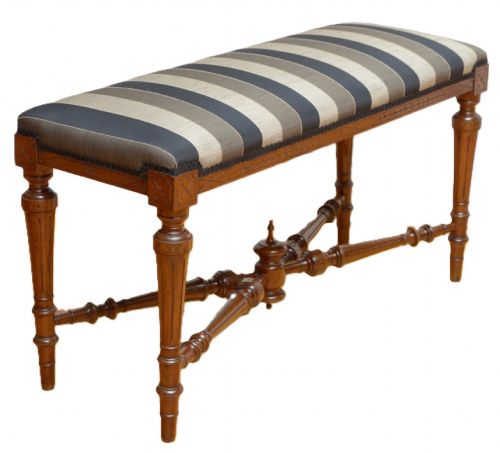
Makers utilised solid walnut and burr walnut veneers for the structural frames, often carving details such as cabriole legs, fluting, and scroll ends directly into the dense wood. Some examples incorporate brass hardware, pearl inlay, or cane panels alongside the primary timber.
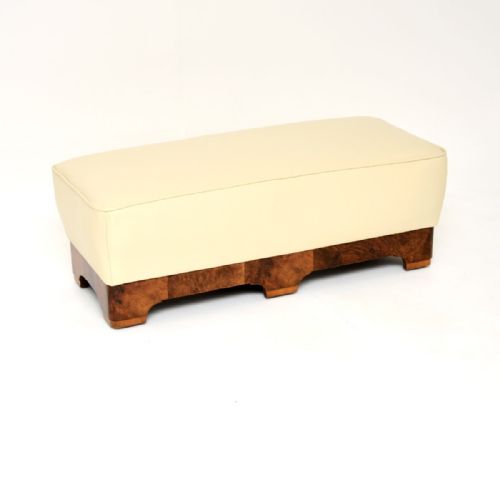
Upholstery techniques involve padding the seats with textiles, velvet, leather, or specialised designer fabrics like Robert Kime. Traditional stuffing methods give way in twentieth-century pieces to streamlined Art Deco forms covered in cream leather or contemporary linen.
Listings feature walnut timber combined with leather, velvet, brass, and various textile upholstery from the seventeenth century through the Art Deco era.
What varies in quality
The standard of carving and timber selection dictates the distinction between standard production and exceptional examples. Crisp execution of cabriole legs and rich grain patterns in burr walnut indicate superior craftsmanship.
The integrity of the frame construction and the quality of the upholstery textile also determine the merit of each piece. Original timber joinery combined with sympathetic reupholstery preserves the character and structural stability of the bench.
Harry & Lou Epstein·Howard & Sons
The Walnut Upholstered Bench Glossary
- Cabriole leg
- A furniture leg that curves outward at the knee and tapers inward to an ankle, mimicking an animal's limb. This form appears frequently on eighteenth-century and revival seating.
- Burr walnut
- A specialised wood veneer taken from the wart-like growths on walnut trees, prized for its swirling, highly figured grain patterns. Makers applied this veneer to prominent surfaces of tables and stool frames.
- Window seat
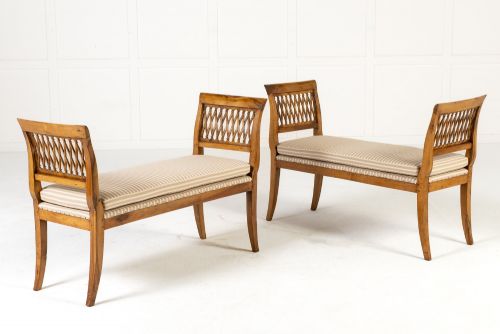
- A long, narrow bench designed specifically to fit beneath a window recess. These pieces often feature armrests at one or both ends and upholstered tops.
- Caned settee
- A wooden seat featuring woven cane panels integrated into the backrest or frame. This technique lightens the visual weight of heavy timber furniture.
- Daybed
- An elongated seating unit designed for reclining, combining elements of a chair and a bed. Examples in this category often feature scroll ends or padded headboards.
Walnut Upholstered Bench: Frequently Asked Questions
Where should I place a walnut upholstered bench?
Smaller stools fit well at the foot of a bed or beneath a dressing table, while long window seats suit hallways and living room perimeters. Their versatile proportions allow them to function as supplementary seating or decorative accents.
Larger settees and daybeds anchor open spaces or serve as conversation pieces in drawing rooms. Pairing the bench with complementary antique or revival furniture enhances the room's cohesive design.
How do I identify a Victorian walnut bench?
Victorian pieces often display dark walnut frames with heavy carved details, cabriole legs, or button-tufted upholstery. The timber tends to have a deep, polished finish characteristic of nineteenth-century production.
Later Victorian window seats and salon stools also incorporate durable springing and dense horsehair stuffing beneath the top cover. Comparing the turning and joinery helps distinguish these from earlier eighteenth-century prototypes.
What is the difference between a stool and a window seat?
Stools are compact, backless platforms designed for perching or resting feet, whereas window seats typically include one or two elevated armrests or back supports. Window seats are engineered specifically in elongated rectangles to sit neatly below glazing.
Both forms utilise walnut frames and upholstered pads, but window seats offer a more defined architectural silhouette. Stools remain portable and modular, shifting easily between rooms.
How should I care for vintage upholstery?
Vacuum textile and velvet surfaces gently with a soft brush attachment to remove dust without crushing the pile. Protect leather and wood frames from direct sunlight and excessive temperature fluctuations to prevent drying.
Professional cleaning is recommended for delicate antique textiles like needlepoint or specialty designer fabrics. Periodic checks of the frame joints ensure the timber remains stable under regular use.