
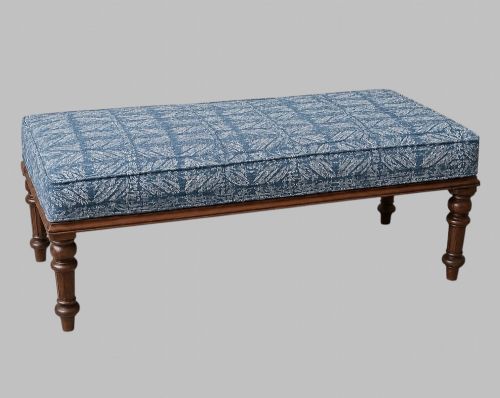
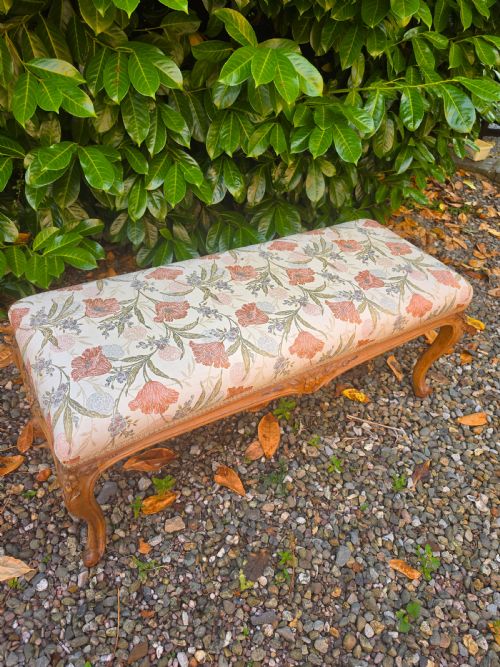
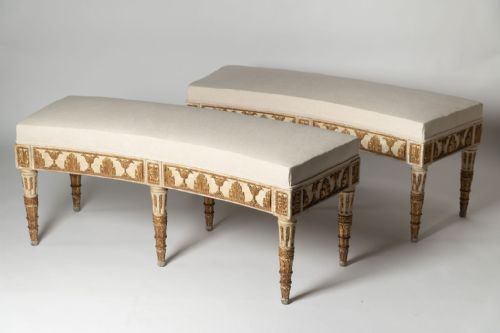
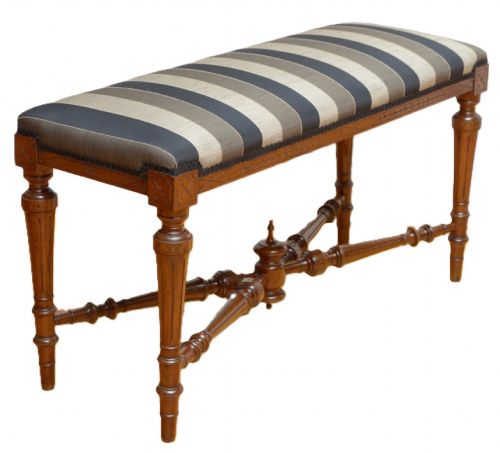





Padded Window Bench
A padded window bench brings a low, upholstered seat to a sill or alcove, combining traditional woodwork with comfortable seating.
Padded Window Bench
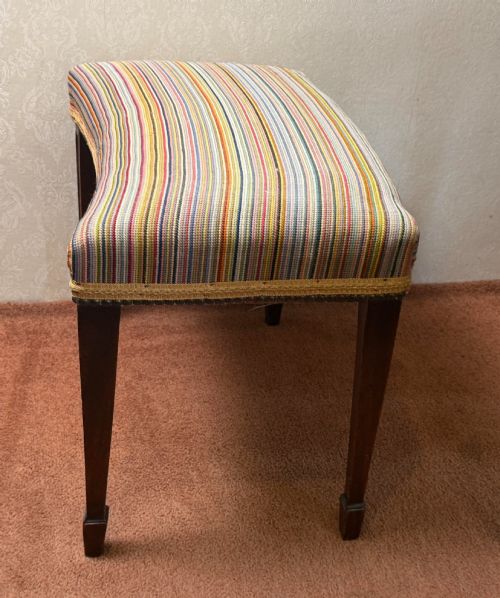
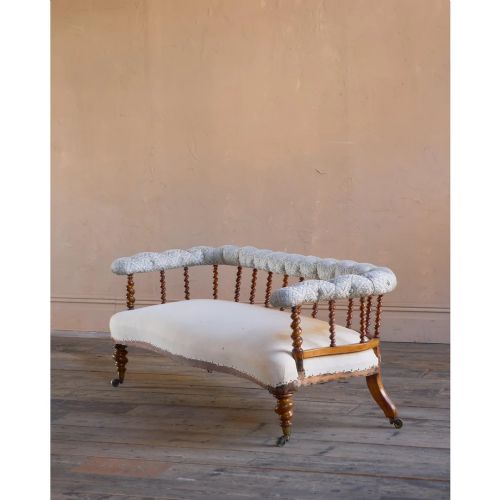
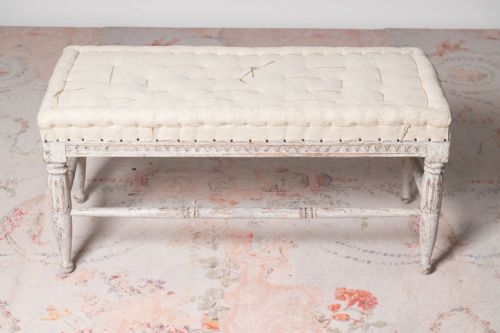
A padded window bench offers a low-profile seat designed to sit beneath a window or along a hallway wall. These pieces appear in forms ranging from compact Victorian walnut window seats to longer Edwardian upholstered footstools and duet stools.
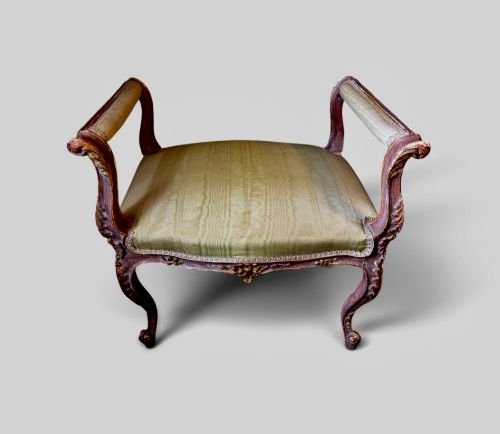
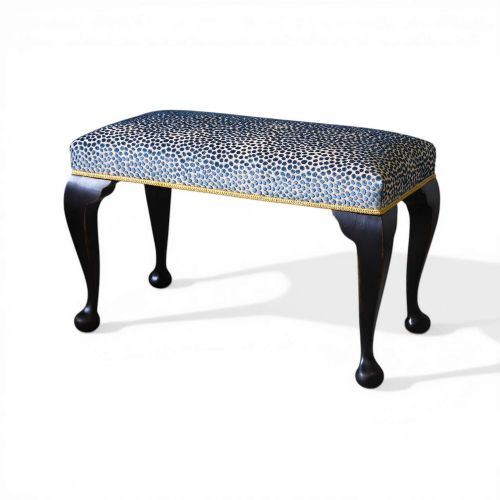
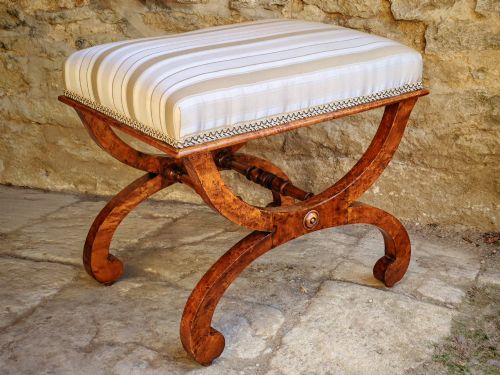
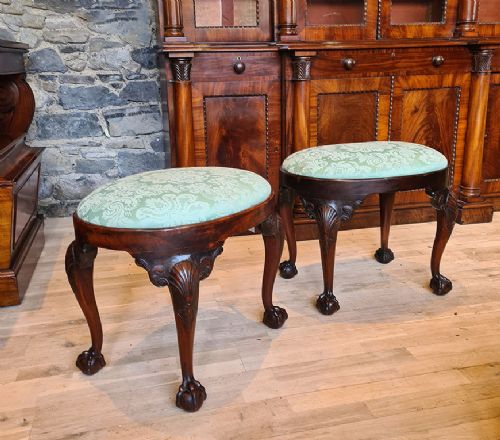
Makers shaped these seats across multiple eras, incorporating styles such as Regency, Rococo Revival, Aesthetic Movement, and Queen Anne Revival. Common structural formats include cabriole legs, turned supports, and X-frames in woods like mahogany, walnut, and oak.
The materials span traditional hardwoods paired with diverse textiles, including velvet, linen, and patterned fabrics like William Morris velvet or Robert Kime designs. Such seating adapts readily to bedrooms, hallways, and living rooms alike.
Markers of Standard
Quality rests in the precision of the timber frame's carving and the structural integrity of the legs, whether square tapering, fluted, or cabriole with claw and ball feet. Denser woods and crisper hand-carved details signal higher craftsmanship.
The standard of upholstery and the choice of covering fabric also dictate the finish. Professional re-upholstery using high-grade textiles like printed velvets or historic linen patterns elevates a piece's presentation while respecting its period character.
Some Victorian duet stools arrived with hidden hinged lids, offering secret storage for sheet music or dropped house keys.
C. Hindley & Sons
The Padded Window Bench Glossary
- Window seat
- A long, upholstered stool designed specifically to fit the width of a window recess. These seats often feature arm supports or open ends.
- Duet stool
- A wider stool intended to accommodate two people sitting side by side, frequently used at a piano or in a drawing room.
- Giltwood
- Timber treated with gold leaf or a gold-coloured metallic finish. This decorative technique appears on formal frames from various periods.
- Cabriole leg
- A furniture leg that curves outward at the knee and tapers inward toward the foot, inspired by the shape of an animal's leg.
- X-framed
- A structural design utilising intersecting diagonal members to support the seat. This form often denotes pieces of considerable decorative ambition.
Padded Window Bench: Frequently Asked Questions
Where should I place a window bench?
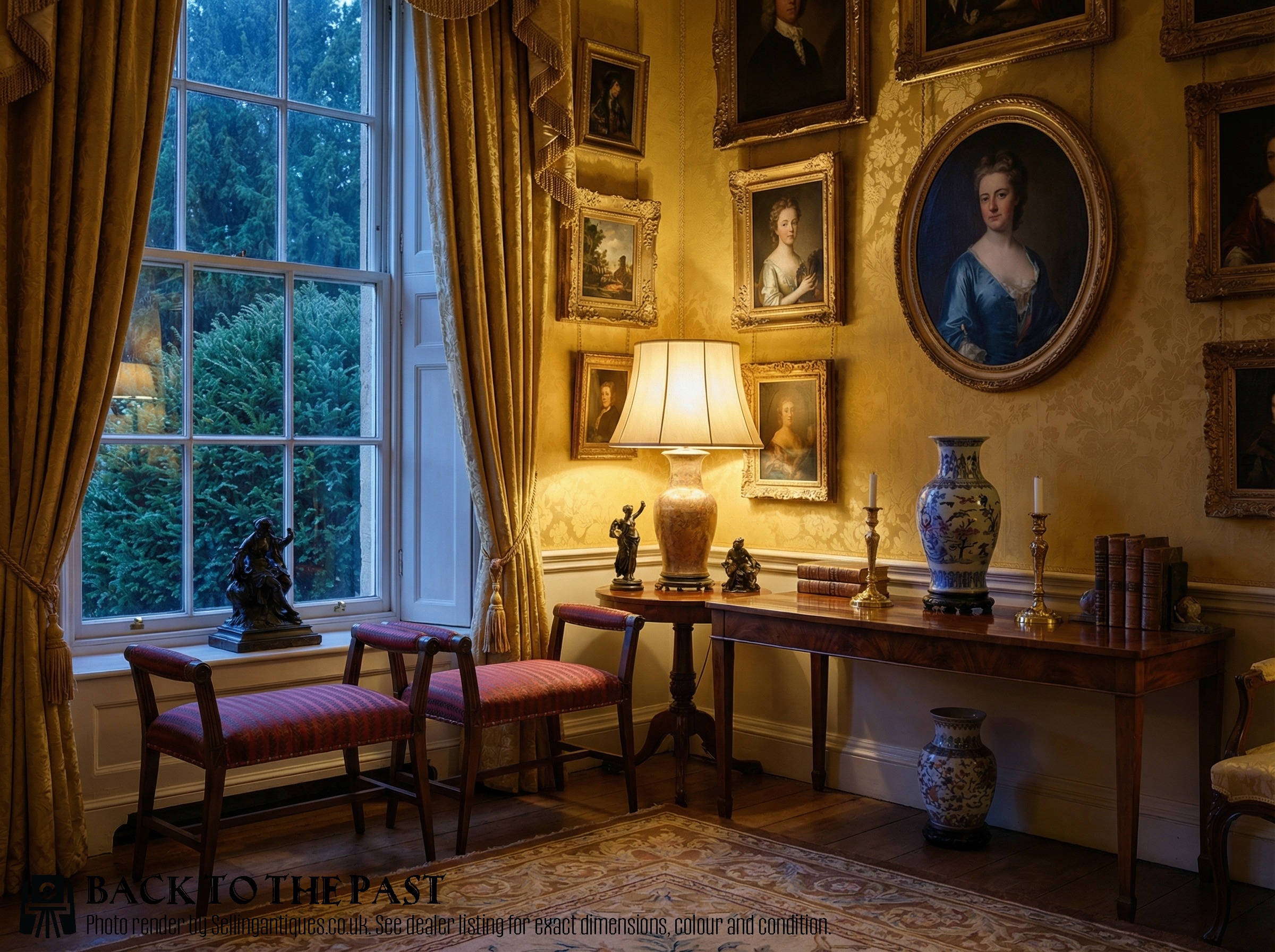
These benches fit naturally beneath low windows, along hallways, or at the foot of a bed. Their slender proportions allow them to occupy circulation spaces without blocking light or passage.
They also serve well in dressing rooms or alcoves where additional seating is useful but floor space is restricted.
How do I identify a Victorian window seat?
Victorian examples often feature dark timbers like walnut or mahogany, frequently paired with robust turnings or cabriole legs. Stylistic hints include Revival influences such as Rococo or Aesthetic Movement details.
Construction methods from this era typically display heavier framing and dense secondary woods beneath the upholstery.
Can I use a piano stool as a window bench?
Many piano stools and duet stools share identical dimensions and upholstery styles with traditional window seats. Their rectangular forms and padded tops make them readily adaptable to window recesses.
Some period examples even include hinged seats providing discreet storage for small items.
What is an X-framed stool?
An X-framed stool relies on intersecting diagonal wooden supports beneath the seat rather than four standard vertical legs. This architectural configuration frequently appears on formal or Irish pieces from the eighteenth and nineteenth centuries.
The geometry creates a striking silhouette suited to prominent spaces.
How do I care for antique upholstery?
Maintenance depends on the specific textile used, whether velvet, linen, or patterned cotton. Regular gentle vacuuming with a soft brush attachment helps prevent dust accumulation in the fabric pile.
Positioning the seat away from direct sunlight protects both the timber finish and the colours of the textile from fading.