
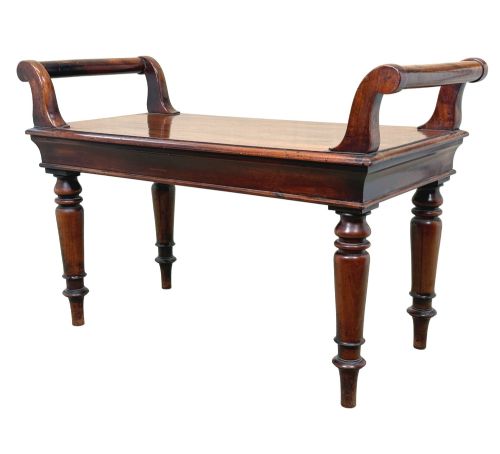


Scrolled Arm Stool
A scrolled arm stool brings distinct seating and architectural line to a room, offering the structured form of a window seat or bench.
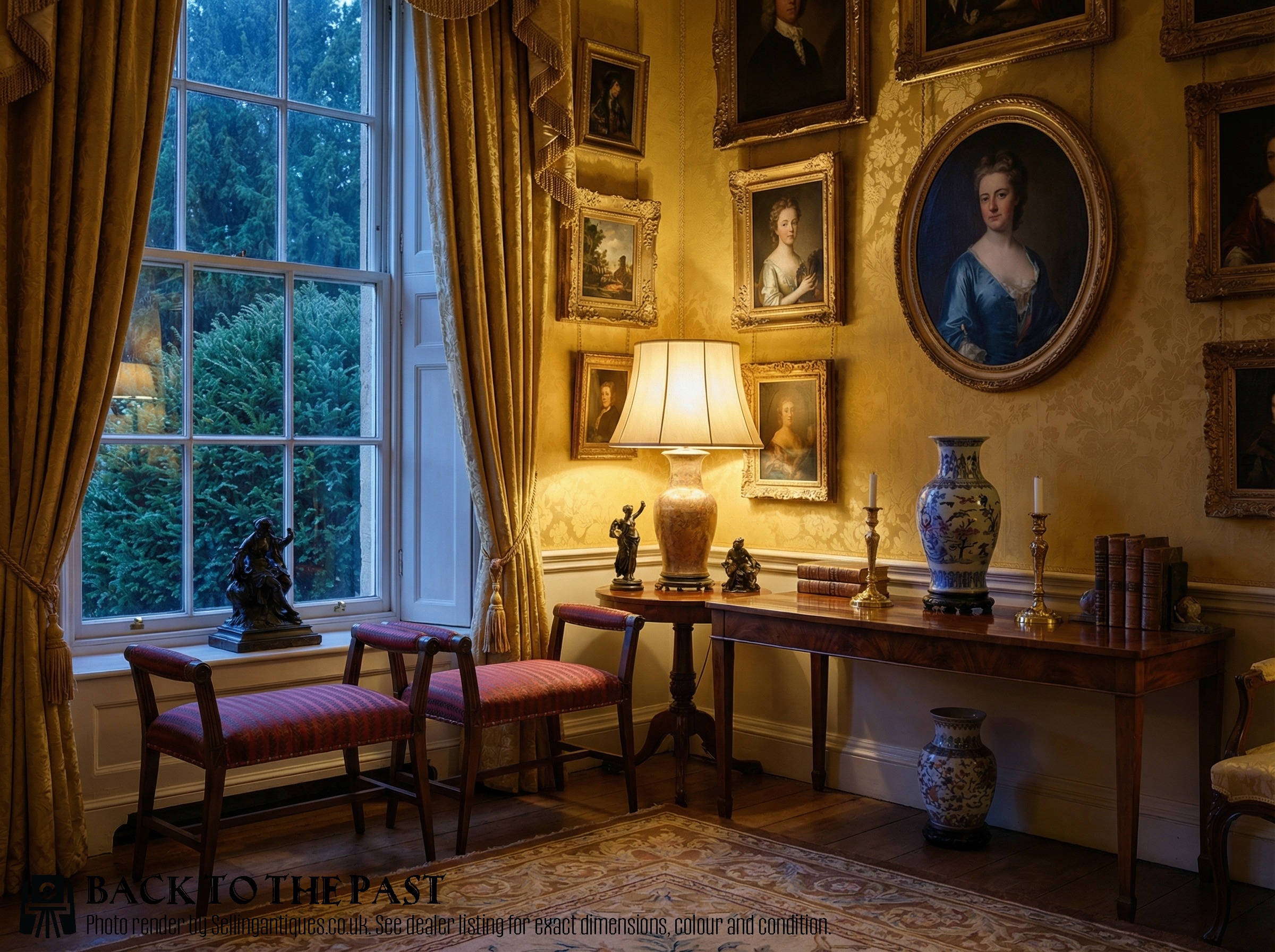
Scrolled Arm Stool
When you search for a scrolled arm stool, you encounter extended seating forms designed for windows, halls, and dressing rooms. These pieces combine the utility of a bench with the decorative presence of scroll-ended arms.
The versions most frequently met on this page span the nineteenth century through the Edwardian period, often appearing as window seats or benches in mahogany and walnut. Many pieces reflect Regency, Victorian, and Neoclassical design influences, incorporating carved details and upholstered seats.
Materials and construction
Cabinet makers constructed these frames predominantly in solid hardwoods such as mahogany and walnut, shaping the timber to form the characteristic curved supports and scrolled ends. Joinery techniques ensured the long frames of window seats and benches remained stable under weight.
Upholstery completed the piece, utilising fabrics like damask, velvet, and traditional upholstery materials secured over padding. Brass details occasionally appeared as decorative mounts or castors on the legs.
Period representation spans from the Regency era through the nineteenth century and into Edwardian revivals.
Assessing quality in execution
The distinction between standard examples and finer pieces lies in the crispness of the timber carving and the architectural proportion of the frame. Superior items display fluid scrollwork on the arms and well-proportioned cabriole or turned legs.
Material selection also dictates the standing of a piece, with dense, figured mahogany or rich walnut elevating the work. The integration of the upholstery with the wooden frame reveals the care taken by the original maker.
The Scrolled Arm Stool Glossary
- Window seat
- A long, narrow form of stool or bench traditionally placed in a bay or recess. These pieces provide low seating without blocking natural light.
- Cabriole leg
- A furniture leg that curves outward and then tapers inward, inspired by the natural shape of an animal's leg. It appears frequently on refined seating from various periods.
- Damask
- A reversible figured fabric traditionally woven on a jacquard loom with patterns formed by contrasting warps and wefts. It offers a textured surface suitable for formal upholstery.
- X-frame stool
- A seating form supported by intersecting diagonal legs forming an X shape when viewed from the side. This ancient architectural form experienced revivals in neoclassical design.
Scrolled Arm Stool: Frequently Asked Questions
Where do you put a scrolled arm stool?
These pieces suit placement beneath large windows, at the foot of a bed, or along a hallway wall. Their narrow depth allows them to fit circulation spaces where deep chairs would obstruct movement.
They also function as dressing stools or extra seating in a reception room, providing a firm surface that does not overwhelm the floor plan.
How do I date a window seat?
Dating relies on identifying the timber, secondary woods, and stylistic vocabulary used in the frame. Regency and Victorian examples often feature characteristic turning and scroll details tied to their respective decades.
Later Edwardian and revival pieces frequently borrow earlier neoclassical motifs while utilising machine-cut construction methods visible in the interior joinery.
Are these seats comfortable for sitting?
Window seats and benches are generally built for short-term seating rather than lounging. The firmness depends on the traditional webbing, stuffing, and spring systems utilised in the upholstery.
Many period examples maintain a firm pad that prioritises architectural line and support over deep cushioning.