
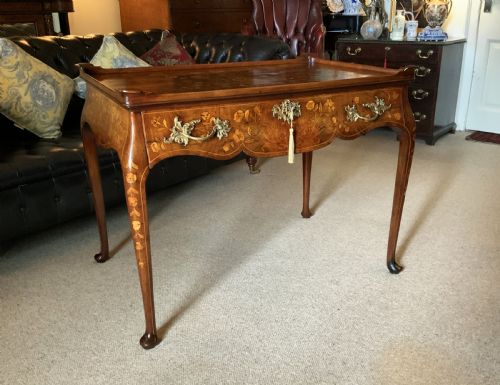


Cabriole Leg Silver Table
A cabriole leg silver table brings together sturdy timber and raised tray tops designed to hold precious tea and dining services.
Cabriole Leg Silver Table
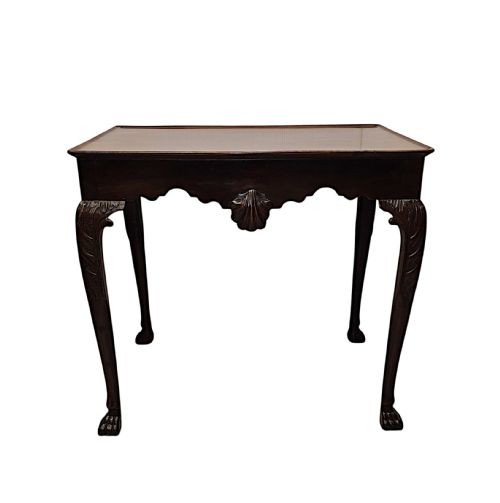
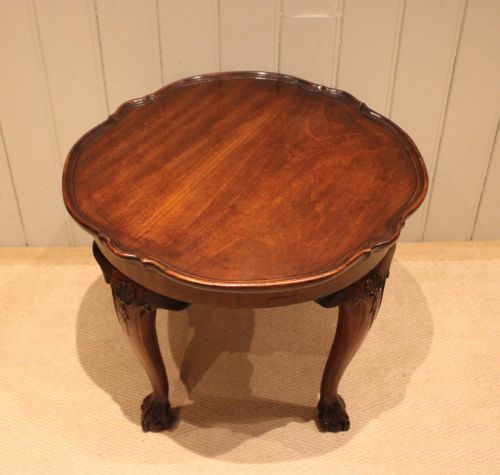
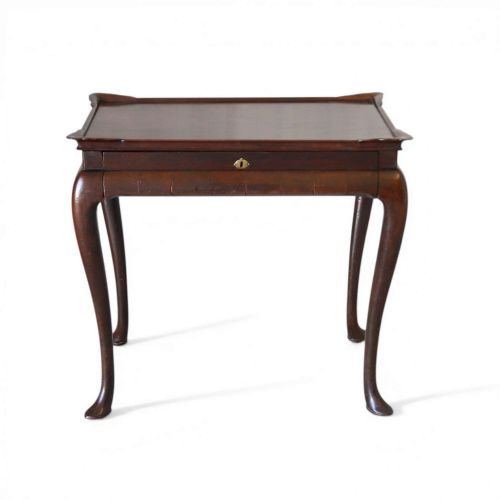
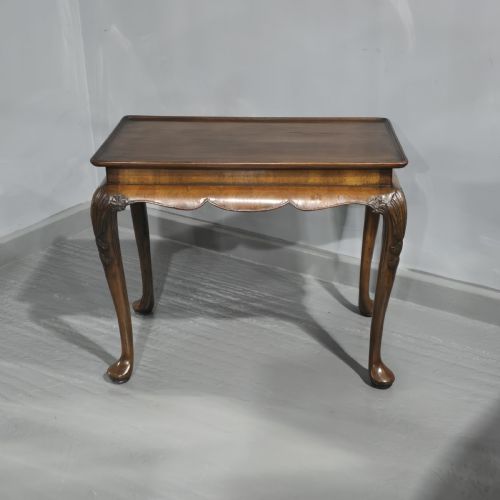
A cabriole leg silver table serves primarily as a display or serving surface for silverware, tea services and presentation items. The form appears across the Georgian, Victorian and early twentieth-century periods in forms such as side tables, occasional tables and coffee tables.
Buyers encounter examples originating from English, Irish, Dutch and French workshops. The configuration typically includes a raised tray top or moulded edge designed to prevent items from sliding off during service.
The evidence shows forms ranging from eighteenth-century George II and George III masterworks to later revival interpretations in mahogany, walnut and fruitwood. These pieces function effectively as central focal points in reception rooms or hallways.
Factors of Quality
Quality rests in the precision of the timber selection and the crispness of the carved details on the knees and feet of the cabriole supports. Heavy figured grains in the walnut and Cuban mahogany elevate the visual presence of the piece.
Proportion and structural integrity distinguish superior examples from standard ones, particularly where delicate tray tops join the frieze and legs. Original hardware, fine marquetry work and intact silver inlay demonstrate superior craftsmanship.
Listings feature woods spanning mahogany, walnut, fruitwood, brass, ormolu, and silver inlay across Georgian and Victorian periods.
Elkington and Co·Walker and Hall·Henry Williamson Ltd·Deakin and Francis
The Cabriole Leg Silver Table Glossary
- Cabriole leg
- A furniture leg that curves outward at the knee and inward at the ankle, mimicking animal limbs. This form frequently terminates in pad, hoof or trifid feet on eighteenth-century examples.
- Tray top
- A tabletop featuring a raised edge or gallery designed to secure vessels and prevent sliding. This feature is common on tables intended for serving tea or displaying silver.
- Marquetry
- The art of applying pieces of veneer to a structure to form decorative patterns. Dutch examples frequently employ this technique to depict birds and floral motifs.
- Ormolu
- Gilded bronze applications utilised for decorative mounts on furniture frames. This material appears on French and continental pieces within the record.
- Trifid foot
- A three-lobed foot often found terminating the bottom of a cabriole leg on Irish and English furniture. It provides a distinct stance to mid-eighteenth-century tables.
Cabriole Leg Silver Table: Frequently Asked Questions
What is a cabriole leg silver table used for?
These tables function as serving surfaces and display areas for silver tea services, presentation pieces and decorative items. They provide stable platforms within reception rooms, halls and dining spaces.
Historically, the raised tray tops prevented valuable vessels from sliding off during use. Today, collectors utilise them as statement side tables or coffee tables.
How do I identify a Georgian silver table?
Georgian examples typically feature solid mahogany or walnut construction with hand-carved cabriole legs. Look for period joinery and proportions characteristic of the eighteenth century.
Many incorporate raised tray tops or finely carved knees terminating in distinct foot styles such as the trifid or pad foot.
Are there regional variations in these tables?
Irish examples often display robust proportions and deeply carved cabriole legs with distinct foot forms. English pieces tend toward refined Georgian or Chippendale styling.
Dutch and French variations frequently incorporate detailed marquetry or silver inlay alongside ormolu mounts.