

Georgian Tea Table Dark
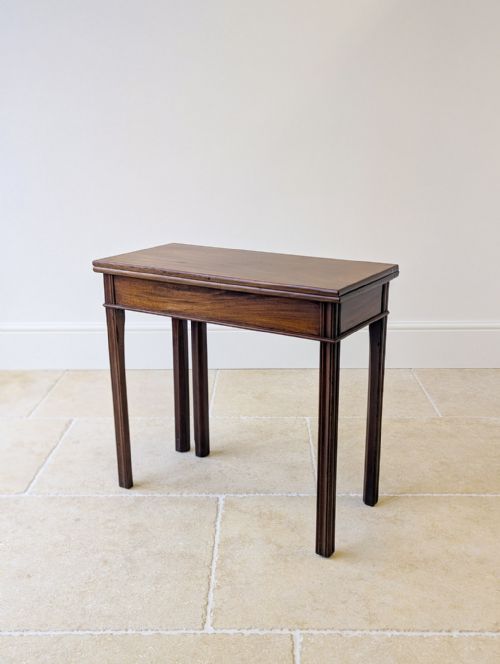
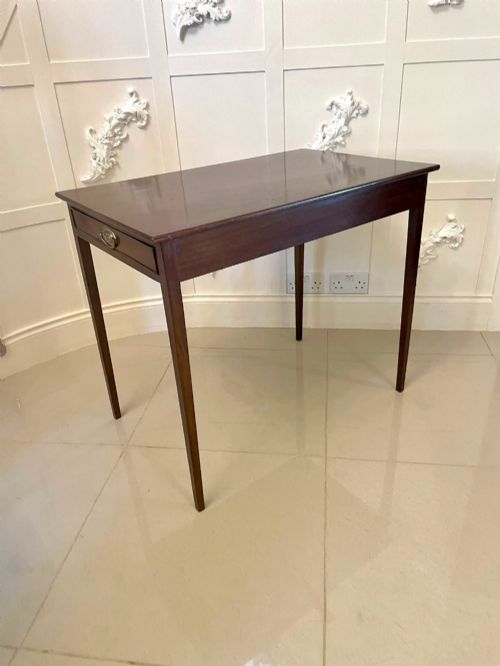
A georgian tea table dark in timber brings folding leaves, tilt tops and compact proportions into a room.
Georgian Tea Table Dark
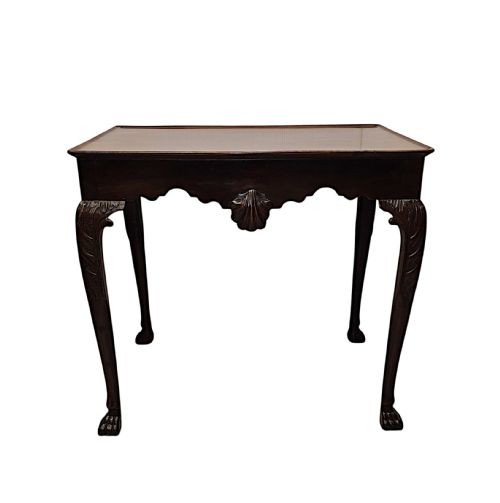
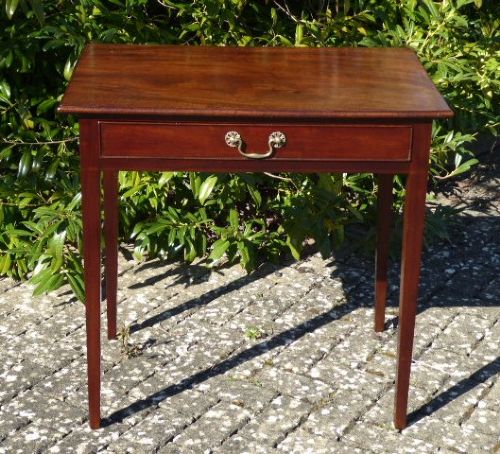
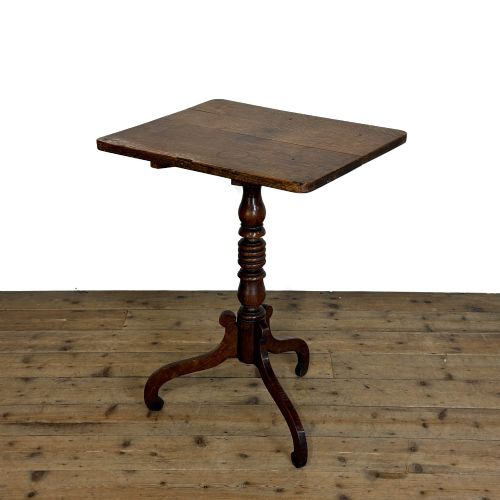
A georgian tea table dark in colour is typically built from mahogany, oak, or rosewood, spanning the eighteenth century, the regency period, and later revival dates. These pieces serve primarily as fold-over top tea tables, card tables, and tilt-top tripod tables designed for parlour use.
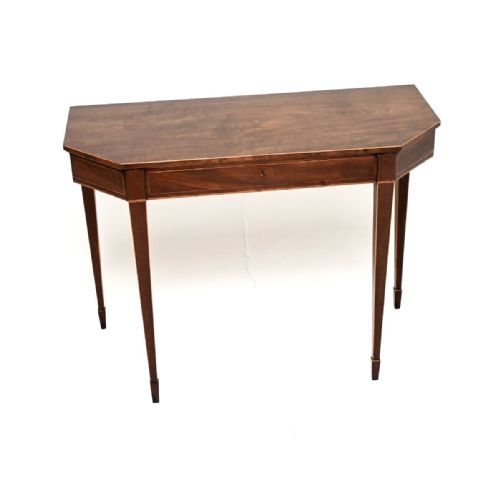
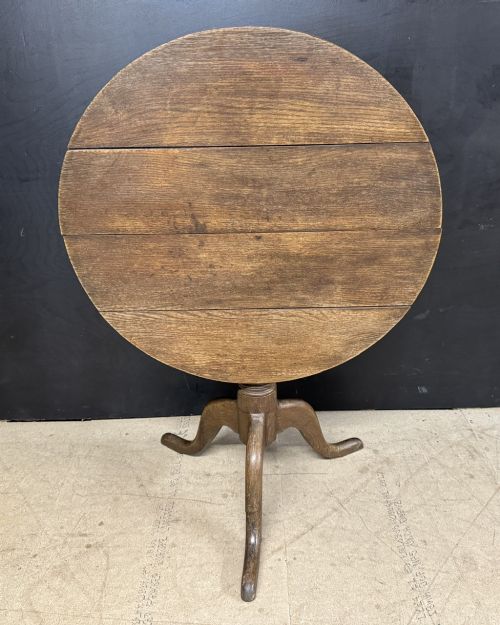
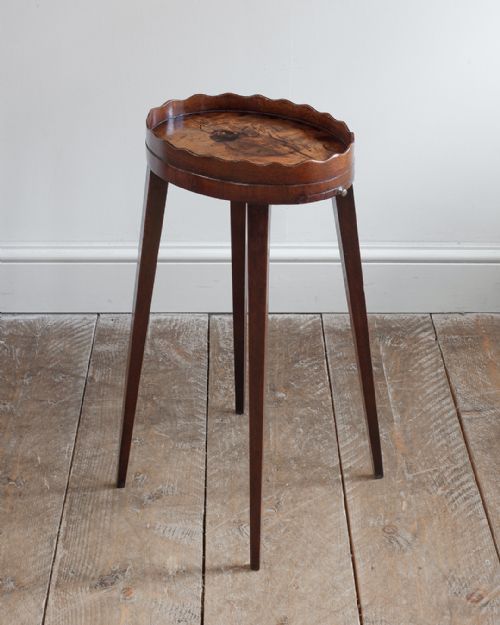
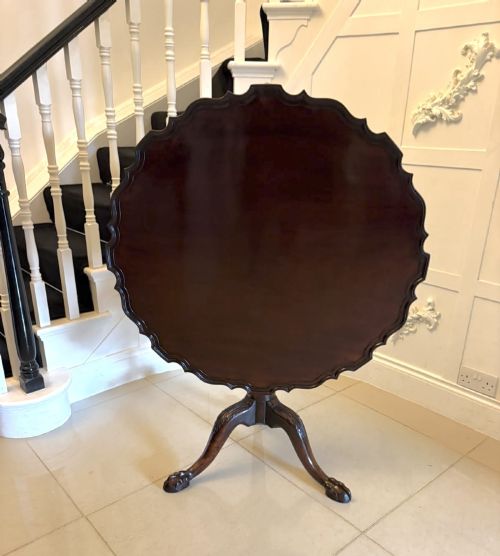
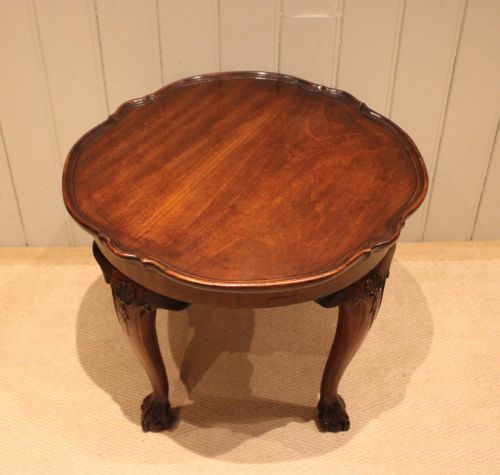
The versions met most frequently on this page date from the georgian and regency eras, alongside later nineteenth and twentieth-century interpretations in the chippendale and georgian styles. Forms range from demi-lune console tables and spider leg lamp tables to tripod tables with birdcage mechanisms.
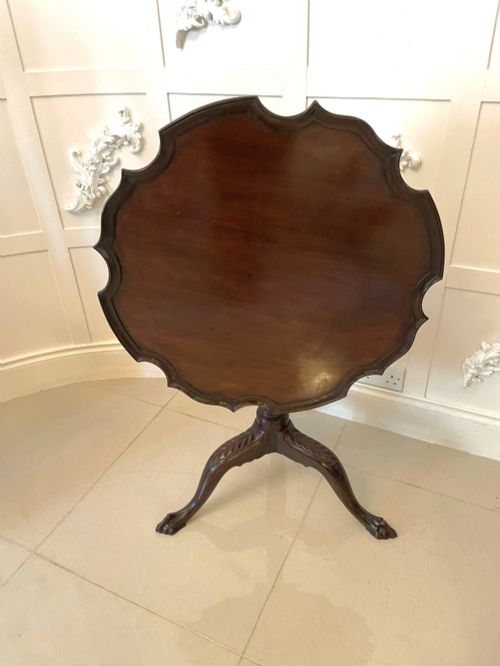
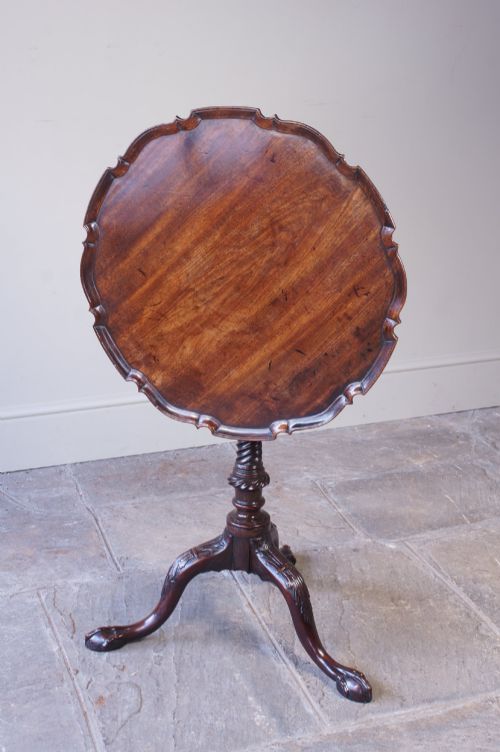
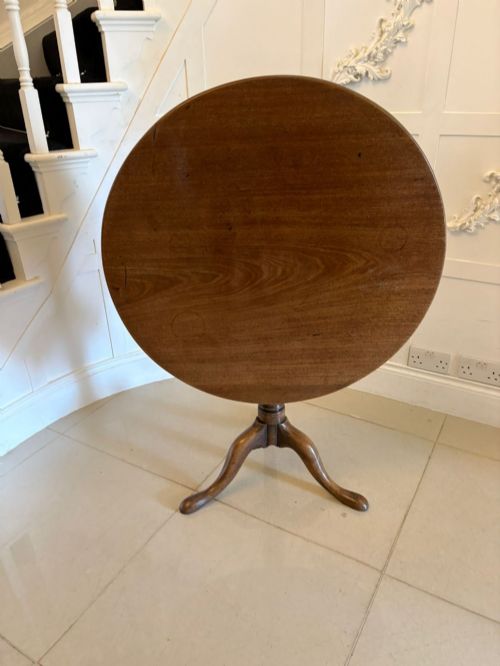
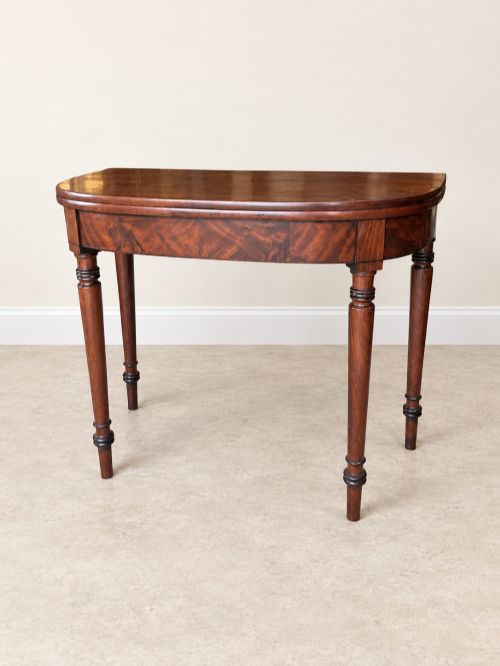
Buyers encounter timbers showing deep red-brown tones, often enhanced by flame mahogany veneer, cuban mahogany, or burr oak. Many examples incorporate folding tops or tilting mechanisms that allow the surface to stand flat against a wall when not in use.
Factors of quality
Quality rests upon timber selection, evident in the depth of grain figured in flame mahogany or the tight growth rings of country oak and burr oak. Superior examples display thoughtful matching of veneers across folding leaves and table tops.
Construction integrity defines the better pieces, seen in the smooth operation of tilt-top birdcage mechanisms, tight joints on tripod legs, and precise alignment of fold-over leaves when closed.
Listings span the eighteenth century, the regency era, and the nineteenth century, extending into Edwardian and 1930s revival pieces.
The Georgian Tea Table Dark Glossary
- Tilt top
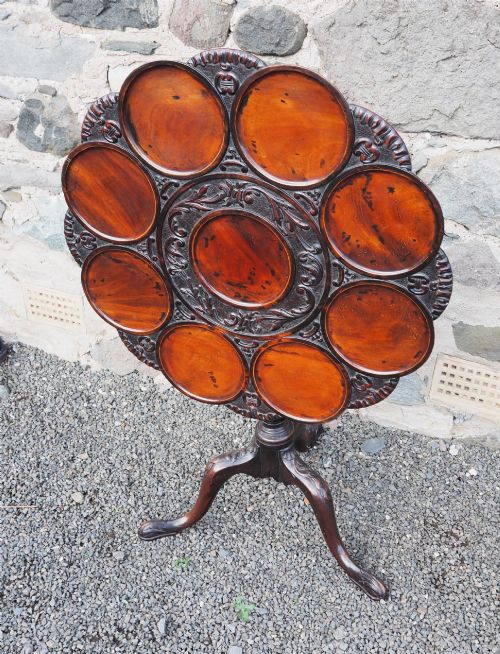
- A table top mounted on a pivot and catch mechanism that allows the surface to rest vertically against the pedestal stem when not in use.
- Demilune
- A half-moon shape characteristic of console and card tables designed to sit flat against a wall.
- Birdcage
- A timber framework beneath a tilt-top table that allows the top to both pivot and rotate.
- Concertina action
- An expanding frame mechanism used on card tables to support folding leaves when opened.
- Pie crust rim
- A raised, scalloped edge carved into the perimeter of a round table top.
Georgian Tea Table Dark: Frequently Asked Questions
How do tilt-top tables work?
Tilt-top tables utilise a central pivot or birdcage mechanism beneath the surface that allows the top to swivel into a vertical position.
This design enabled tables to be stored out of the way against room perimeters when floor space was needed.
What woods are typical for these tables?
Mahogany, oak, and rosewood form the primary timbers, often supplemented by Cuban mahogany and fruitwood in country pieces.
Surface enrichment comes from satinwood inlay, boxwood stringing, and flame mahogany veneer.
How do I distinguish georgian from later styles?
Georgian pieces date from the eighteenth and early nineteenth centuries, displaying construction methods and timber ageing typical of that period.
Later pieces from the Edwardian era or 1930s are marked as georgian style or chippendale style revivals.