




Dished Top Silver Table
These dished top silver table pieces range from mahogany occasional furniture to sterling silver lidded glass trinket boxes.
Dished Top Silver Table
A dished top silver table brings together timber occasional furniture and small receptacles designed for the dressing table or drawing room. The listings divide cleanly between substantial mahogany tripod or console tables and smaller silver lidded boxes, trinket jars, and potpourri baskets.
The larger occasional and side tables appear in Georgian, eighteenth-century, and nineteenth-century forms, including Irish mahogany examples with dished tops and carved details. Smaller iterations span the Victorian, Edwardian, and George V periods, featuring glass, crystal, or enamel bodies fitted with solid silver lids.
Makers and silversmiths active in Birmingham and London produced these smaller boxes alongside regional cabinetmakers crafting figured walnut and mahogany tables. Buyers encounter both the miniature silver-mounted glass vanity jars and the larger wooden display surfaces under this single heading.
How They Were Made
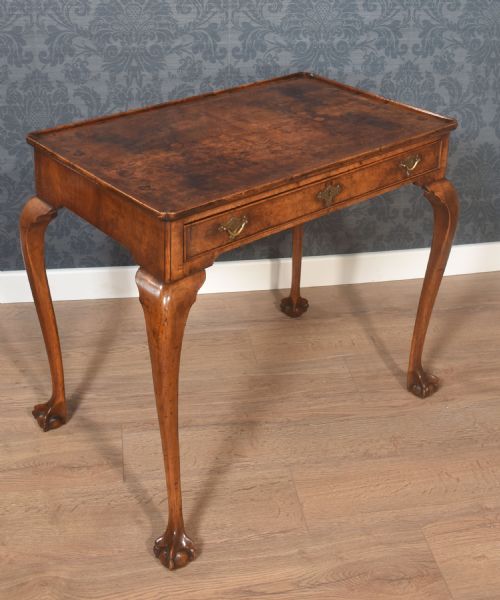
Cabinetmakers constructed the larger tables using solid mahogany and figured walnut, shaping the raised edges of the timber tops by hand. Turning and carving defined the supports and tripod legs of these eighteenth-century and nineteenth-century occasional pieces.
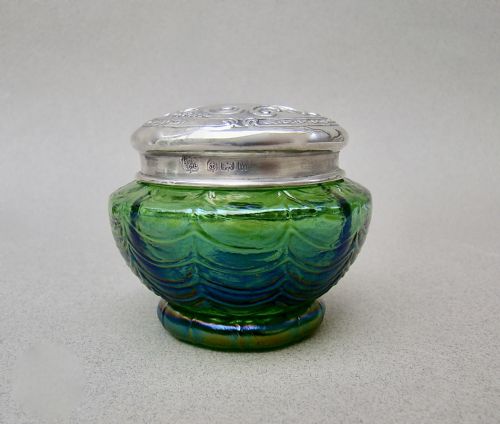
For the smaller boxes and jars, silversmiths hammered and cast sterling silver to form hinged or removable lids, frequently incorporating repoussé work, hallmarks, and enamel. Cut glass, rock crystal, and Kralik glass bodies were fashioned separately before being united with their silver mounts.
Materials span solid silver, cranberry glass, enamel, brass, and figured walnut across multiple centuries.
What Varies in Quality
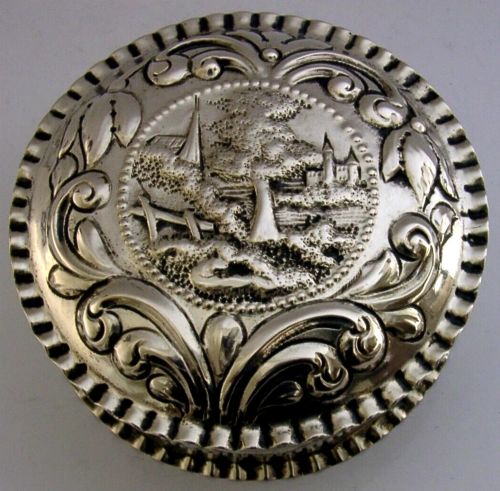
The distinction between standard domestic items and superior examples rests on the depth of the carving in the timber tables and the weight of the solid silver mounts. Heavier gauge silver and crisply cast castle top motifs separate finer desk and table boxes from simpler production.
Cut glass clarity and the precision of the mitre cuts on trinket box bodies indicate the skill involved in the glassmaker's contribution. Timber selection also dictates standing, with figured mahogany and walnut grain showing greater visual depth in the larger occasional tables.
A. J. Pepper & Co·William Comyns
The Dished Top Silver Table Glossary
- Dished top
- A table surface with a raised or concave edge turned from the solid timber to prevent items from rolling off. This form appears on eighteenth-century Irish mahogany occasional pieces and small stands.
- Castle top
- A detailed pictorial lid or plaque cast in relief with a specific architectural landmark or scene. These heavy silver top boxes date predominantly around nineteen hundred.
- Kralik glass
- Art glass produced by the Bohemian manufacturer Wilhelm Kralik Sohn, known for iridescent and organic surfaces. These vessels were frequently fitted with British silver lids.
- Potpourri basket
- An open vessel with a pierced or pierced-work silver lid designed to diffuse scent from dried flowers. Edwardian examples often include swing handles and crystal bowls.
- Vanity jar
- A cylindrical or faceted glass container with a solid silver screw or slip-on lid for dressing table use. Victorian and Edwardian iterations frequently feature hobnail cutting.
Dished Top Silver Table: Frequently Asked Questions
What is a dished top table used for?
These tables served as small tea, occasional, or display surfaces in Georgian and later drawing rooms. The raised rim kept small porcelain or silver items secure.
Today, collectors use them as accent tables in hallways or sitting rooms where space is limited but timber character is desired.
How do I care for silver and glass boxes?
Keep sterling silver lids polished with a soft cloth while avoiding abrasive cleaners that damage hallmarks and chased details. Wash glass bodies gently in warm water without submerging glued or sealed silver mounts.
Place them away from direct sunlight and damp environments to protect both the metal and any internal fabric linings.
How can I tell a Georgian table from a later copy?
Examine the underside and joints of the timber for signs of hand-cut construction, pegging, and natural ageing in the mahogany. Eighteenth-century Irish tables display distinct regional carving traits and heavy timber density.
Later reproductions often reveal machine-sawn marks and modern fixings upon close inspection of the frame.
What are silver lidded trinket boxes made of?
The lids consist of solid sterling silver, frequently bearing town marks, date letters, and maker's stamps from Birmingham or London. The lower bodies utilise cut glass, rock crystal, cranberry glass, or Kralik glass.
Some larger table boxes feature solid silver or cast picture tops mounted directly onto wooden display boxes.