





Georgian Walnut Silver Table
A georgian walnut silver table brings architectural timber and refined proportion into a room, offering a surface designed for formal service.
Georgian Walnut Silver Table
When you search for a georgian walnut silver table, you encounter items spanning actual eighteenth-century examples alongside later revivals from the nineteenth and early twentieth centuries. These tables often feature tray tops, figured veneers, or solid construction designed to hold tea and silver services.
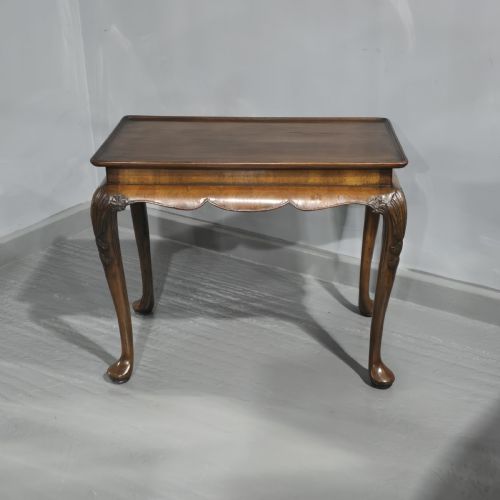
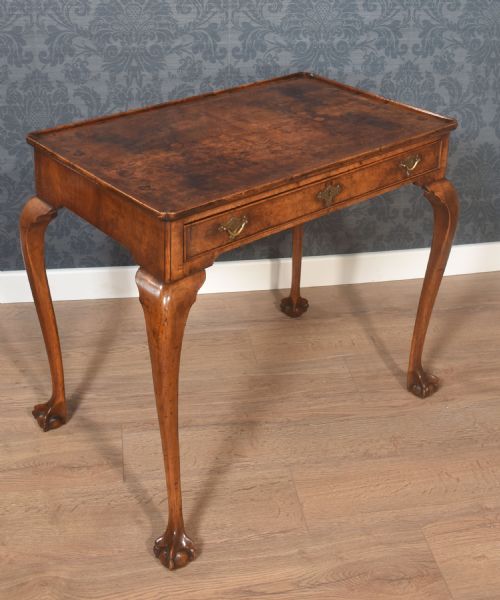
The pieces on this page encompass side tables, tray top coffee tables, and occasional forms executed in walnut, burr walnut, and black lacquered walnut. Stylistic influences include Queen Anne and George II designs, reflecting the domestic habits of earlier periods.
How they were made
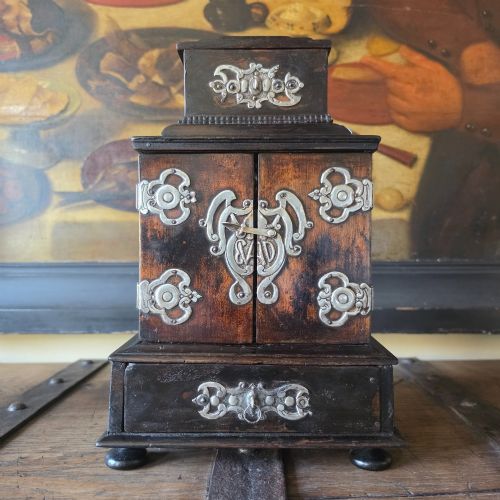
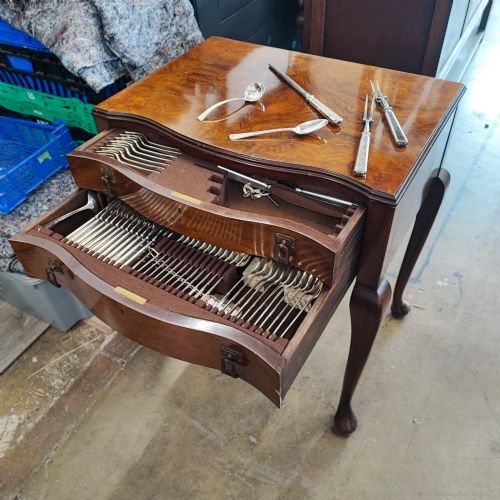
Construction relies upon walnut and burr walnut timbers, frequently worked into figured surfaces that highlight the natural grain of the wood. Brass and silvered metal details appear alongside felt linings in related cabinet and chest forms.
Joinery and surface treatments follow traditional cabinet-making methods, utilising the distinct properties of walnut to achieve smooth tray edges, raised borders, and structured frames.
Some tables feature tray tops so deeply moulded they could double as miniature swimming pools for a very determined house mouse.
What varies in quality
The distinction between standard examples and superior pieces rests on the choice of timber and the handling of the veneer. Figured walnut and burr walnut displays require precise matching and cabinet-making skill to achieve a balanced visual weight across the top.
Proportion and period fidelity also separate workshop output, distinguishing authentic eighteenth-century construction from later revival interpretations produced in the nineteenth or early twentieth centuries.
The Georgian Walnut Silver Table Glossary
- Tray top
- A table surface finished with a raised moulded edge or gallery designed to secure objects from sliding. This form is common on tea and silver tables.
- Burr walnut
- Timber taken from the growth excrescences of a walnut tree, yielding complex, swirling grain patterns. It is sliced into fine veneers for decorative surfaces.
- Queen Anne style
- A design aesthetic originating in the early eighteenth century characterised by curved lines, pad feet, and restrained ornamentation. Revival pieces often emulate these traits.
- George II style
- A heavier, more architectural design phase of the mid-eighteenth century utilising polished woods and structured proportions. Pieces from this era display formal symmetry.
Georgian Walnut Silver Table: Frequently Asked Questions
What is a silver table?
A silver table is an occasional or side table historically used for displaying or serving silver items, tea services, and precious objects.
These tables frequently incorporate raised tray edges to keep vessels secure during use in domestic settings.
How do I date a walnut table?
Dating relies on examining construction methods, timber preparation, and stylistic markers such as leg profiles and edge mouldings.
Earlier eighteenth-century pieces differ in structural joinery from later nineteenth-century revivals and twentieth-century interpretations.
What is burr walnut?
Burr walnut is a specialised wood veneer sourced from the knotted growths of walnut trees, prized for its intricate, swirling patterns.
Cabinet-makers select these figured sections to create decorative focal points on table tops and cabinet fronts.
Where were these tables used?
These tables functioned primarily in reception rooms and parlours for entertaining guests with tea and displaying household silver.
Their compact size allowed them to be moved easily to serve different functions within the home.