
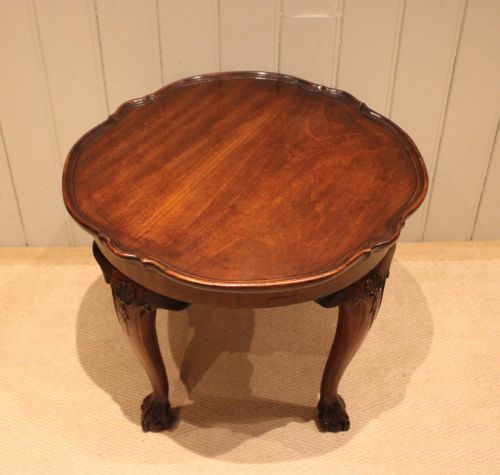
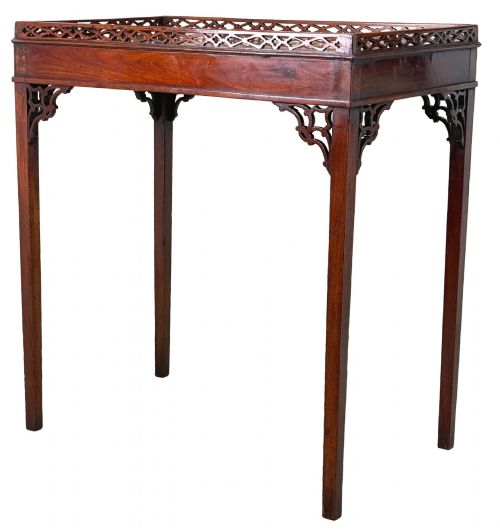


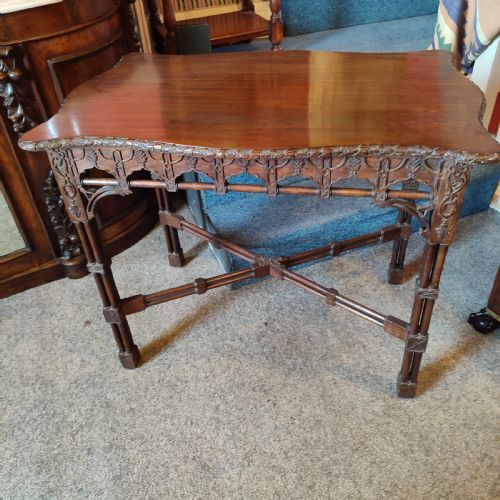

Chippendale Style Silver Table
These chippendale style silver table pieces bring Georgian elegance and refined mahogany craftsmanship straight into your home.

Chippendale Style Silver Table
A chippendale style silver table serves as an elegant display or occasional surface, drawing directly from eighteenth-century English furniture traditions. When you search for a chippendale style silver table, you encounter forms ranging from authentic eighteenth-century examples to later revival pieces from the Victorian and Edwardian eras.
Makers and periods span widely, encompassing genuine Georgian pieces alongside later revivals from nineteen hundred and nineteen thirty. Buyers find both simple side tables and deeply carved Irish silver tables reflecting distinct regional interpretations of the style.
How They Were Made
Cabinet makers constructed these tables primarily using solid mahogany and walnut timber, often employing intricate carving techniques on the legs and friezes. Brass fittings and hardware appear across several pieces, serving both structural and decorative purposes.
Surface finishes include traditional polish alongside black lacquer work, demonstrating the diverse workshop methods employed across the eighteenth, nineteenth, and early twentieth centuries.
Listings include pieces from the eighteenth, nineteenth, and twentieth centuries, spanning the Georgian, Victorian, and revival periods.
What Varies in Quality
The depth and crispness of the carved ornamentation separate standard production work from exceptional craftsmanship, particularly on the legs and edge mouldings. Timbers selected for the top surfaces show varying degrees of grain figure and natural warmth.
Structural integrity depends on the original joinery methods and how well the timber has settled over centuries of use, influencing the overall stability of the table.
Elkington and Co·Walker and Hall
The Chippendale Style Silver Table Glossary
- Chippendale Revival
- A period of furniture production dating from the late nineteenth and early twentieth centuries that imitated eighteenth-century designs. Revivals often utilised older timber stocks and traditional joinery techniques.
- George III
- The period of British history spanning from seventeen sixty to eighteen twenty, associated with refined cabinet making and specific neoclassical or rococo influences. Tables from this era represent the original benchmark for the style.
- Silver Table
- A specialised form of occasional table designed originally for displaying or serving silver tea wares. These tables typically feature raised edges or galleries to prevent items from sliding.
- Cutlery Chest
- A fitted wooden chest designed to house silver flatware sets, occasionally associated with console tables in the evidence. They reflect the domestic dining customs of the period.
Chippendale Style Silver Table: Frequently Asked Questions
What is a silver table used for?
Originally, a silver table provided a raised surface for displaying prized silver collections or serving afternoon tea in fashionable drawing rooms.
Today, collectors use them as accent tables in reception rooms where their decorative woodwork complements traditional interiors.
How do I identify a Georgian silver table?
Authentic Georgian examples typically date from around seventeen sixty and exhibit period-appropriate mahogany construction with hand-cut joinery. They carry the patina of genuine age rather than manufactured distressing.
Later revival pieces from the nineteenth and twentieth centuries often emulate these proportions but bear the distinct manufacturing hallmarks of their own eras.
Are all these tables made of mahogany?
Mahogany forms the primary material across the majority of pieces listed, prized by cabinet makers for its stability and rich grain. Walnut and black lacquered finishes also appear within the selection.
Brass components frequently accompany the woodwork on specific examples.
What distinguishes revival pieces from eighteenth century originals?
Eighteenth century pieces were produced during the Georgian period itself, reflecting contemporary domestic requirements and workshop practices of that time. Revival pieces date from later periods such as eighteen eighty, nineteen hundred, or nineteen thirty, reinterpreting the earlier aesthetic.
Both categories utilise similar timbers like mahogany, but material analysis and construction traits help distinguish the age of the piece.