


Buttoned Leather Stool
A buttoned leather stool is a sturdy seat or rest for the feet, combining padded upholstery with deep tufting, prized for library and drawing room use.
What they are
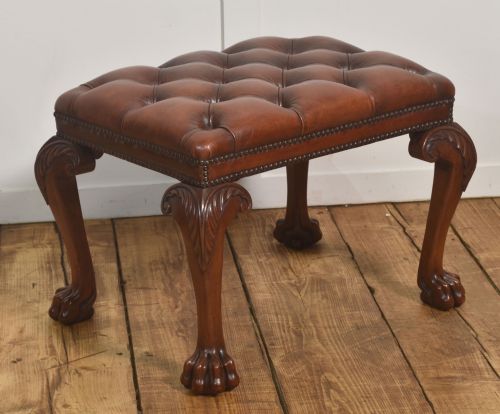
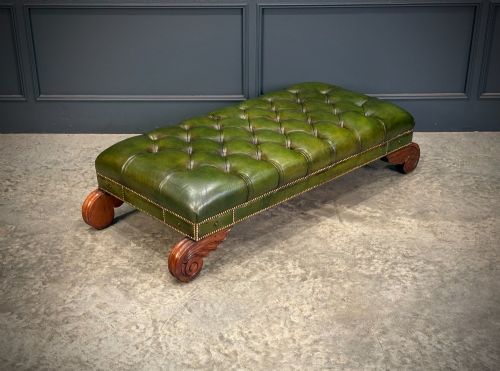
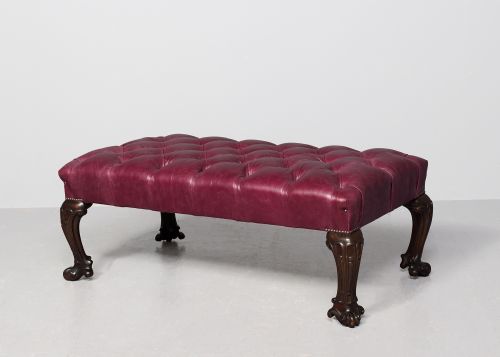
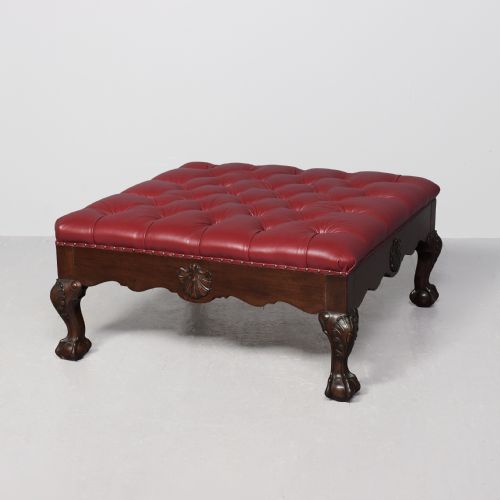
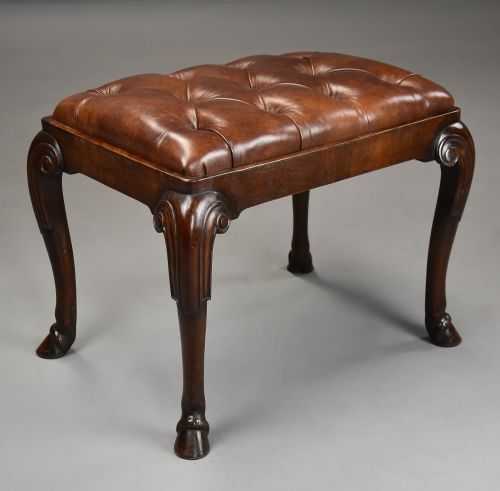
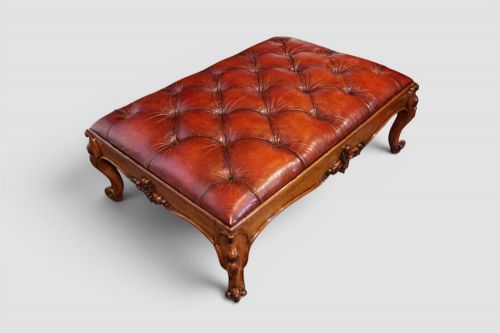
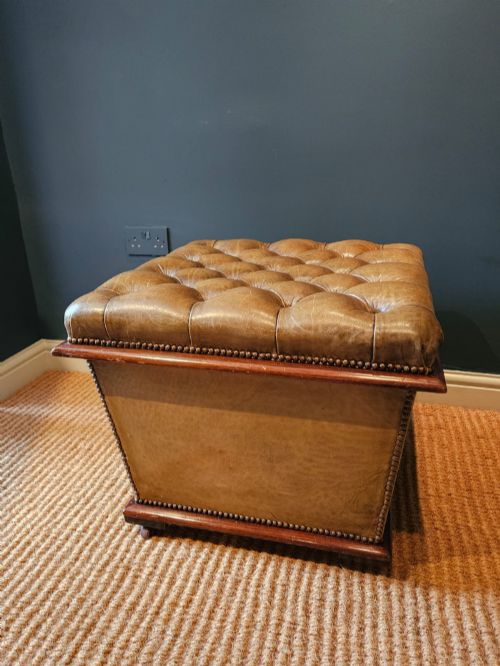
A buttoned leather stool represents a sturdy form of seating or footrest found in period interiors, heavily upholstered and tufted across the top surface. Buyers hunting for a buttoned leather stool will encounter various formats, from low footstools to large ottomans and library window seats.
The pieces appearing on this page span the 19th century and the Victorian era, alongside specific iterations like Queen Anne Revival and William IV designs. Piano stools and revolving dressing table variants also emerge from these periods, offering practical seating alongside the standard low footstool shape.
How they were made
These stools rely on timber frames built from mahogany and walnut, providing a robust structural base for the upholstered top. Joinery techniques from the nineteenth century secure the legs to the main frame, often featuring carved details or cabriole shaping.
Leather provides the primary covering, secured with deep buttoning techniques that pull the hide into distinct diamond patterns. Brass elements occasionally appear on the fittings or castors, complementing the dark tones of the polished woods.
Retail Price Guide 2026
Typical UK retail prices for buttoned leather stool, calculated from the Sellingantiques database of over a million retail prices indexed since 2003. This retail price guide relies exclusively on Sellingantiques data; no external sources or auction records are used, so the figures do not describe the wider market.
Some Victorian piano stools swivel just enough to make practicing scales a dizzying adventure.
What varies in quality
The caliber of a buttoned leather stool rests in the depth and regularity of its tufting and the richness of the hide. Finer examples display even tension across the leather surface, where each button creates a crisp, symmetrical fold.
Timber selection and frame construction also dictate the standing of a piece. Solid walnut and mahogany frames with refined leg carving or turnings indicate higher workshop standards than simpler utilitarian versions.
Holland & Sons
The Buttoned Leather Stool Glossary
- Buttoning
- A method of upholstery where twine is pulled through the padding and secured to create a quilted, indented pattern across the leather.
- Cabriole leg
- A furniture leg that curves outward and then tapers inward, frequently terminating in a pad or claw foot on revival pieces.
- Ottoman
- A low, upholstered seat or footstool without a back or arms, often built on a large scale for central room placement.
- Revolving
- A mechanical feature allowing the seat top to turn on a central spindle, common on period piano and dressing table stools.
Frequently Asked Questions
What is a buttoned leather stool used for?
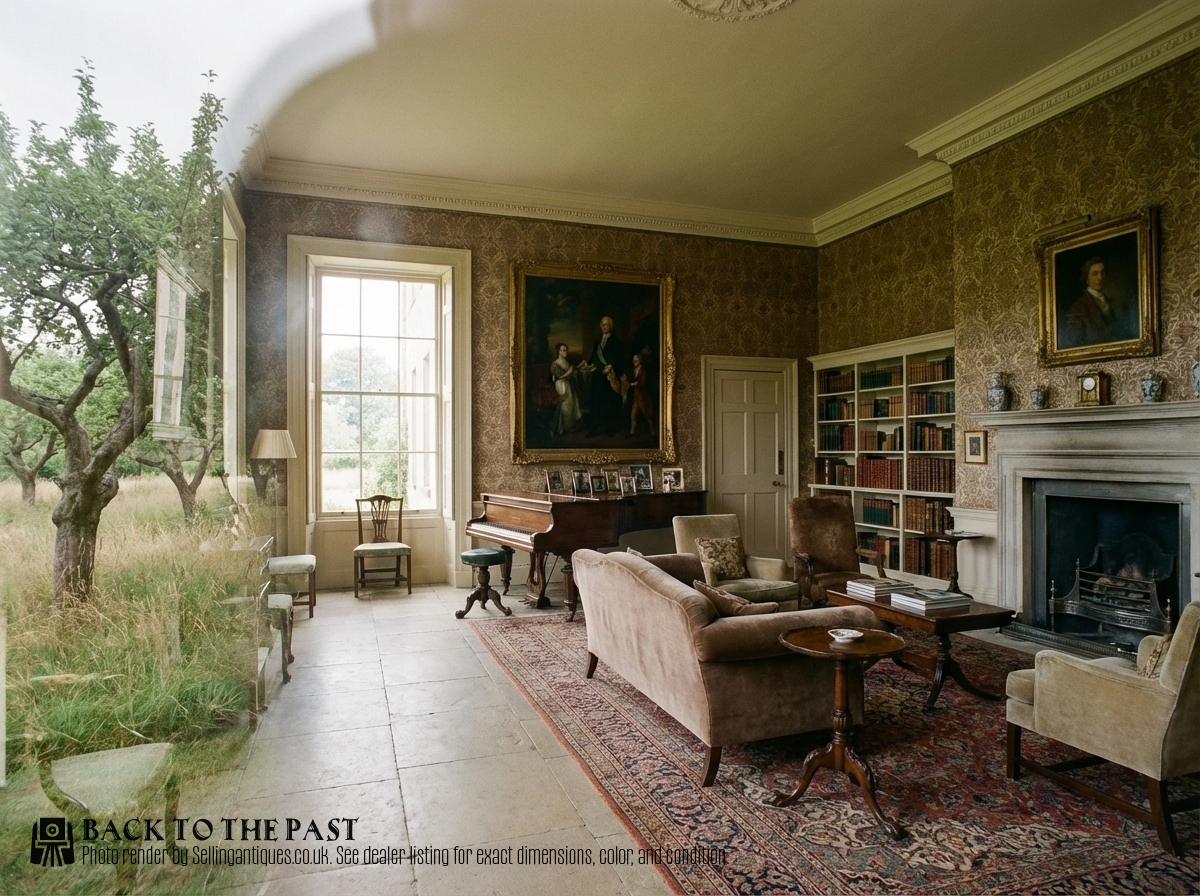
These pieces function primarily as footrests, low seats, or small coffee tables depending on their proportions and height. Library and drawing room examples often served as moveable seating near bookshelves or windows.
Larger ottoman versions provided substantial resting spaces for rooms, while specialised forms like gout stools offered targeted support for the feet.
How do I identify a Victorian buttoned leather stool?
Victorian pieces typically display robust mahogany or walnut frames paired with deep buttoned leather upholstery. Look for traditional proportions and timber patination characteristic of the nineteenth century.
Revival styles from the period also incorporate design cues from earlier centuries, such as cabriole legs or turned supports.
Are piano stools different from regular footstools?
Piano stools are specifically designed for seating at a keyboard instrument, frequently featuring revolving mechanisms for height adjustment. Some examples include dressing table variants built with similar swivel functions.
Standard footstools and library ottomans remain stationary and lack the mechanical pivoting components found on piano seats.
How do I care for antique leather upholstery?
Antique leather requires gentle cleaning and conditioning to maintain the suppleness of the hide over time. Avoid placing the stool in direct sunlight or near heat sources to prevent the material from drying out.
Regular dusting and careful treatment preserve the natural finish and the integrity of the buttoned folds.