

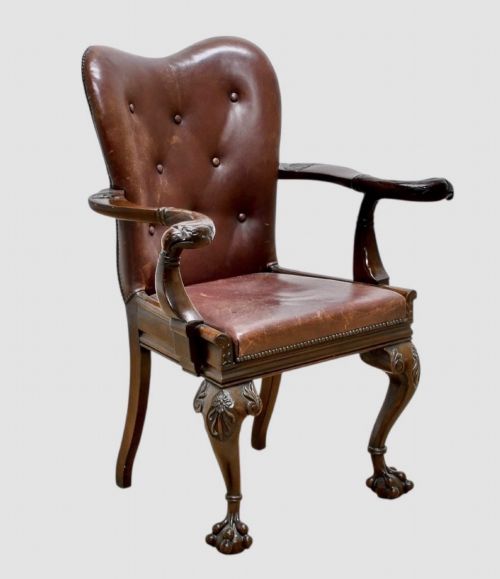


Buttoned Leather Seating
Buttoned leather seating combines deep upholstery with robust timber frames, creating substantial furniture designed for comfort and long-term use.
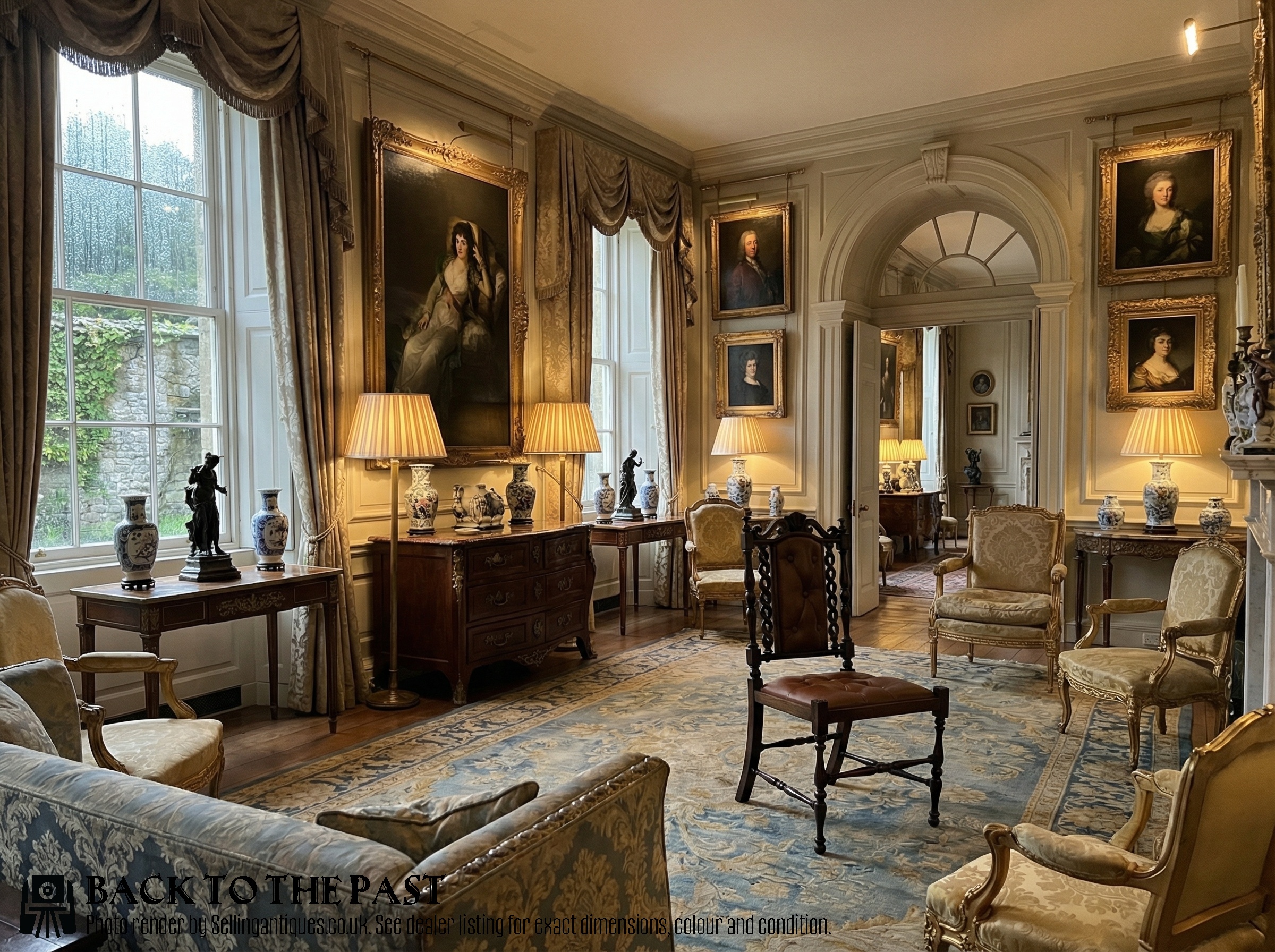
Buttoned Leather Seating
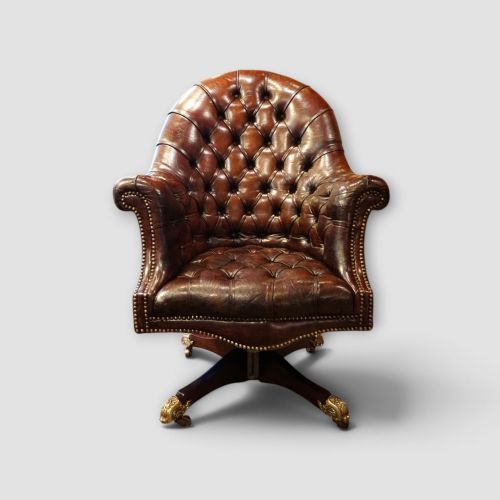
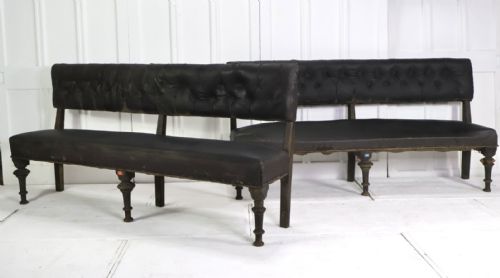
Buttoned leather seating encompasses a variety of substantial forms designed for sitting and resting, ranging from library armchairs and revolving desk chairs to club fenders and long benches. These pieces originate predominantly from the nineteenth and early twentieth centuries, spanning Victorian, Edwardian, and Regency periods.
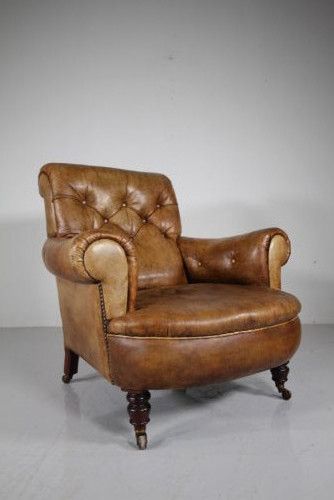
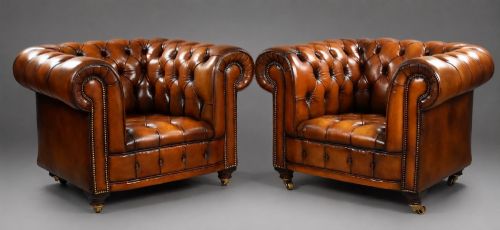
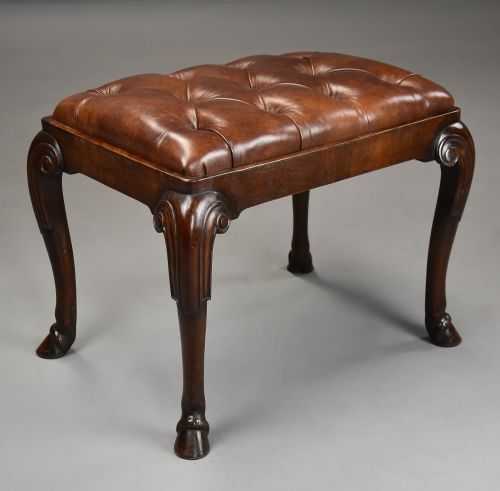
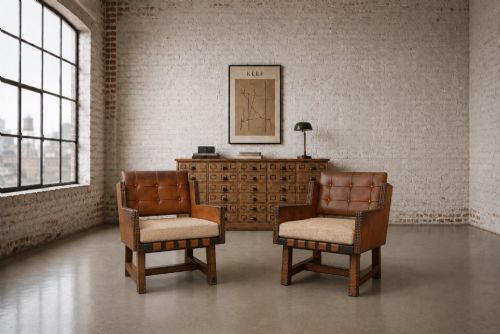
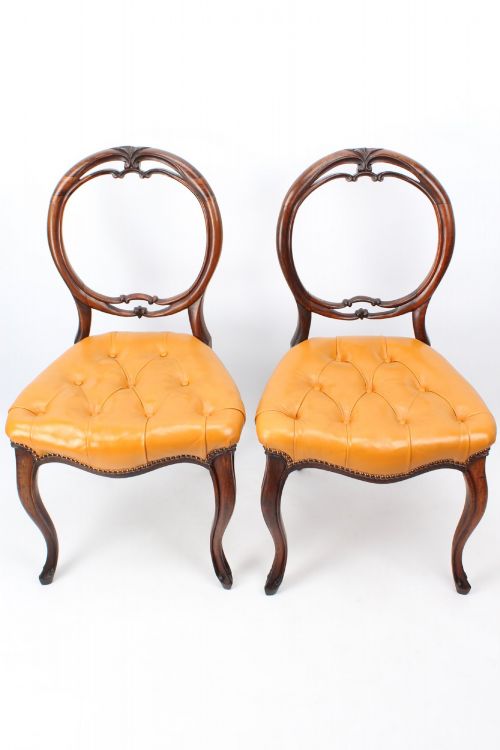
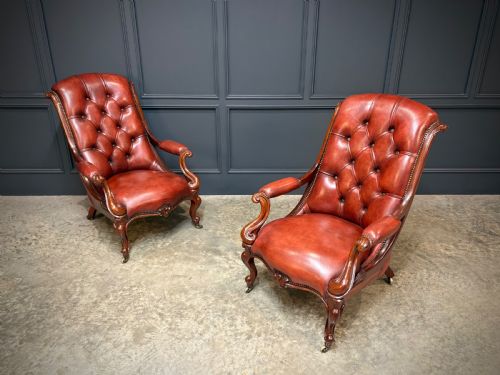
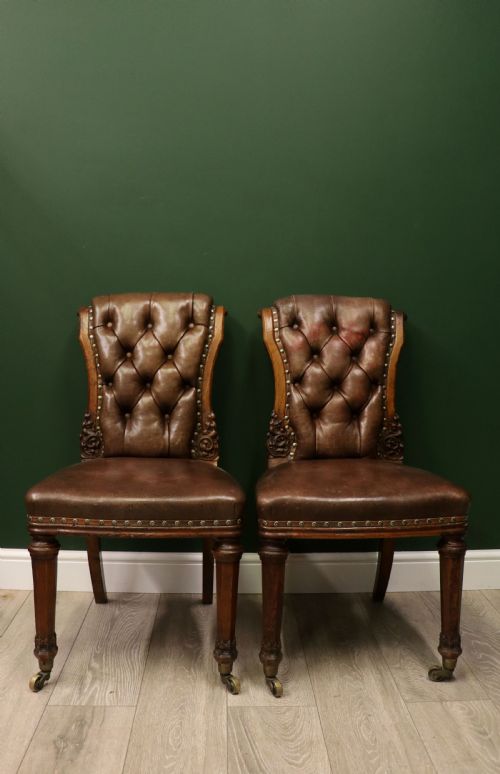
The most common examples encountered on this page are Victorian and later leather armchairs, often featuring deep buttoning and supportive wooden frames constructed from mahogany, walnut, or oak. Alongside chairs, buyers will find specialised items such as brass-framed club fenders with leather seats and low footstools.
Materials and Construction
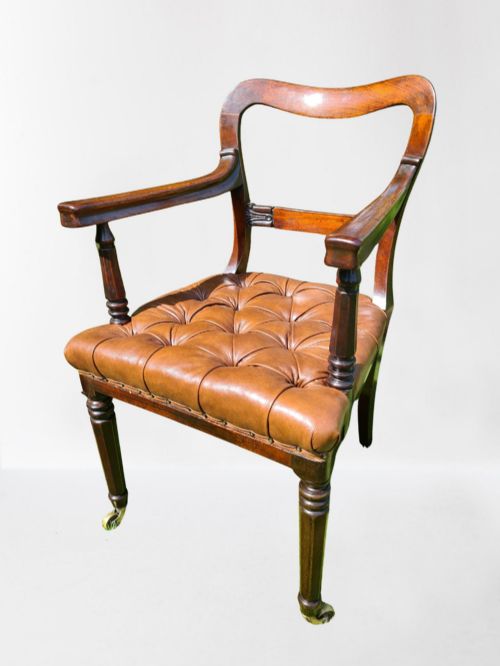
Makers constructed the structural frames of buttoned leather seating using dense hardwoods including mahogany, walnut, oak, and rosewood. These timbers were frequently carved, polished, or inlaid with brass to frame the upholstered areas.
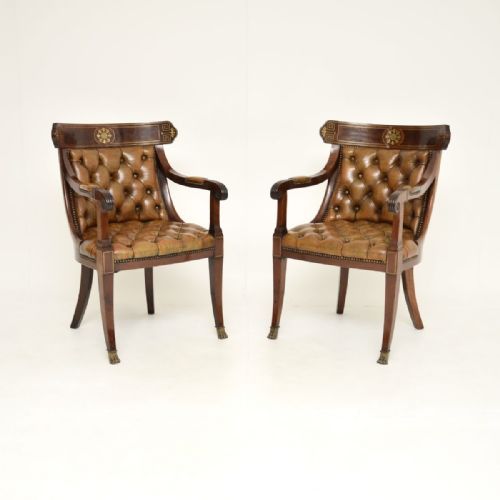
Upholstery relied on durable leather stretched over padding and secured with deep tufting or buttoning, often supplemented by brass stud work along the borders. Metal components such as cast steel and polished brass also appear on specific forms like club fenders and revolving desk chair mechanisms.
Listings feature seating from the Regency, Victorian, and Edwardian periods, utilising mahogany, walnut, oak, and brass.
Craftsmanship and Proportion
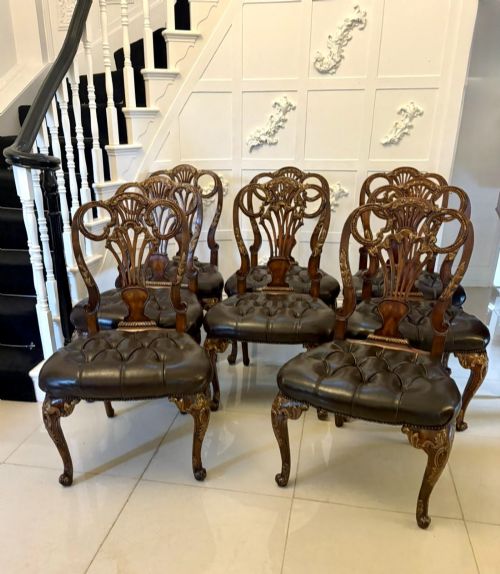
Quality in buttoned leather seating rests upon the architectural harmony of the wooden frame and the precision of the upholstery work. Superior pieces display carefully proportioned timber supports, such as cabriole legs or fluted details, which balance the heavy visual weight of the leather.
The execution of the buttoning itself distinguishes finer examples, requiring uniform tension and precise placement across the leather hide. The selection of timber also dictates quality, with dense grains in mahogany, walnut, and rosewood offering greater durability and refined ageing compared to lesser woods.
Howard & Sons
The Buttoned Leather Seating Glossary
- Club Fender
- A low hearth seat featuring a metal frame with padded leather top rails. These pieces originally provided comfortable fireside seating in large reception rooms.
- Chesterfield
- A large upholstered sofa or armchair characterised by rolled arms and uniform deep buttoning. This style remains a defining form of traditional English seating.
- Bergère
- An enclosed upholstered armchair with wooden frames where the sides are often caned or upholstered. The style originated in France and offers a lighter profile.
- Spoon-Back
- A chair back shaped like the bowl of a spoon, curved to fit the human spine. This form is frequently seen on nineteenth-century Victorian seating.
- Cabriole Leg
- A furniture leg that curves out and then in, resembling an animal's leg. It appears widely on walnut and mahogany seating from various revival periods.
Buttoned Leather Seating: Frequently Asked Questions
What is a club fender?
A club fender is a low, sturdy frame made of brass or steel designed to sit around a fireplace hearth. The top rails are upholstered in leather to provide convenient fireside seating.
These pieces combine metalwork with comfortable padding, serving both a functional and decorative role in period rooms.
Are these pieces suitable for daily office use?
Many nineteenth and early twentieth-century desk chairs feature revolving mechanisms and sturdy mahogany frames built for daily work. Their ergonomic wooden supports and durable leather upholstery handle regular use well.
Choosing a proper desk height relative to the chair ensures comfortable everyday sitting.
What is the difference between Regency and Victorian styles?
Regency seating, dating from the early nineteenth century, often incorporates classical lines, brass inlay, and lighter mahogany frames. Victorian pieces tend to be heavier and more heavily padded.
Victorian designs frequently favour deep buttoning and robust carved wooden details compared to the restrained elegance of the Regency period.