


Turned Rosewood Accent Chair
A turned rosewood accent chair brings rich grain and hand-turned detail into a room, offering both sculptural presence and period character.
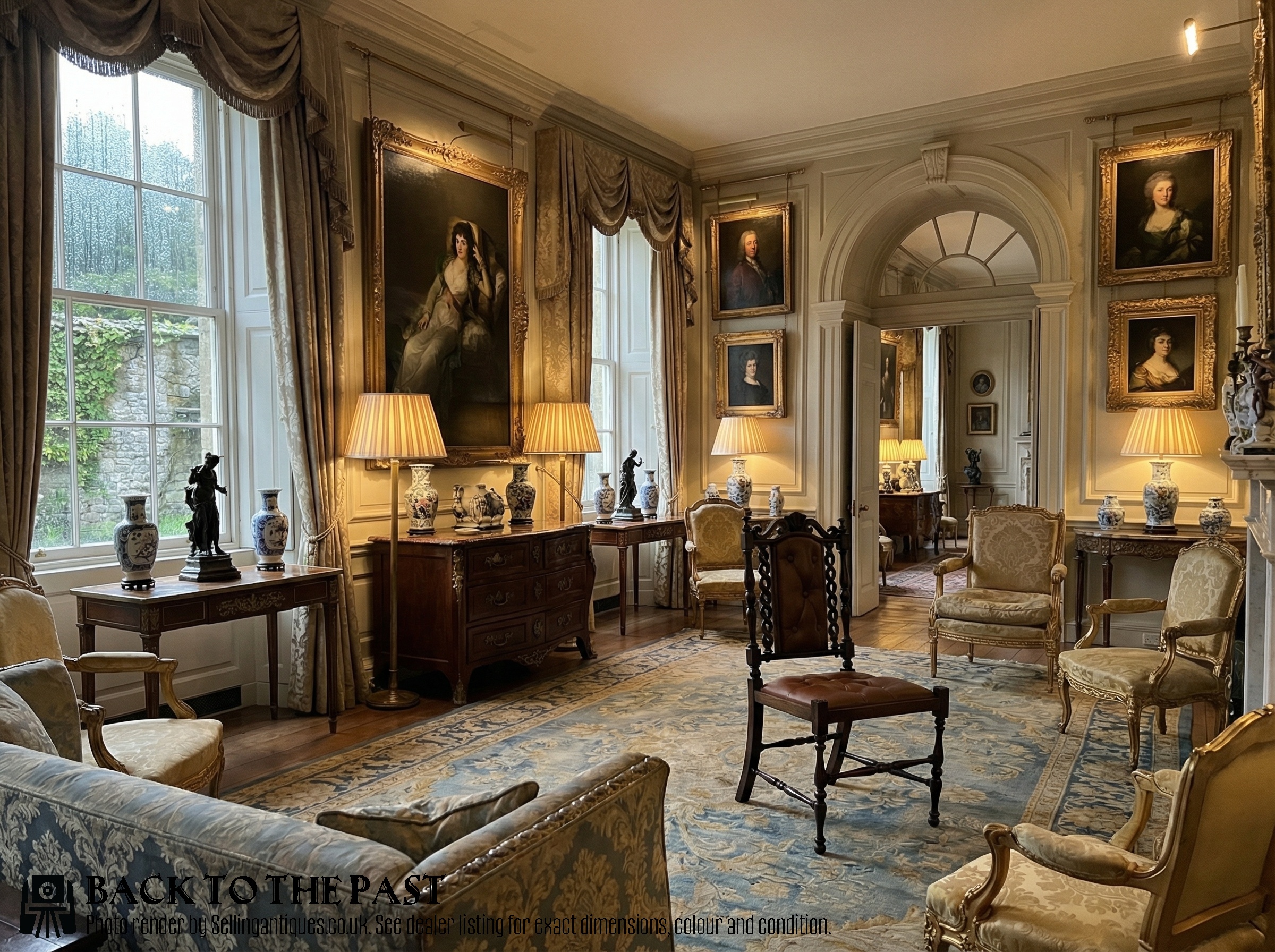
Turned Rosewood Accent Chair
A turned rosewood accent chair is a seating piece defined by its timber frame and decorative turning, spanning the nineteenth century, Regency, and Victorian periods. These pieces appear in forms such as library armchairs, nursing chairs, side chairs, and elbow chairs.
The versions most commonly met on this page include Victorian and William IV examples, alongside specific regional interpretations like Anglo-Indian side chairs and Gothic Revival prie-dieu chairs. They function as striking focal points in a sitting room or study.
Makers utilised dense, dark timbers to create compact seating, sometimes pairing the wooden frames with cane seats, buttoned leather, or plush velvet upholstery. Each form reveals how nineteenth-century cabinet makers adapted traditional turning techniques for domestic comfort.
How they were made
The construction relies heavily on solid rosewood frames shaped through lathe-turning, creating bobbin or spool profiles along the legs, spindles, and uprights. Joinery methods of the period ensure sturdy assembly without concealing the natural grain of the timber.
Upholstery techniques varied according to the specific chair type, ranging from tightly stretched cane panels to buttoned leather and plush velvet over padding. Brass details occasionally appear as structural or decorative fixings within these nineteenth-century workshops.
Listings span the nineteenth century, including Regency, William IV, and Victorian periods, utilising materials such as rosewood, brass, cane, and velvet.
What varies in quality
Quality in these pieces is dictated by the crispness of the turning and the density of the rosewood grain. Finer examples display deeply carved or precisely sculpted frames that retain their structural integrity.
The treatment of the secondary materials, such as hand-caning or careful leather buttoning, separates standard production from superior workshop output. Original upholstery techniques and well-preserved timber patination elevate the standing of a piece.
The Turned Rosewood Accent Chair Glossary
- Bobbin chair
- A seating piece characterised by turned woodwork resembling a string of bobbins or spools. This style gained popularity during the nineteenth century.
- Prie-dieu chair
- A devotional chair featuring a low seat and a tall, narrow back designed for kneeling and prayer. Victorian examples often incorporated Gothic Revival motifs.
- Nursing chair
- A low-seated armchair designed for comfort, traditionally used for feeding or tending to infants. They frequently feature high padded backs and upholstered frames.
- Caning
- A weaving technique utilised for seats and backs using split rattan or cane. It provides a flexible yet durable support surface.
- Patina
- The surface sheen and colour developed by timber over decades of handling and exposure to light. It serves as an indicator of age and careful maintenance.
Turned Rosewood Accent Chair: Frequently Asked Questions
Where should I place a turned rosewood accent chair?
These chairs work well in quiet corners, libraries, or bedrooms where their turned frames can be appreciated from multiple angles. Pair them with simple surrounding furniture to let the rich rosewood timber stand out.
Because many forms, such as nursing chairs and side chairs, have compact footprints, they fit easily into smaller spaces without overwhelming the room.
How do I care for rosewood furniture?
Keep rosewood pieces away from direct sunlight and strong heat sources to prevent the dense timber from drying out or splitting. Dust the turned spindles regularly with a soft, dry cloth.
Avoid applying modern silicone polishes, as they can build up and dull the natural patina over time.
What is the difference between a nursing chair and a side chair?
Nursing chairs are built with lower seats and taller backs, designed originally for comfort and domestic tasks like nursing children. They often feature upholstered or buttoned backs.
Side chairs are lighter, more upright seating pieces without arms, intended primarily to sit against a wall or around a table when not in use.
How can I tell a Victorian chair from a Regency one?
Regency pieces often display cleaner classical lines and restraint in ornament, reflecting early nineteenth-century neoclassical tastes. Victorian examples tend to be heavier, sometimes incorporating Gothic Revival details or more elaborate carving.
Examining the turning style and the upholstery method can also help narrow down the production period.