




Antique Leather Nursery Chair
An antique leather nursery chair is a low-slung seat built for children, offering sturdy historic craftsmanship and compact proportions for domestic use.
Antique Leather Nursery Chair
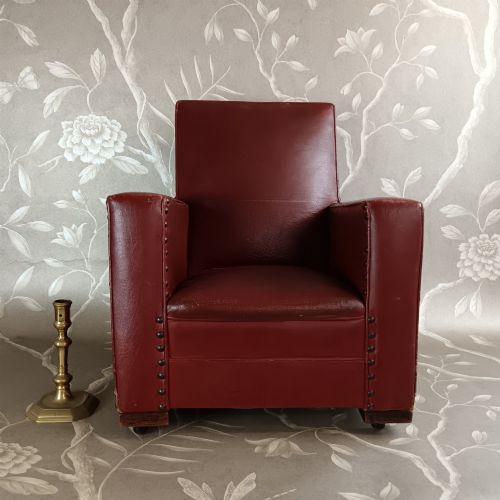
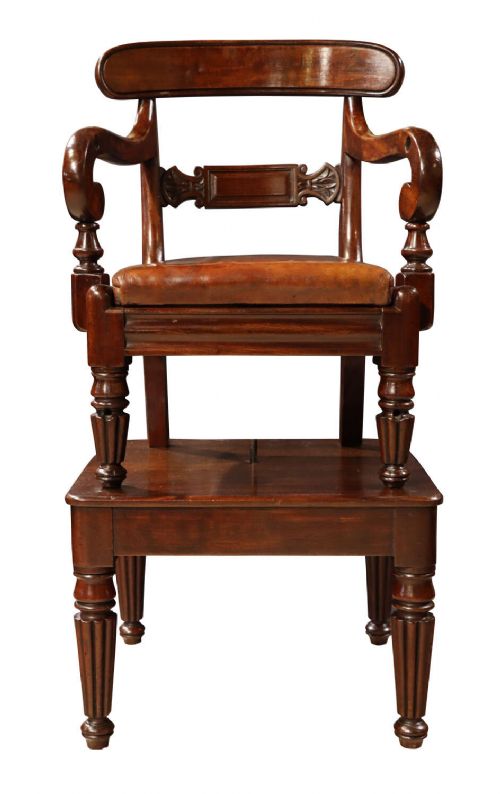
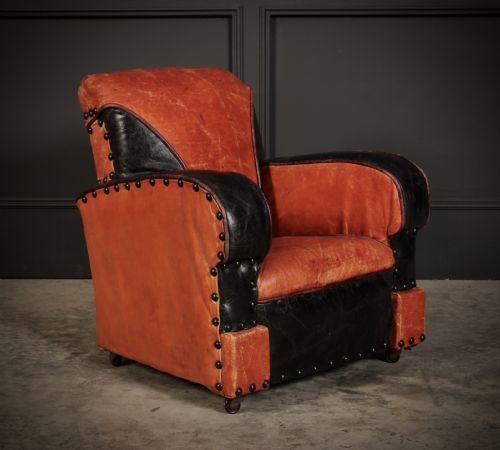
When you search for an antique leather nursery chair, you encounter a specialised form of antique seating designed specifically for children during the nineteenth and early twentieth centuries. These pieces appear in varied formats across our listings, including standard child chairs, reclining chairs, rocking chairs, and metamorphic high chairs. Periods represented span from the Regency era through the Victorian epoch and into Art Deco designs of the 1930s.
The materials recorded in these listings show timber frames combined with leather upholstery and brass fittings. Woods such as mahogany, rosewood, walnut, oak, and bamboo provide the structural foundation for these small-scale seats. Makers adapted prevailing furniture styles of their day, producing Georgian style, William IV, French Aesthetic Movement, and Art Deco examples.
How they were made
Craftsmen built these chairs using solid hardwoods like mahogany and rosewood, often shaping the frames with carved and turned details. Highchairs and metamorphic designs incorporated functional timber mechanisms alongside brass hardware to adjust the seating position.
Upholsterers fitted the frames with leather upholstery, frequently securing the material with buttoning techniques. Subsidiary materials such as metal and bamboo appear in specific variants, notably French highchairs from the turn of the twentieth century.
What varies in quality
Quality in these child seats rests upon the choice of timber and the sophistication of the frame construction, distinguishing standard utilitarian pieces from high-status commissions. Elaborate turnings, carved rosewood details, and complex metamorphic mechanisms indicate greater skill from the original cabinetmaker.
The execution of the leather upholstery and buttoning further separates examples, alongside the integrity of the underlying wooden frame. Pieces retaining their original materials and functional mechanisms demonstrate higher grade historic workmanship.
The Antique Leather Nursery Chair Glossary
- Metamorphic
- Furniture designed to transform from one object into another, such as a high chair converting into a low chair. This ingenuity required precise carpentry.
- Buttoned leather
- Upholstery pulled deep into the padding with stitches or buttons to form a quilted geometric pattern. It provides structural tension and decoration.
- Turned frame
- Wood shaped on a lathe to create rounded, cylindrical, or spiral decorative members. It defines the legs and spindles of many nineteenth-century chairs.
- Regency
- A British design period spanning the early nineteenth century, characterised by classical restraint and refined proportions. Pieces from this era show archaeological inspiration.
Antique Leather Nursery Chair: Frequently Asked Questions
What is an antique nursery chair?
An antique nursery chair is a small-scale seat constructed for children during past centuries, utilising sturdy domestic hardwoods and leather.
These pieces reflect the prevailing furniture styles of their respective periods, ranging from Regency and Victorian designs to later Art Deco club chairs.
How were high chairs used?
Historical high chairs elevated young children to table height for meals, often utilising metamorphic mechanisms to adapt their configuration.
Some examples served a dual purpose as standalone seating or rocking chairs once converted from their elevated frames.
How do I date these chairs?
Dating relies on identifying the stylistic markers of the wood frame, such as Victorian turnings, Regency lines, or Art Deco club chair profiles.
Materials also offer clues, with rosewood and mahogany dominating earlier nineteenth-century pieces while bamboo and oxblood leather emerge in later decades.
Are these chairs comfortable?
These seats offer compact proportions suited to children, padded with leather and sometimes featuring buttoned upholstery for added cushioning.
While built for historic domestic use, modern buyers typically acquire them for display or gentle sitting rather than rigorous daily deployment.