
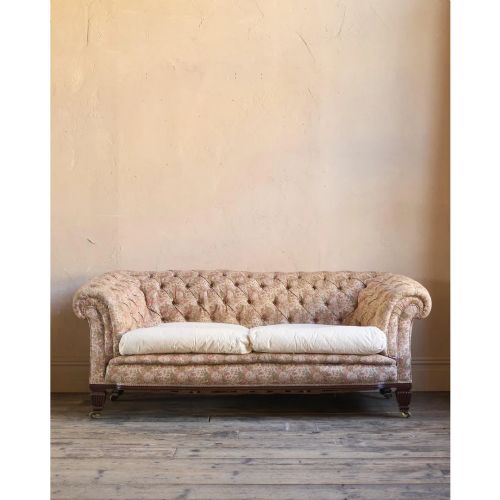
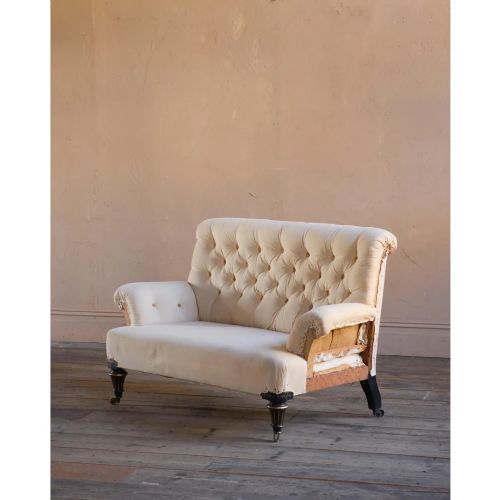
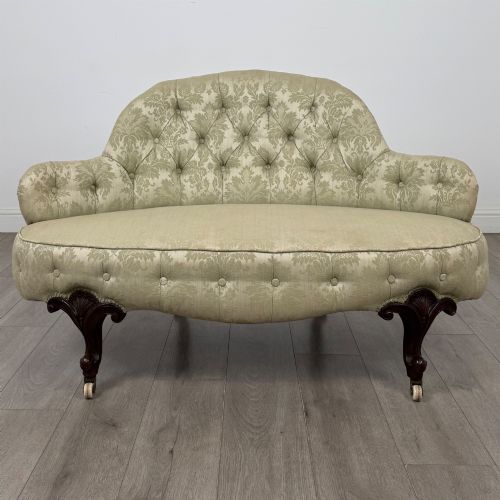
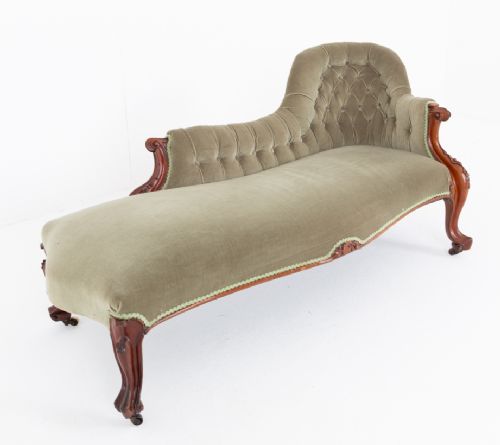
Button Tufted Settee
A button tufted settee brings profound depth and tactile luxury to a room, offering enduring comfort shaped by Victorian hands.
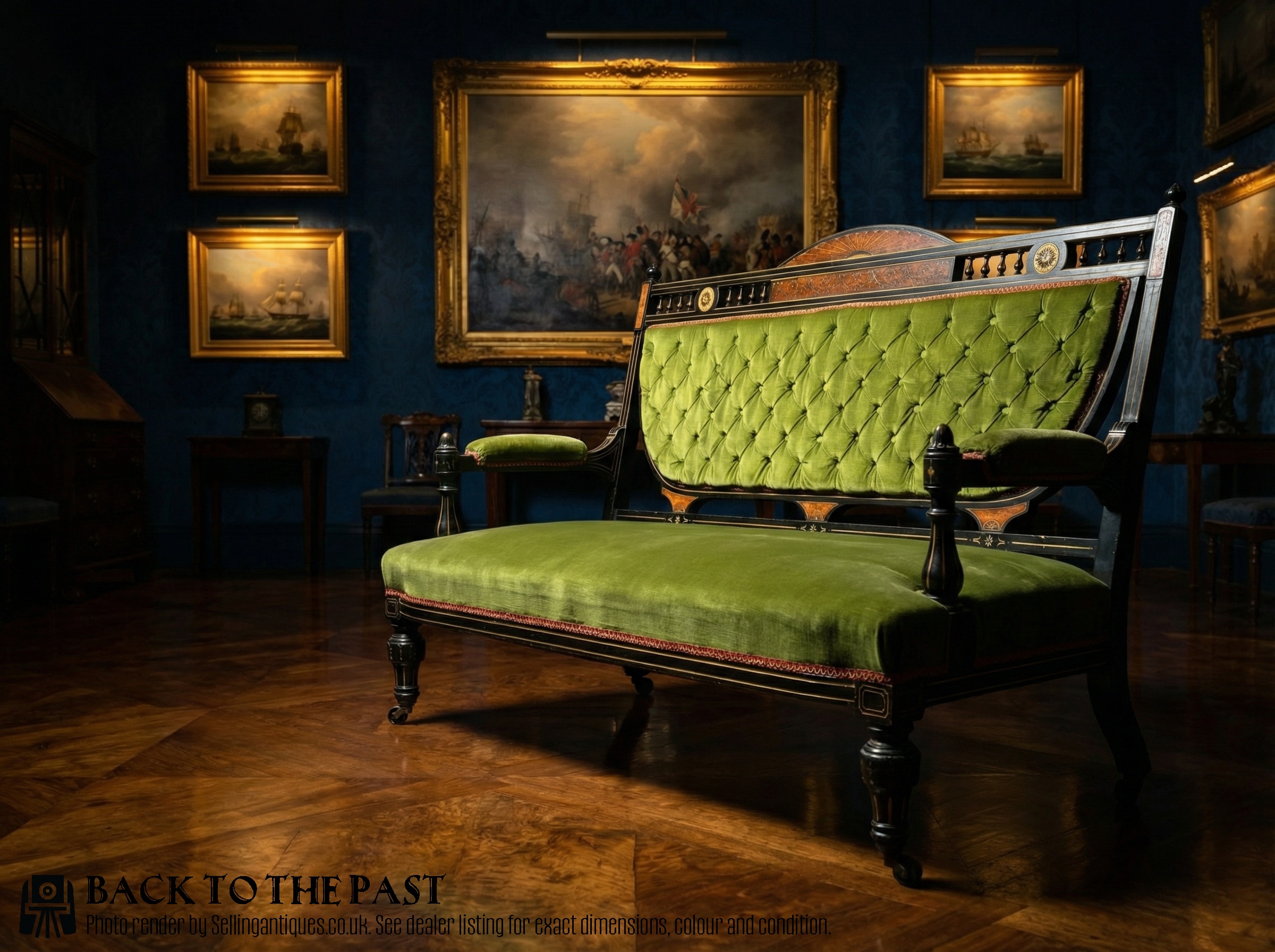
Button Tufted Settee
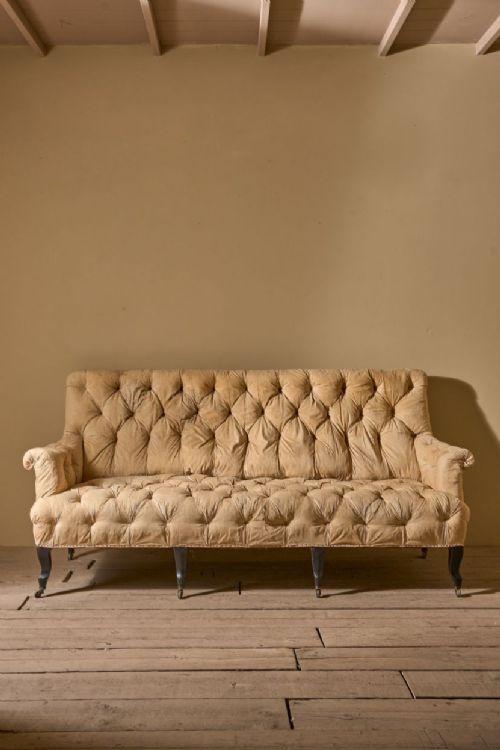
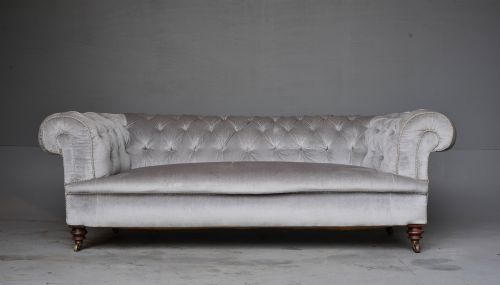
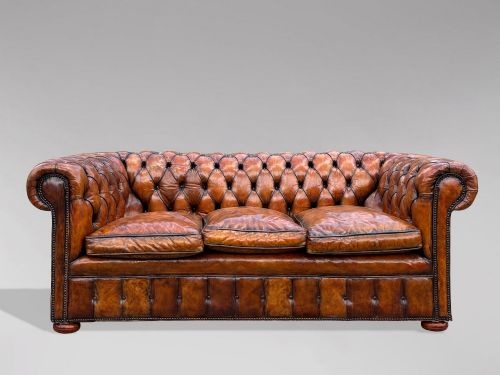
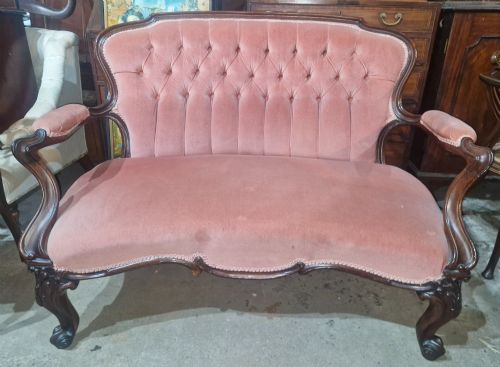
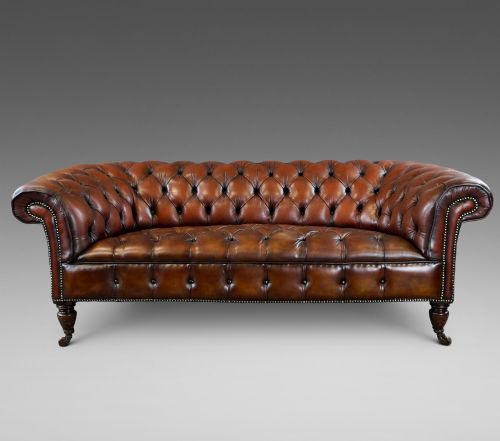
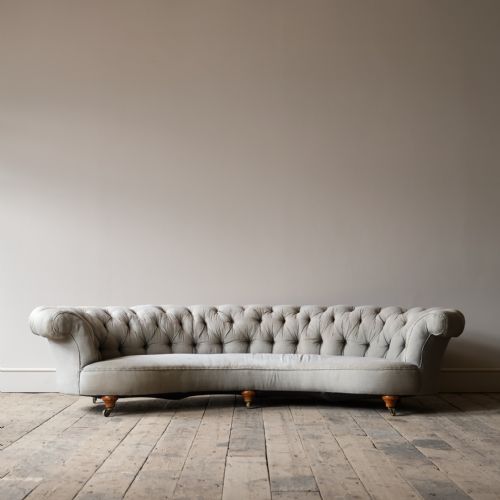
When you search for a button tufted settee, you enter a domain dominated by nineteenth-century Chesterfields, salon suites, and chaise longues. These pieces were built for formal parlours and libraries, providing generous seating through deep springs and padded upholstery. Victorian workshops produced the vast majority of these items, often utilising rich mahogany, walnut, or rosewood frames.
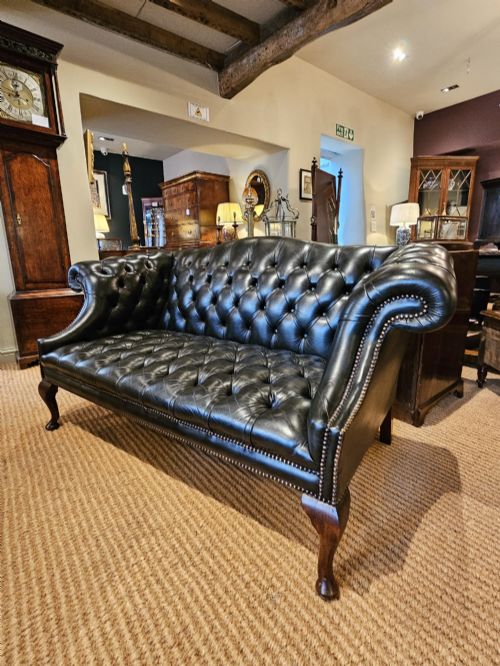
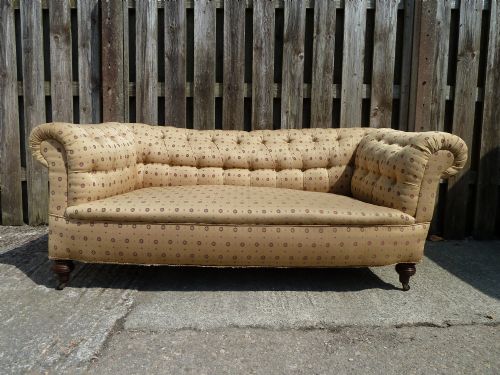
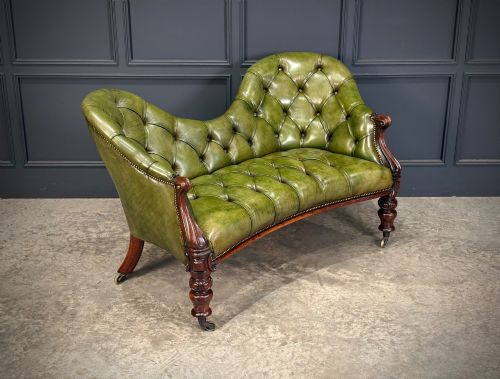
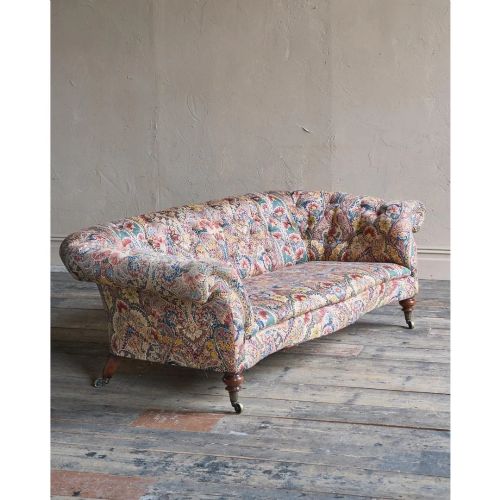
The most common form on this page is the leather or velvet Chesterfield, alongside carved rosewood framed settees from the mid-nineteenth century. You will also encounter Napoleon III variations and Edwardian adaptations, showing diverse regional tastes from England and France. Each configuration serves as a focal point, designed to anchor a traditional interior with understated authority.
How They Were Made
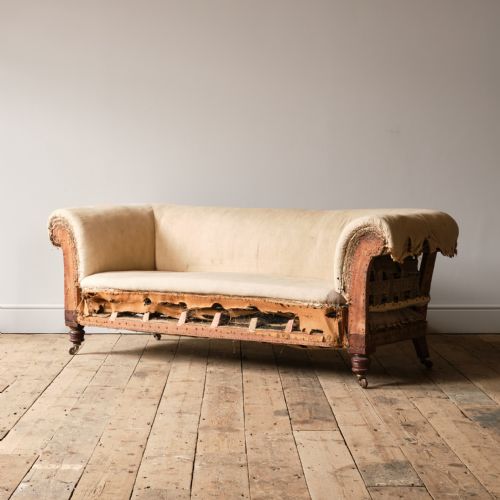
The construction of a button tufted settee relies on solid timber frames fashioned from mahogany, walnut, or rosewood, often featuring carved detail. Upholsterers utilised traditional fillings such as horsehair beneath layers of leather, velvet, or fabric to achieve the characteristic sprung seat and padded back. Deep tufting required precise tension, securing the cover material deep into the internal webbing with sturdy twine and buttons.
Makers integrated brass fixings and exposed polished wood to frame the upholstered areas, balancing structural rigidity with decorative elegance. Coil sprung systems inside the seat platform provided resilience, ensuring the upholstery maintained its shape through decades of daily use.
What Varies in Quality
Quality in a button tufted settee rests upon the integrity of the internal frame and the crispness of the timber carving. Pieces originating from renowned workshops display superior joinery and heavier timber sections that resist shifting over time. The uniformity of the tufting and the grade of the leather or velvet also distinguish standard examples from exceptional ones.
The survival of original show wood surfaces, without excessive refinishing, separates a well-preserved survivor from a heavily altered piece. Superior upholstery work maintains tautness across every diamond fold, whereas lesser examples show slackness in the fabric or uneven button depth.
Howard And Sons·Jackson And Graham·Holland And Sons·H Goodall And Sons
The Button Tufted Settee Glossary
- Chesterfield
- A large upholstered sofa with arms and back of the same height, traditionally finished in deep buttoned leather. It remains a staple of traditional British seating design.
- Chaise Longue
- An upholstered long chair for reclining, typically featuring a single raised end and a backrest that extends partway along the side. Mid-Victorian examples often employ carved rosewood frames.
- Tufting
- The technique of pulling twine through upholstery padding at regular intervals to secure the filling and create a geometric pattern of recessed buttons. This method defines the appearance of the piece.
- Show Wood
- The exposed, polished wooden parts of a framed settee or chair that remain visible around the upholstery. Walnut, mahogany, and rosewood are typical examples.
- Salon Suite
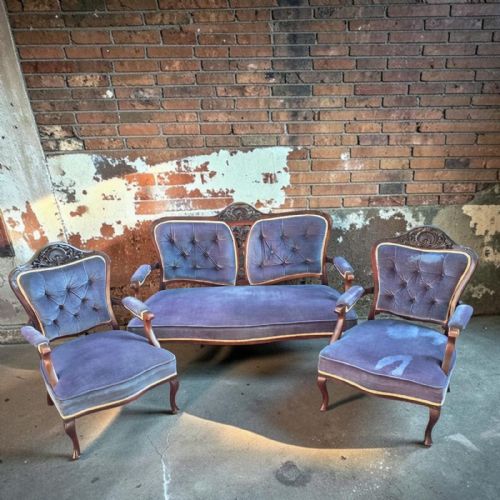
- A matched set of seating comprising a settee and matching chairs, designed for formal reception rooms. These suites display unified carving and fabric choices.
Button Tufted Settee: Frequently Asked Questions
What defines a Chesterfield?
A Chesterfield is characterised by arms and a back of identical height, combined with deep button tufting across the leather or fabric.
This specific proportion creates a formal yet enveloping profile designed for nineteenth-century reception rooms.
How do I care for leather?
Leather upholstery benefits from regular dusting and occasional treatment with appropriate conditioning balms to prevent drying.
Keeping the piece away from direct sunlight and heat sources preserves the natural supple texture of the hide.
Are these settees comfortable?
Most examples incorporate traditional coil springs and horsehair stuffing, which offer a supportive and resilient sit.
Because they were built for daily use in period homes, they provide substantial physical backing compared to modern lightweight frames.
How do I date a settee?
Dating relies on examining the timber frame style, carving details, and internal construction methods visible beneath the upholstery.
Victorian pieces often feature rosewood or walnut with heavy spoon-backs, while later Edwardian variants introduce lighter framing.