
Buttoned Back Sofa
A buttoned back sofa brings deep upholstery and tactile comfort into a room, spanning nineteenth-century Victorian frames and French Napoleon III designs.
Buttoned Back Sofa
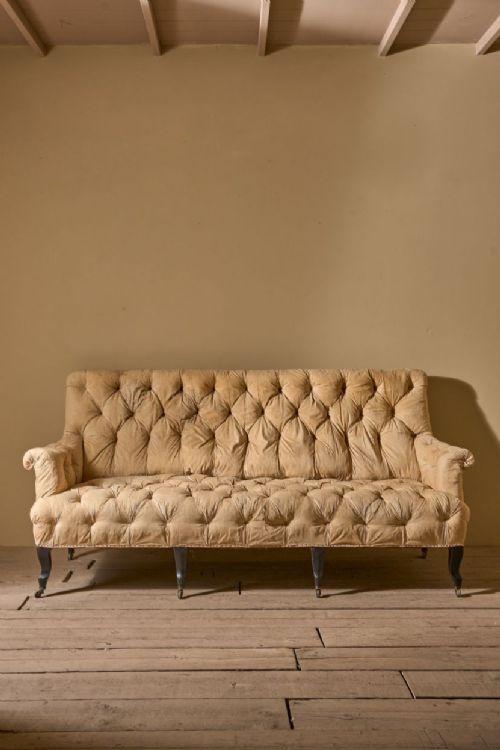
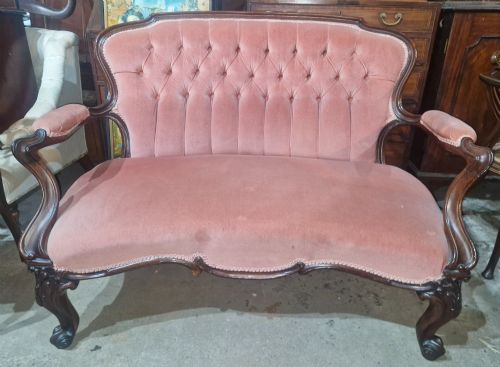
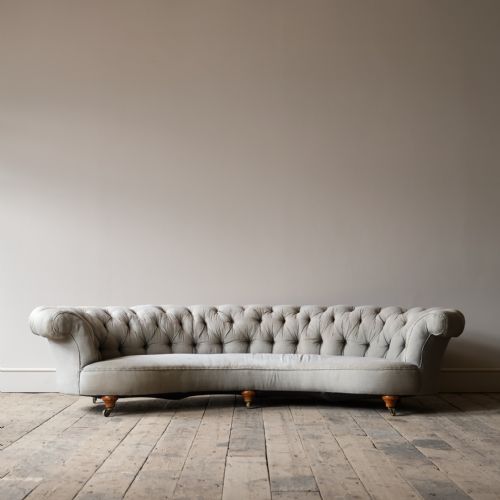
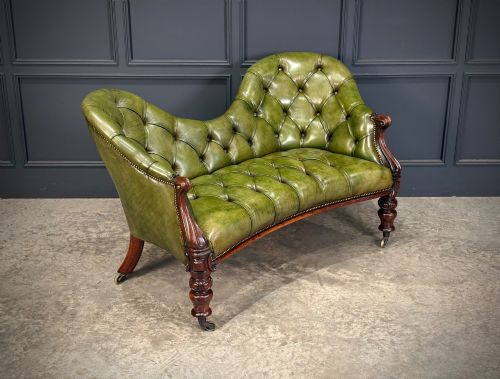
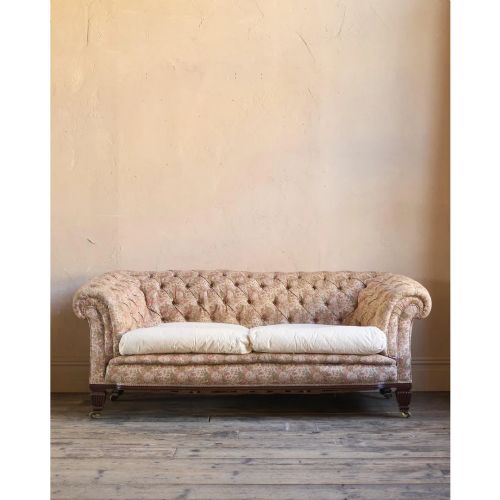
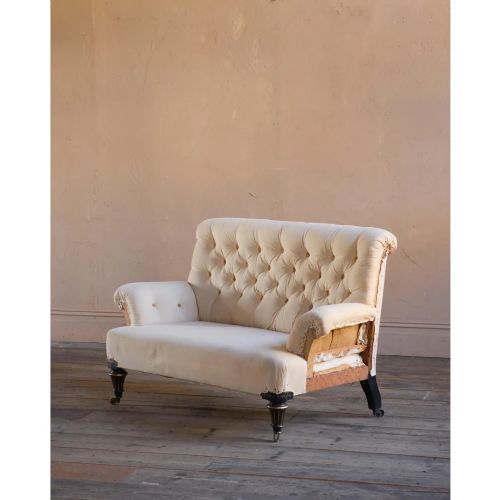
A buttoned back sofa draws the eye with its signature tufted upholstery, where folds of fabric or leather are pulled tight and secured to create a quilted surface. When exploring this selection, buyers encounter nineteenth-century Victorian forms and French Napoleon III pieces alongside later Edwardian and nineteen-thirties variations.
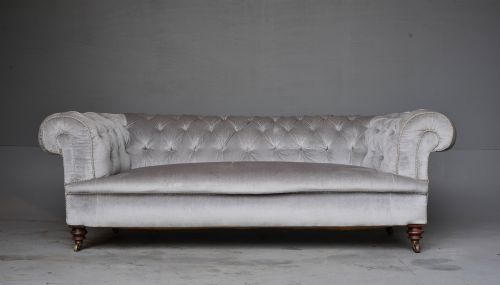
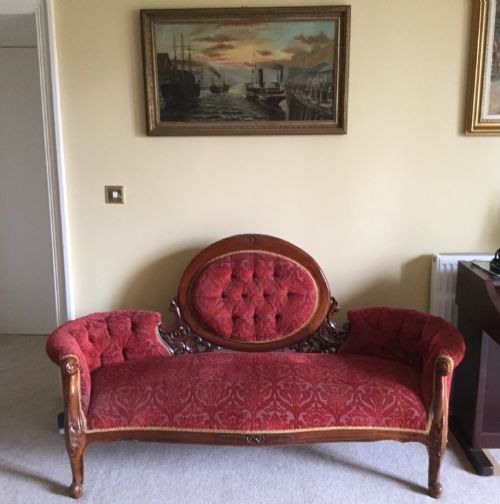
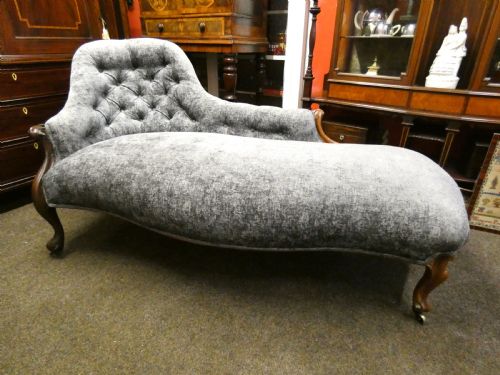
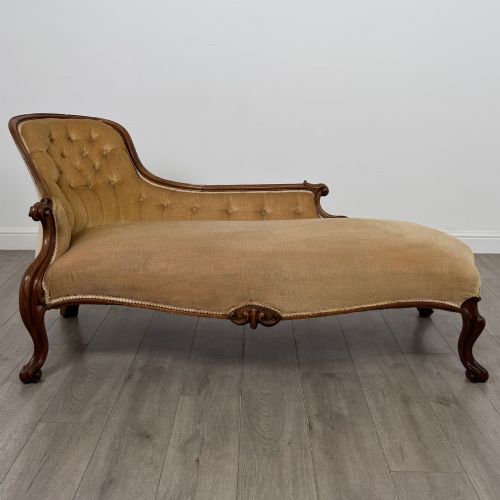
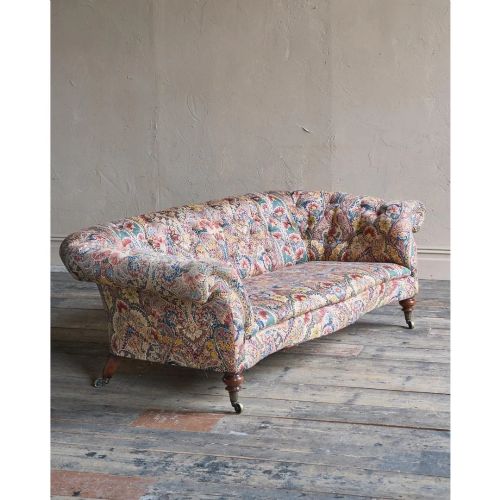
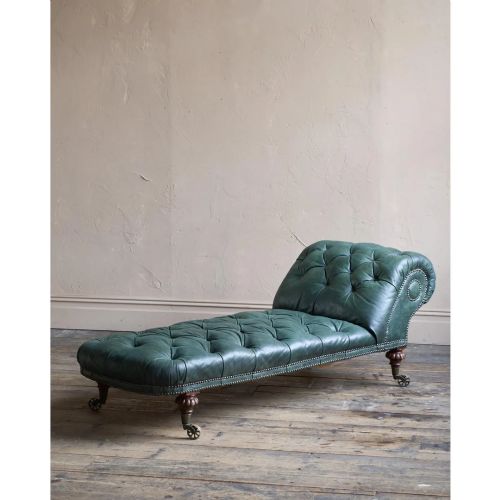
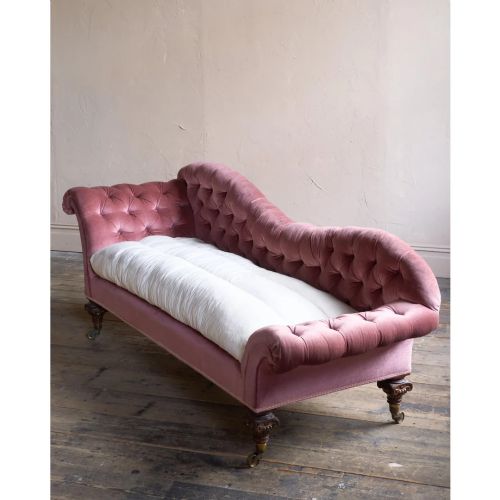
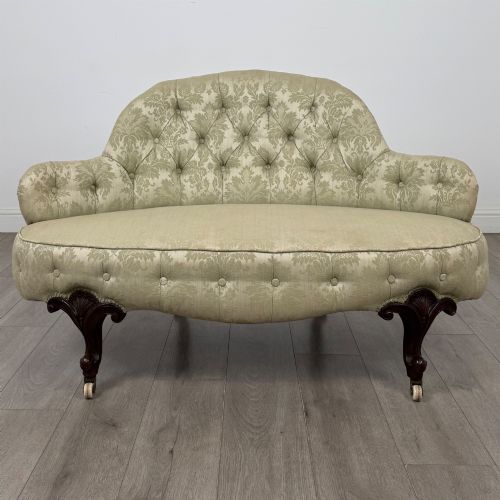
The commonest examples met on this page include deep-sprung Chesterfords, carved rosewood or mahogany framed settees, and asymmetric chaise longues designed for reclining. These seating options range from compact boudoir pieces to large country house sofas designed for principal reception rooms.
Makers such as Howard and Sons, Jackson and Graham, and C. Hindley and Sons appear among the records, showing the high standard of joinery and sprung work expected from top-tier nineteenth-century workshops.
Materials and construction
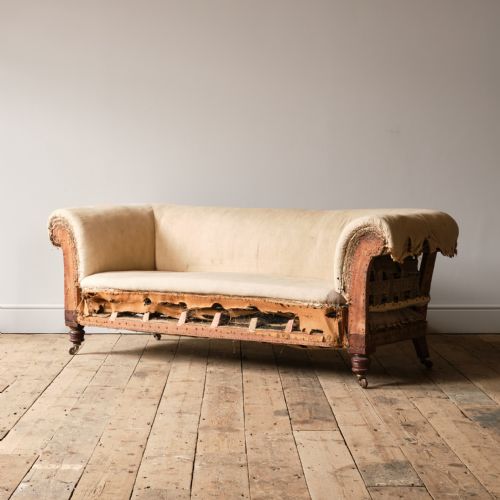
Frames rely on dense hardwoods such as mahogany, walnut, rosewood, and ebonised timber, which provide the structural rigidity needed to support heavy internal spring assemblies. Joinery methods involve traditional tenon and mortise framing, shaped and carved by hand on exhibition-quality models.
Upholstery relies on horsehair stuffing, coil springs lashed with twine, and top covers of leather, velvet, silk brocade, or heavy fabric. Deep buttoning requires meticulous hand-pleating through multiple layers of wadding to secure the tension across the backrest.
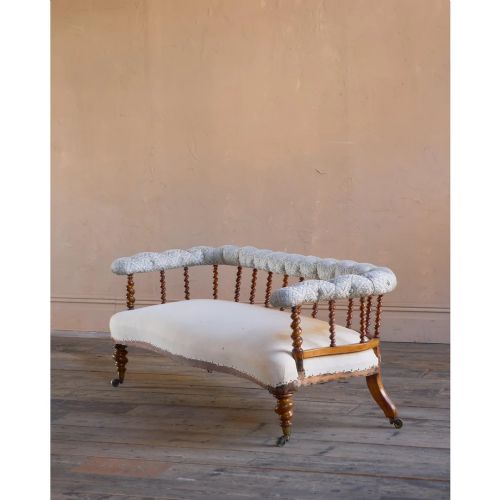
Some nineteenth-century conversation sofas allowed two people to sit close while facing opposite directions, perfect for polite Victorian gossip.
Judging the range
Quality reveals itself in the harmony of the timber frame's carving and the depth of the buttoning, where tighter, more even diamond patterns indicate superior craftsmanship. Workshop attribution to makers like Howard and Sons elevates a piece significantly.
The integrity of the internal springing and the choice of covering material, whether patinated leather or heavy-pile brocade, dictate the overall standing of the furniture within its period.
Howard and Sons·C. Hindley and Sons·A Jackson and Graham·Holland and Sons·John Taylor·George Smith
The Buttoned Back Sofa Glossary
- Chesterfield
- A traditional deep-tufted sofa characterised by arms and back of the same height. This form offers upright seating combined with formal nineteenth-century proportions.
- Chaise Longue
- An elongated seating form designed for reclining, typically featuring a single raised backrest at one end. Examples frequently incorporate carved mahogany or walnut frames.
- Napoleon III
- A French design style spanning the mid to late nineteenth century, noted for ebonised frames, giltwood accents, and curved buttoned backs. These pieces often display ornate cabriole legs.
- Settee
- A medium-sized upholstered seat designed for two or more occupants. This term frequently overlaps with nineteenth-century parlor and salon seating forms.
- Spoon-Back
- A padded chair or sofa back shaped like the bowl of a spoon, popular during the Victorian era. The wooden frame closely follows the curved outline of the upholstery.
Buttoned Back Sofa: Frequently Asked Questions
How do I care for leather upholstery?
Leather upholstery requires regular dusting and occasional treatment with appropriate conditioners to prevent the hide from drying out over time. Avoiding direct sunlight and heat sources preserves the natural oils and finish.
Many antique pieces retain their original patinated leather, which responds well to gentle cleaning rather than harsh chemical restoration.
How do I spot a Victorian sofa?
Victorian sofas are identified by dense hardwood frames made from mahogany, walnut, or rosewood, often featuring elaborate hand-carved floral motifs. They typically employ deep coil springing and heavy horsehair stuffing beneath velvet, leather, or brocade covers.
Stylistic markers include spoon-backs, cabriole legs, and scroll arms characteristic of mid-nineteenth-century cabinet making.
Can I use these sofas daily?
These sofas are built on robust hardwood frames with traditional coil-sprung bases designed for enduring comfort and structural resilience. Many survive precisely because their underlying joinery was engineered to withstand generations of heavy household use.
Periodic reupholstering or internal spring maintenance ensures that historical seating remains entirely practical for contemporary living spaces.