
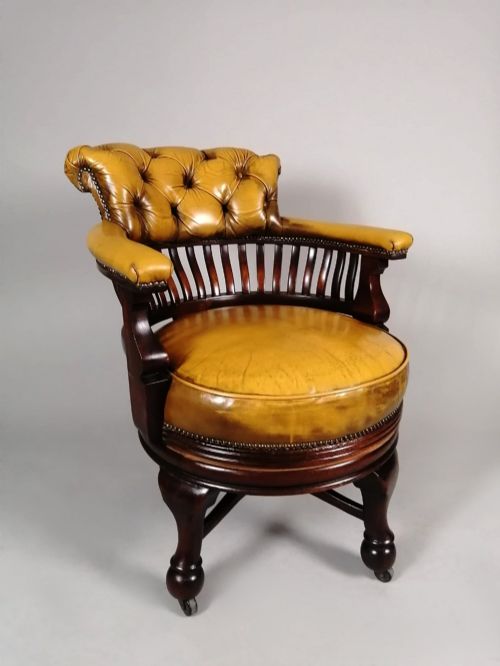
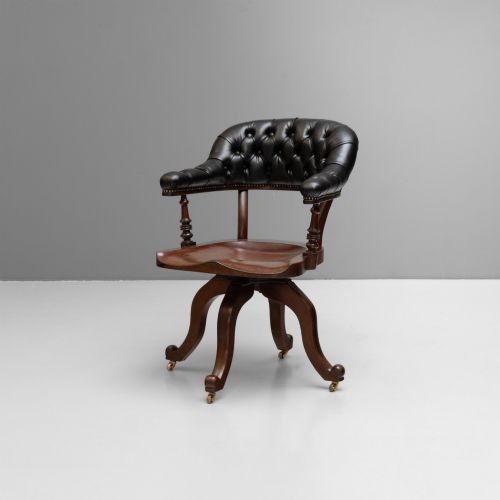
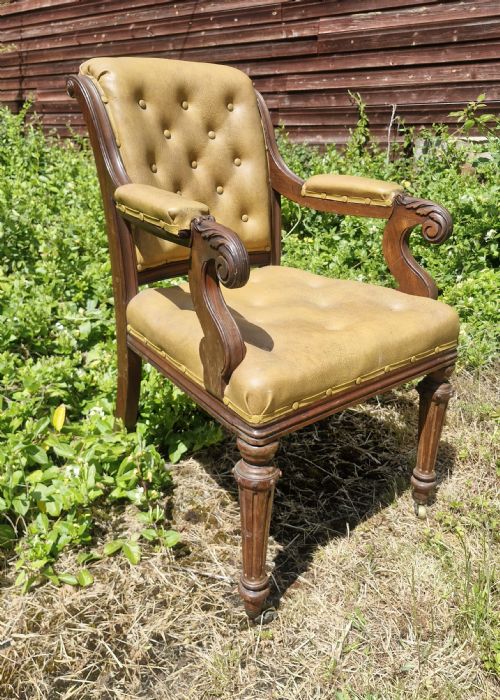


Button Back Office Chair
A button back office chair offers substantial seating built for nineteenth and early twentieth century work, combining solid timber frames with upholstered support.
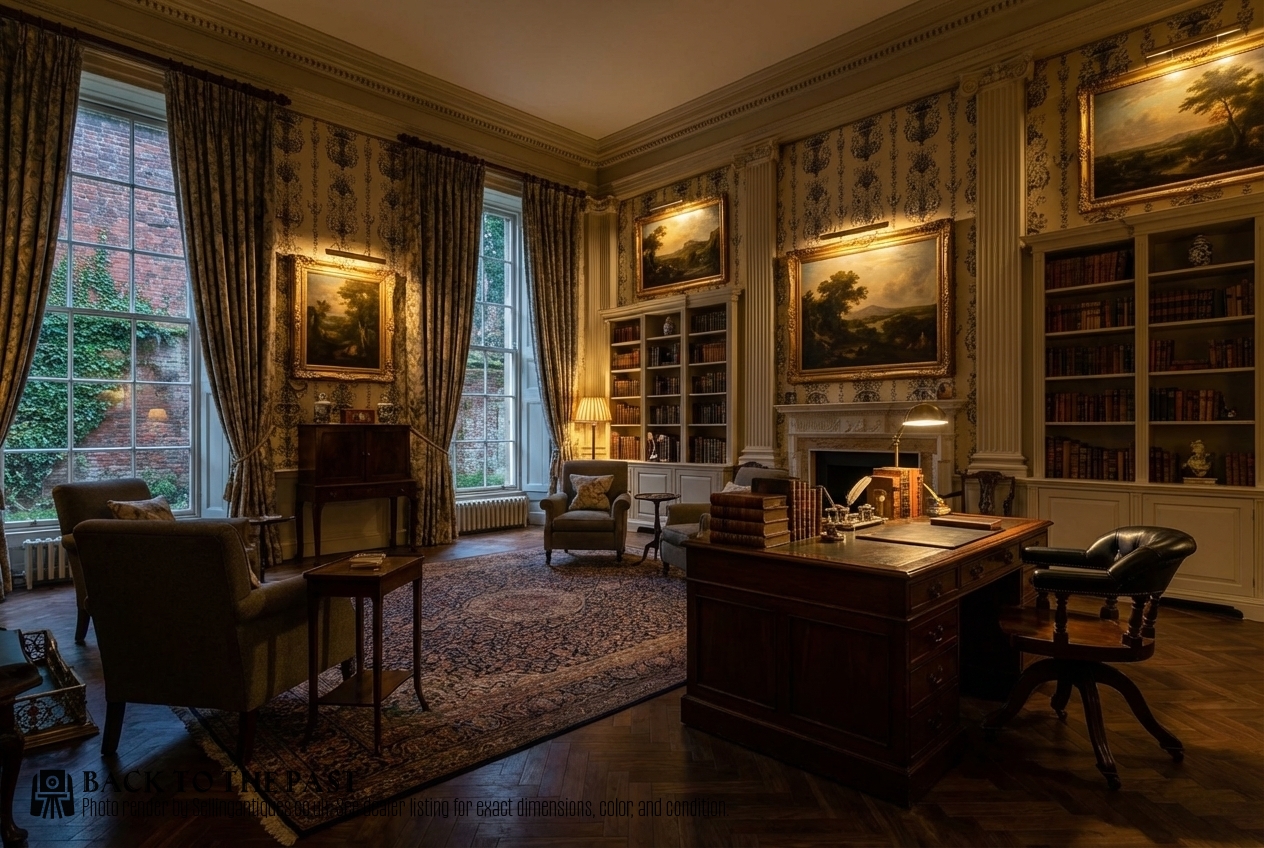
Button Back Office Chair
A button back office chair is designed for sustained working at a desk, appearing primarily across the nineteenth century and into the Edwardian period. Buyers encounter forms ranging from revolving desk armchairs to static library and captain styles.
The materials span mahogany, oak, and walnut frames paired with leather, oil cloth, or textile upholstery. Many incorporate brass and cast iron mechanisms to permit swivelling and mobility.
Traditional English workshops produced these desk armchairs with carved details or plain wooden members. The configuration typically involves a supportive elbow or tub shape suited to administrative tasks.
Materials and construction
Cabinet makers utilised dense hardwoods such as mahogany, oak, and walnut to construct sturdy frames capable of withstanding daily movement. These timbers were often polished to highlight the natural grain.
Upholstery involved securing leather or textile directly to the frame, frequently finished with buttoning to keep the padding secure. Metal components including brass and cast iron provided functional pivoting bases and supports.
Listings span the nineteenth and early twentieth centuries, featuring Victorian and Edwardian periods with oak, mahogany, and walnut construction.
Distinguishing quality
The standard of a button back office chair depends upon the density and selection of the timber used for the frame. Heavier carved wooden members and robust swivelling mechanisms indicate superior execution.
The integration of the upholstery and the durability of the leather or oil cloth swab cushion determine the refinement of the piece. Superior examples maintain balanced proportions between the backrest and the arm supports.
The Button Back Office Chair Glossary
- Revolving desk chair
- A seating form fitted with a central pivot mechanism allowing rotation. This permits movement while seated at a large desk.
- Captain chair
- A traditional wooden armchair characterised by a rounded upper rail supported by spindles. These often feature low backs designed to fit beneath a desktop.
- Oil cloth
- A heavy woven fabric treated with boiled linseed oil to render it waterproof and durable. It frequently appears as a practical covering on nineteenth century office seating.
- Elbow chair
- An armchair featuring short arms designed to support the elbows rather than the full length of the arms. They provide compact seating for office and library environments.
- Swab cushion
- A removable pad placed upon the seat base for added comfort. These cushions appear on walnut and mahogany office armchairs.
Button Back Office Chair: Frequently Asked Questions
What is a button back office chair?
A button back office chair is a traditional seating option designed for desks and workspaces, constructed primarily during the nineteenth and early twentieth centuries.
These chairs combine timber frames such as mahogany or oak with upholstered leather backs secured by deep buttons.
How do I date a desk chair?
Dating involves examining the timber species, construction methods, and hardware employed in the frame.
Nineteenth-century examples often utilise solid mahogany or oak, while swivel mechanisms reveal the manufacturing technology of the period.
Are these chairs suitable for daily use?
Many buyers utilise these vintage chairs at modern desks for everyday seating. Their sturdy hardwood frames and supportive arm designs offer practical ergonomics.
Checking the stability of the revolving mechanism ensures safe daily operation.