
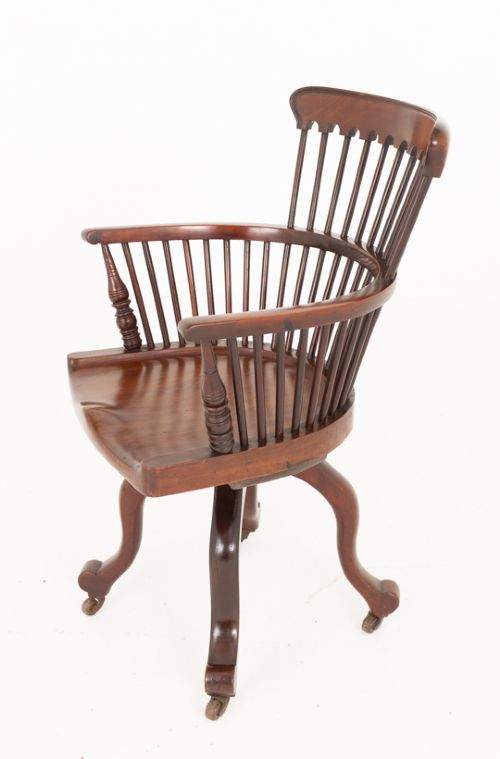
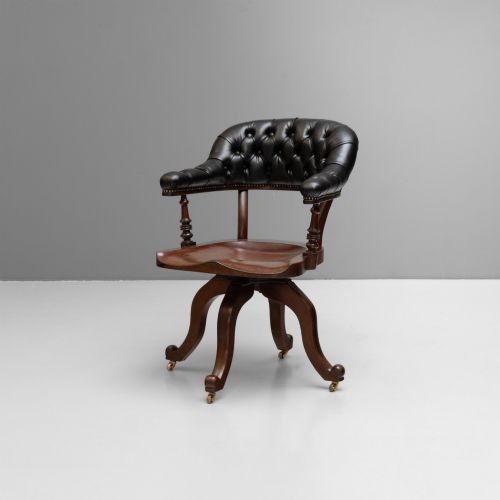
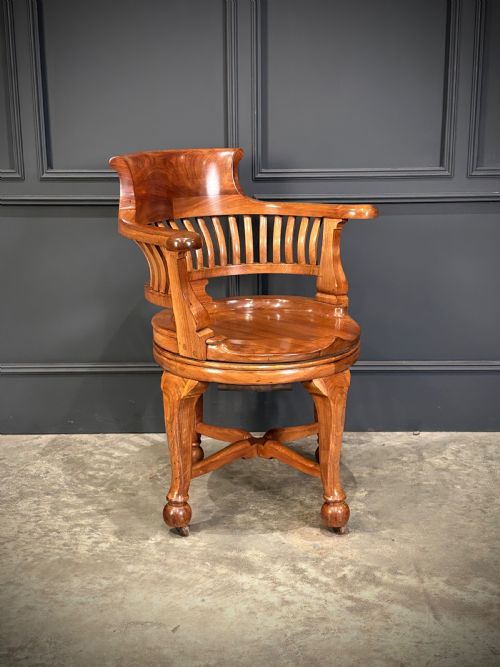
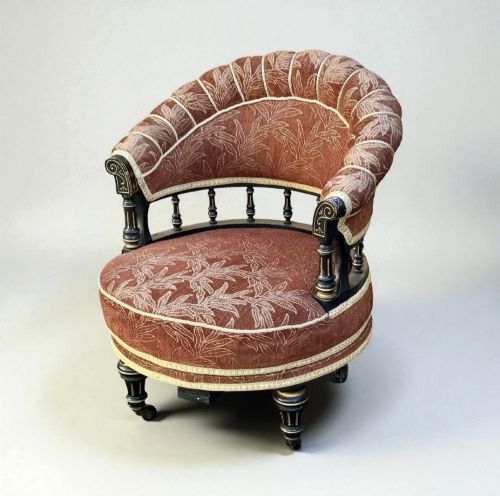
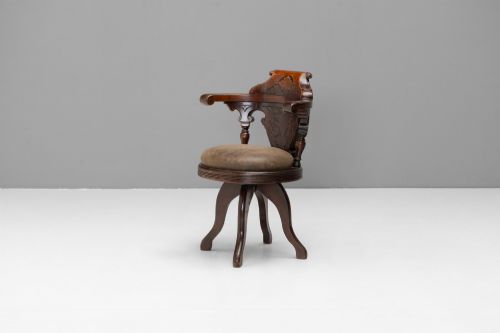


Vintage Swivel Captain Chair
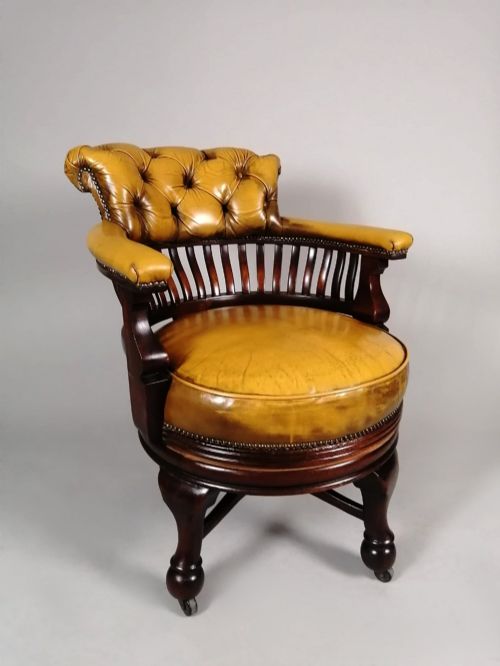
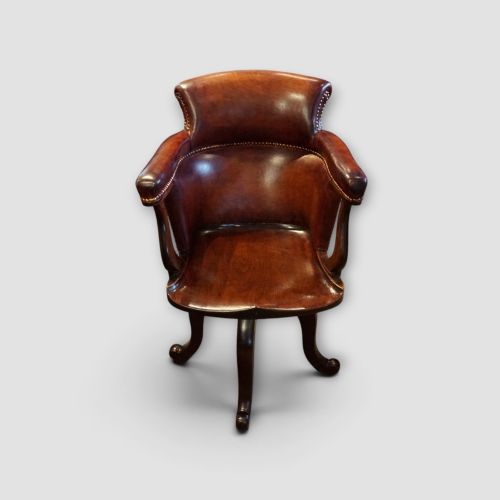
A vintage swivel captain chair offers sturdy revolving support at a desk, combining period timber and leather.
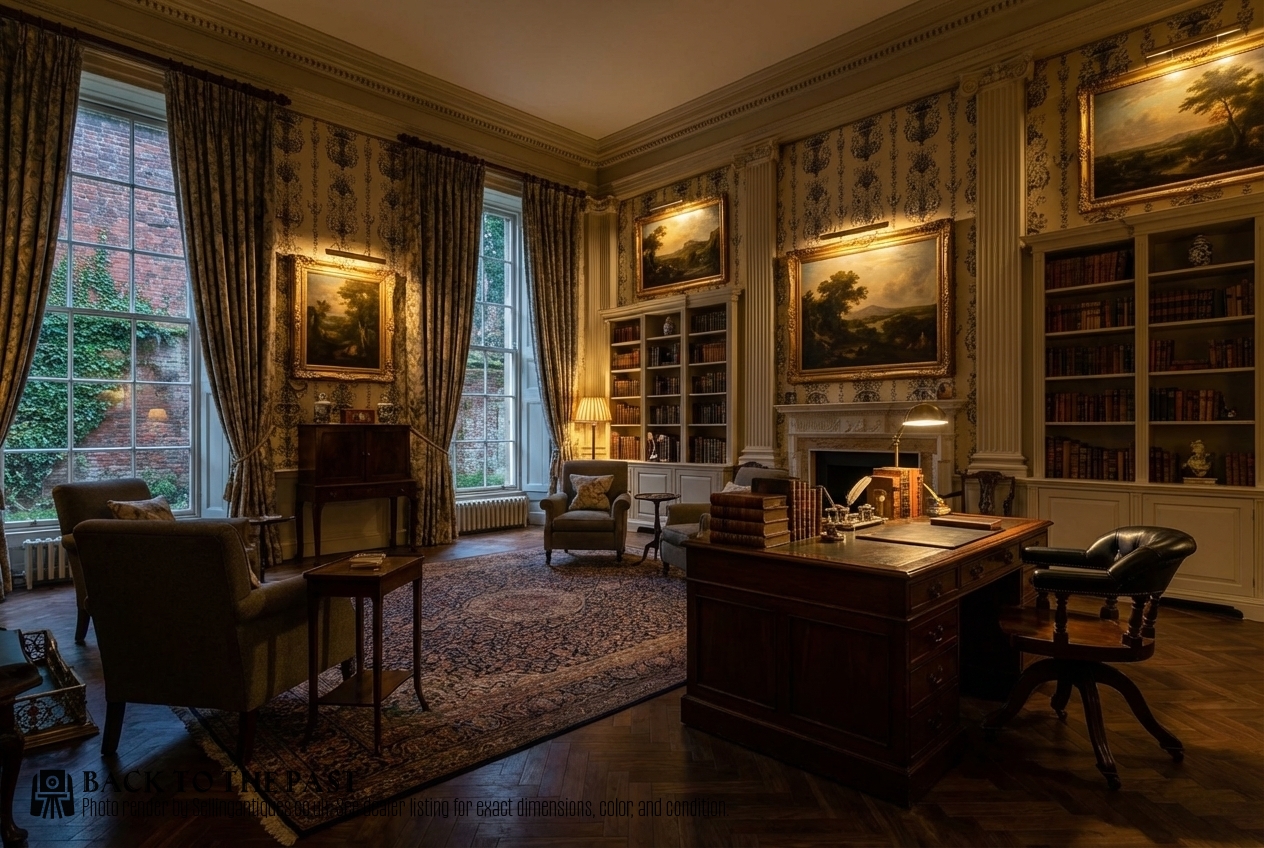
Vintage Swivel Captain Chair
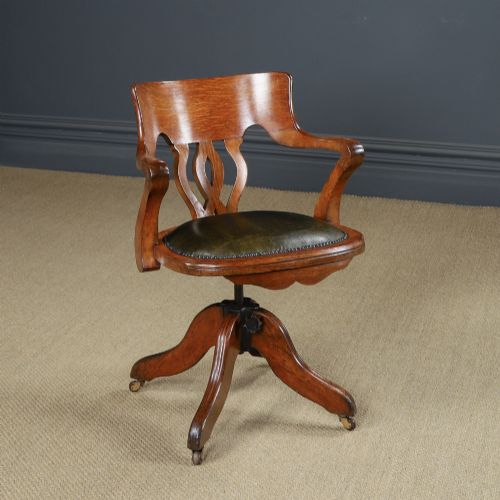
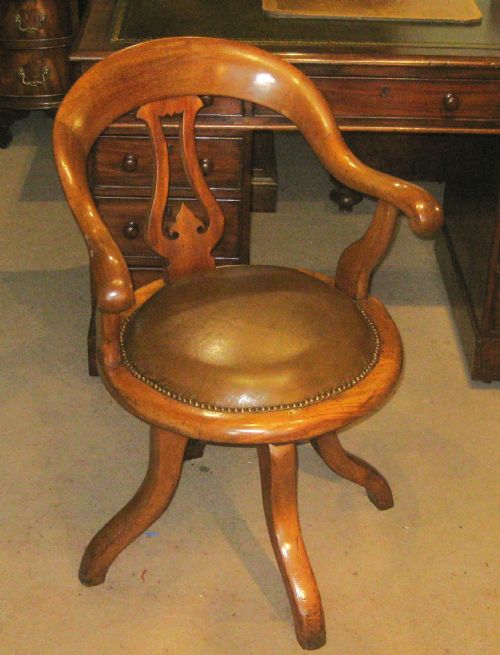
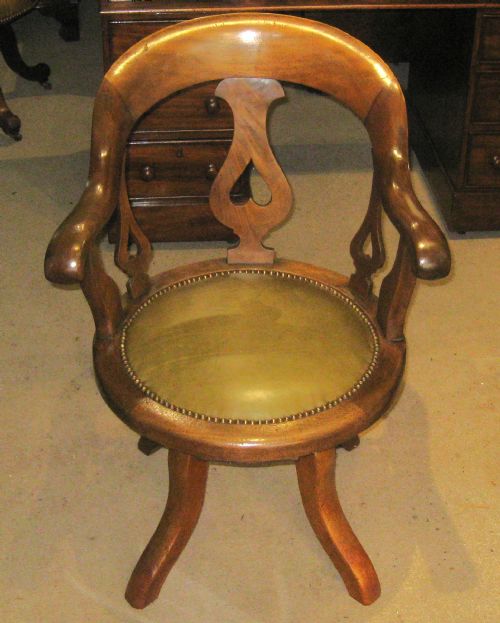
When you search for a vintage swivel captain chair, you encounter robust seating designed for offices, libraries and studies across the nineteenth and early twentieth centuries. These forms include revolving desk chairs, armchairs and office chairs that turn on central pivots.
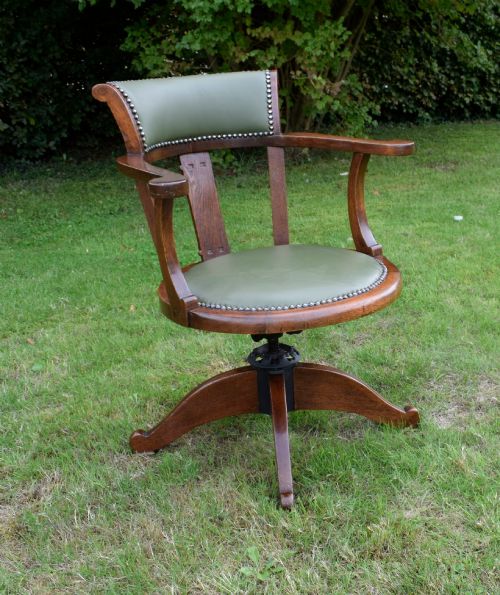
The versions you meet most frequently on this page date from the Victorian and Edwardian eras, spanning oak and mahogany construction with leather upholstery. Makers from these periods adapted traditional captain chair designs to incorporate mechanical swivel and tilt functions for working environments.
How they were made
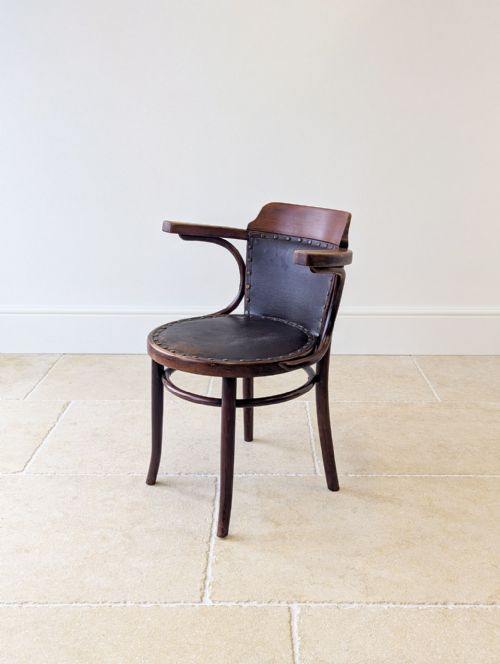
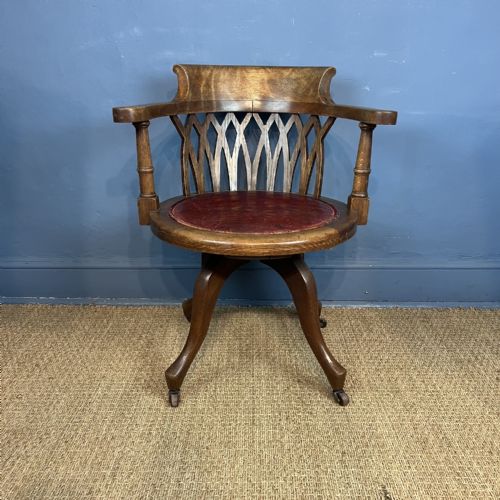
Carpenters constructed the frames of these chairs primarily using solid hardwoods such as oak, mahogany, walnut and beech, often shaped into bentwood components or carved in Gothic Revival and Arts and Crafts styles. Timber sections were joined to support the stresses of daily rotation and leaning.
Engineers integrated iron and brass mechanisms beneath the seat to permit swivelling and height adjustment, pairing the wooden frames with buttoned or plain leather, hide and bergere upholstery.
Burgermeister's chairs bring municipal authority straight to the desk, ensuring official correspondence is conducted with mayoral gravity.
What varies in quality
The distinction between standard office seating and superior examples rests upon the weight of the timber framing and the complexity of the undercarriage mechanism. Heavier grades of mahogany and quarter-sawn oak provide greater structural stability.
Detailing such as hand-tooled leather hides, disciplined turning on the spindle supports, and original brass or cast iron swivel hardware elevate certain models above mass-produced utilitarian counterparts.
S&H Jewell·Edward William Godwin·Thonet
The Vintage Swivel Captain Chair Glossary
- Revolving
- Turning around a central axis on a pivot mechanism. This allows the seated person to rotate without moving the chair legs.
- Bentwood
- Wood steamed and bent into curved structural forms. This technique created smooth rounded backs on Victorian and Edwardian office chairs.
- Bergere
- Woven cane panelling set into a wooden frame. This material frequently forms the backrest or seat panels on lighter desk chairs.
- Gothic Revival
- A nineteenth-century architectural and decorative style drawing on medieval motifs. Pieces from this movement display pointed arches and heavy geometric carving.
- Hide
- Animal skin prepared for upholstery use. It provides a durable, smooth surface for desk chair seats and armrests.
Vintage Swivel Captain Chair: Frequently Asked Questions
How do I date a revolving desk chair?
Dating relies upon timber selection, hardware construction and stylistic details like Gothic Revival carving or Edwardian Arts and Crafts lines. Earlier nineteenth-century examples often use heavy mahogany and simpler iron pivots.
Twentieth-century versions introduce bentwood components and varied adjustment mechanisms alongside oak and beech structures.
Were these chairs used on ships?
Some revolving chairs were specifically manufactured for maritime use, including designated ships chairs and P&O lines. These pieces had to remain stable while vessels were in motion.
Such chairs share the heavy timber and swivel action of land-based office models but often feature specialised compact proportions.
How do I care for the leather upholstery?
Leather upholstery on these chairs benefits from regular dusting and occasional conditioning to maintain suppleness. Avoiding direct sunlight prevents the hide from drying out and cracking.
Preserving the original surface retains the character acquired through decades of daily office use.