

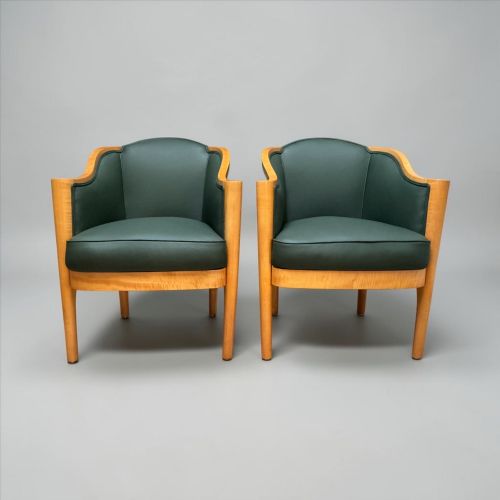
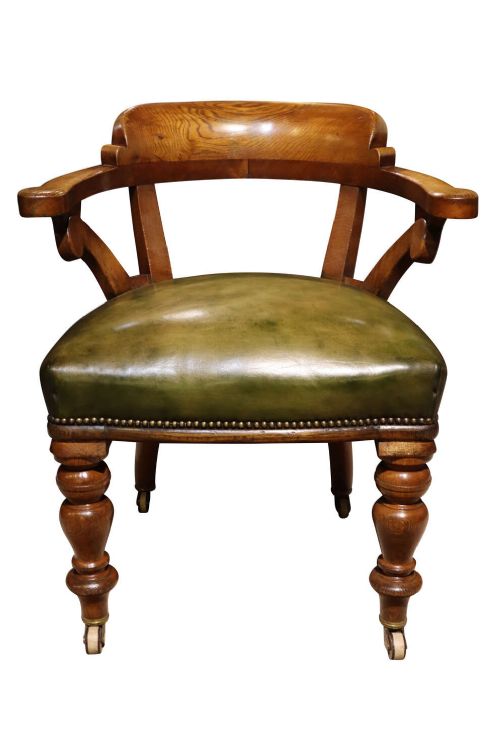
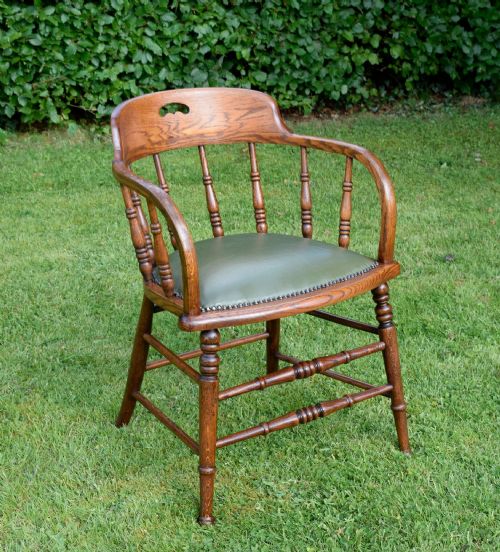


Green Leather Tub Chair
A green leather tub chair brings sturdy comfort to a study, built from solid timbers and rich hide designed for long hours at a desk.
Green Leather Tub Chair
A green leather tub chair combines a curved, enclosing backrest with a supportive upholstered seat designed for a library, office or study. Buyers searching for a green leather tub chair will find examples ranging from Victorian and Edwardian periods to Regency and William IV eras.
The form typically manifests as a desk chair, swivel chair, or library armchair constructed with deep buttoning or smooth hide upholstery. Frames appear in oak, mahogany, beech, and simulated or faux rosewood, often complemented by cane or brass details.
How they were made
Frames are constructed from sturdy hardwoods such as oak and mahogany, shaped to form the signature curved tub silhouette and sometimes finished with a simulated rosewood grain. Joinery relies on traditional methods to support the weight and movement of revolving or stationary desk chairs.
Upholstery involves fitting durable leather over padding, occasionally featuring deep buttoning, and securing the hide with brass tacks. Swivel and revolving mechanisms incorporate iron and brass engineering to allow smooth movement for office use.
Green Leather Tub Chair Retail Price Guide 2026
Typical asking prices for green leather tub chair among the pieces listed under this phrase on Sellingantiques today, from the lower quarter to the upper quarter. They describe what is for sale here now, not the wider market.
A swivel mechanism let Victorian clerks spin rapidly between tasks, proving the nineteenth-century office had its own quiet thrills.
What varies in quality
The grade of timber and the depth of grain in the oak or mahogany set pieces apart, alongside the richness and suppleness of the leather hide. Finer examples display superior hand-carving on the frame and more complex joinery around the curved back.
The sophistication of the mechanical components in revolving or swivel versions marks the distinction between standard utility office seating and higher-status library furniture. The neatness of the upholstery work, particularly around the curved tub arms, indicates the skill of the maker.
The Green Leather Tub Chair Glossary
- Tub chair
- An armchair with a continuous curved back and arms that form a single low-enclosing unit. This shape provides secure support around the back and sides.
- Smokers bow
- A sturdy, low-backed wooden armchair with turned spindles, often used in offices or smoking rooms. It shares similar proportions with Captains chairs.
- Simulated rosewood
- Timber painted or stained to imitate the rich grain and colour of genuine rosewood. This technique was common in the Regency period.
- Revolving chair
- A desk chair fitted with a central pivot mechanism allowing it to turn full circle. These often incorporate brass and cast iron components.
Green Leather Tub Chair: Frequently Asked Questions
Are these chairs comfortable for working at a desk?
The curved tub design provides natural side support and a comfortable posture for extended periods of reading or writing. Many versions include swivel mechanisms and adjustable heights suited for modern office use.
Heavier frames in oak and mahogany offer sturdy construction, while padded leather seats ensure long-lasting comfort throughout the working day.
How do I identify a Victorian tub chair?
Victorian examples frequently utilise solid golden oak or mahogany with robust frames and often feature deep buttoned green leather upholstery. Proportions tend to be generous and heavy, reflecting the manufacturing styles of the nineteenth century.
Turned wooden legs and brass hardware commonly appear on pieces from this period, alongside revolving office functions on library and captains variants.
What is the difference between a library chair and a desk chair?
Library chairs are generally designed for relaxed reading, featuring lower profiles, bergere sides, or wider upholstered arms. Desk chairs focus on functionality, frequently incorporating swivel mechanisms, castors, and upright posture support.
Both types share the green leather upholstery and curved tub silhouette, but desk variants prioritize mobility and workspace utility.
How should I care for vintage leather upholstery?
Leather surfaces benefit from regular dusting with a dry cloth and occasional treatment with a suitable nourishing wax or balm to maintain the hide's suppleness. Keeping the leather away from direct heat sources prevents cracking and fading over time.
Gentle cleaning preserves the natural patina and colour depth developed across decades of use in studies and libraries.