
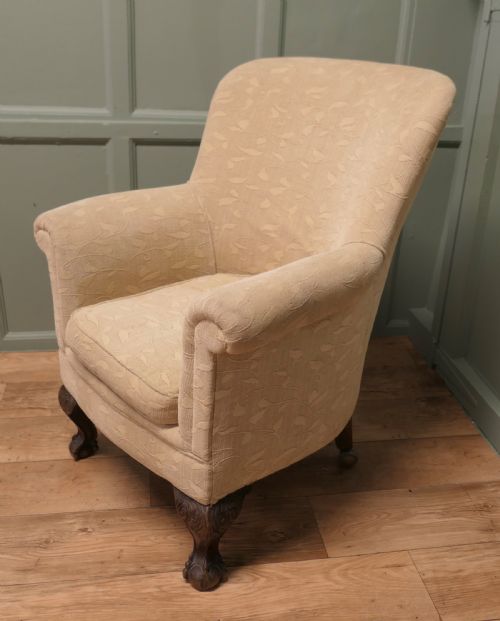
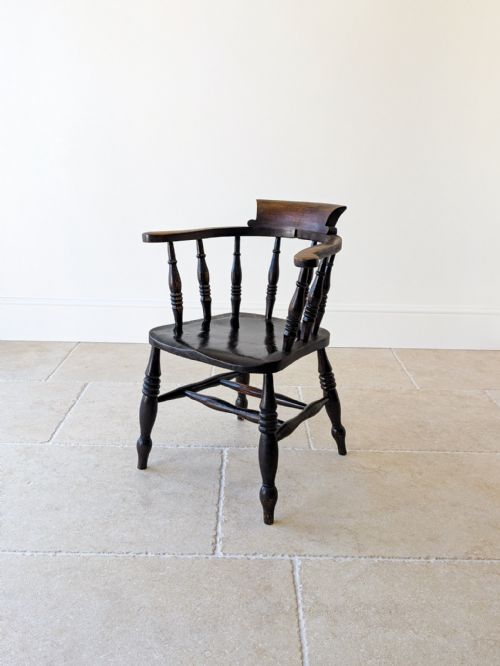
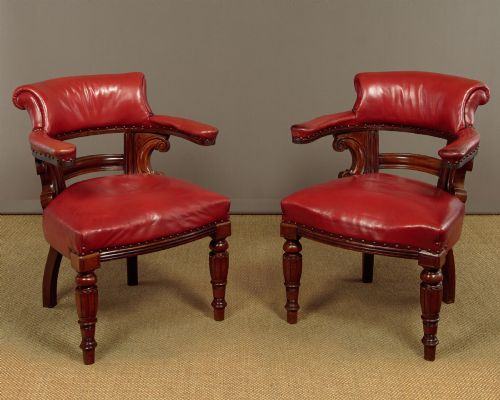
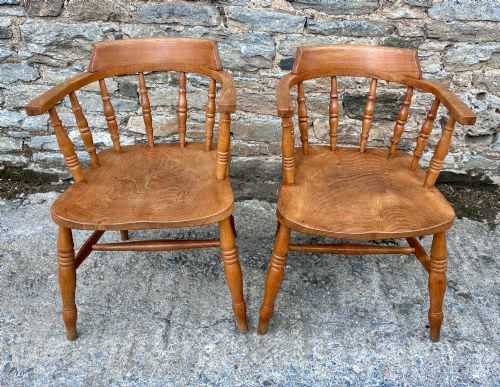
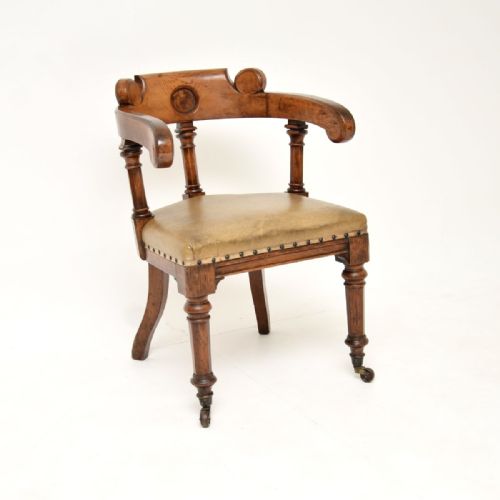
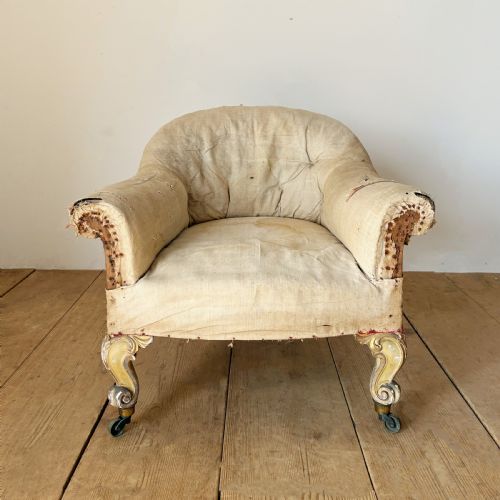


Victorian Carved Tub Chair
When you select a victorian carved tub chair, you choose a rounded seat design shaped by nineteenth-century joiners for comfort.
Victorian Carved Tub Chair
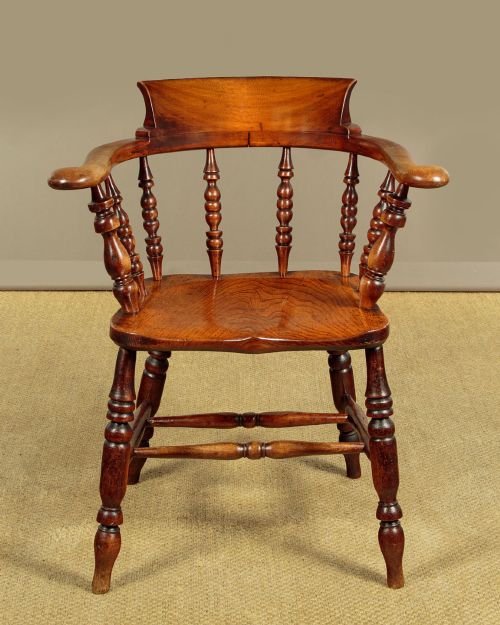
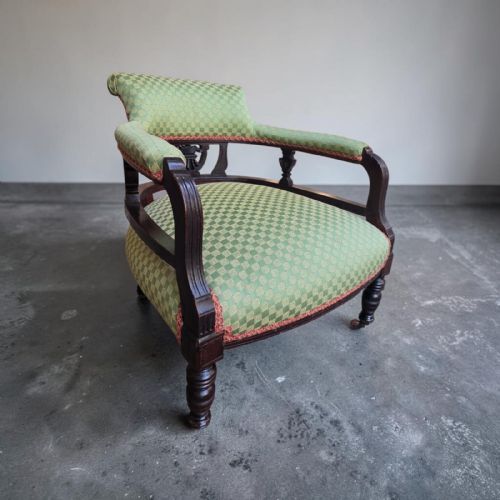
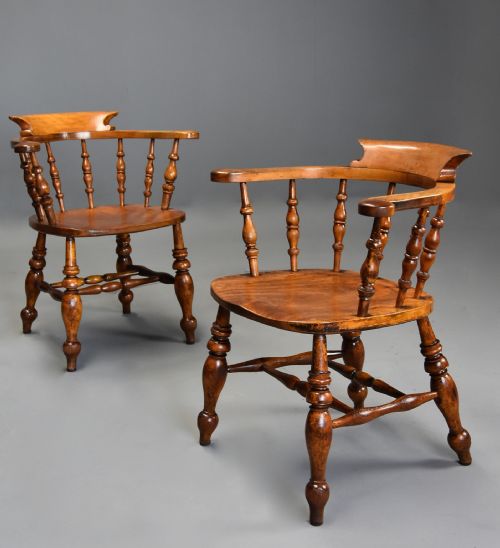
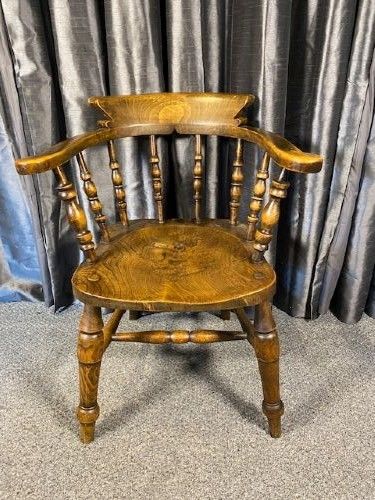
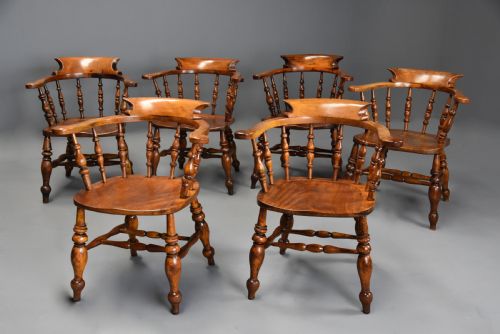
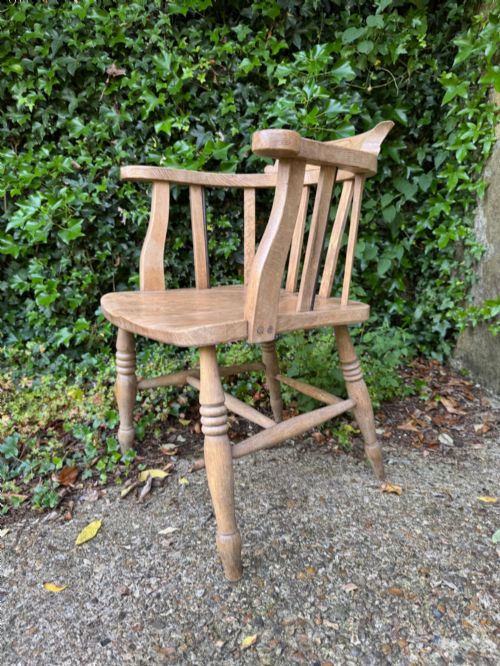
A victorian carved tub chair brings a distinctive curved back and enclosing arms into a room, serving as a comfortable seat for a study, parlour or library. The form appears across the nineteenth century in various timber frames, often accompanied by related seating such as captain's chairs and smokers bows.
Most examples found on this page date from the Victorian era, spanning decades from eighteen fifty to nineteen hundred, alongside occasional pieces from the Edwardian period. Makers constructed these chairs in forms ranging from solid oak desk chairs to upholstered button-backed library seats.
How they were made
Cabinet makers utilised a diverse range of timbers including mahogany, walnut, oak, elm, ash, birch, rosewood, yew and beech to build the structural frames of a victorian carved tub chair. Solid hardwoods provided the necessary strength for the curved backs and turned supports.
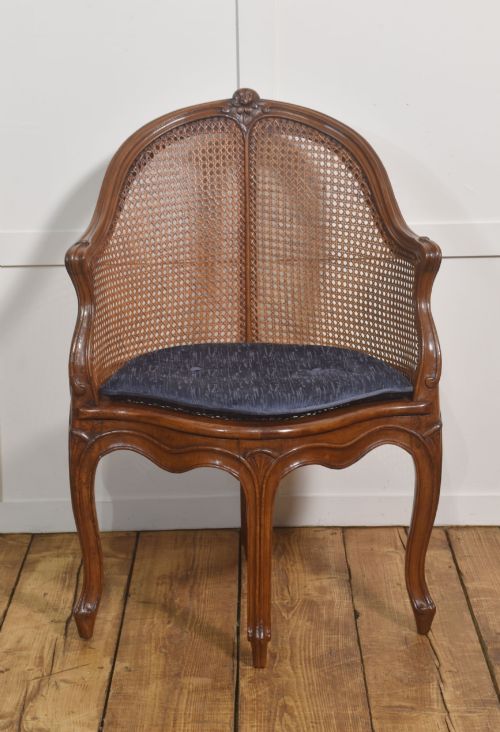
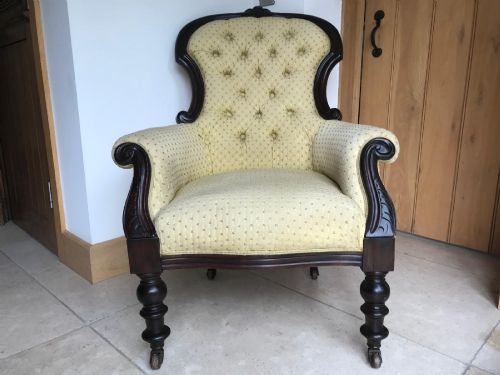
Workshops finished many pieces with leather coverings, cane panels or fabric upholstery, often incorporating button-back detailing. Joiners shaped the wood using traditional turning, steam-bending and carving techniques suited to the rounded profile.
A child's caned mahogany tub highchair appears among the seating, proving nineteenth-century toddlers also sat in miniature architectural comfort.
What varies in quality
The standard of a victorian carved tub chair rests upon the selection of timber and the depth of the carving on the show-wood frame. Dense hardwoods like oak, walnut and mahogany with well-preserved patination indicate superior original materials.
Construction methods also separate standard pieces from exceptional ones, particularly the rigidity of the curved back joints and the integrity of the original leather or upholstery coverings. Matched pairs and complete parlour suites show a higher level of initial workshop investment.
The Victorian Carved Tub Chair Glossary
- Tub chair
- An armchair featuring a continuous curved back and arms that form a low, enclosing barrel shape. This design provides enclosed support for the sitter.
- Captain's chair
- A low-backed wooden armchair with a rounded spindle back rail, frequently constructed from elm or ash. These chairs originated as sturdy seating for office and domestic use.
- Smoker's bow
- A sturdy vernacular wooden armchair related to the Windsor tradition, featuring a curved low back. It shares similarities with the captain's chair found in nineteenth-century listings.
- Button-back
- An upholstery technique where indentations are formed in the padding by pulling buttons deep into the stuffing. This method secures the fabric and creates a distinctive quilted pattern.
- Show-wood
- Exposed wooden framing around an upholstered armchair where the grain and carving remain visible. Craftsmen polished this timber to display the quality of the material.
Victorian Carved Tub Chair: Frequently Asked Questions
Where were these chairs used?
A victorian carved tub chair typically stood in studies, libraries and formal parlours where guests gathered. Their enclosing shape offered a comfortable seat for reading or conversation.
Desk and office variants also served working environments, providing sturdy timber support for long hours of writing. Domestic spaces often paired them with matching parlour suites or smaller occasional seating.
How do I care for the leather?
Original leather coverings require gentle cleaning with a damp cloth followed by a suitable leather conditioner to prevent drying and cracking. Avoiding direct sunlight helps preserve the natural tone of the hide.
Wooden frames benefit from occasional dusting and mild wax polishing to maintain the patina without building up excessive residue. Care should be taken around carved details to avoid snagging fabric or cloth.
Can I use one at a modern desk?
Many nineteenth-century desk and library variants fit standard desk heights, though interior dimensions vary across different periods. Checking the specific seat height and clearance beneath the arms ensures compatibility with modern furniture.
Solid oak and mahogany desk models provide the stability needed for daily workspace use. Upholstered versions offer added padding for prolonged seating.
How do I date a chair?
Dating relies on timber choice, construction marks and stylistic cues associated with specific decades of the nineteenth century. Gothic Revival details, burr elm surfaces and specific turnings help narrow the period of manufacture.
Comparative study of related captain's chairs and parlour seating from eighteen fifty to nineteen hundred clarifies stylistic transitions. Listings often record specific estimated decades based on these physical characteristics.