




Oak Leather Library Chair
When you need an oak leather library chair, you are choosing a substantial seat designed for heavy reading, study and long hours at a desk.
Oak Leather Library Chair
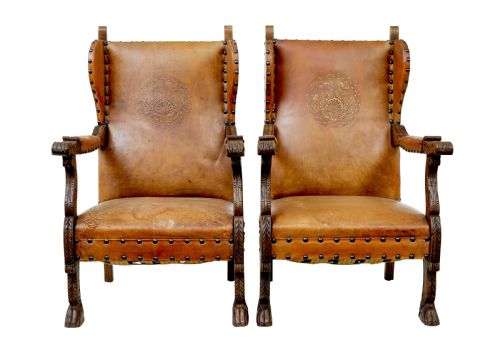
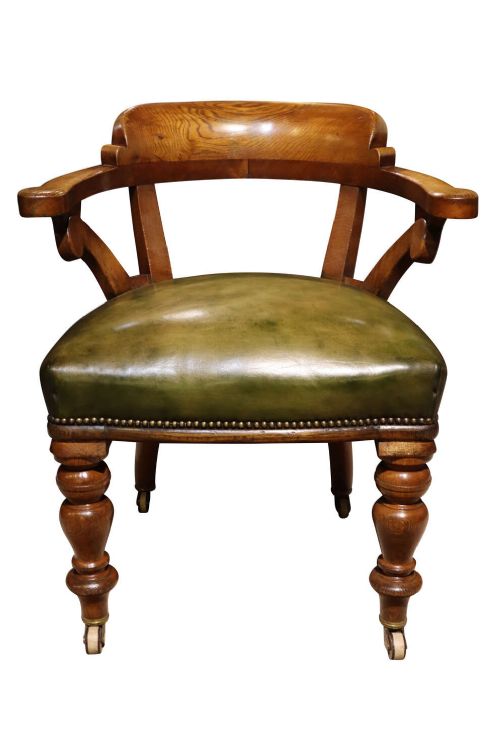
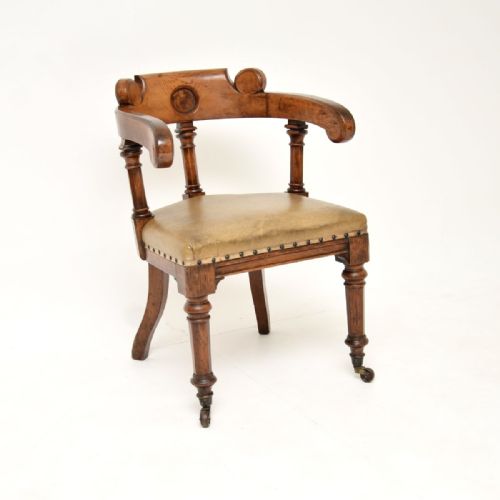
An oak leather library chair combines a sturdy hardwood frame with a durable hide seat and back pad, built for institutional study spaces and private homes alike. These seats appear predominantly in Victorian and Edwardian interpretations, ranging from low club armchairs to swivel desk chairs and tall wingback models.
Makers utilised resilient timber such as golden, solid or polished oak to construct heavy frames often ornamented with carving, brass studs or turned supports. You will encounter styles spanning Jacobean revival, Gothic revival and the clean lines of the Arts and Crafts movement.
The selection includes desk armchairs, fireside seating, and metamorphic library steps that convert into chairs. These utilitarian forms reflect the varied demands of nineteenth and early twentieth century studies.
Materials and Construction
Frames rely principally on solid oak, frequently paired with secondary timbers like beech or chestnut, shaped using traditional joinery and deep carving. Upholsterers secured the leather surfaces with metal studs, brass tacks or woven straps to withstand constant daily use.
Hide colours range from deep green and dark red to tan and brown, often buttoned to provide firm support across the backrest and arm pads. Metal mechanisms appear in later office variants to allow swivel motion and adjustable height.
Some chairs double as clever library steps, proving that nineteenth century scholars enjoyed a practical party trick.
Judging Quality
The density and grain of the oak timber dictate the foundational strength of the frame, with golden or carved variations indicating careful selection by the cabinetmaker. Substantial proportions and heavy framing separate utilitarian seating from exceptional workshop commissions.
The grade of the leather and the precision of the buttoning determine the tactile success of the upholstery. Intricate woodwork, such as Gothic revival tracery or Scottish school details, points to superior craftsmanship.
Gillows·Bruce James Talbert·W Williamson And Sons·Alfred Allen
The Oak Leather Library Chair Glossary
- Bergere
- A type of chair featuring woven cane panels enclosed within a wooden frame. This method provides a lighter alternative to solid upholstery.
- Cockfighting chair
- A low, narrow seat traditionally designed with a padded rest on the backrest for straddling. These pieces feature leather upholstery and sturdy oak frames.
- Metamorphic
- Describing furniture designed to transform into another object, such as library steps that fold into a chair. This clever engineering served compact study spaces.
- Wainscot
- A heavy wooden armchair featuring panelled construction. These pieces offer high backs and solid oak frames derived from earlier vernacular traditions.
- Wingback
- An armchair featuring protective side panels designed to shield the occupant from draughts. These upholstered versions combine deep leather seats with sturdy wooden legs.
Oak Leather Library Chair: Frequently Asked Questions
What defines an oak leather library chair?
These pieces combine heavy hardwood frames with durable hide upholstery designed for prolonged reading and study.
They appear primarily across nineteenth and early twentieth century styles, including Victorian Gothic revival and Arts and Crafts designs.
Where were these chairs used historically?
Owners placed them in private libraries, offices, studies and institutional reading rooms where durability was essential.
Their robust construction and comfortable leather pads suited long hours of administrative work or scholarly research.
How do I care for the leather?
Keep the hide clean by dusting regularly and treating it periodically with appropriate conditioning balms to prevent cracking.
Avoid placing the chair in direct sunlight or near heat sources that might dry out the natural material.
How do I tell Victorian from Edwardian pieces?
Victorian examples often display heavier proportions, deep buttoning and elaborate Gothic or Jacobean Revival carvings.
Edwardian pieces generally favour lighter frames, simpler lines and influences from the Arts and Crafts movement or Scottish schools.