
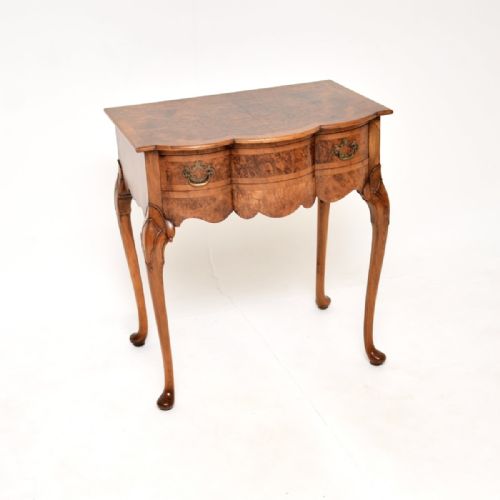


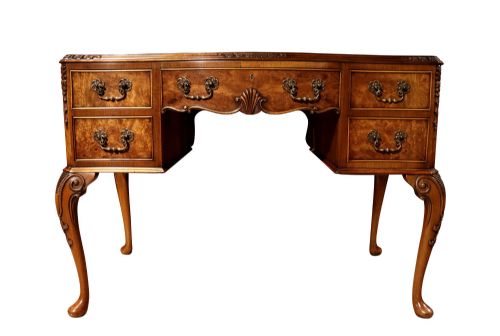

Burr Wood Dressing Table
A burr wood dressing table brings figured grain and historical form to a room, offering both a surface for preparation and a statement of timber craftsmanship.
Burr Wood Dressing Table
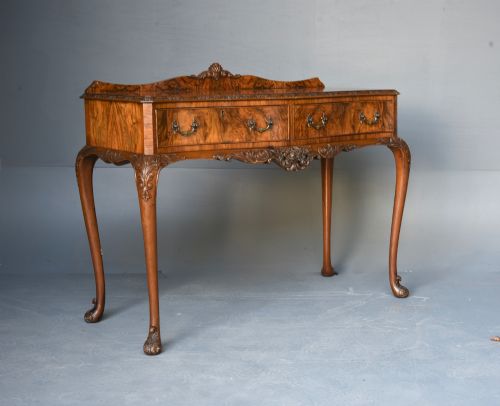
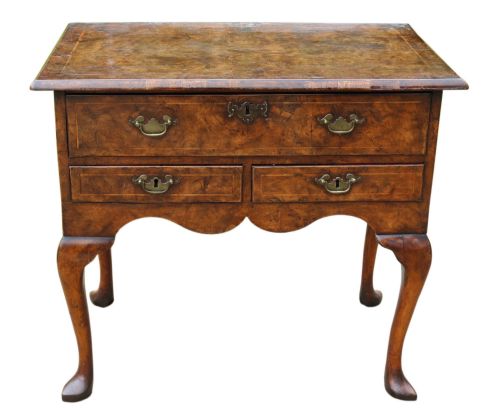
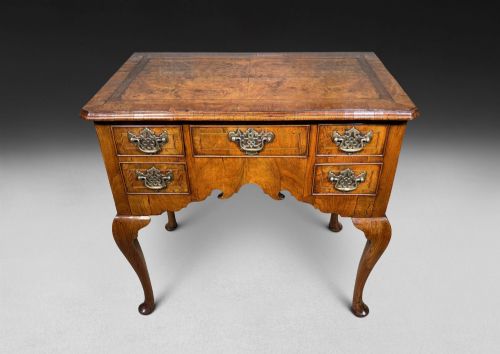
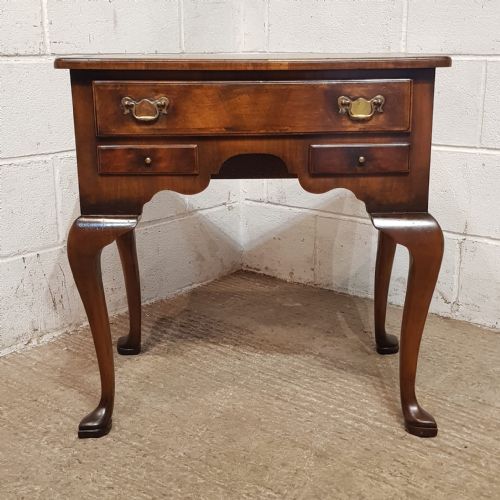
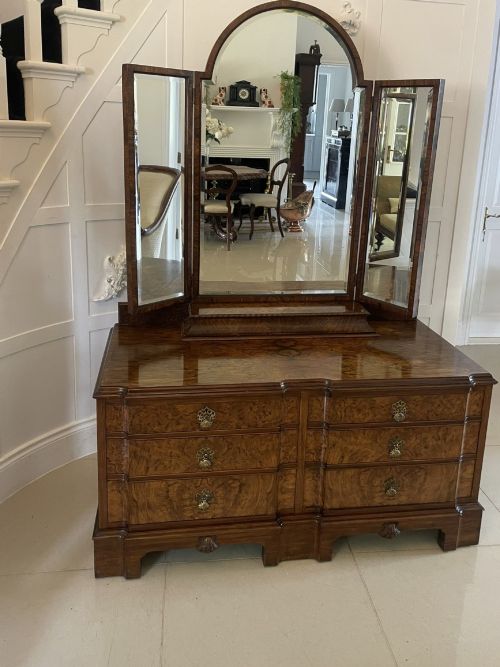
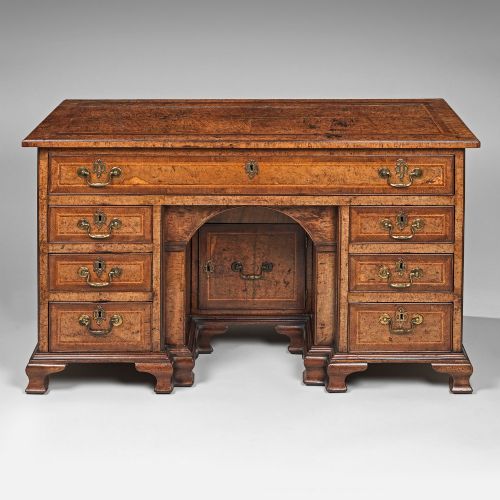
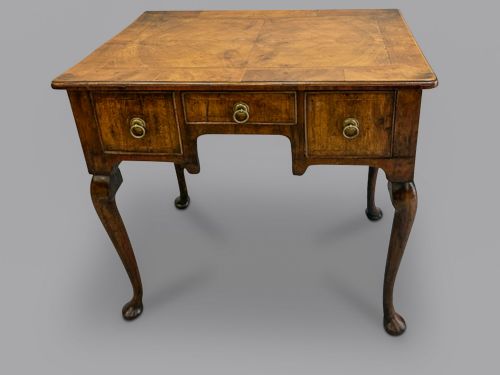
A burr wood dressing table typically manifests in forms from the 18th century onward, including lowboys, kneehole desks, and Victorian pedestal designs. The search for a burr wood dressing table directs attention toward pieces finished in burr walnut, burr elm, burr ash, and burr oak.
Early examples bridge the gap between lowboys and functional surfaces, while Victorian and later iterations introduce integrated mirrors and tiered drawers. Walnut and elm dominate the early periods, alongside revival styles from later decades.
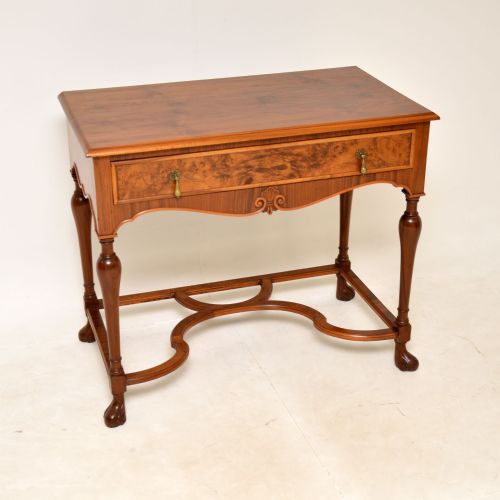
Buyers encounter everything from George II lowboys adapted for use to Victorian pedestal dressing tables and Art Deco writing surfaces. The selection spans centuries of cabinetmaking, uniting diverse forms through highly figured timber.
Materials and construction
Cabinetmakers constructed these pieces using solid foundational timbers like oak and plain walnut, veneered with highly figured burr sections harvested from tree growths. This technique allowed artisans to display intricate grain patterns across large drawer fronts and tabletops.
Secondary materials such as brass for handles and locks, glass for mirrors, and occasionally leather for writing surfaces complement the primary wood construction. Joinery methods evolved from early dovetailing on drawer construction to the more complex frames seen in later revival pieces.
Listings feature burr walnut, burr elm, burr ash, and burr oak across periods from the early 18th century to the Art Deco era.
Assessing quality and execution
Quality rests primarily on the density, placement, and symmetry of the burr figuring across the primary surfaces. Finer pieces demonstrate careful book-matching of the veneer, ensuring the grain patterns flow logically across drawers and panels.
The choice of secondary timbers and the precision of the cabinet work dictate the longevity and structural integrity of the piece. Early examples with undisturbed patination and original brass hardware sit at the upper end of the spectrum.
Maurice Adams
The Burr Wood Dressing Table Glossary
- Burr wood
- Timber harvested from tree growths or burls, producing swirling, knotty grain patterns prized by cabinetmakers. It is sliced into thin veneers to cover larger surfaces.
- Lowboy
- A small table with drawers, typically standing on four legs, functioning historically as a dressing table or side table. They frequently date to the 18th century.
- Kneehole desk
- A desk or dressing table featuring a central recess for the legs, flanked by pedestals of small drawers. Early 18th-century versions often utilise walnut and burr oak.
- Dressing mirror
- A table-top mirror mounted on a small frame with drawers, popular from the 18th century onward. They were often placed atop chests or dedicated tables.
- Pedestal dressing table
- A larger furniture form where twin stacks of drawers support the main top and mirror superstructure. This layout becomes prominent during the Victorian era.
Burr Wood Dressing Table: Frequently Asked Questions
What is a burr wood dressing table?
A burr wood dressing table is a surface used for grooming or writing, surfaced with highly figured wood grain derived from tree burls. These pieces span from early 18th-century lowboys to Victorian pedestal designs.
They combine practical storage compartments with decorative veneers, making them central items in historical bedroom furnishings.
How do I date an antique dressing table?
Dating relies on observing construction methods, timber choices, and hardware styles. Early 18th-century examples often use walnut and oak, featuring hand-cut dovetails and period brasses.
Later Victorian and revival pieces incorporate heavier pedestals, plate glass mirrors, and distinct decorative motifs reflecting their specific decades of manufacture.
Where were lowboys used?
Lowboys served flexible roles in historic interiors, functioning as dressing tables, side tables, or small writing desks in bedrooms and parlours. Their compact footprint allowed placement in smaller rooms.
Over time, dedicated dressing tables with fixed mirrors largely replaced the multi-purpose lowboy in bedroom suites.
How should I care for burr walnut?
Burr walnut veneer requires protection from direct sunlight and excessive moisture to prevent fading and veneer lifting. Regular dusting with a soft, dry cloth preserves the polished surface.
Avoid placing these tables near heat sources, as fluctuations in temperature can cause the historic wood and glue to dry out and crack.