




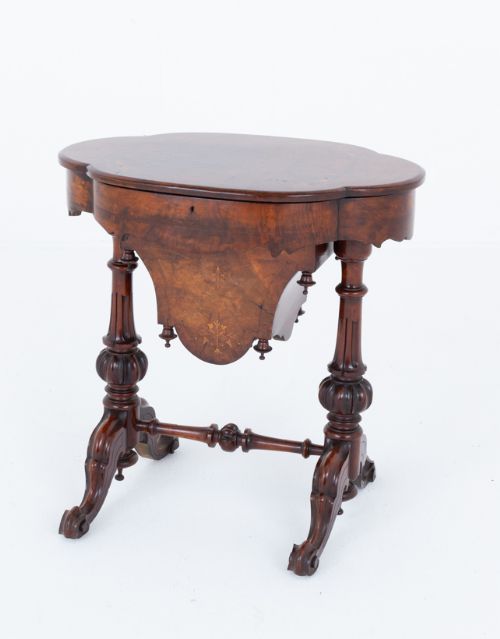

Burr Walnut Work Box
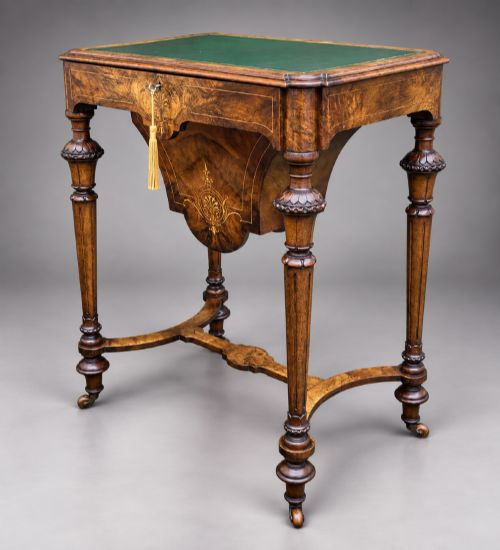
When you search for a burr walnut work box, you are looking at nineteenth-century lidded caskets and fitted sewing tables designed for domestic needlework.
Burr Walnut Work Box
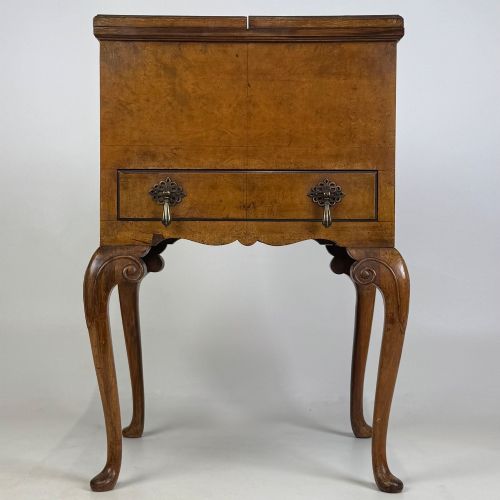
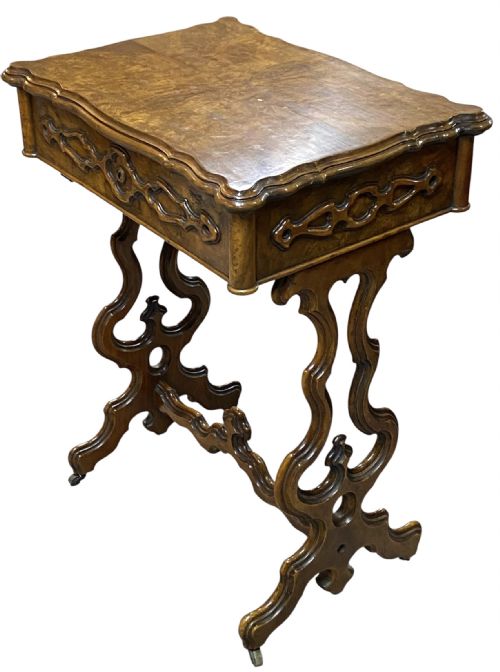
A burr walnut work box combines decorative timber veneers with compartments designed to hold threads, needles, and small sewing implements. The pieces on this page span the Victorian period and the Edwardian era, taking the form of tabletop boxes or freestanding pedestal tables with fitted interiors.
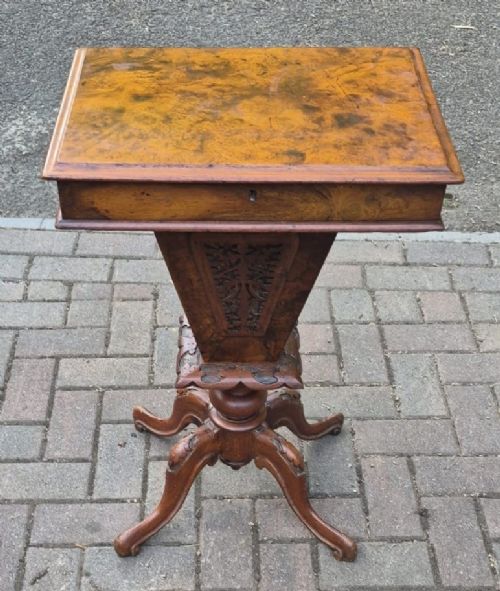
The most common formats include the trumpet sewing table with an octagonal or circular top above an octagonal tapering bag, and smaller portable lidded caskets. These examples originate primarily from nineteenth-century workshops, where domestic craft furniture occupied a central place in the parlour.
How they were made
Cabinet makers applied thin slices of burr walnut veneer over solid secondary timbers, selecting the knotted growth rings of the walnut tree for dynamic, swirling grain patterns. They integrated boxwood inlay, marquetry, and brass mounts to accentuate the geometric form of the lid and panels.
Freestanding examples often incorporate carved and turned wooden supports or a cradle base, while table variations conceal fitted trays and compartments beneath the hinged lid to organise sewing tools.
Listings feature burr walnut and figured walnut alongside boxwood inlay, brass hardware, and fabric-lined interiors.
What varies in quality
The standard of a burr walnut work box depends upon the symmetry and richness of the veneer selection across the top and sides. Pieces featuring crisp boxwood inlay, intact internal lift-out trays, and precise joinery stand apart from simpler iterations.
Construction details such as the turning of pedestal supports, the weight of brass hardware, and the complexity of the interior fittings distinguish standard production pieces from finer workshop commissions.
Waring & Gillow·Parkins & Grotto
The Burr Walnut Work Box Glossary
- Burr walnut
- A wood veneer taken from the burl or growth deformity of a walnut tree, prized for its swirling, highly figured grain patterns. Cabinet makers reserved this material for the primary display surfaces of high-status furniture.
- Trumpet work table
- A freestanding sewing table featuring an octagonal or round top and a wide, flaring bag below for wool and needlework. This form became popular during the Victorian period.
- Marquetry
- The art of forming decorative patterns by fitting together small pieces of different coloured wood veneers. Craftsmen applied this technique to the lids of work boxes and game tables.
- Tunbridge ware
- Small wooden objects decorated with mosaic patterns made from tiny segments of differently coloured woods. These mosaics were often incorporated into the lids of Victorian boxes.
- Fitted interior
- A compartmented tray or arrangement of small lidded boxes positioned beneath the main lid of a work box. These sections kept sewing tools and accessories organised during use.
Burr Walnut Work Box: Frequently Asked Questions
What is a burr walnut work box used for?
These boxes and tables served as dedicated storage for sewing implements, threads, and needlework projects in nineteenth-century homes. The internal trays kept small items organised while the lockable lids secured private correspondence or valuables.
Today, they function as decorative accent pieces on tabletops or as freestanding tables that store everyday items out of sight.
How do I date a burr walnut work box?
Dating relies upon construction methods, hardware, and stylistic markers recorded across the Victorian and Edwardian periods. Pieces from the mid-nineteenth century frequently display heavy carved pedestal bases and Tunbridge ware inlay.
Later examples from the turn of the twentieth century often adopt simpler silhouettes and lighter proportions while retaining the characteristic figured walnut veneer.
What is the difference between a work box and a work table?
A work box is a portable lidded casket designed to sit upon a desk, table, or sideboard. A work table is a freestanding item of furniture featuring legs, a pedestal, or a cradle base.
Both forms share the same internal arrangement of compartments and trays intended for sewing accessories.
How do I care for burr walnut veneer?
Burr walnut benefits from stable room temperatures away from direct sunlight and strong heat sources. Maintaining consistent humidity prevents the thin decorative veneers from drying out or lifting from the secondary timber carcass.
Dusting with a dry, soft cloth preserves the polished finish without introducing moisture that could damage historic wood surfaces.