
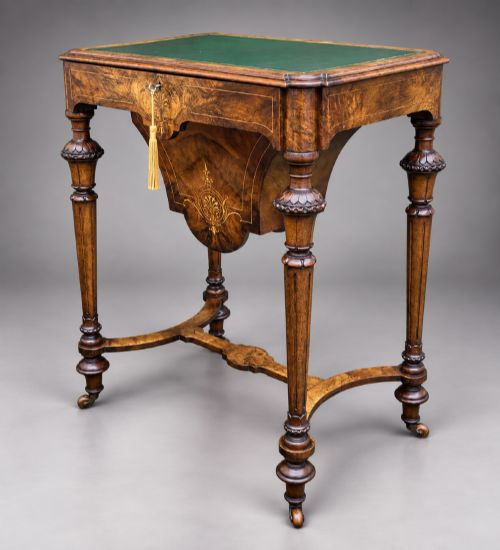
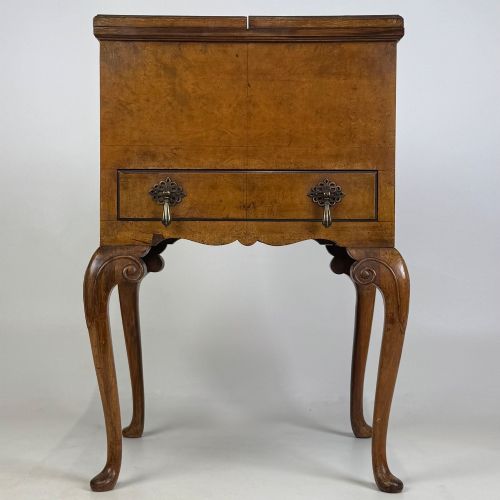


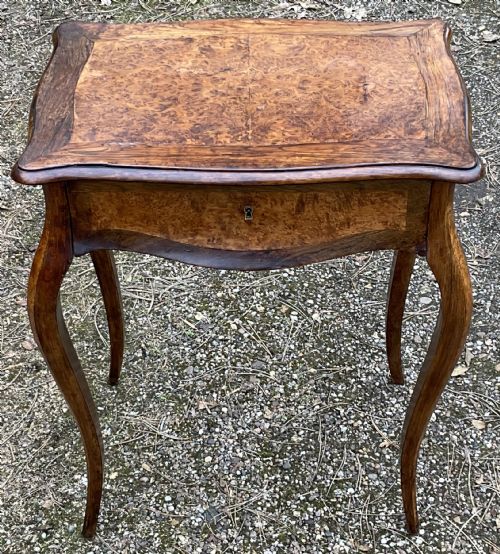


Edwardian Walnut Sewing Table
These pieces of edwardian walnut sewing table combine domestic utility with fine timber work, offering compact storage for needles, thread and small crafts.
Edwardian Walnut Sewing Table
When you search for an edwardian walnut sewing table, you are looking at domestic furniture designed to hold sewing gear, threads and needlework. These items range from compact workboxes placed on side tables to dedicated sewing tables with fitted interiors and drop leaves.
How they were made
Cabinet makers relied heavily on walnut and burr walnut for these tables, often selecting the figured grain of burr timber for top surfaces and lids. This wood was frequently enhanced with fruitwood inlay and marquetry inlay to create decorative patterns across the exterior.
Internal compartments were built with fitted interiors to organise cotton reels, needles and small tools. Brass fittings, leather inserts and fabric components completed the construction of these functional domestic items.
Listings span the Victorian and Edwardian periods, extending from eighteen-fifty to nineteen-twenty, utilising walnut, burr walnut, fruitwood inlay and brass.
What varies in quality
The distinction between ordinary and superior pieces rests on the choice of timber and the precision of the cabinet work. Tables utilising highly figured burr walnut and intricate marquetry inlay command greater attention than plain walnut versions.
Fitted interiors that retain their original partitions, compartments and small accessories elevate the standing of a piece. The crispness of the fruitwood inlay and the stability of the joined structure define the overall standard of the work.
The Edwardian Walnut Sewing Table Glossary
- Burr walnut
- A timber harvested from walnut tree growths, prized for its swirling, highly figured grain pattern. It was frequently used for the top surfaces of fine tables.
- Marquetry inlay
- Decorative patterns formed by fitting small pieces of veneer into a prepared surface. Fruitwood was often used for these contrasting floral or geometric designs.
- Work table
- A piece of furniture designed for needlework and domestic crafts, usually featuring an internal compartment or attached basket for sewing materials.
- Poudreuse
- A type of dressing table incorporating compartments and mirrors. Examples from the nineteenth century often overlap with work and writing table forms.
Edwardian Walnut Sewing Table: Frequently Asked Questions
What is an edwardian walnut sewing table?
An edwardian walnut sewing table is a small piece of furniture designed to hold sewing equipment, threads and needlework. These tables typically feature a hinged lid opening to reveal a fitted interior.
Many examples include an integrated fabric bag or wooden box suspended beneath the main surface to store ongoing craft projects.
How do I tell Victorian from Edwardian tables?
Victorian tables often display heavier proportions and dense marquetry inlay, frequently incorporating styles such as Rococo Revival. Burr walnut veneers and dark finishes dominate this era.
Edwardian pieces generally lean towards lighter frames, simpler lines and satin walnut or subtler inlay work, reflecting changing domestic tastes around the turn of the twentieth century.
How were these tables used originally?
These tables served as functional work stations for ladies undertaking needlework, embroidery and mending in the parlour or drawing room. The fitted compartments kept small tools and cottons organised during daily tasks.
Some designs also incorporated foldover tops for playing games or writing letters, making them versatile items of domestic furniture.
Where should I place one at home?
An edwardian walnut sewing table fits easily beside a sofa or armchair as an occasional table. The compact footprint makes them useful in smaller rooms where surface space is limited.
The internal storage compartments remain practical for holding small modern items such as stationery, keys or craft supplies.