


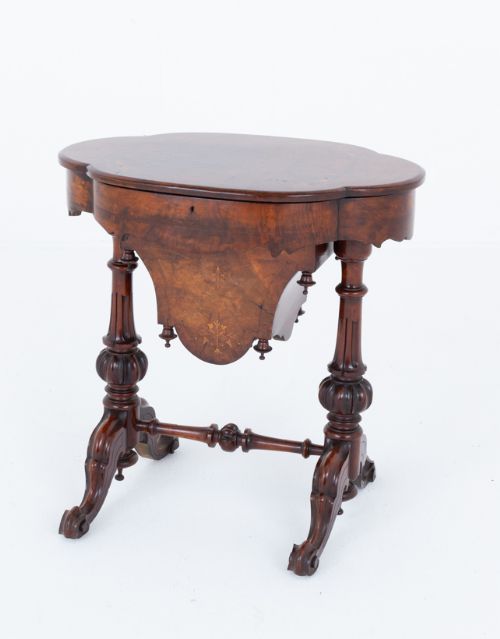


Victorian Inlaid Needlework Table
A victorian inlaid needlework table combines intricate marquetry with practical sewing storage, offering both workspace and elegance for a period interior.
Victorian Inlaid Needlework Table
A victorian inlaid needlework table is primarily encountered as a sewing, work, or games table originating from the nineteenth century. These pieces frequently appear in burr walnut or rosewood, often featuring fitted interiors designed for textiles and small crafts.
Makers utilised various regional interpretations, producing forms such as trumpet workboxes, occasional tables, and occasional writing desks. The styling spans standard Victorian designs through to Sheraton Revival, Regency, and Anglo-Indian variants.
Surviving examples date chiefly from the mid to late nineteenth century, reflecting the domestic pursuits of the era. Buyers find both simple needlework boxes on stands and multi-functional tables incorporating chess or backgammon boards.
Materials and Technique
Cabinetmakers constructed these tables using solid foundational timbers overlaid with burr walnut or rosewood veneers. Marquetry and wood inlay, utilising lighter elements such as boxwood, created geometric or floral patterns across the lids and friezes.
Internal compartments required precise joinery to house sewing equipment, spools, and fabric bags suspended beneath the table top. Brass fittings and hinges secured the lids and folding leaves on dual-purpose games and sewing tables.
Cabinetmakers occasionally included concealed compartments within the trumpet bodies for hiding clandestine love letters.
Craftsmanship and Detail
The sophistication of the marquetry and the choice of burl veneers largely determine the standard of a piece. Elaborate boxwood inlay and hand-painted decorations separate standard production work from finer examples.
Structural integrity of the delicate pedestal bases, trumpet bodies, and internal sewing wells indicates the original skill of the workshop. Complete, original fitted interiors with functioning compartments retain greater authenticity.
Waring and Gillow
The Victorian Inlaid Needlework Table Glossary
- Trumpet table
- A work table featuring an octagonal or flared body resembling a musical instrument, standing on a tripod base. This form typically opens to reveal a deep storage well for wools and needlework.
- Marquetry inlay
- The art of applying fitted pieces of wood veneer to a structural panel to form decorative patterns. Craftsmen often combined rosewood and boxwood to achieve high contrast.
- Killarney ware
- Decorative wooden objects produced in Ireland, typically characterised by intricate parquetry made from native timbers like arbutus. These pieces often feature local scenic motifs.
- Workbox
- A portable or table-mounted box designed for sewing implements, sometimes elevated on legs to form an independent piece of furniture. They house fitted trays and pin cushions.
Victorian Inlaid Needlework Table: Frequently Asked Questions
What is inside a sewing table?
Most pieces contain a fitted wooden tray with compartments for spools, thimbles, and pins. Below this tray, a fabric bag or a deep wooden well holds larger needlework projects.
Finer examples retain original silk linings and specialised bone or ivory sewing tools. The interior layout directly reflects the specific domestic needlework tasks of the period.
How do I use one today?
These tables function well as bedside cabinets, side tables, or occasional desks in a modern living space. The internal compartments remain useful for storing small accessories, stationery, or contemporary craft supplies.
Positioning them away from direct sunlight and radiators protects the delicate walnut or rosewood veneers. Regular waxing maintains the polished finish of the marquetry surface.
How are games and sewing tables combined?
Dual-purpose tables feature reversible or folding tops inlaid with chessboard or backgammon markings. Lifting or rotating the top reveals the sewing well concealed beneath the playing surface.
This versatility allowed Victorian households to save space in smaller drawing rooms. The craftsmanship accommodates both sedentary board games and needlecraft within a single piece.
Are all these tables Victorian?
While the majority date from the nineteenth century, variations span related design movements like Regency and Edwardian Sheraton Revival. Cabinetmakers continued producing these forms into the late Victorian period with similar decorative techniques.
Materials such as papier-mache and arbutus wood point to specific regional and temporal workshops. Examining the construction methods and secondary timbers helps clarify the exact manufacturing period.