
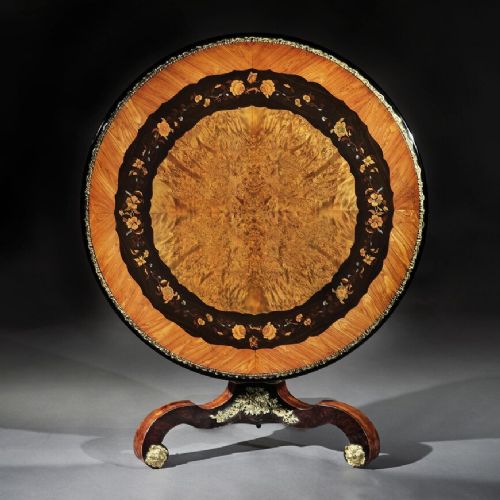
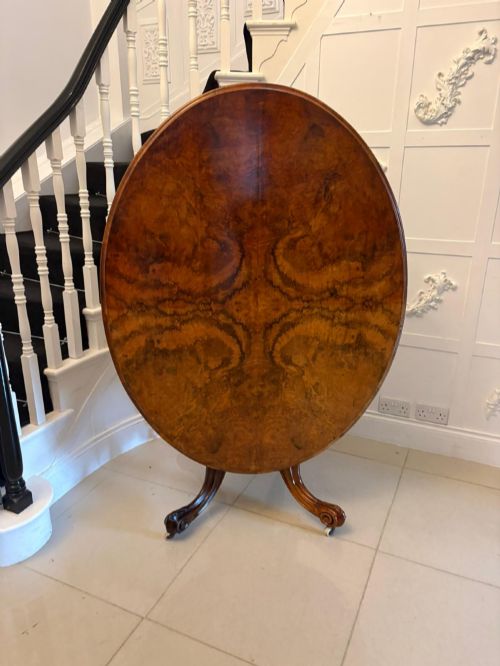

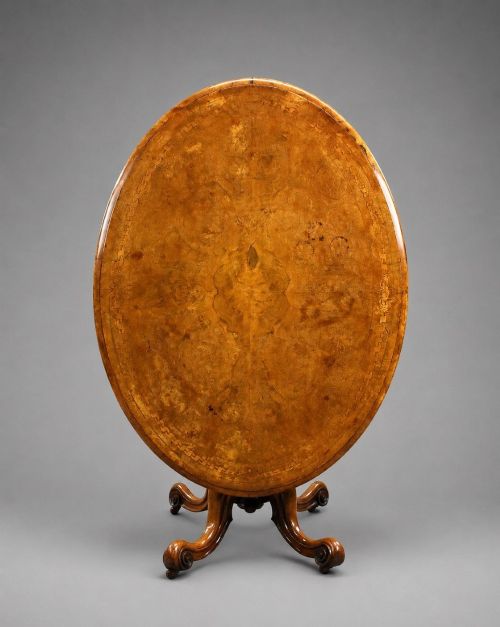
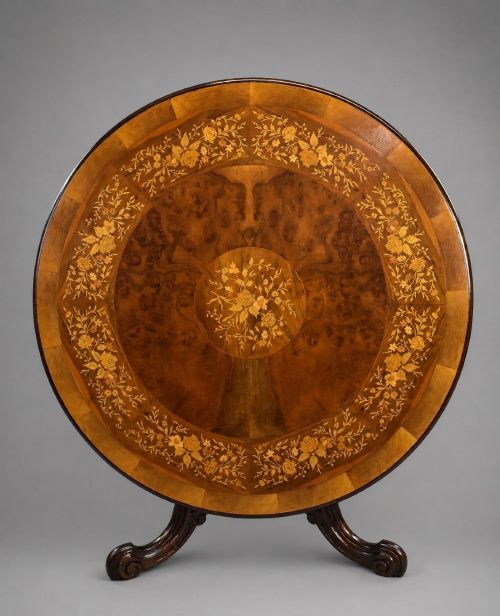
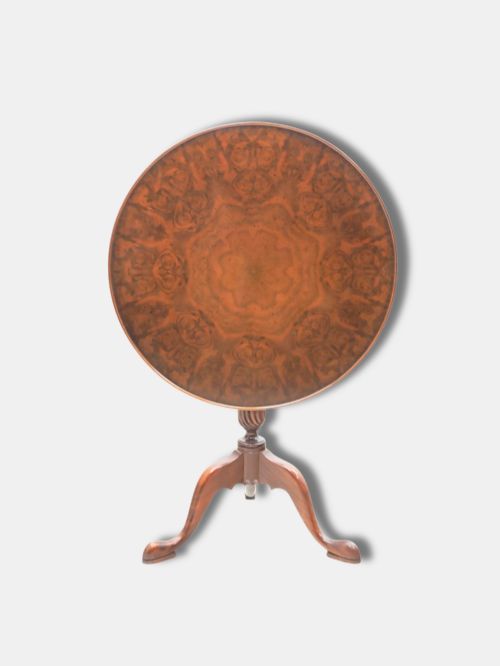
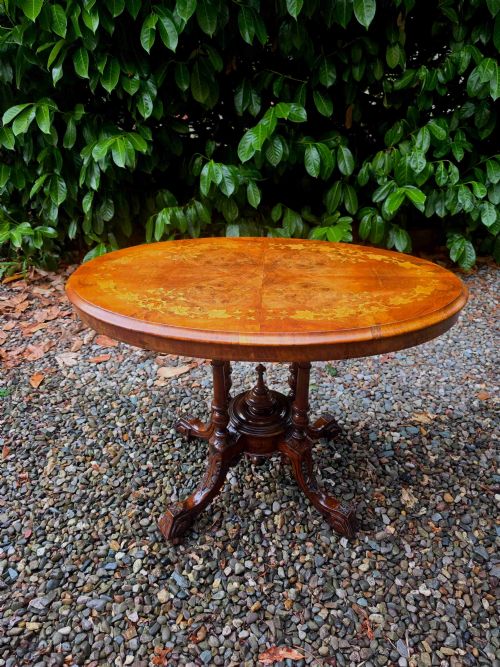
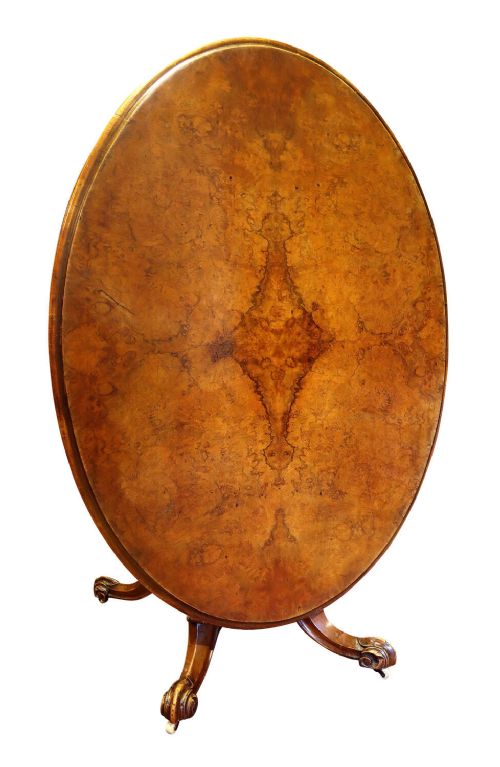
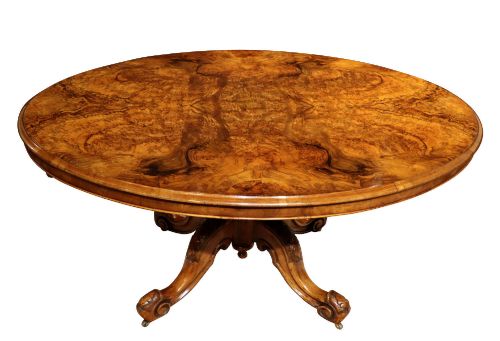
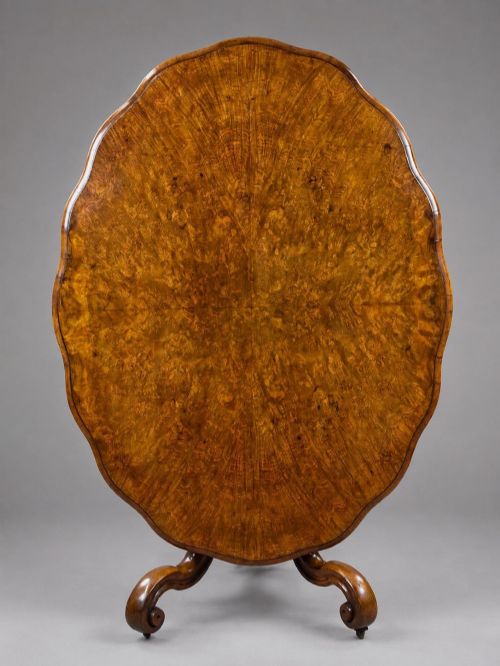
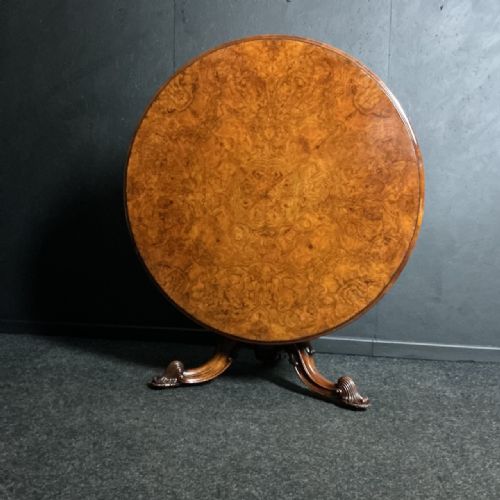
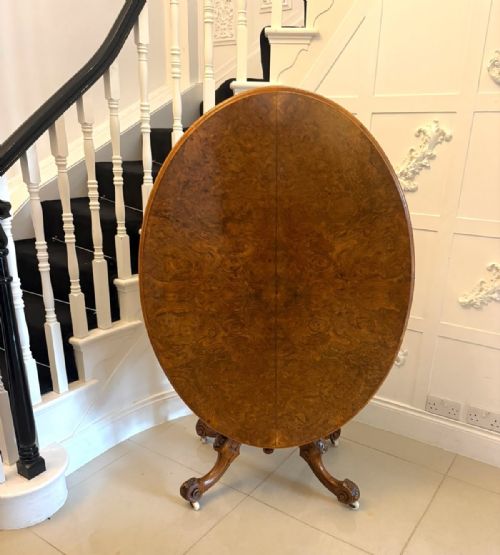
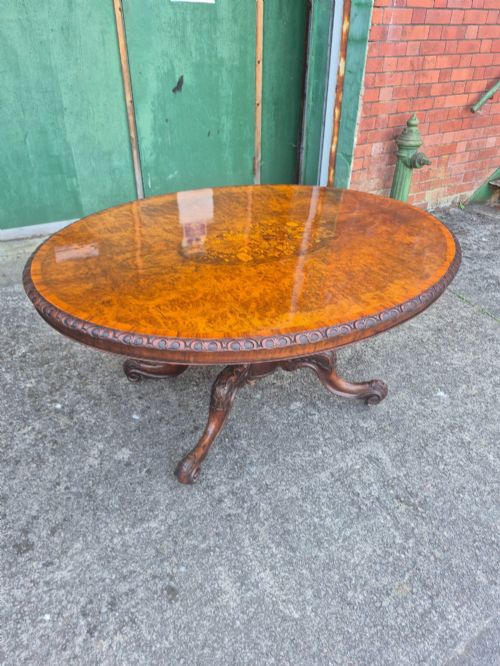
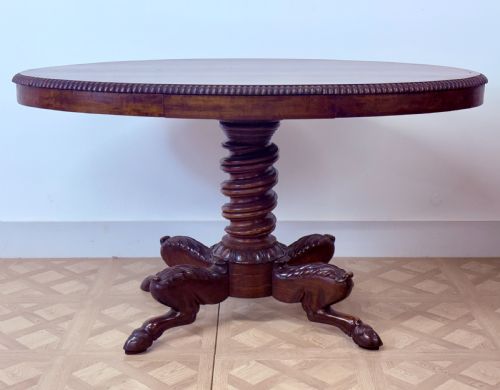
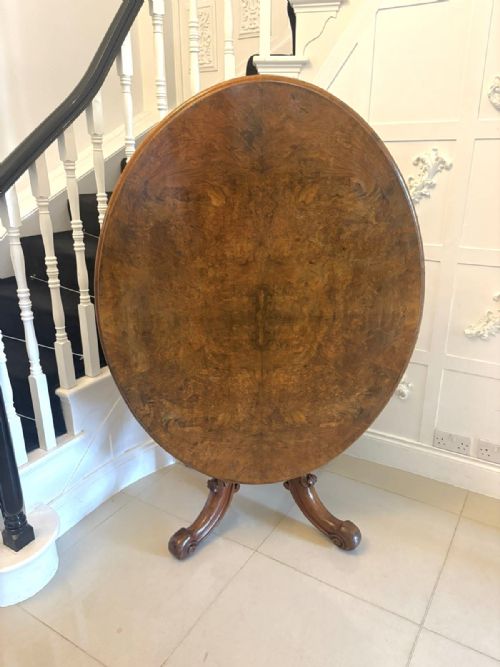
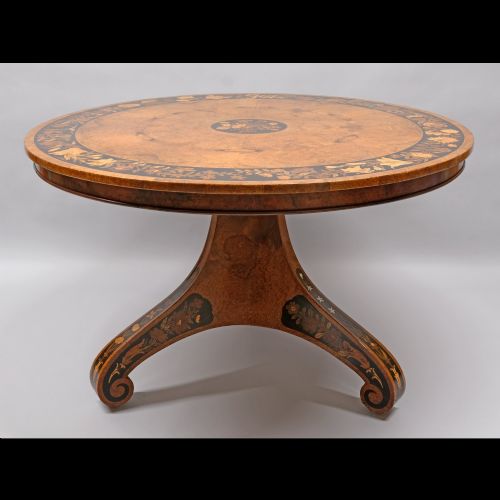
Burr Walnut Tilt Table
A burr walnut tilt table brings rich timber grain and clever engineering into a room, offering a versatile surface that tips upright when not in use.
How they were made
Craftsmen built these tables using sturdy secondary timbers like mahogany or oak as a foundation, applying thin, highly figured burr walnut veneers to the visible surfaces to create dramatic, swirling grain patterns.
Decorative embellishments often include boxwood and floral wood inlay, marquetry details, and intricate brass or carved wooden mechanisms that permit the top to pivot and lock securely into place.
What varies in quality
The distinction between ordinary and superior pieces rests on the choice of veneer and the intricacy of the marquetry work, with densely figured burr walnut commanding greater visual depth.
Engineering precision in the tilting mechanism and the stability of the central pedestal or quadrapod base dictate the overall durability and refinement of the furniture.
Listings feature nineteenth-century furniture predominantly from the Victorian period, utilising burr walnut, mahogany, and intricate wood inlay.
Edward Holmes Baldock
The Burr Walnut Tilt Table Glossary
- Burr walnut
- A veneer sliced from the gnarled growths of a walnut tree. It displays complex, swirling patterns highly prized by nineteenth-century cabinet makers.
- Tilt top
- A hinged table mechanism allowing the surface to rotate vertically. This design enabled tables to be pushed out of the way against a wall when not in dining use.
- Loo table
- A large nineteenth-century parlour table intended for card games like loo. They frequently feature oval tilt tops supported by robust central pillars.
- Marquetry
- The art of applying pieces of veneer to a structure to form decorative patterns. Artisans utilised contrasting woods to create floral or geometric motifs.
- Quadrapod base
- A table support resting on four feet or legs. This configuration provided extra stability for larger oval breakfast and dining surfaces.
Burr Walnut Tilt Table: Frequently Asked Questions
How do I use a tilt table today?
These tables function well as central display surfaces in living rooms or as occasional dining tables for smaller gatherings. Tipping the top vertical allows the piece to double as a decorative wall panel when space is tight.
Ensure the release catch is fully engaged when returning the surface to the horizontal position. Placing coasters on the polished wood prevents moisture rings from daily use.
What is a loo table?
A loo table is a nineteenth-century parlour table specifically sized for playing card games. Their generous oval surfaces made them equally suited for morning breakfast or evening gatherings.
Most examples incorporate a tilt mechanism so servants could store them compactly against the perimeter of a room. Today, they serve as striking centre tables in larger entrance halls or dining spaces.
How do I identify a Victorian burr walnut table?
Look for the characteristic rich, swirling grain patterns of walnut burl combined with nineteenth-century construction methods. Many examples feature central pedestals with tripod or four-way carved bases, alongside inlaid boxwood details.
Examine the underside for traditional joinery marks and evidence of period hand-tooling. The presence of a working tilt mechanism is typical of dining and loo tables from the eighteen-fifties and sixties.
Are these tables sturdy when flat?
High-quality nineteenth-century examples feature robust locking catches that hold the surface firmly in place. The weight of the solid timber pillar and heavy base provides a stable foundation for everyday items.
Over time, the wooden pivot pin or metal latch can develop slight play. Gentle tightening of the internal fittings usually restores absolute rigidity to the top.