
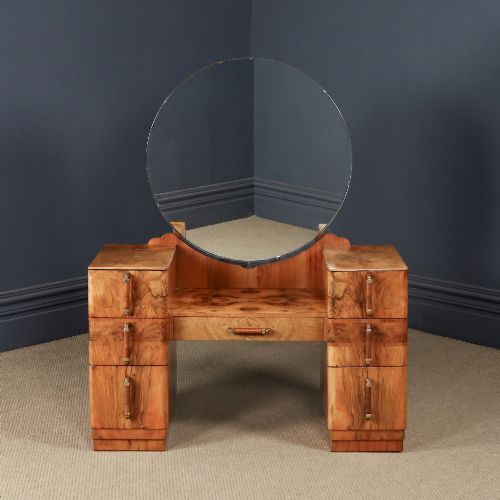
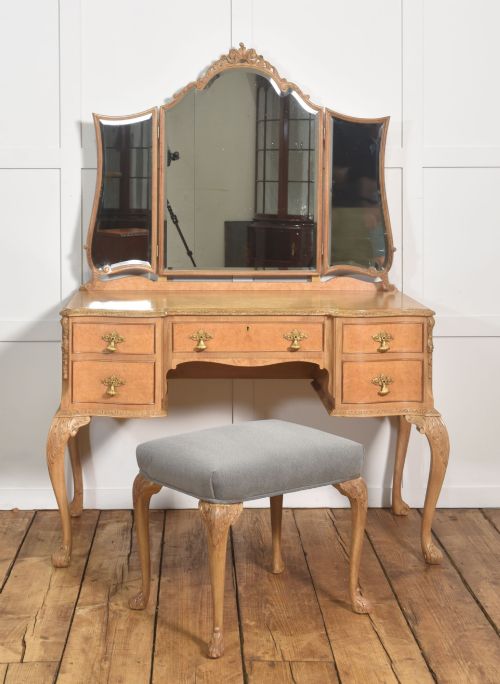
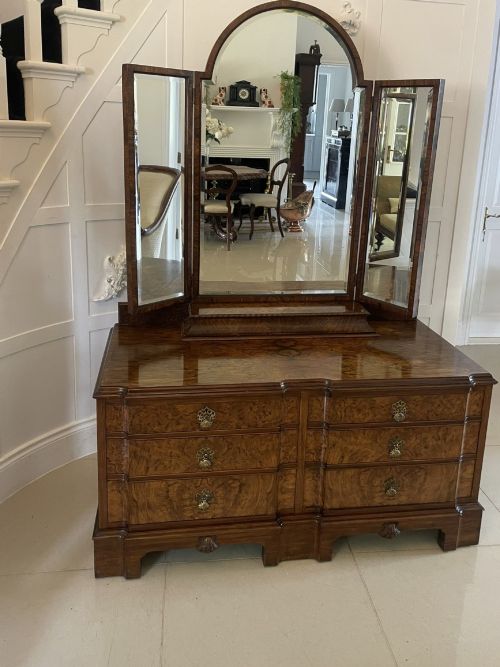


Burr Walnut Table Mirror
A burr walnut table mirror brings rich, swirling grain and warm timber tones to a dressing surface.
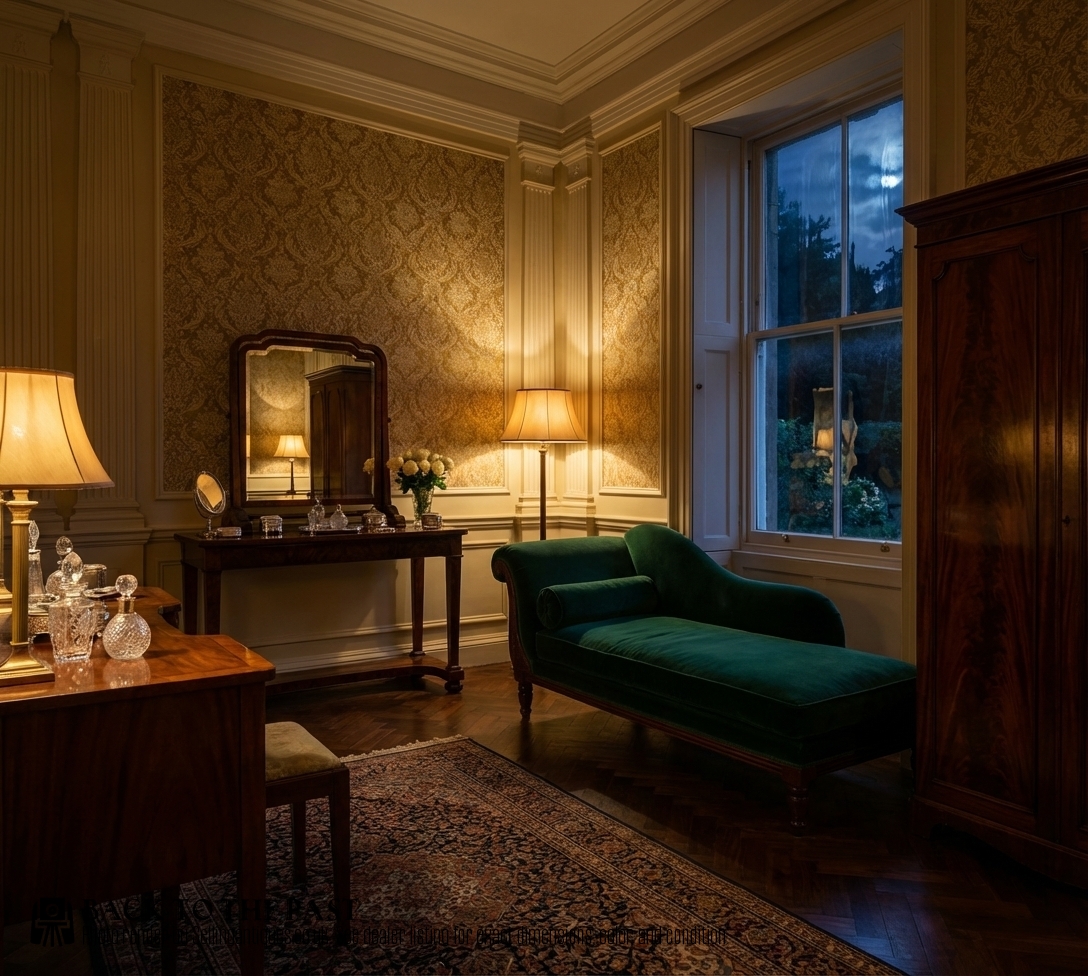
Burr Walnut Table Mirror
A burr walnut table mirror sits on a chest or dressing table, offering a portable reflective surface framed in richly figured wood. These pieces span the eighteenth century, the Victorian era, and the art deco period.
The most common form met here is the swing mirror, often mounted on scrolling or upright supports above small trinket drawers. Examples range from simple georgian toilet mirrors to elaborate victorian and queen anne revival designs.
How they were made
Cabinet makers applied thin veneers of burr walnut to solid walnut carcases, exploiting the knotted, swirling growth patterns of the timber. Glass and brass fixtures completed the construction, providing pivot mechanisms and handles for the adjustable plates.
Makers shaped the frames with curved crests and arched profiles, frequently incorporating inlaid details or ebonised accents. The glass itself sat within rebated wooden mouldings, secured by backing boards that protected the silvered reverse.
Listings feature burr walnut combined with materials like brass, marble, and ormolu across Victorian and art deco periods.
What varies in quality
Quality rests in the density and spread of the burr figure across the walnut veneer, alongside the crispness of any inlaid banding. Finer examples show careful book-matching of the grain across the frame and drawer fronts.
The architectural proportion of the uprights and the weight of the brass pivots distinguish better workshops. Heavy, solid construction in the supporting frame separates standard production from superior cabinet work.
Maurice Adams·Harry and Lou Epstein·Whytock and Reid
The Burr Walnut Table Mirror Glossary
- Burr walnut
- A prized timber veneer sliced from the grotesque growths on walnut trees, showing swirling, knotted grain patterns. It creates highly decorative surfaces on furniture.
- Toilet mirror
- A traditional term for a small table mirror designed for personal grooming, usually fitted with small drawers beneath the plate. These pieces date across the eighteenth and nineteenth centuries.
- Swing mirror
- A glass plate hung on pivots between two upright posts, allowing the user to tilt the angle of reflection. This mechanism is central to table mirrors.
- Trinket drawer
- A small compartment built into the base of a dressing mirror for storing jewellery and pins. They often feature small brass knobs.
- Queen Anne style
- A decorative aesthetic reviving early eighteenth-century forms, characterised by graceful curves and rich walnut veneers. It appears frequently in later revival pieces.
Burr Walnut Table Mirror: Frequently Asked Questions
How do I date a burr walnut table mirror?
Dating relies on the construction methods of the frame, the thickness of the mirror glass, and the style of the supporting uprights. Georgian examples often show simpler rectangular proportions, while Victorian and Edwardian pieces incorporate elaborate scrollwork and shaped bases.
Secondary woods inside drawers and the type of screw fixings also indicate the period. Examining the bevelling and silvering of the mirror glass provides further clues to its age.
Where should I place a table mirror?
These mirrors sit comfortably on top of chests of drawers, sideboards, or dedicated dressing tables. They require a stable surface that matches their depth and weight.
Positioning them near a natural light source enhances their reflective utility while highlighting the figured grain of the walnut frame.
How do I care for burr walnut veneer?
Keep the wood away from direct sunlight and steady heat sources to prevent the walnut veneer from drying or cracking. Dust the surface regularly with a soft, dry cloth.
Avoid liquid polishes containing silicone, opting instead for traditional beeswax applied sparingly to nourish the timber and preserve its natural sheen.
What is the difference between a toilet mirror and a dressing mirror?
A toilet mirror typically refers to smaller eighteenth and nineteenth-century table mirrors with integrated drawer bases designed for personal grooming. Dressing mirrors can encompass larger swing mirrors mounted on pedestals or vanity tables.
Both serve the same functional purpose of reflection, but toilet mirrors are specifically proportioned to sit atop existing furniture.