

Burr Walnut Open Bookcase
A burr walnut open bookcase brings the distinctive, swirling grain of figured timber into a room while offering accessible, doorless shelving for a collection.
Burr Walnut Open Bookcase
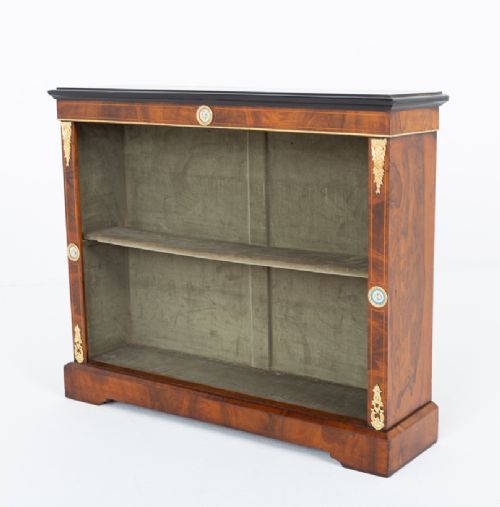
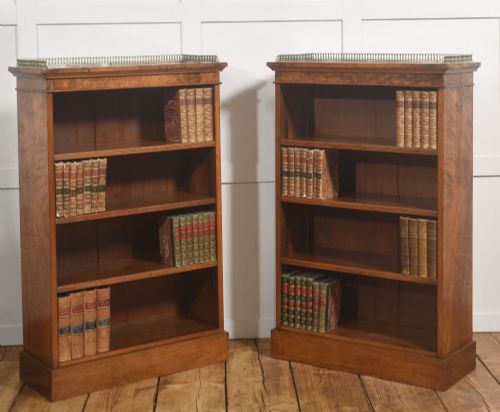
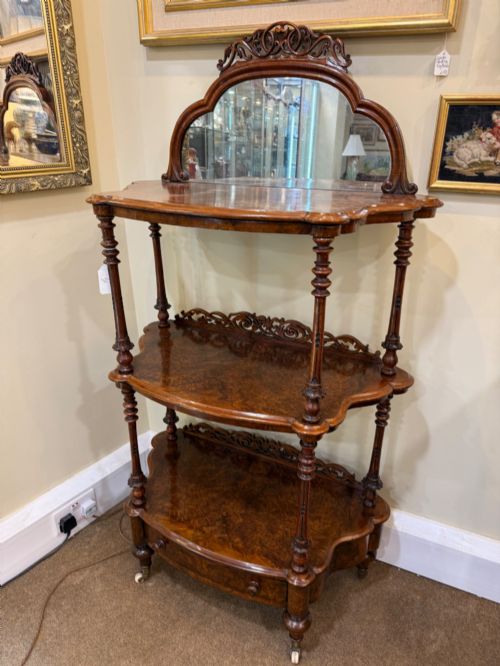
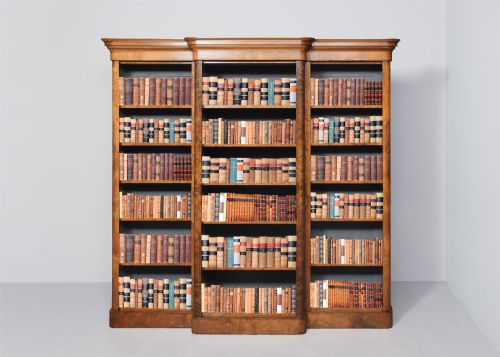
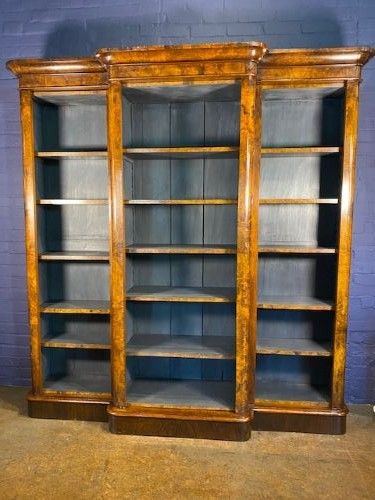
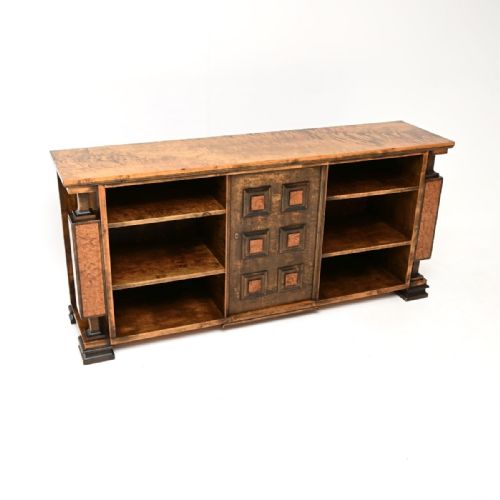
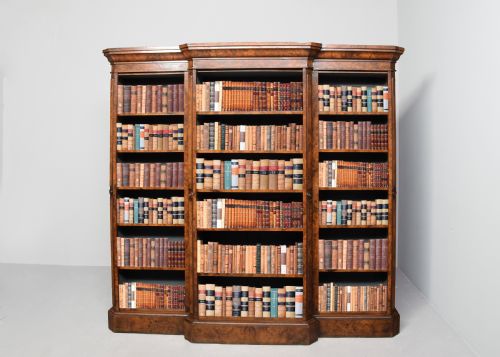
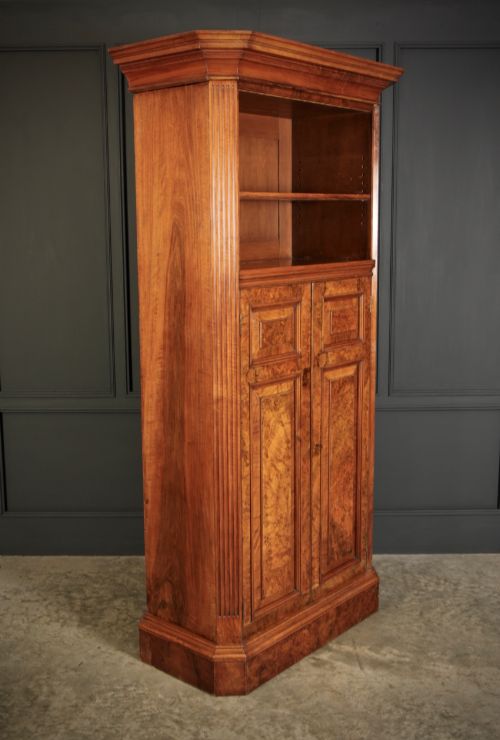
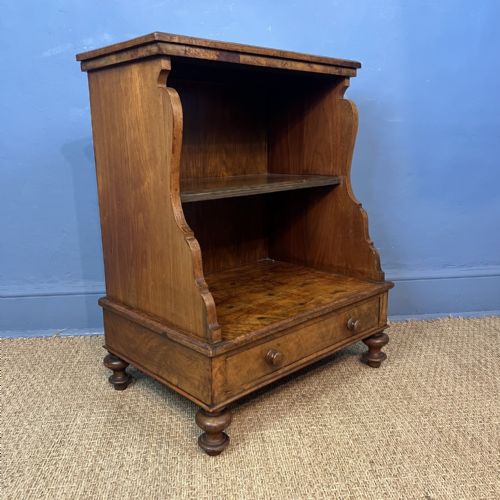
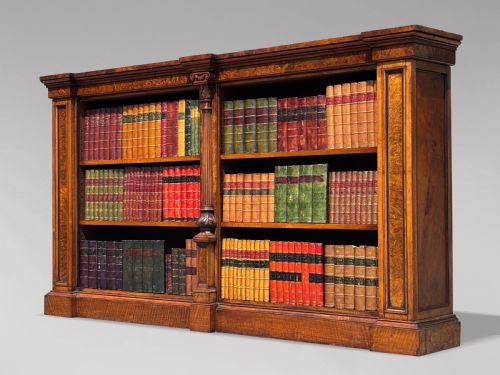
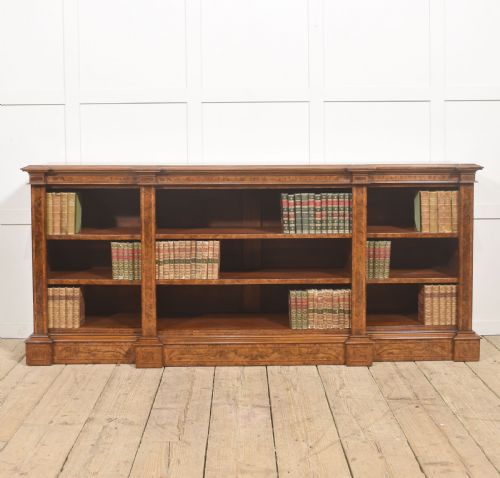
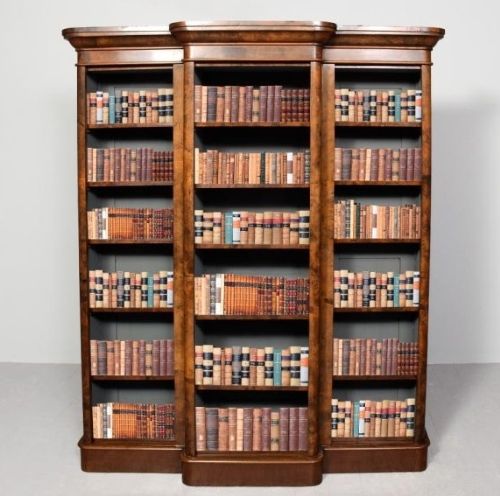
A burr walnut open bookcase most commonly appears from the nineteenth century, with Victorian examples forming the backbone of what turns up on this page. Pieces range from low, compact bedside cabinets and slim corner whatnots to expansive, multi-section breakfront formats designed for principal reception rooms.
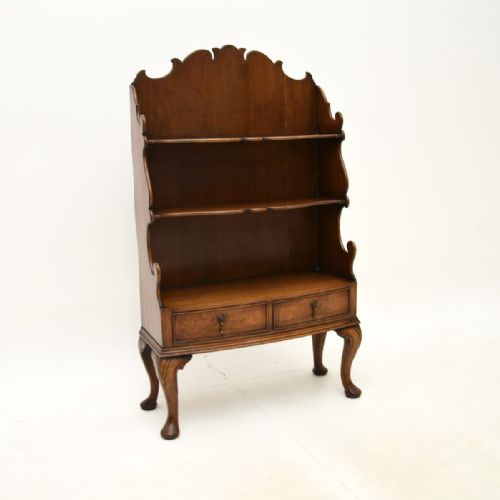
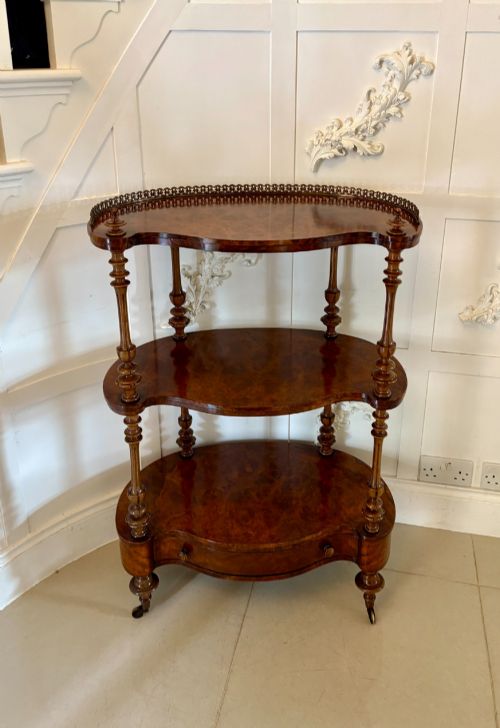
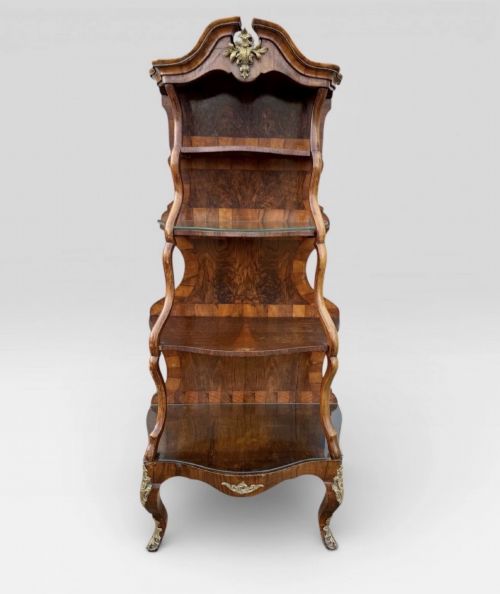
Makers adapted the form across decades, creating cascading tiers, serpentine shapes, and credenza combinations alongside standard linear shelving. While Victorian periods dominate the record, variations stretch from William IV interpretations through to twentieth-century revivals and Art Deco adaptations.
Buyers encounter everything from diminutive single-bay units to grand architectural breakfronts with adjustable wooden shelves. The defining trait across these variations remains the exposed shelf arrangement combined with decorative figured wood surfaces.
Materials and Technique
Cabinet makers applied thin veneers of highly figured burr walnut onto stable underlying timber carcases to display the intricate, swirling knot formations of the wood. This method allowed workshops to wrap complex serpentine and breakfront shapes in continuous, mirrored grain patterns.
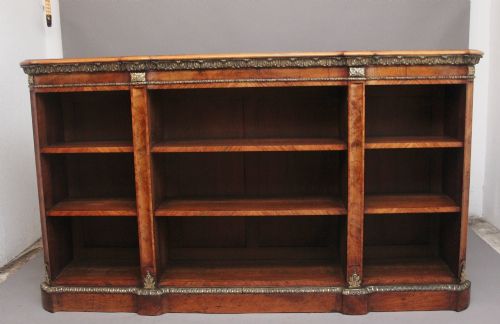
Many examples incorporate mounts of brass, ormolu, or gilt metal to accent the corners, borders, and plinths of the cabinetry. Glass panels appear occasionally on related cabinet hybrids, whilst internal configurations rely on simple timber supports for adjustable shelving.
Burr Walnut Open Bookcase Retail Price Guide 2026
Typical asking prices for burr walnut open bookcase among the pieces listed under this phrase on Sellingantiques today, from the lower quarter to the upper quarter. They describe what is for sale here now, not the wider market.
Some nineteenth-century makers squeezed diminutive open bookcases into bedside spaces, proving that bedtime reading habits required figured wood long ago.
Judging Quality
Quality rests principally in the selection and matching of the burr walnut veneer across the front elevation. Superior pieces display symmetrical, book-matched grain patterns that flow uninterrupted across drawers, stiles, and plinths.
Construction depth also defines the better examples, seen in robust breakfront carcases, finely cut brass or gilt metal mounts, and well-proportioned architectural cornices. Lesser pieces rely on plainer walnut surfaces with simpler timber framing and minimal decorative hardware.
Johnstone and Jeanes·Filmer and Sons·Morison and Co
The Burr Walnut Open Bookcase Glossary
- Burr walnut
- A specialised timber cut from the abnormal growth or burl of a walnut tree, yielding a dense cluster of swirling, organic grain patterns. It is sliced into thin veneers for decorative furniture surfaces.
- Breakfront
- A cabinet design where the central section projects forward from the flanking outer bays. This architectural arrangement creates depth and shadow across the front elevation.
- Whatnot
- A piece of freestanding furniture consisting of multiple open shelves supported by slender pillars or uprights. These tiers were traditionally used for displaying ornaments and small books.
- Ormolu
- Cast bronze that has been gilded with a finely ground gold mercury amalgam. It appears on nineteenth-century pieces as decorative mounts and edgings.
- Book-matching
- A veneer technique where adjacent slices from the same flitch are opened like a book and applied side by side. This creates a mirrored, symmetrical pattern in the wood grain.
Burr Walnut Open Bookcase: Frequently Asked Questions
How do I date a burr walnut open bookcase?
Dating relies on structural proportions, secondary timbers, and stylistic markers such as Victorian breakfront configurations or nineteenth-century gilt metal mounts. Examining the construction of the interior carcase and adjustable shelf supports often reveals the manufacturing period.
Later revival pieces from the early twentieth century mimic Victorian forms but typically employ different backing timbers and lighter internal framing. Comparing the density of the carcase and the style of any brass or ormolu mounts helps confirm the era.
Are shelves usually adjustable on these bookcases?
Many nineteenth-century examples feature adjustable wooden shelving supported by rows of peg holes or brass rack strips inside the uprights. This flexibility accommodated volumes of varying heights.
Fixed shelves do appear on smaller variants, particularly low bedside cabinets and certain corner whatnots. Checking the interior walls for support mechanisms indicates whether the shelf heights can be altered.
How should I care for burr walnut veneer?
Burr walnut veneer requires stable room humidity and protection from direct sunlight to prevent the thin timber from drying or fading. Regular dusting with a soft, dry cloth preserves the polished surface.
Avoid placing damp items or unpadded ceramics directly onto the wooden shelves. Periodic application of appropriate furniture wax maintains the moisture and lustre of the antique polish.