

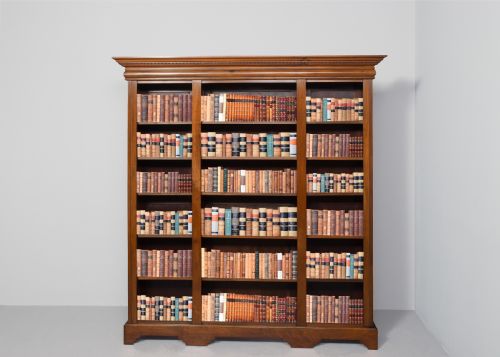
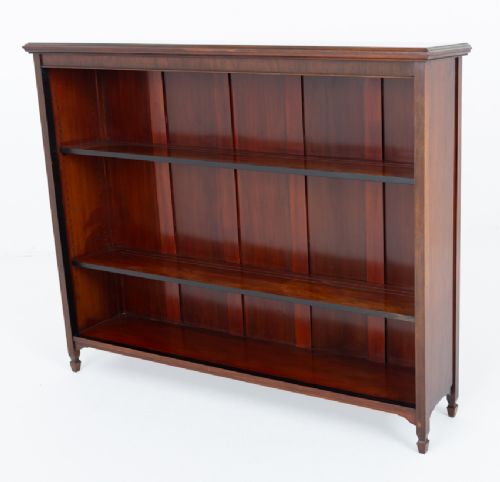
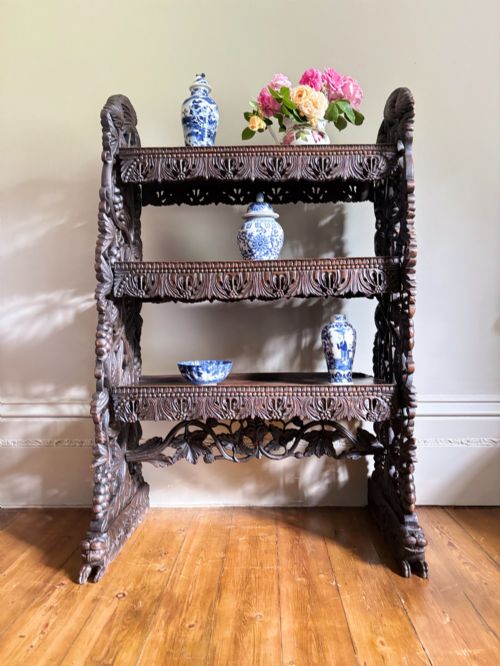

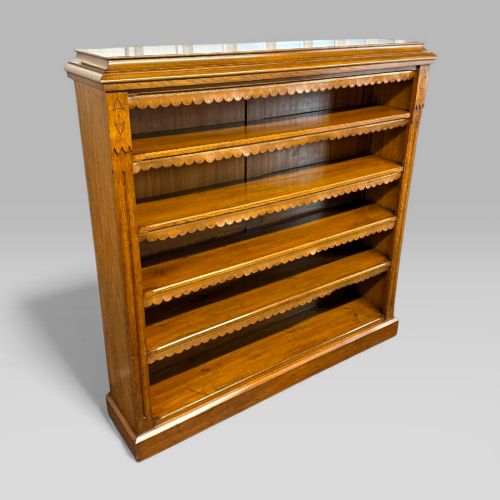
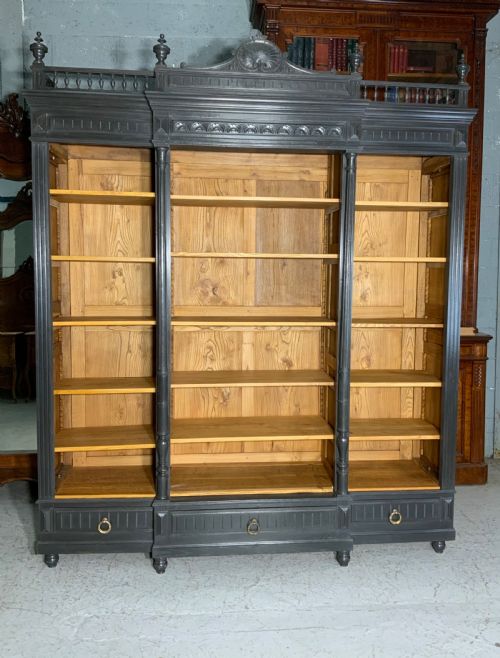
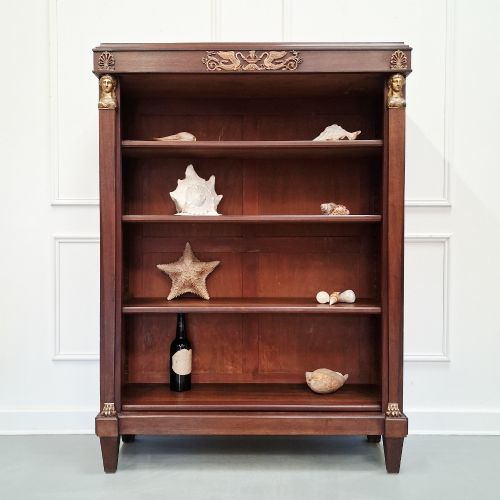
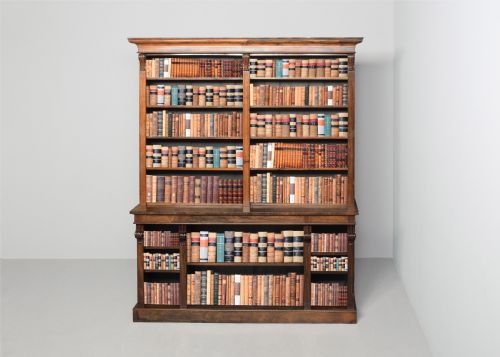
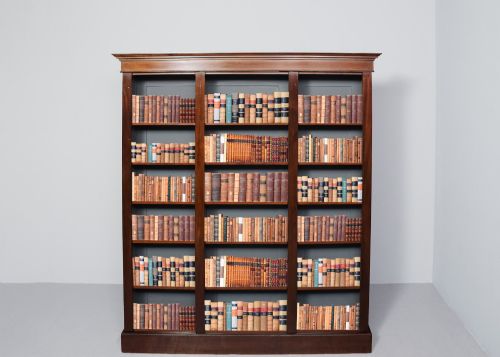
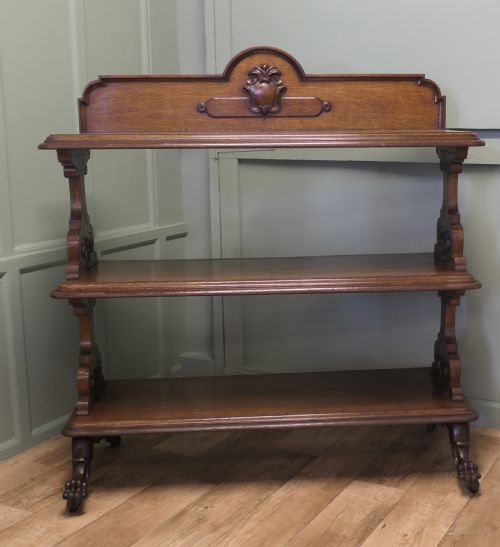
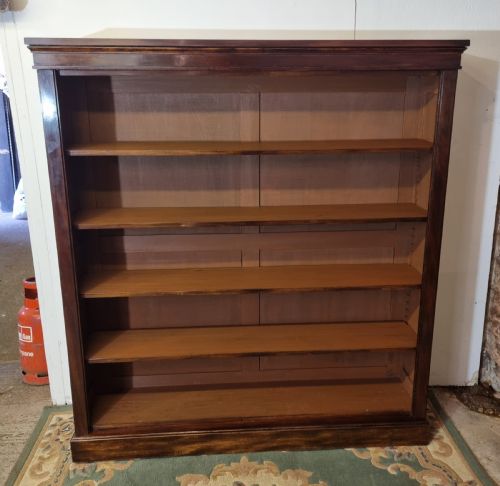
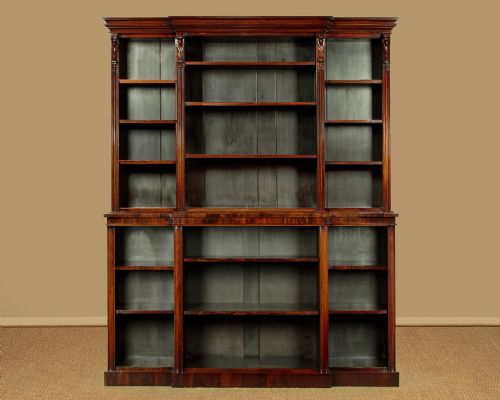
Large Open Shelving Unit
A large open shelving unit provides commanding presence and practical display, uniting robust architectural timber with accessible storage.
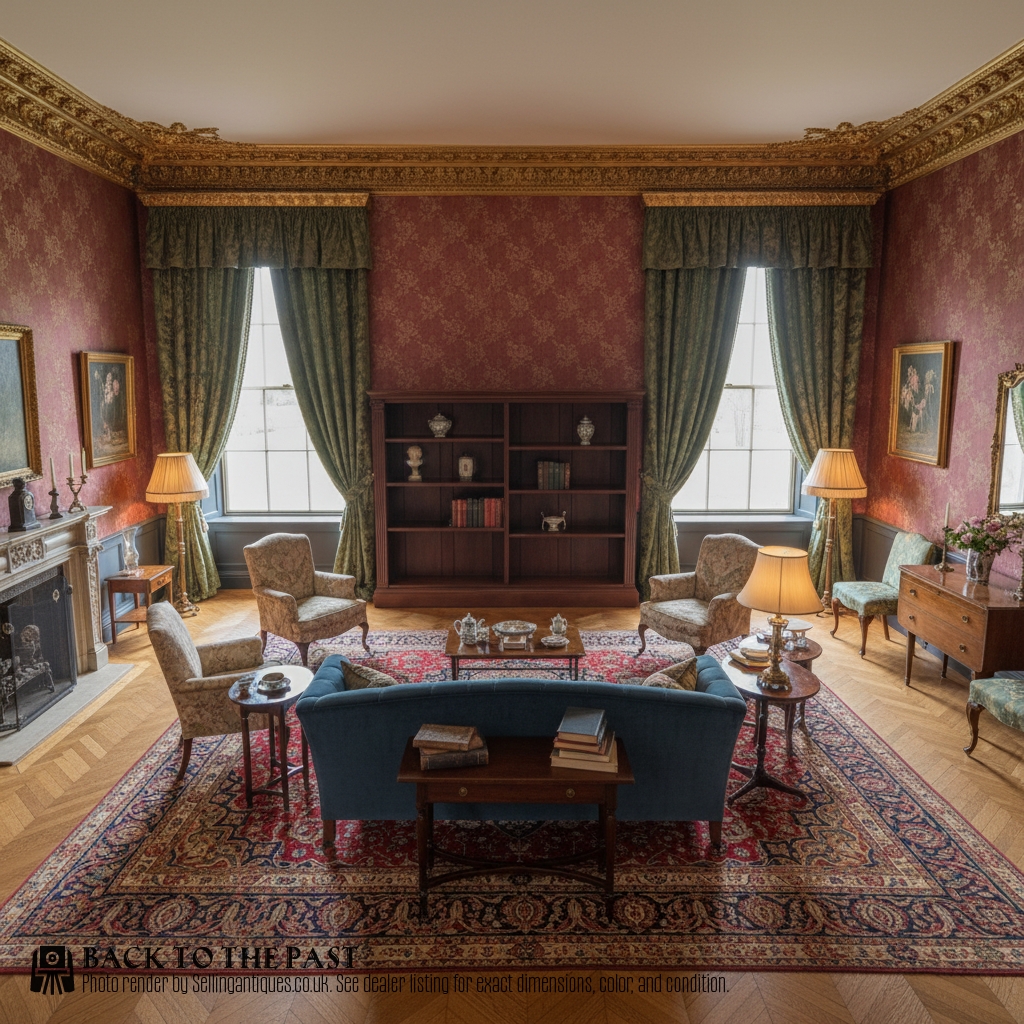
Large Open Shelving Unit
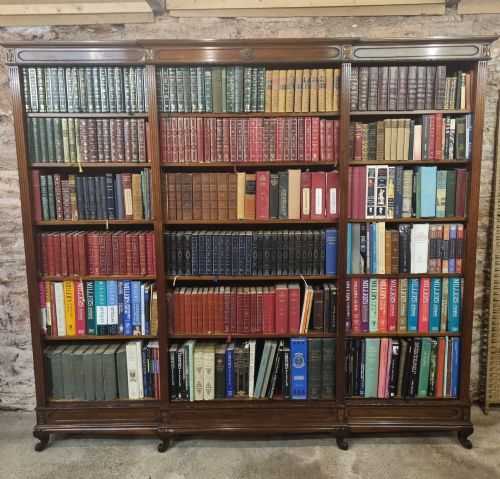
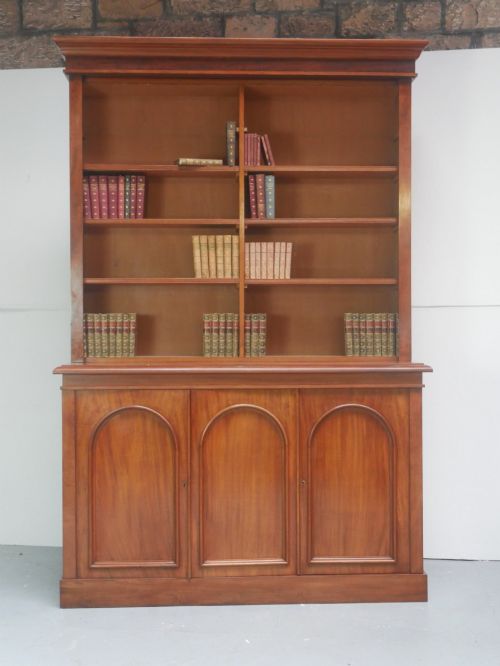
A large open shelving unit serves primarily as a bookcase or display cabinet, offering generous proportions to house extensive collections. Buyers seeking a large open shelving unit encounter substantial timber constructions designed to dominate a room with functional utility.
The pieces listed on this page span the 19th Century, Victorian, Early Victorian, and Mid-Victorian periods, alongside examples from 1900 and 1930. These items predominantly take the form of bookcases and bookcases with open shelving.
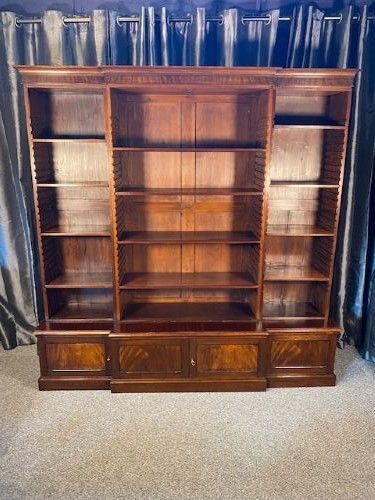
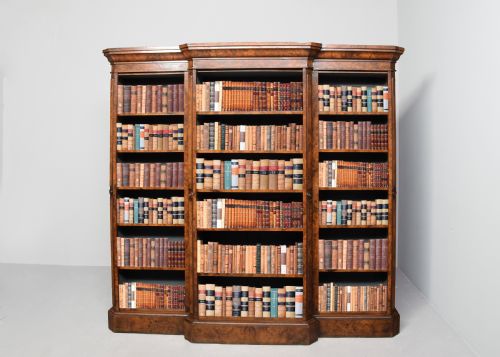
Traditional styles prevail across the selection, featuring notable configurations such as breakfront designs and three-section layouts. Many examples incorporate adjustable shelves, providing adaptability for varying heights of books and objects.
Materials and Construction
Makers utilised a variety of dense hardwoods and softer timbers, incorporating oak, mahogany, walnut, burr walnut, and softwood. These materials form the structural backbone and visible surfaces of the bookcases.
Surface treatments range from polished timber finishes to painted wood and straightforward paint applications. The combination of these woods and finishes defines the tactile and visual character of each piece.
Large Open Shelving Unit Retail Price Guide 2026
Typical asking prices for large open shelving unit among the pieces listed under this phrase on Sellingantiques today, from the lower quarter to the upper quarter. They describe what is for sale here now, not the wider market.
The site listings feature pieces spanning the 19th Century, Victorian, and 1930 periods, constructed from oak, mahogany, walnut, burr walnut, and softwood.
Distinguishing Quality
The hierarchy of quality rests upon the selection of timber and the sophistication of the cabinetry. Pieces utilising burr walnut or finely figured mahogany demonstrate a higher level of ambition than standard softwood or basic oak builds.
Architectural complexity separates standard units from superior examples, particularly the presence of a three-section breakfront design. Integrated adjustable shelving mechanisms further denote thoughtful construction.
The Large Open Shelving Unit Glossary
- Breakfront
- A cabinet or bookcase where the central section projects forward from the flanking wings. This architectural arrangement creates depth and shadow.
- Burr Walnut
- Timber taken from the warted excrescences of a walnut tree, prized for its swirling, highly figured grain patterns. It typically appears as veneer on high-status surfaces.
- Softwood
- Timber derived from conifer trees such as pine, utilised for internal structures or simpler painted carcasses. It offers a lighter weight alternative to dense hardwoods.
- Adjustable Shelves
- Shelves supported by movable pins or racks, allowing the internal vertical spacing to be altered. This mechanism provides practical versatility for storage.
Large Open Shelving Unit: Frequently Asked Questions
How do I date a large open shelving unit?
Dating relies on identifying timber choices, stylistic markers, and construction methods characteristic of specific eras like the Victorian period or the early twentieth century.
Examining the backboards, fixings, and secondary woods helps narrow down the decade of manufacture.
Are all these units suitable for heavy books?
Most pieces are built from substantial hardwoods like oak or mahogany, designed specifically to bear significant weight across their shelves.
Checking the thickness of the timber and the support system of the shelves ensures the unit suits heavy collections.
How do I care for antique painted wood?
Antique painted surfaces require gentle dusting with a dry cloth and protection from direct sunlight and excessive humidity.
Avoiding harsh chemical cleaners preserves the integrity of the original paint finish.