
Burr Walnut Shelving
Burr walnut shelving brings rich, swirling grain and warm tones to interiors through Victorian bookcases, etageres and multi-tiered whatnots.
Burr Walnut Shelving
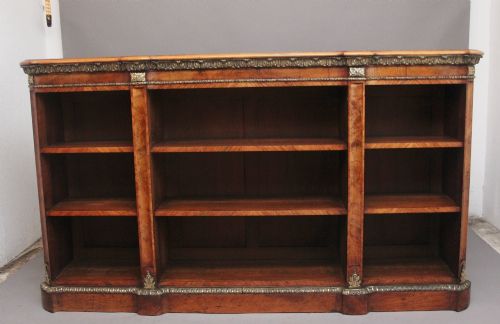
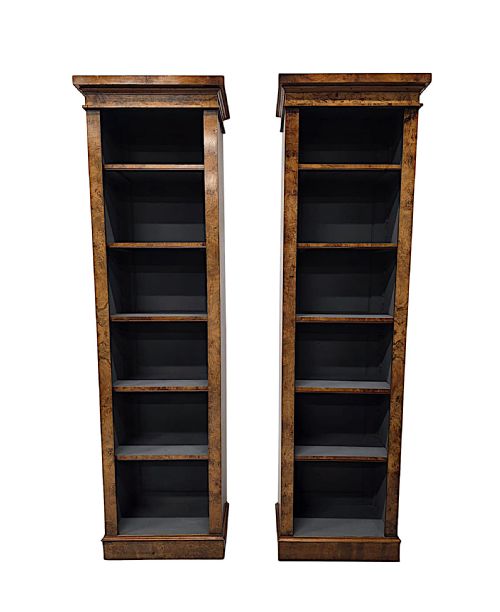
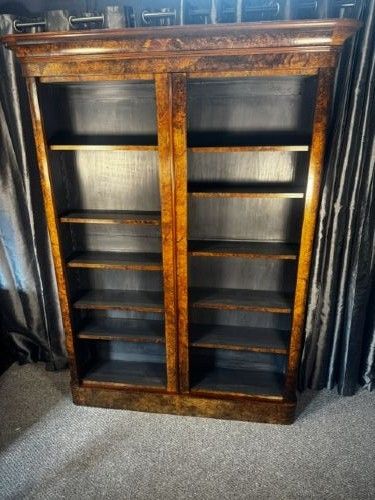
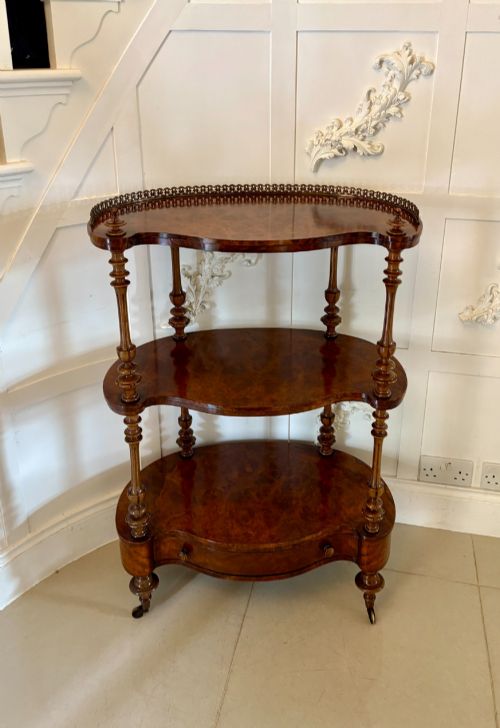
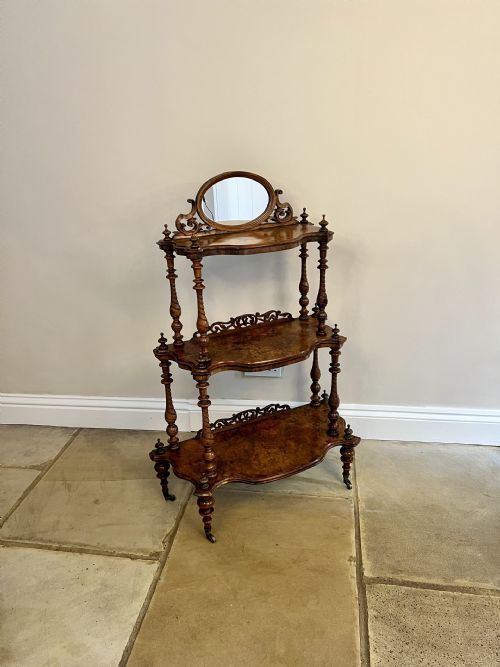
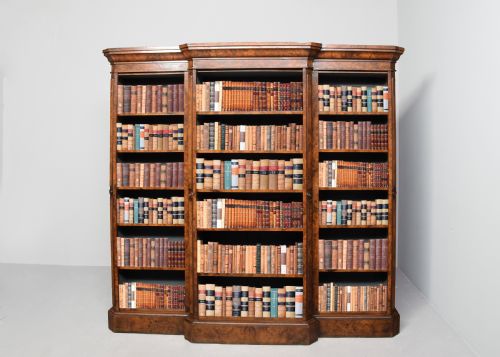
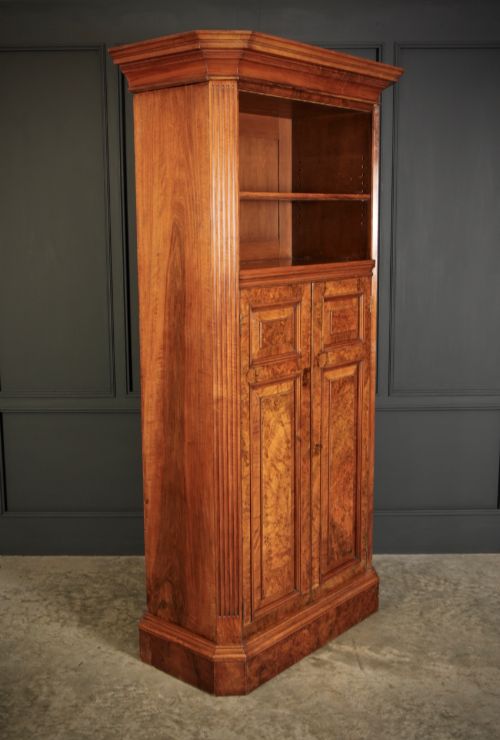
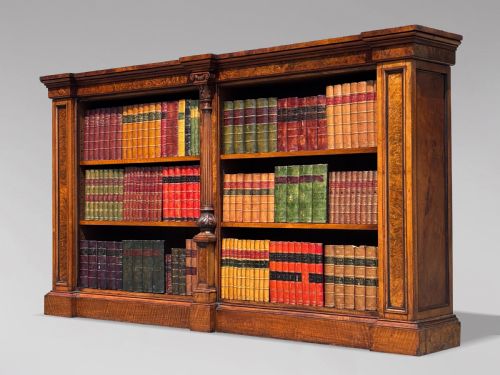
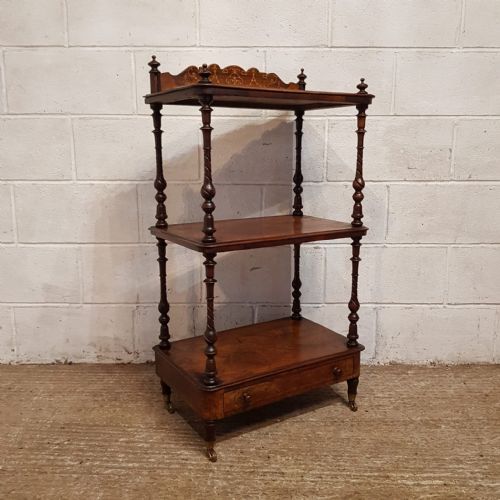
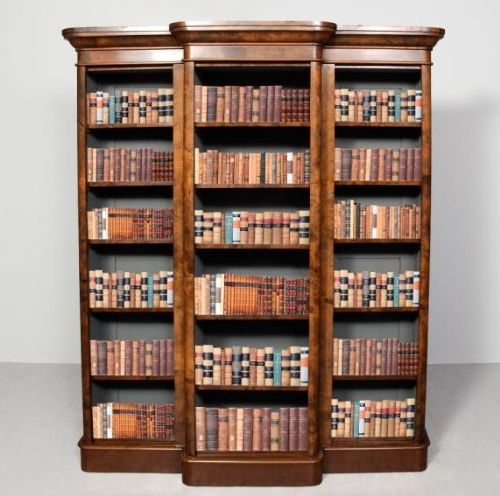
Burr walnut shelving primarily comprises open bookcases, multi-tiered whatnots, and display cabinets originating from the nineteenth century and the early twentieth century. Pieces range from small corner whatnots and slim open bookshelves to large breakfront bookcases with adjustable shelves.
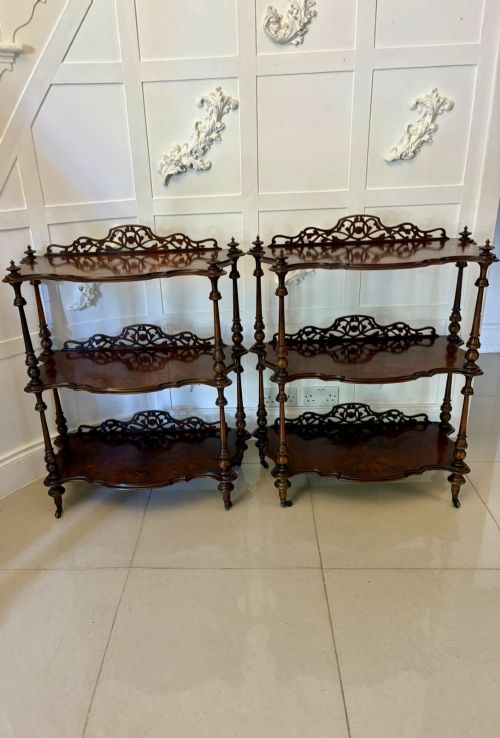
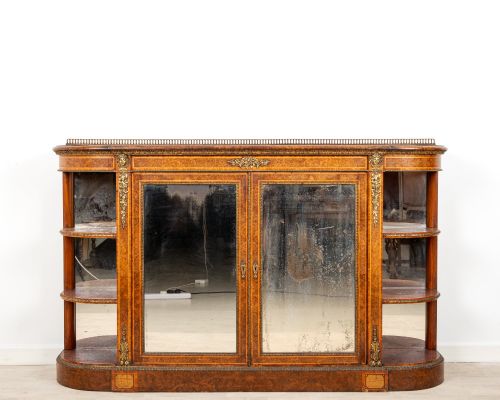
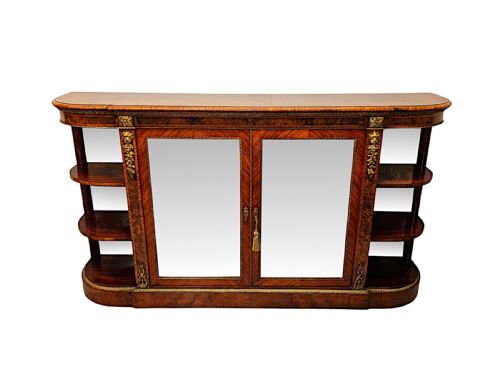
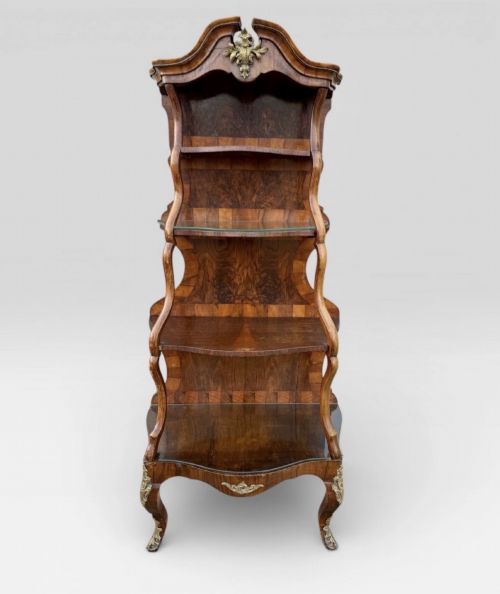
Victorian examples dominate the selection, often featuring serpentine shapes, ormolu mounts, and mirrored doors in credenzas or side cabinets. Makers and designers of the period utilised the decorative timber for various display pieces, including cascading shelves and demi-lune console whatnot tables.
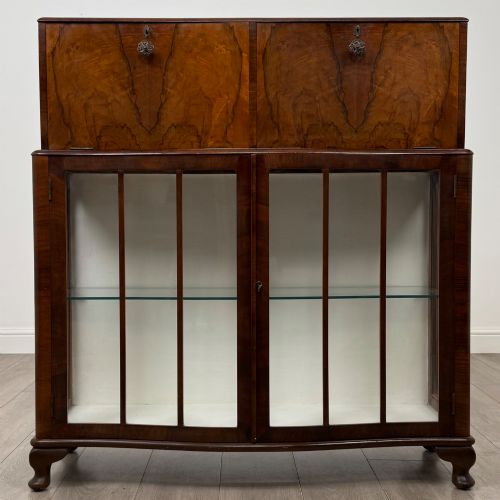
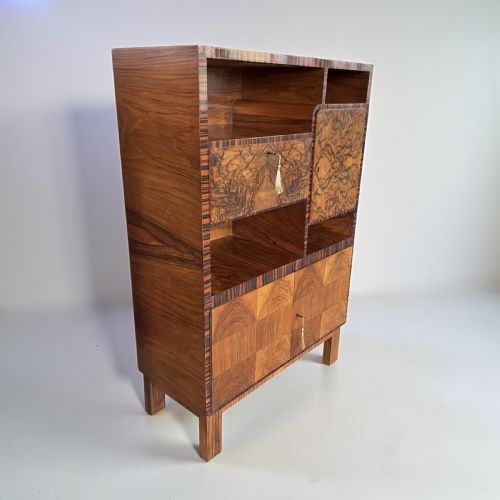
Later twentieth-century additions include Art Deco cabinets and revival styles such as Queen Anne and Georgian influences. These items provide functional storage while highlighting the intricate patterning of walnut veneer and timber construction.
Distinctions in craftsmanship and design
Quality separates through the selection and matching of the burr walnut veneer, where symmetrical grain patterns across large breakfront surfaces indicate superior workmanship. Finely executed marquetry inlay and well-cast ormolu or gilt metal mounts also elevate the status of a piece.
Structural complexity dictates distinction, moving from simple open bookcases to multi-tiered serpentine whatnots, demi-lune console tables, and fitted credenzas with mirrored doors. The integration of adjustable shelving mechanisms and robust timber framing reflects higher standards of period cabinet making.
Early cabinet makers occasionally utilised elm alongside walnut, proving that even trees enjoyed a mixed heritage.
Johnstone and Jeanes·Gillows·Druce and Co
The Burr Walnut Shelving Glossary
- Burr walnut
- A veneer sliced from the knotty growth of a walnut tree, prized for its swirling and mottled grain patterns. It provides a highly decorative surface for Victorian and Edwardian furniture.
- Whatnot
- A piece of freestanding shelving with multiple open tiers, used for displaying ornaments and books. Victorian examples often feature three or four tiers with slender columns.
- Ormolu
- Gilded bronze applied as decorative mounts on furniture. It frequently highlights the corners and friezes of nineteenth-century bookcases and credenzas.
- Breakfront
- A piece of furniture where the central section projects forward from the flanking wings. This architectural arrangement adds depth to large open bookcases and credenzas.
- Credenza
- A low cabinet, often enclosed with mirrored doors and mounted with ormolu, originating in the Victorian period. It serves both display and storage functions.
Burr Walnut Shelving: Frequently Asked Questions
What is burr walnut shelving?
Burr walnut shelving consists of nineteenth and twentieth-century display furniture, including open bookcases, multi-tiered whatnots, and credenzas. These items utilise highly decorative burr walnut veneer over solid timber.
Such pieces range from slim open bookshelves to large breakfront libraries with adjustable shelving. Ormolu mounts and mirrored doors frequently accompany the woodwork.
How were whatnots used historically?
Whatnots served as open display stands in Victorian parlours and drawing rooms for ornaments, porcelain, and books. Their multiple tiers allowed households to showcase varied decorative objects.
Corner whatnots and tiered console tables maximised floor space while providing accessible open shelving. They combined utility with the visual appeal of figured walnut timber.
How do I identify Victorian pieces?
Victorian burr walnut pieces often display rich veneer patterns, serpentine shaping, and gilt metal or ormolu mounts. Common forms include multi-tiered whatnots, credenzas with mirrored doors, and breakfront bookcases.
Construction details such as adjustable wooden shelf racks and solid timber framing help confirm nineteenth-century origins. Specific makers occasionally stamp their work on drawers or carcases.
How do I care for walnut veneer?
Walnut veneer requires protection from direct sunlight and excessive humidity to prevent fading and splitting. Regular dusting with a soft, dry cloth preserves the polished surface.
Avoid placing damp items directly onto open shelves or cabinet tops. Conditioning the timber periodically with appropriate furniture wax maintains the natural lustre of the wood.