
Large Victorian Library Bookcase
A large victorian library bookcase dominates a room with generous proportions, offering substantial shelving and architectural presence for serious collections.
Large Victorian Library Bookcase
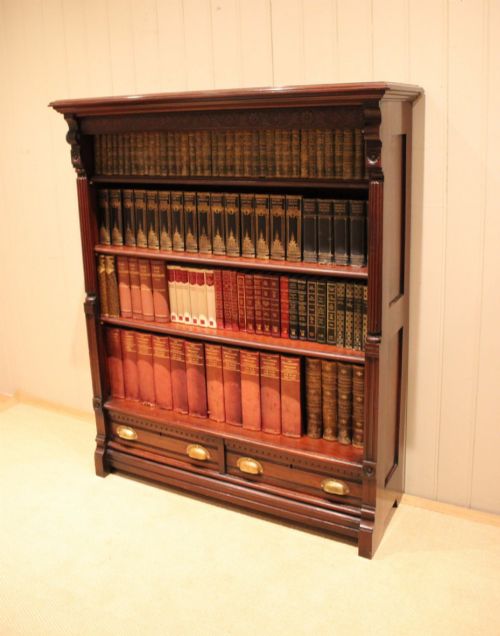
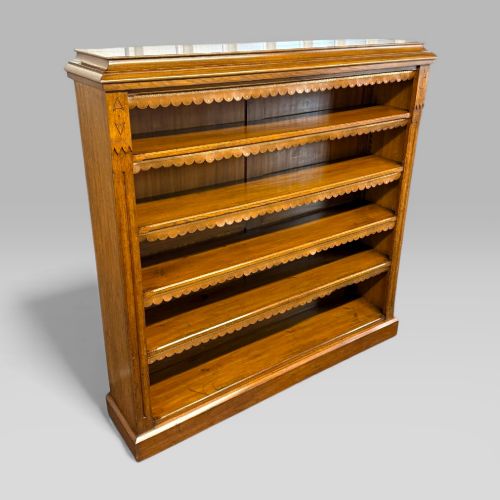
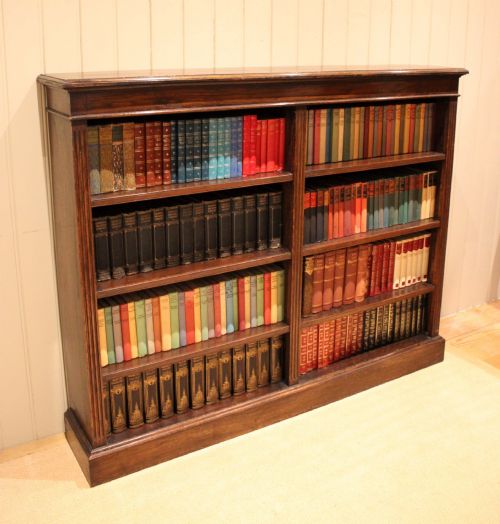
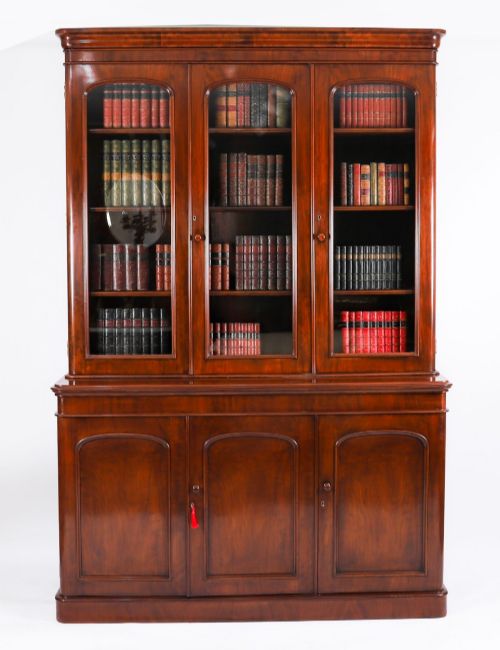
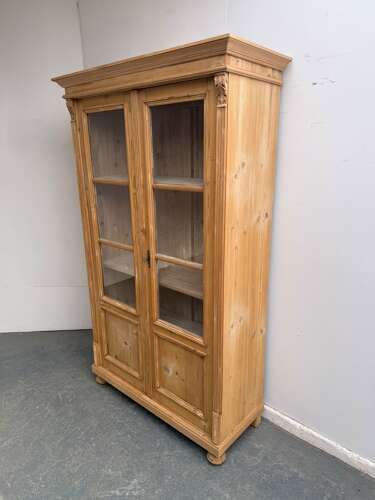
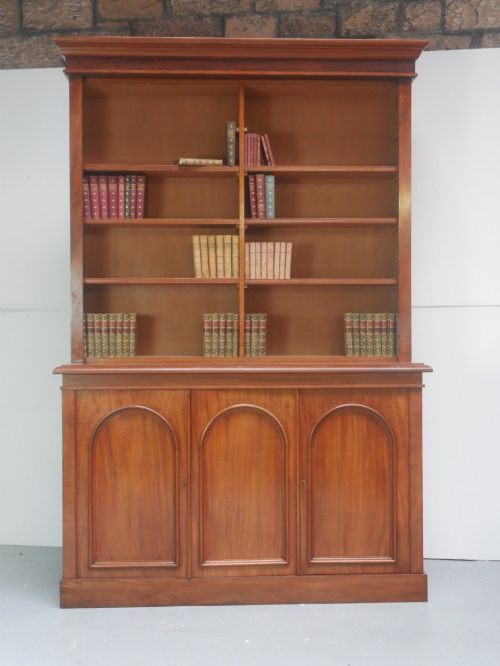
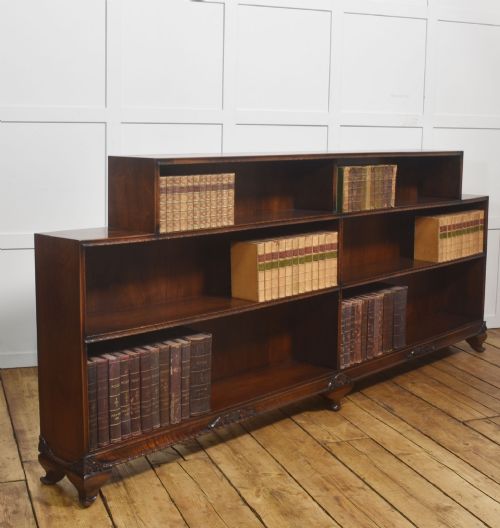
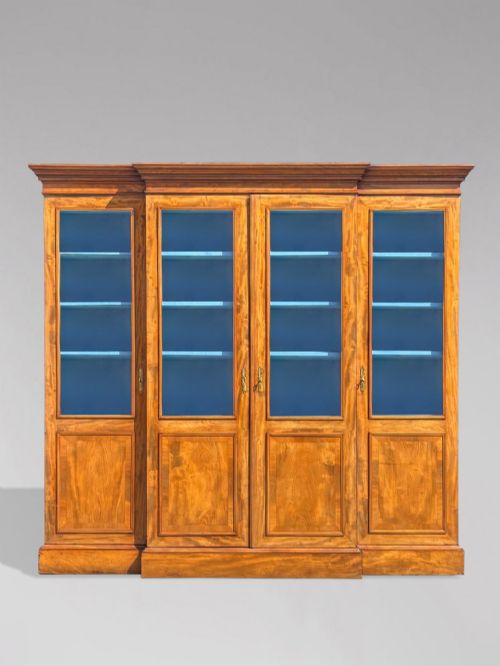
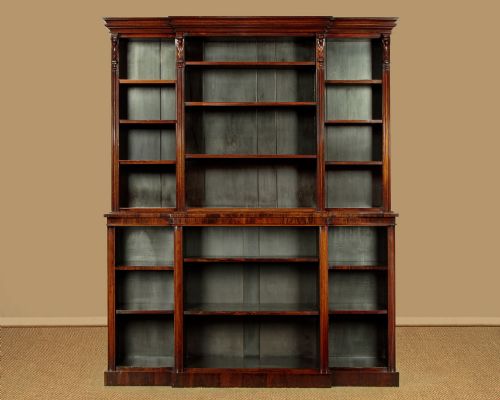
A large victorian library bookcase represents the grand scale of nineteenth-century domestic and institutional interiors. These pieces appear most frequently in substantial timber constructions, taking the form of open shelving or glazed cabinets designed to house extensive volumes.
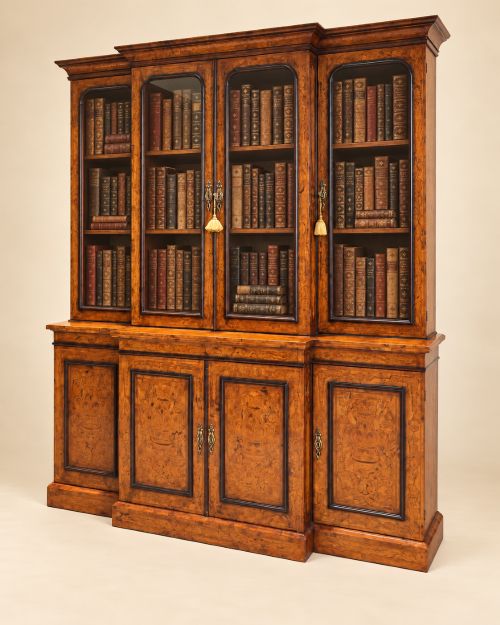
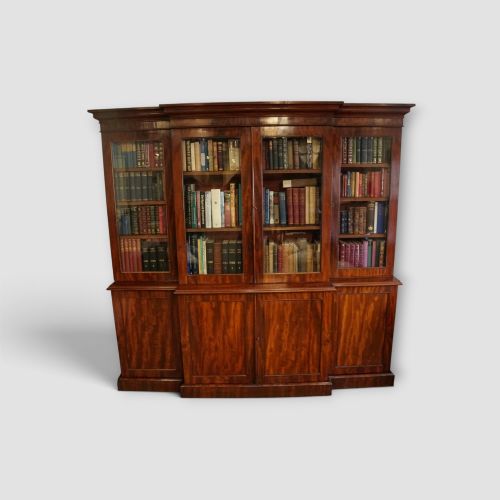
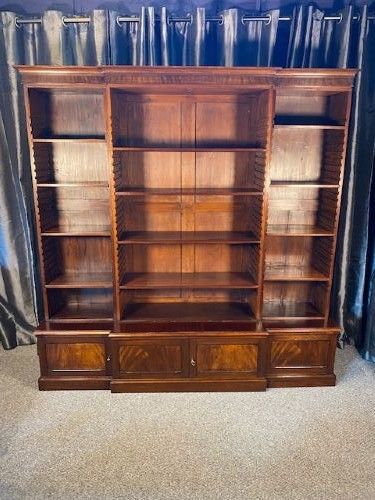
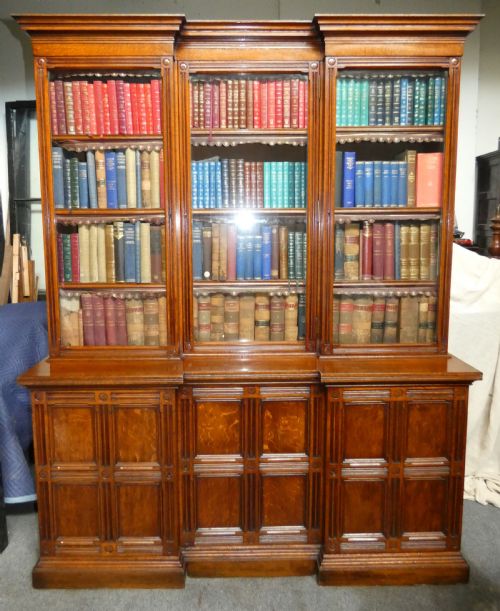
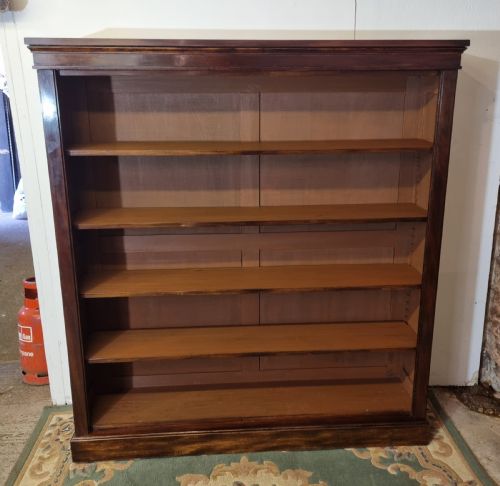
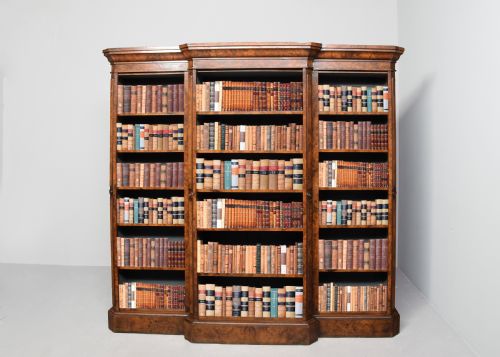
Makers built these furniture pieces to anchor domestic libraries, country houses, and studies. They range from simple open formats with adjustable shelves to elaborate breakfront designs featuring multiple glazed doors and secretaire drawers.
How They Were Made
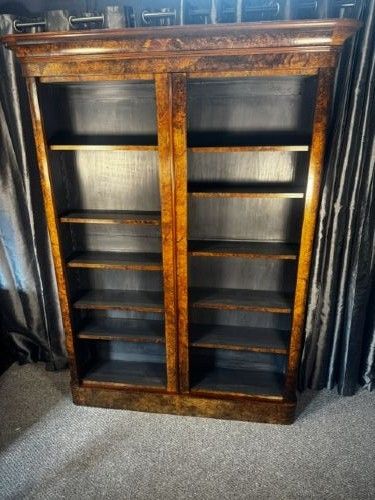
Cabinet makers utilised dense hardwoods such as mahogany, oak, and walnut, frequently selecting figured veneers like burr walnut or flame mahogany for primary display surfaces. Glass panels were fitted into wooden frames, while brass hardware secured doors and supported movable shelf mechanisms.
Construction techniques combined robust joinery with decorative detailing, including carved mouldings, inlay work, and ormolu mounts. Open bookcases often relied on simple pegged frames, whereas glazed or breakfront examples required complex carcase divisions.
Listings demonstrate a strong preference for mahogany and oak construction across nineteenth-century library furniture.
What Varies in Quality
Quality rests upon the selection of timber and the sophistication of the architectural detailing. Superior examples exhibit carefully matched grain patterns across large expanses, such as figured mahogany or burr walnut veneers.
The refinement of internal mechanics also distinguishes better examples, visible in the smoothness of adjustable shelf systems and the precision of breakfront proportions. Finer pieces incorporate carved ornamentation or specialised compartments rather than relying on plain surfaces.
S and H Jewell
The Large Victorian Library Bookcase Glossary
- Breakfront
- A cabinet design where the central section projects forward from the flanking wings. This configuration creates architectural depth and is common in large library furniture.
- Secretaire
- A desk drawer fitted with a drop-front to reveal small pigeonholes and writing surfaces. It turns a standard bookcase into a multi-functional study piece.
- Veneer
- A thin layer of figured wood applied over a secondary timber base. This technique allowed cabinet makers to display dramatic grain patterns economically.
- Adjustable shelves
- Movable wooden boards supported by pins or rack systems. They allow the interior height to be customized for different book sizes.
Large Victorian Library Bookcase: Frequently Asked Questions
How do I adjust the shelves?
Most nineteenth-century library bookcases use wooden or metal support pins fitted into vertical tracks along the interior sides. Simply lift the shelf to clear the supports and relocate them to the desired height.
Heavier oak or mahogany boards require two people to handle safely without damaging the veneered or solid interior linings.
Can I fit standard books inside?
Victorian library shelving was built to accommodate larger volumes, folios, and octavos than modern standard bookshelves provide. The adjustable shelf system allows you to alter clearances for oversized art books and reference materials easily.
Check the internal depth of the shelves before organising heavy collections, as some open variations differ from glazed cabinet depths.
Where should I place a large bookcase?
Position these substantial pieces against internal walls away from direct sunlight and strong heat sources to protect timber veneers from drying out. Ensure the floor is level, as heavy wooden carcases require stable foundations to keep doors and glazed panels aligned.
Allow adequate clearance around breakfront projections for opening doors and accessing lower drawers.