


Burr Walnut Music Canterbury
A burr walnut music canterbury brings rich timber figure and practical compartmented storage to a room.
Burr Walnut Music Canterbury
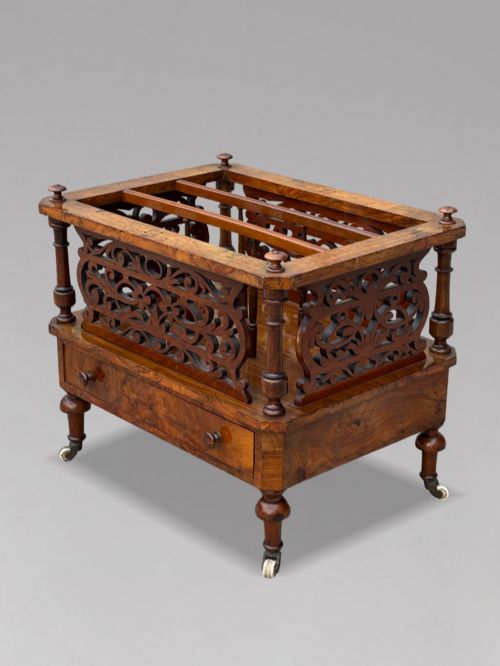
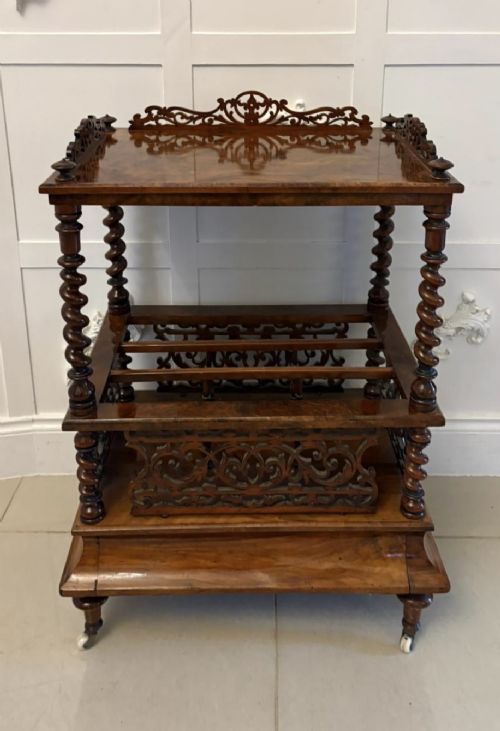
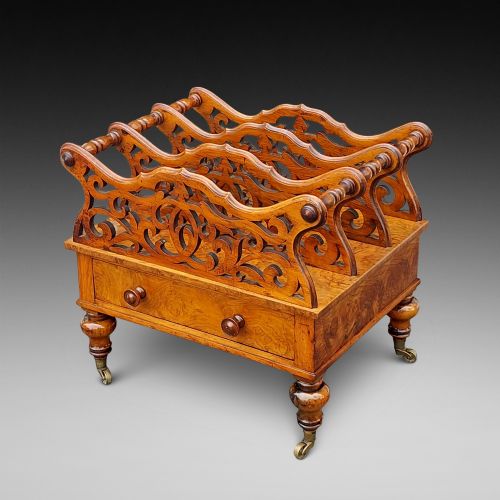
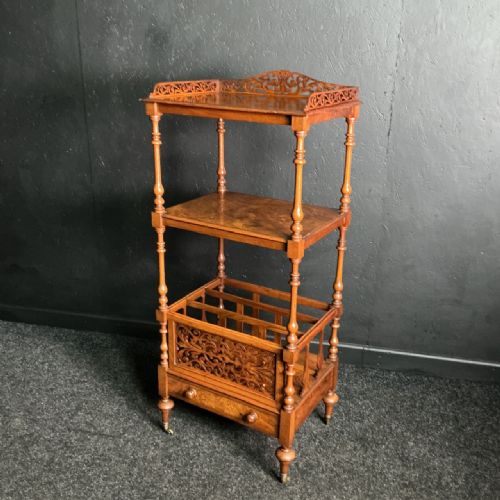
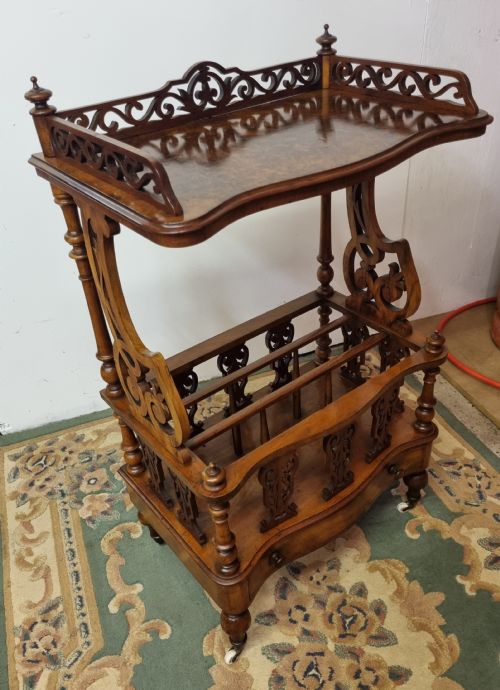
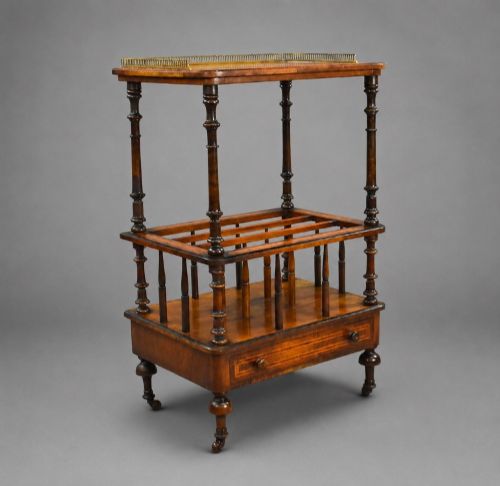
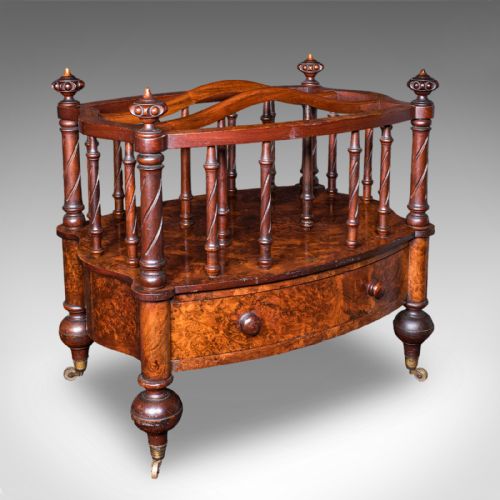
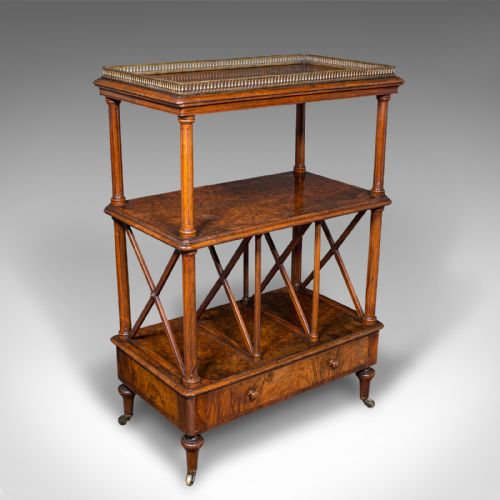
A burr walnut music canterbury is a compartmented stand designed for holding sheet music, folios and periodicals, frequently combined with a drawer, tabletop or whatnot shelving. You are most likely to encounter Victorian examples on this page, spanning the mid-nineteenth century through the eighteen-eighties alongside occasional Regency and Edwardian pieces.
The form appears in various configurations, including freestanding magazine racks, multi-tiered etageres, music cabinets, and serpentine or oval occasional tables. These pieces served as functional furniture in nineteenth-century drawing rooms, keeping performance scores and reading material organised near a piano or seating area.
What varies in quality
The visual impact of the timber grain largely distinguishes examples, with richly figured burr walnut surfaces and balanced marquetry panels sitting at the upper end of the scale. Pieces featuring complex serpentine shaping, fine pierced fretwork, and combined functions like a whatnot or music cabinet display higher ambition in design.
Execution of inlay work and the refinement of turned supports or brass fittings separate standard production from more distinguished cabinet work. The coherence of the proportions and the crispness of the fret-cut partitions indicate the original maker's investment of time and skill.
Listings feature burr walnut, plain walnut, boxwood, ebony, and porcelain materials spanning the Regency, Victorian, and Edwardian periods.
Shoolbred
The Burr Walnut Music Canterbury Glossary
- Canterbury
- A low stand with upright partitions designed for holding sheet music, newspapers and magazines. It typically includes a low drawer beneath the divisions.
- Burr walnut
- Timber taken from the wart-like growth on a walnut tree, producing highly prized, swirling grain patterns used for decorative veneer. It is sliced thin and applied to carcass woods.
- Whatnot
- An open set of shelves for displaying ornaments, books or small objects, often combined with a canterbury base. It is also known as an etagere.
- Marquetry
- Decorative patterns created by fitting together small pieces of wood veneer, shell or ivory into a wooden surface. It forms geometric or floral designs on cabinet tops and panels.
- Fretwork
- Ornamental design created by cutting patterns through thin wood using a fretsaw. It appears on the partitions and gallery rails of music stands.
Burr Walnut Music Canterbury: Frequently Asked Questions
What is a music canterbury used for?
A music canterbury is designed to hold sheet music, folios, and periodicals upright within its wooden partitions. Many examples also feature a small drawer for accessories or a top surface functioning as a table.
In a modern home, these pieces serve equally well for organising current magazines, vinyl records, or books near a seating area while adding period character to the room.
How do I date a burr walnut canterbury?
Dating relies on stylistic markers and construction details recorded across the nineteenth century. Mid-Victorian pieces from around eighteen-fifty to eighteen-eighty often feature rich burr veneers and applied marquetry.
Earlier Regency items tend towards classical restraint, while Edwardian versions show lighter framing. Comparing the turning of the legs and the presence of brass castors helps narrow the period.
Where should I place a canterbury in a room?
These freestanding pieces work well beside a piano, beside an armchair, or as an occasional table next to a sofa. Because many feature finished backs and detailed fretwork all round, they sit comfortably away from walls.
Placement should avoid direct sunlight and intense heat sources to protect the delicate burr walnut veneer from drying out.
What is the difference between a canterbury and a whatnot?
A traditional canterbury focuses on partitioned storage for papers at floor level, sometimes with a single drawer. A whatnot consists of multiple stacked shelves intended for display.
Many examples combine both forms, placing display tiers above the partitioned rack to create a versatile item of furniture.