





Edwardian Walnut Magazine Stand
An edwardian walnut magazine stand is a sturdy piece for the parlour, and you will find nineteenth-century walnut canterburys here instead.
Edwardian Walnut Magazine Stand
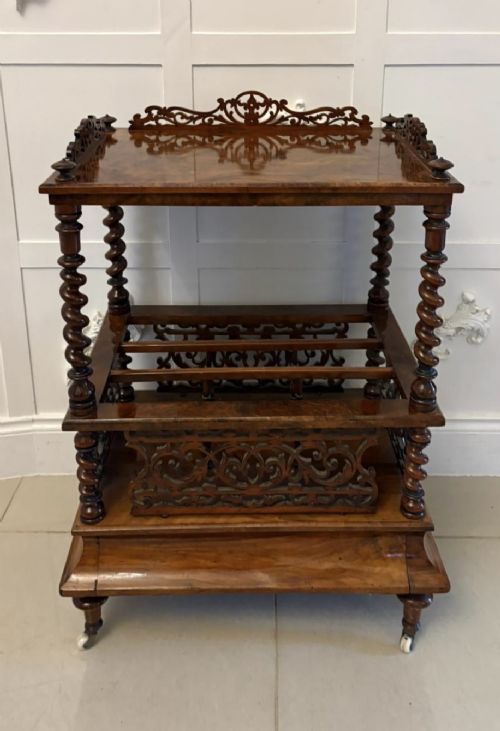
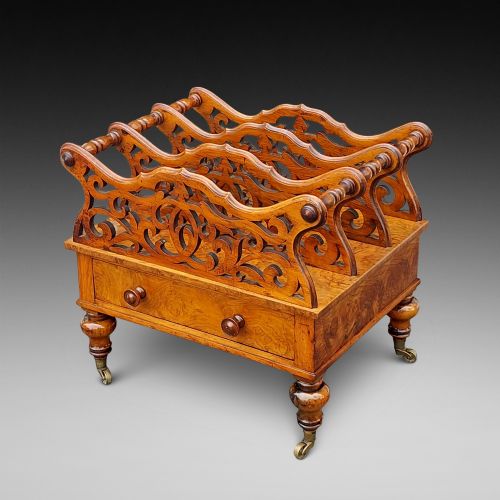
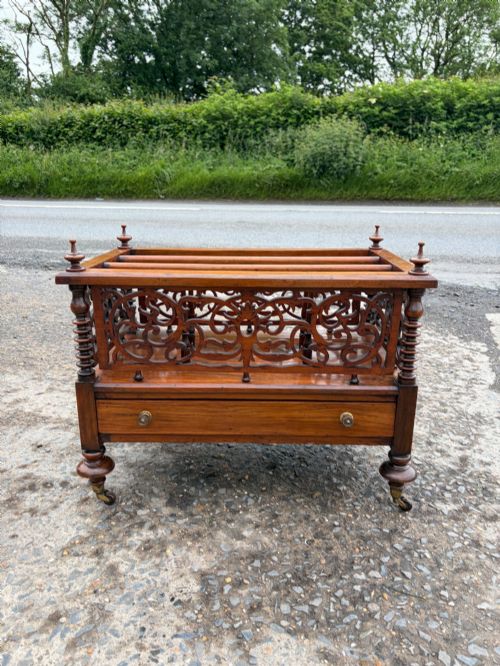
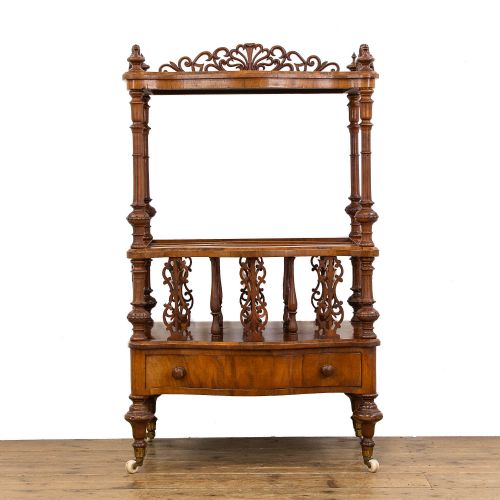
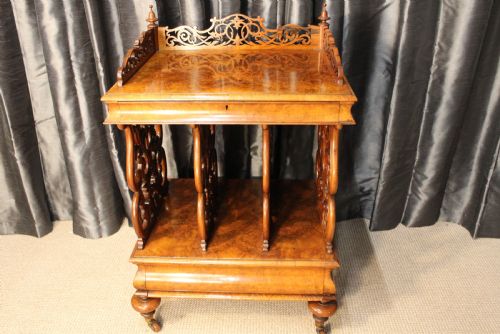
When you search for an edwardian walnut magazine stand, you actually encounter nineteenth-century walnut canterburys, music canterburys, and whatnot shelves dating from the Victorian period. These items served as repositories for periodicals, sheet music, and books beside the fireplace or settee.
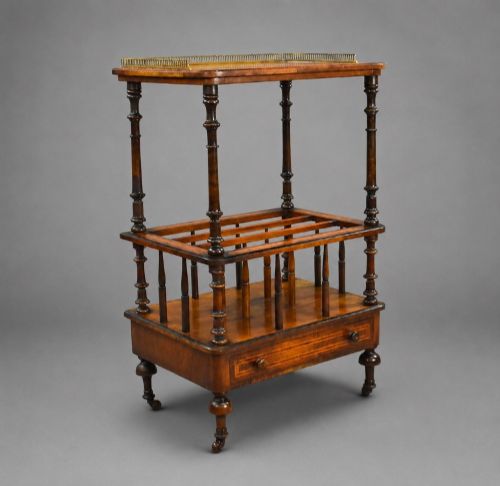
The pieces listed here span the nineteenth century, featuring formats like the Canterbury magazine rack, the occasional table combination, and the multi-tiered whatnot with a drawer. They merge display space with partitioned storage compartments in rich timber.
How they were made
The cabinetmakers utilised walnut and highly figured burr walnut veneers, often enhanced with marquetry inlay and ebony stringing. These surfaces were finished to highlight the natural grain patterns of the timber.
Structural elements incorporated turned wooden supports, brass castors, and occasionally ceramic or porcelain components to aid mobility across carpets.
Cabinetmakers ensured these stands could glide smoothly across the parlour carpet by fitting them with tiny brass and ceramic castors.
What varies in quality
The distinction between standard examples and finer pieces lies in the selection of burr walnut veneer and the intricacy of the inlaid marquetry. Finer specimens exhibit crisply turned uprights and well-executed joinery rather than plain timber construction.
Proportion and multifunctionality also separate the tiers, with combined whatnot shelves and fitted drawers representing a more ambitious design than simple racks.
The Edwardian Walnut Magazine Stand Glossary
- Canterbury
- A low stand fitted with divisions for holding sheet music, books, or periodicals, often mounted on castors. This form originated in the late eighteenth century and remained popular throughout the Victorian era.
- Whatnot
- An open set of tiered shelves used for displaying ornaments or holding books. They frequently appear combined with a Canterbury base.
- Marquetry
- The art of applying pieces of veneer to a structure to form decorative patterns and pictures. Cabinetmakers used various woods to create contrasting pictorial designs on the top surfaces.
- Burr Walnut
- Wood taken from the wart or burl of a walnut tree, yielding highly swirled grain patterns. It was sliced into thin veneers for decorative table tops and cabinet fronts.
Edwardian Walnut Magazine Stand: Frequently Asked Questions
What is a Canterbury used for?
A Canterbury was originally designed to hold sheet music near a piano, though later Victorian variants frequently served as magazine racks beside a parlour seating area.
The partitioned sections kept unbound papers upright and organised within easy reach of the hearth.
Are these pieces Edwardian?
The pieces available on this page date from the Victorian era and the nineteenth century, pre-dating the Edwardian period by several decades.
Cabinetmakers of the nineteenth century favoured substantial walnut and burr walnut timbers for these functional parlour items.
Where should I place one at home?
These stands suit sitting rooms or studies where current periodicals and books require a compact storage solution.
The castors fitted to many examples allow them to be moved easily across wooden flooring or carpets.