
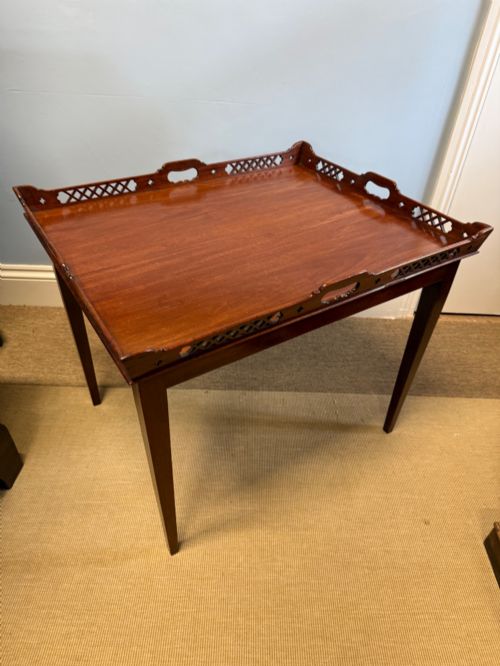


Victorian Fretwork Side Table
A victorian fretwork side table brings intricate pierced carving and rich timbers into a room, serving as a striking surface for lamps or ornaments.
Victorian Fretwork Side Table
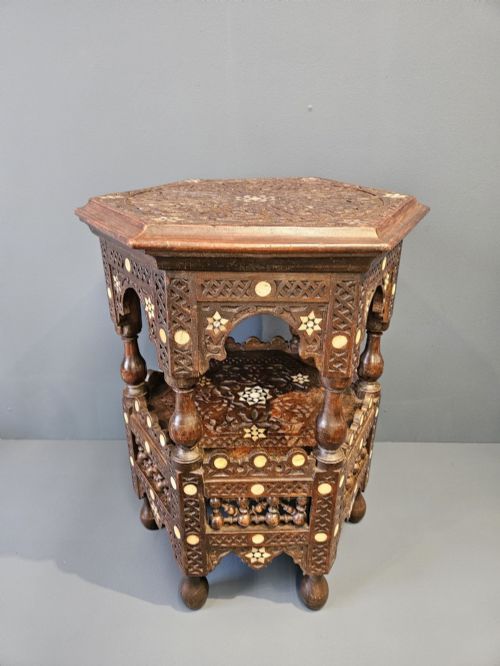
A victorian fretwork side table encompasses occasional surfaces, console tables, and lamp tables produced during the nineteenth century and into the early twentieth century. These pieces emerge in styles ranging from Chippendale Revival and Aesthetic Movement to Anglo-Indian and Moorish Revival.
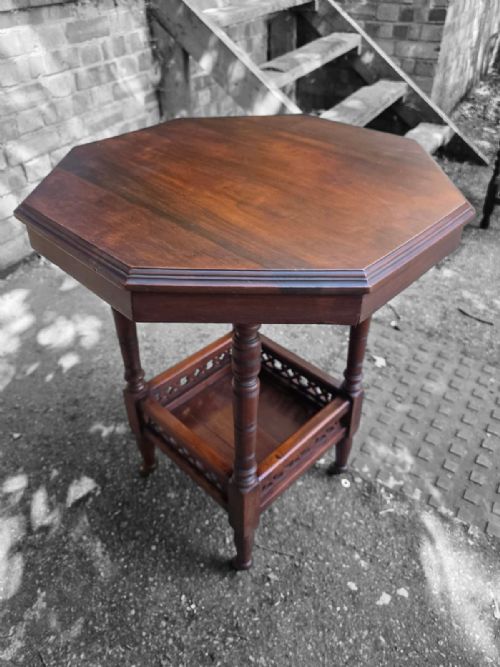
The selection on this page demonstrates various forms, including octagonal tables, tray tables, and console tables. Walnut, mahogany, and rosewood form the primary foundations of these items.
How they were made
Cabinet makers utilised dense hardwoods such as mahogany, walnut, and rosewood to construct these tables. Burr walnut and teak also appear, providing distinct grain patterns and durable structures.
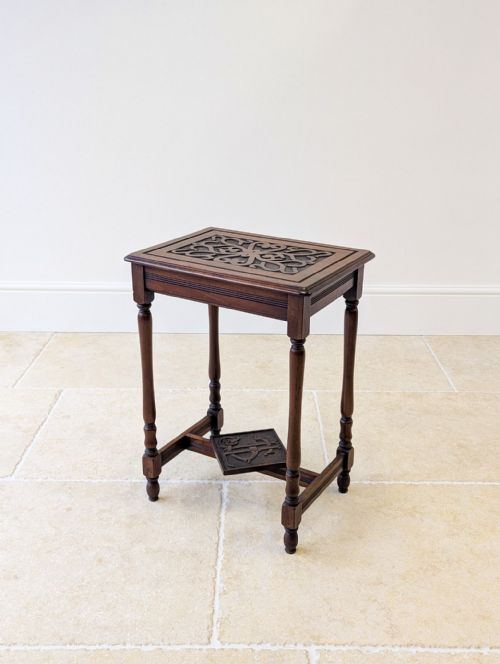
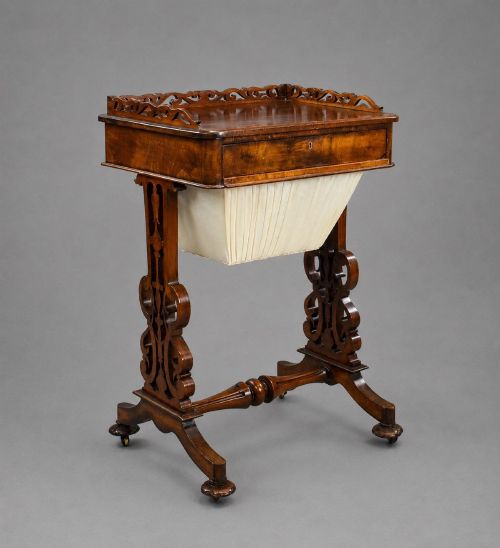
Pierced fretwork and relief carving define the ornamentation, alongside brass elements and occasional pietra dura inlay work. Artisans shaped these details by hand, employing turning and joinery techniques suited to each specific revival style.
Peacocks occasionally find their way into nineteenth-century woodwork, gazing out from Indian tables amidst dense foliage.
What varies in quality
Depth and precision of the carved detail distinguish finer examples from standard production. Crisp edges on pierced fretwork indicate skilled handwork rather than mechanical replication.
Selection of timber figure, such as burr walnut or figured mahogany, alters the visual impact of the surface. Construction stability and the integrity of joints also determine the standing of each piece.
The Victorian Fretwork Side Table Glossary
- Fretwork
- Openwork ornamentation carved or pierced from a flat board. It creates intricate geometric or floral patterns across panels and aprons.
- Occasional table
- A small, movable table designed for specific, intermittent use in a room. These pieces function easily beside seating.
- Burr walnut
- Timber taken from a walnut tree outgrowth, showing swirling, mottled grain patterns. Cabinet makers prized this wood for decorative table tops.
- Canterbury
- A low stand featuring sloped partitions for sheet music or periodicals, often combined with a side table or drawer. This form emerged in the late eighteenth century and remained popular through the Victorian era.
- Aesthetic Movement
- A late nineteenth-century design current emphasising art for art's sake and drawing inspiration from Japanese and Anglo-Oriental motifs.
Victorian Fretwork Side Table: Frequently Asked Questions
Where should I place a side table?
These tables suit placement beside armchairs, in hallways, or against living room walls as display surfaces.
Their compact footprints allow them to fit into smaller spaces while holding lamps, books, or decorative objects.
How do I clean timber surfaces?
Dust the wood regularly with a soft, dry cloth to prevent dirt accumulation on the carved fretwork.
Avoid chemical polishes and water, using only traditional beeswax sparingly when the timber appears dry.
What defines the Aesthetic Movement style?
This style focuses on visual beauty and simplicity, often incorporating ebonised wood or structural influences from Japanese design.
Pieces from this movement stand apart from heavier Victorian revivals through cleaner lines and restrained ornamentation.
How can I identify a walnut table?
Walnut displays a deep brown colour with varied grain patterns, ranging from straight lines to swirling burrs.
Makers frequently polished this timber to highlight its natural warmth and complex figuring.