

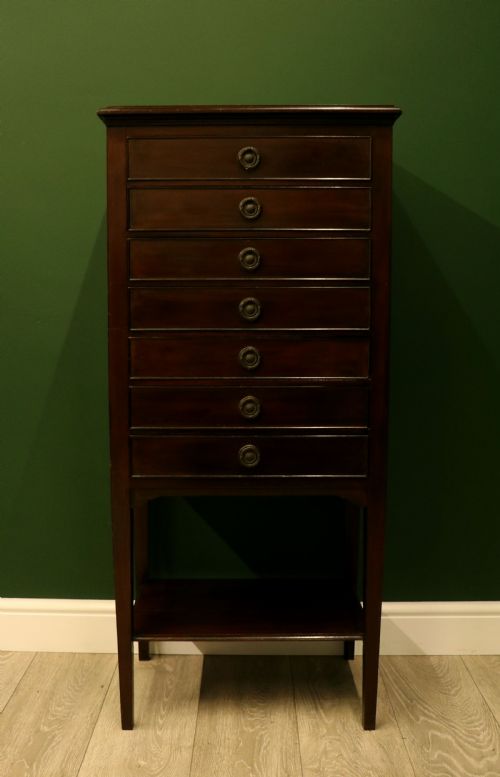


Sheet Music Storage Stand
A sheet music storage stand keeps scores and folios ordered near the piano.
Sheet Music Storage Stand
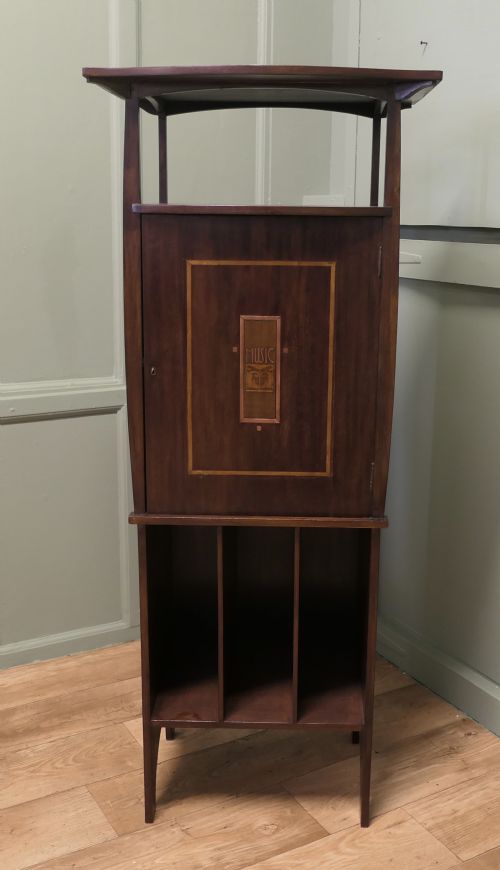
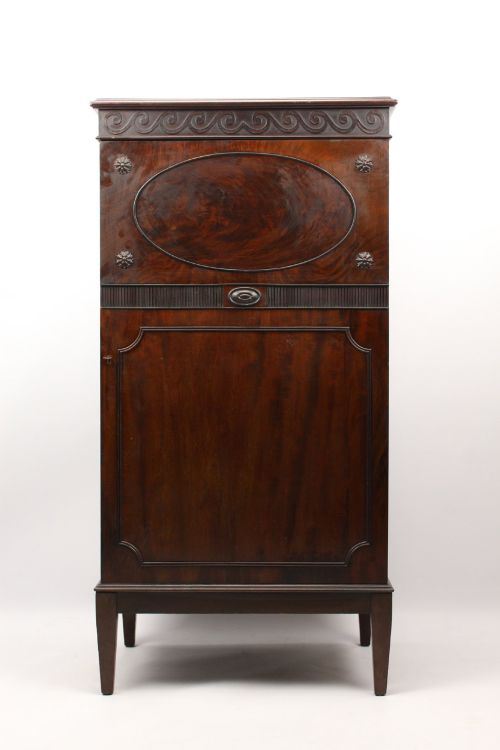
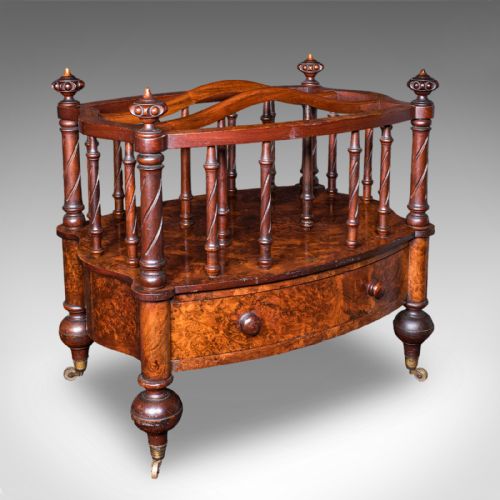
A sheet music storage stand serves musicians by holding sheet music, folios, and scores near an instrument. These pieces appear in forms such as music cabinets, canterburys, magazine racks, and folio cabinets.
The versions met most often on this page date from the Georgian, Regency, Victorian, and Edwardian periods, stretching into the early twentieth century. Makers constructed them in mahogany, walnut, burr walnut, rosewood, oak, and ebonised wood.
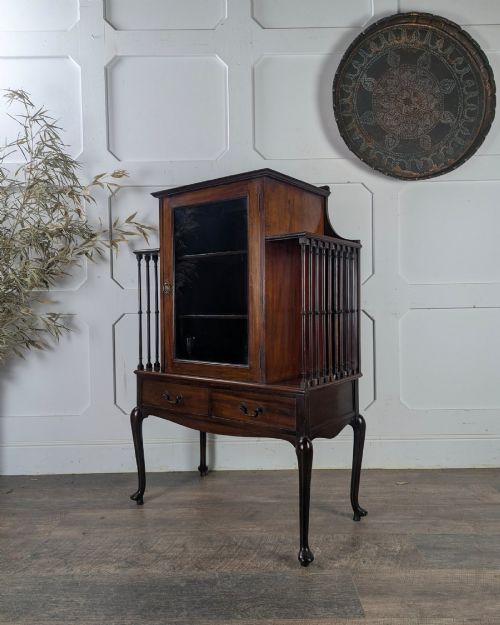
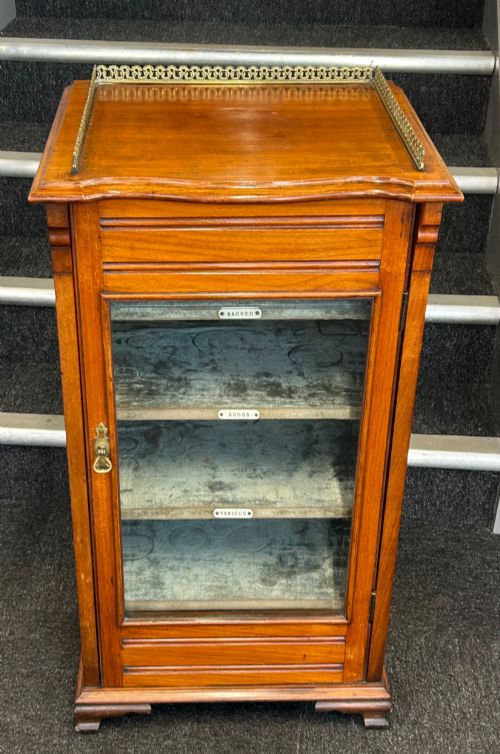
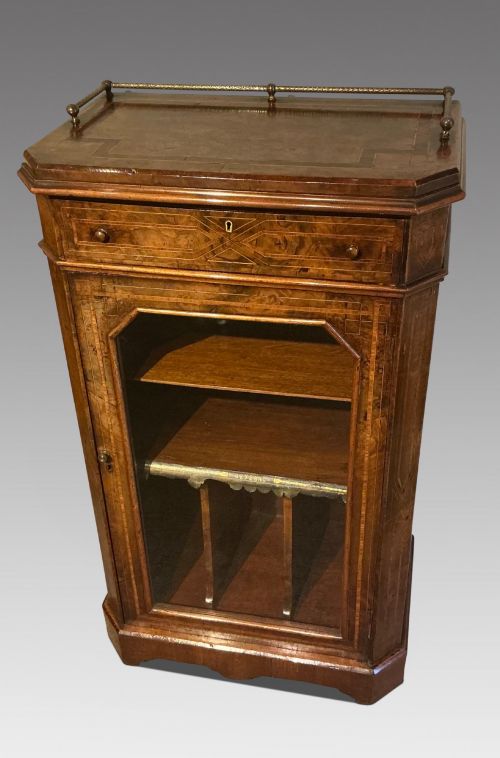
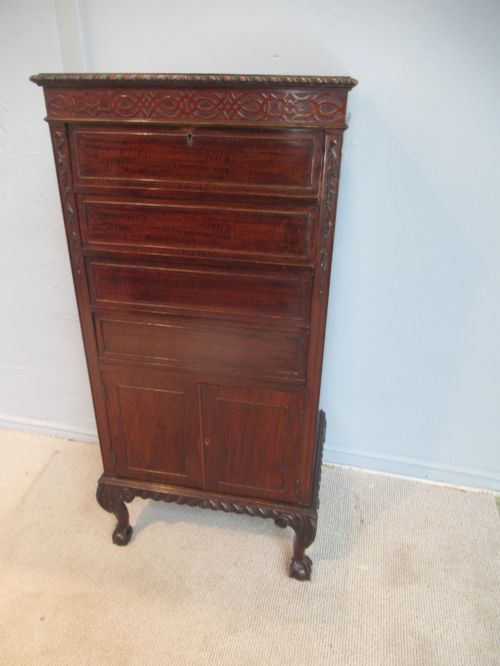
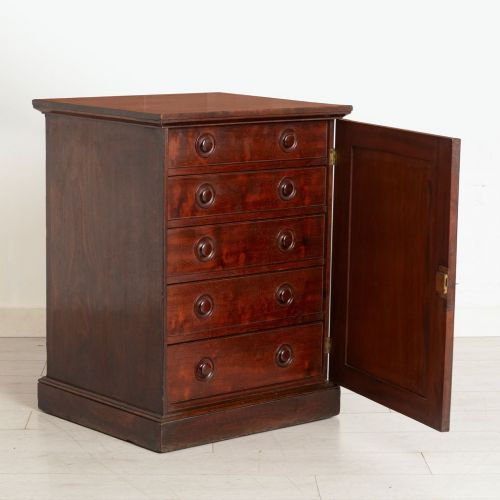
Object types include upright music cabinets with drop fronts or multiple internal drawers, alongside open canterburys designed with slatted partitions. Some examples integrate brass handles, glass doors, or inlaid wood surface decoration.
Materials and construction methods
Cabinetmakers utilised dense timbers like mahogany, rosewood, and walnut to build sturdy frames capable of supporting heavy paper folios. Burr walnut and figured mahogany veneers provided decorative surface grain across drawer fronts and doors.
Internal partitions and drop fronts required precise joinery to allow smooth operation without jamming. Brass fittings, including castors, handles, and hinges, added functional durability to both freestanding canterburys and enclosed cabinets.
Some nineteenth-century musicians required multi-functional side cabinets to keep their folio collections strictly separated from the family newspapers.
Assessing quality and craftsmanship
Quality rests in the selection of timber and the precision of the cabinetwork. Pieces featuring matched burr walnut veneers or fine ebony banding show a higher level of workshop skill than plain utilitarian equivalents.
The integrity of internal divisions, original brass hardware, and the smooth action of fall fronts or drawers distinguish finer examples. Maker attribution, such as signed pieces by known nineteenth-century firms, elevates the standing of an item.
GM Elwood for JS Henry·Denby & Spinks·Henry Ogden & Son
The Sheet Music Storage Stand Glossary
- Canterbury
- A low stand featuring vertical partitions, designed for holding sheet music, newspapers, and magazines. Originating in the eighteenth century, it frequently incorporates castors and a carrying handle.
- Fall Front
- A hinged panel that drops forward to reveal internal storage compartments or desk space. This mechanism appears frequently on music cabinets to allow easy access to stacked folios.
- Folio Cabinet
- A specialist piece of furniture constructed to store large paper sheets, prints, or musical scores flat. These cabinets contain wide, shallow drawers.
- Ebonised Wood
- Timber treated with a chemical stain or finish to imitate ebony. This dark finish gained popularity during the Victorian period, particularly within Aesthetic Movement pieces.
- Inlay
- A technique where pieces of contrasting wood, metal, or shell are inserted into recesses within a solid wood surface to form decorative patterns.
Sheet Music Storage Stand: Frequently Asked Questions
What is the difference between a music cabinet and a canterbury?
A music cabinet is an enclosed piece of furniture featuring doors, drawers, or a drop front to keep scores protected from dust and light. These upright cabinets often contain dedicated internal shelving for organised filing.
By contrast, a canterbury is typically an open stand with vertical slatted partitions designed for quick access to current pieces of sheet music and periodicals.
How do I date a sheet music storage stand?
Dating relies on observing the prevailing wood choices, hardware, and stylistic details of the period. Georgian and Regency pieces favour rosewood and mahogany with classical lines, while Victorian and Edwardian examples introduce burr walnut veneers, inlaid banding, and fall fronts.
Cabinet construction methods and the presence of specific maker signatures or stamps further help narrow down the decade of manufacture.
Can these stands hold modern magazines and books?
Canterburys and magazine racks provide open upright storage that accommodates modern periodicals, broadsheet newspapers, and softcover books. Their vertical partitions keep soft items upright without bending.
Enclosed music cabinets feature shallow drawers or compartments originally dimensioned for standard sheet music folios, which suit comparable paper sizes today.
Where should I place a music cabinet in a room?
These cabinets suit placement directly beside a piano, upright desk, or seating area where scores remain within reach. Their compact footprints allow them to function as side cabinets or lamp tables in a living space.
Freestanding canterburys work well positioned near reading chairs or alongside low living room furniture where open access is useful.