
Sheet Music Canterbury
These sheet music canterbury pieces provide dedicated storage for folios and journals, combining practical compartments with refined period cabinetry.
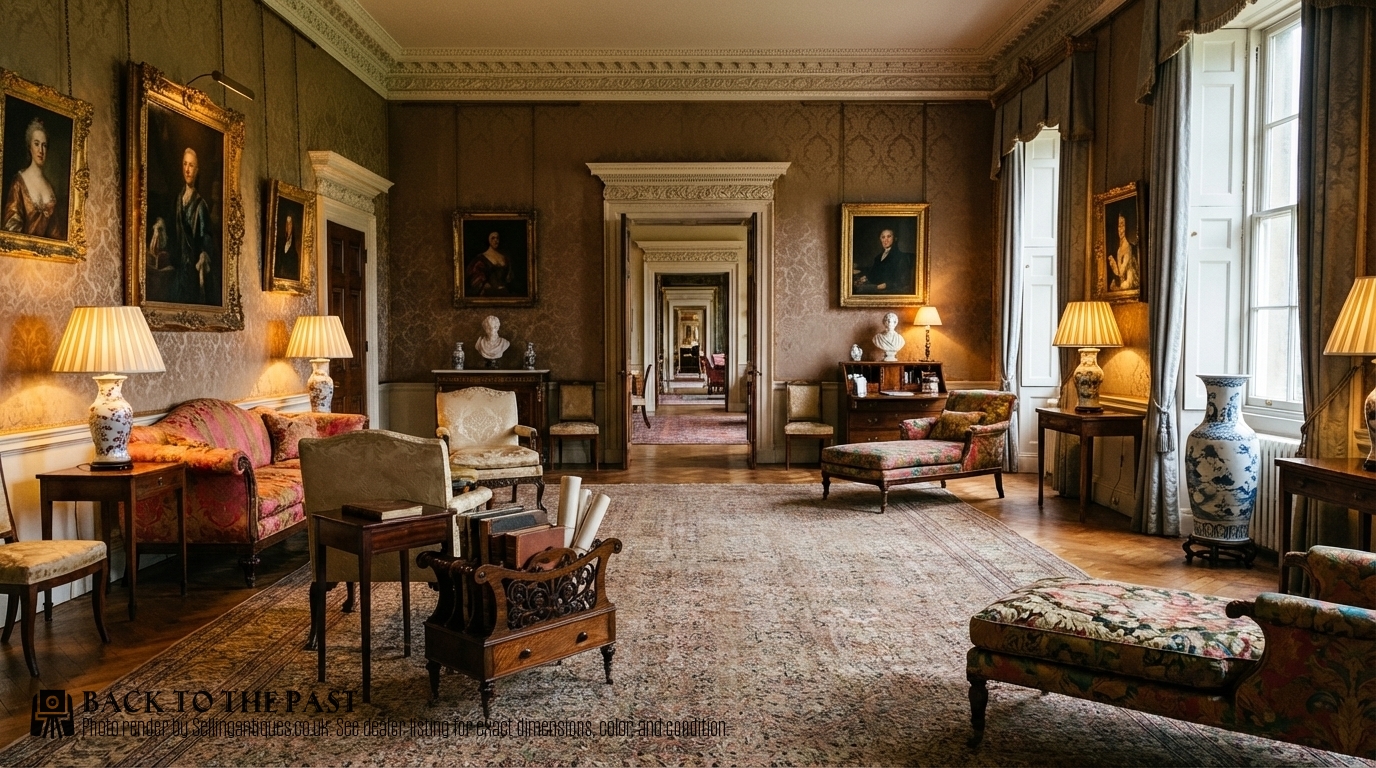
Sheet Music Canterbury
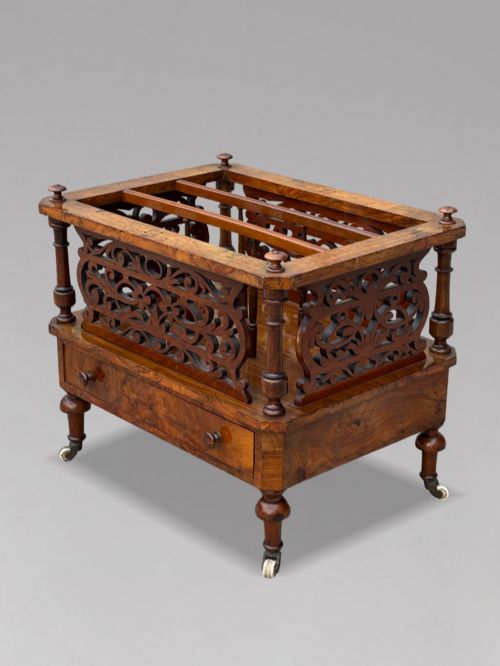
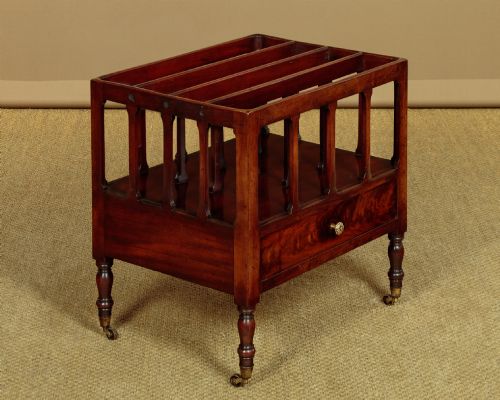
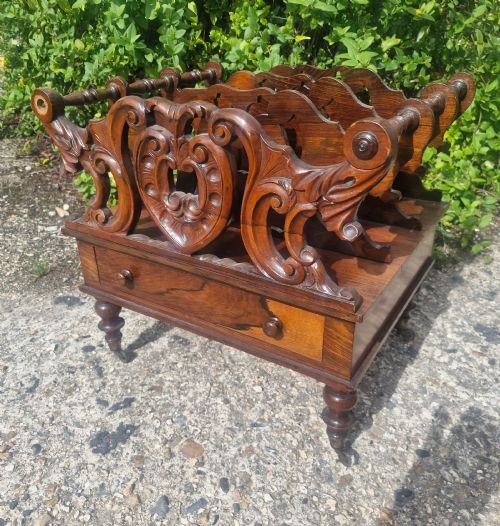
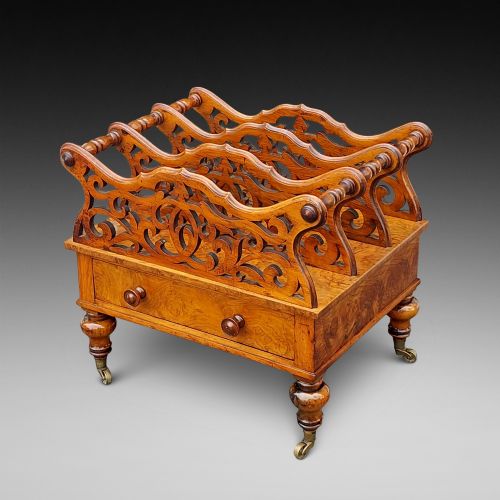
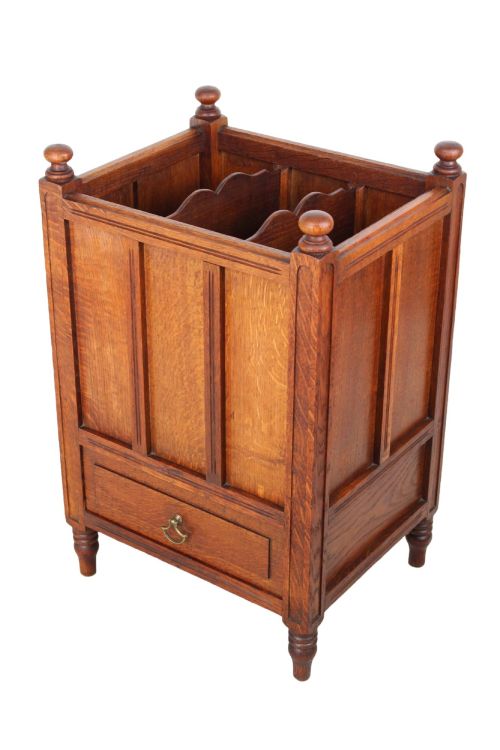
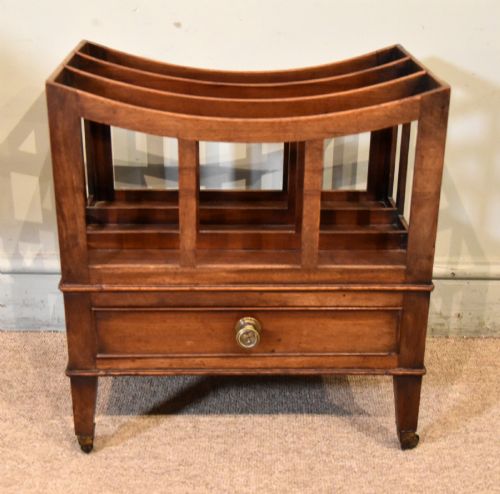
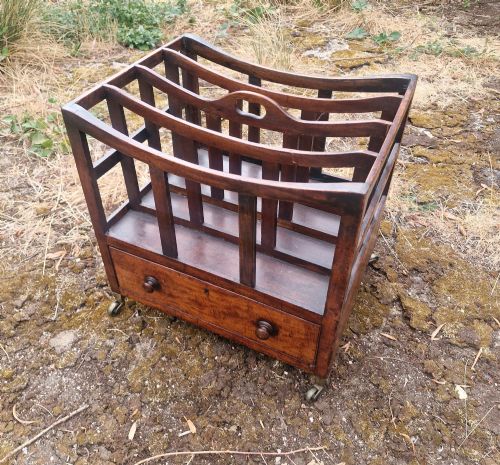
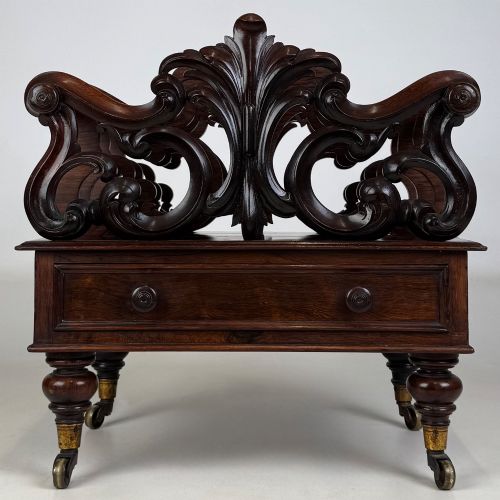
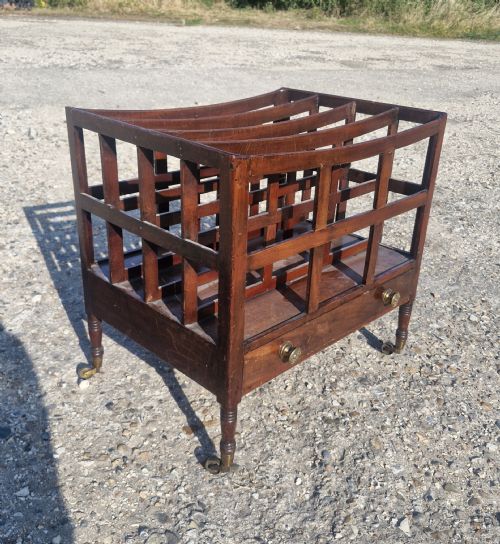
A sheet music canterbury is a specialised stand designed to hold folios, periodicals and scores upright within partitioned sections, often incorporating a lower drawer or integrated table surface. These pieces appear frequently across the nineteenth century, moving from early designs through the Victorian and Edwardian eras.
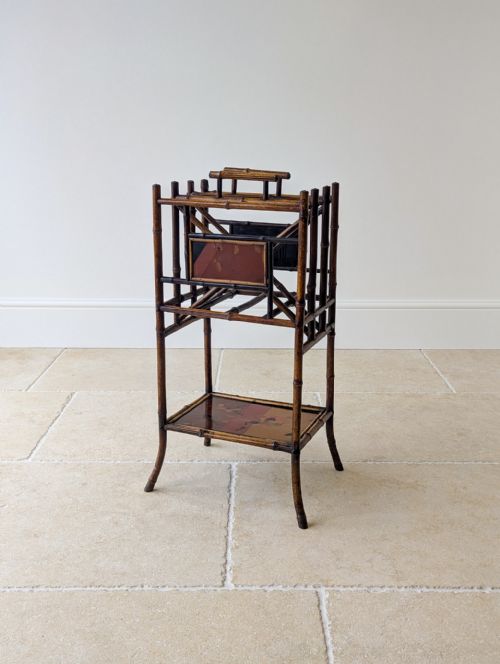
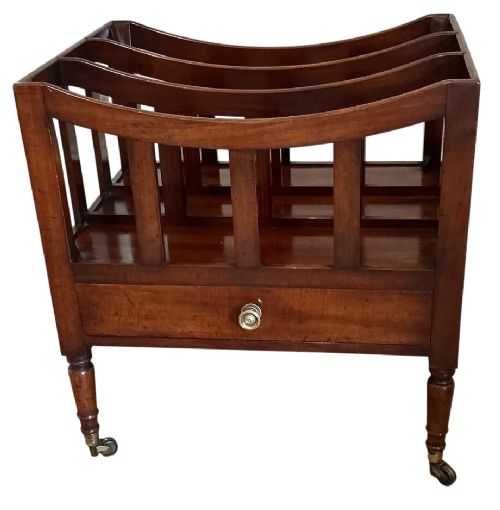
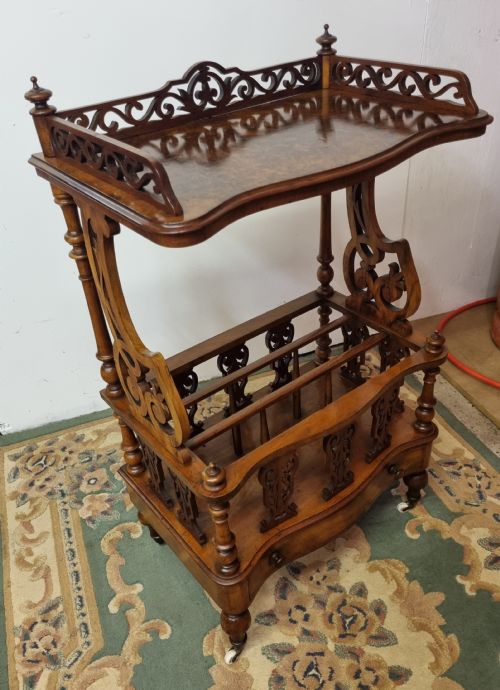
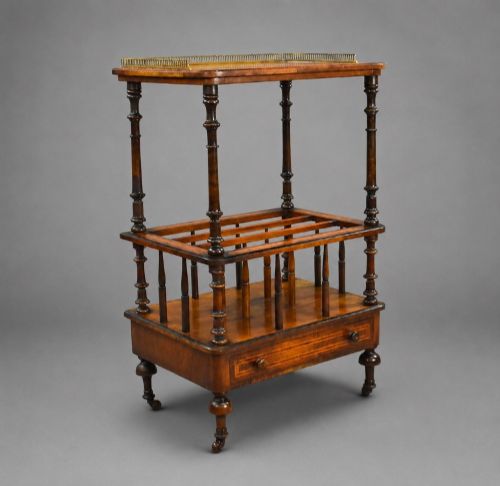
The form adapts across distinct periods, showing Regency boat-shaped profiles alongside George III mahogany frames and later Aesthetic Movement bamboo interpretations. Buyers most often meet walnut and mahogany iterations featuring upright slat divisions and occasional drop-down compartments.
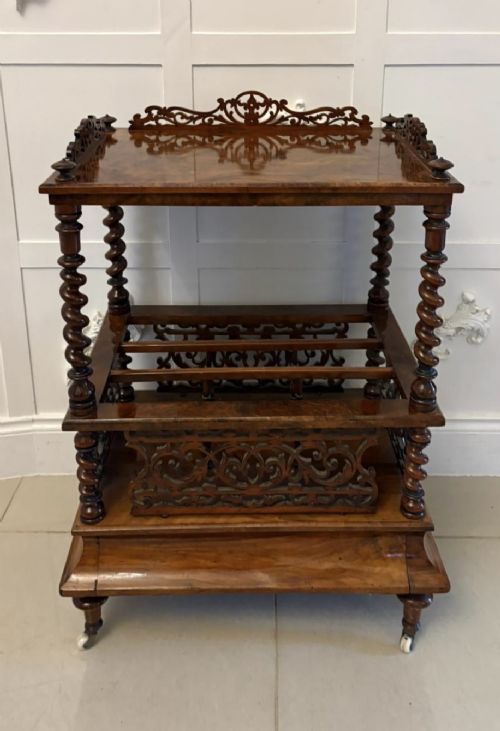
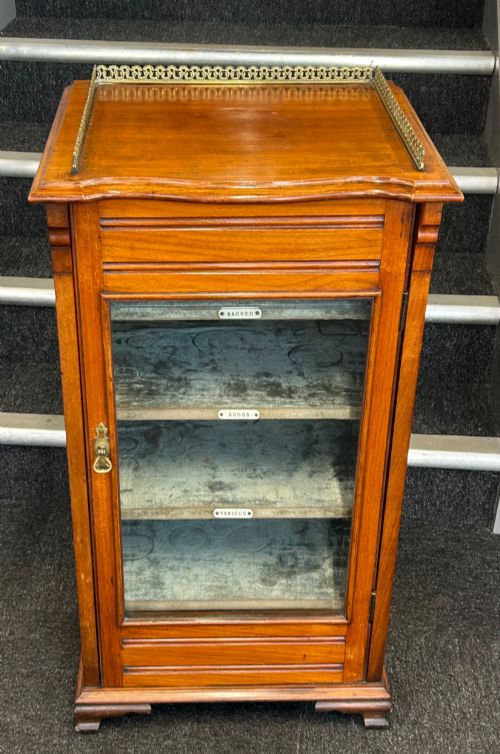
Makers also produced related music cabinets and multi-functional side tables that combine rack storage with cabinet space for smaller items. This versatility means pieces serve equally well today as magazine tidies or occasional tables beside seating.
Materials and construction
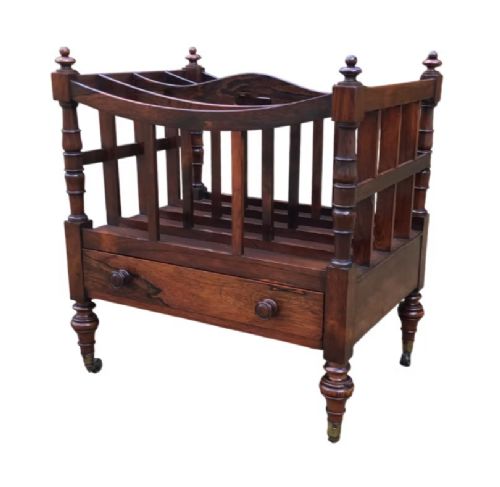
Cabinet makers utilised dense hardwoods such as mahogany, walnut, burr walnut and rosewood to construct the structural frames and slatted partitions of these stands. Burr walnut veneers and detailed string inlay frequently decorate the surfaces of high Victorian examples.
Turned wooden supports, brass castors and occasional ceramic or metal elements facilitate movement and provide structural detail. Bamboo appears in later nineteenth-century pieces reflecting the Aesthetic Movement taste for exotic materials.
Joinery methods rely on traditional framing to support the weight of stacked paper without placing strain on the vertical dividers. Open slatted sections balance against enclosed lower drawers or cupboard spaces.
The listings on this site span the Regency, Victorian and Edwardian periods, utilising walnut, mahogany, rosewood and bamboo.
Distinctions in quality
Quality separates through the selection of timber veneers and the crispness of applied string inlay across the exterior surfaces. Burr walnut and figured mahogany displays demonstrate superior material choice compared to plainer domestic timbers.
Construction detail distinguishes standard workshop output from finer cabinet work, visible in the turning of upright supports and the integration of drawers. Pieces bearing maker stamps reflect documented craftsmanship from workshops such as Edwards & Roberts or Henry Ogden & Son.
Edwards & Roberts·Henry Ogden & Son
The Sheet Music Canterbury Glossary
- Canterbury
- A low stand with upright partitions designed to hold sheet music, newspapers or magazines. The form originated in the late eighteenth century and persisted through the Edwardian period.
- Whatnot
- An open set of multi-shelved tiers used for displaying or storing small objects. These often combine with canterbury bases in high Victorian designs.
- Aesthetic Movement
- A late nineteenth-century design style emphasising visual beauty over narrative function, utilising materials like bamboo and dark polished woods. Pieces from this movement display distinct artistic influences.
- Boat-shaped
- A curved hull-like contour found in Regency furniture forms. This profile gives certain canterburys a sweeping silhouette.
Sheet Music Canterbury: Frequently Asked Questions
What is a sheet music canterbury used for?
These stands hold bound music scores, loose sheets and periodicals in upright partitioned sections. They keep papers organised and accessible near a piano or seating area.
Lower drawers or enclosed cupboards also provide space for smaller accessories, keeping surfaces clear.
How do I date a sheet music canterbury?
Dating relies on timber choice, decorative styles and construction methods visible across different periods. Regency examples show clean boat-shaped lines, while Victorian pieces often feature burr walnut and elaborate inlay.
Edwardian items tend to present lighter oak or mahogany frames, sometimes incorporating enclosed cabinet doors rather than open slats.
Can I use a canterbury as a magazine rack?
The vertical slatted compartments suit contemporary magazines and journals just as well as nineteenth-century musical folios. Their compact footprint fits easily beside modern sofas and armchairs.
Many period examples served dual functions as occasional tables or side cabinets for everyday domestic use.
What is the difference between a music cabinet and a canterbury?
A canterbury typically relies on open vertical partitions and slatted sides to hold items upright in plain view. Music cabinets feature enclosed doors or drop-front drawers to shield contents from dust.
Both forms belong to the same family of nineteenth-century storage furniture designed for the home music room.